There’s a quiet frustration every birder, hunter, and concert-goer knows: the perfect view arrives, and your phone is one second too slow to catch it. A solid binocular phone adapter turns that pocket telescope into a sharable, frame-worthy shot without juggling optics and a camera.
Whether you’re aiming for a rare warbler at dawn, a buck in the back forty, or a comet streaking past the moon, the right adapter handles the alignment, holds the phone steady, and stays out of the way. The eight picks below cover the most common scenarios: from magnetic snap-on convenience to vehicle-mounted stability, from precision rigs for telescopes to budget clamps that get the job done without drama.
How The Shortlist Stacks Up

OLLIN Snapshot Bino Adapter – Size 27

Gosky Adjustable Vehicle Window Mount

Celestron NexYZ 3-Axis Phone Adapter

Celestron NexGO 2-Axis Smartphone Adapter

APEXEL Magnetic Telescope Phone Adapter 36-46mm

GOSKY Spotting Scope Phone Adapter

Celestron Basic Telescope Eyepiece Smartphone Adapter
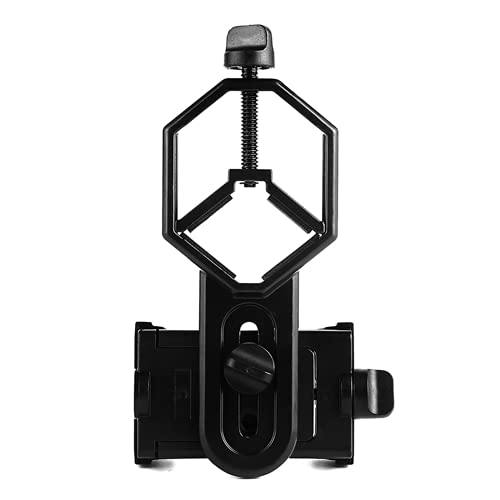
SVBONY Universal Cell Phone Adapter 25-48mm
A Closer Look At Each Pick
OLLIN’s Snapshot Bino Adapter takes a different path than the clamp-and-tighten designs dominating this list. Built around a magnetic auto-centering system, it pulls your phone’s camera lens into alignment without fiddling with screws or knobs. The compression-fit install means it stays permanently on your binocular bridge, so there’s nothing to lose in a backpack or coat pocket.
Birders chasing warblers through dense brush will appreciate the speed: the moment a target shows up, the phone snaps on, finds center, and starts recording. The ABS plastic construction keeps weight down, which matters during long observation walks where every gram on your neck counts.
What Pays Off
- Magnetic auto-centering removes manual alignment guesswork
- Permanent compression-fit install means no parts to misplace
- Lightweight ABS body won’t fatigue your neck on long sessions
- Works with all Snapshot Snapcases for cross-device flexibility
- Fast attach-detach keeps you in the moment when a rare bird flies by
Things To Consider
- Requires a compatible Snapcase, which is sold separately
- Permanent install limits use across multiple binocular pairs
Who It Suits Best
Casual birders and nature photographers who want grab-and-go speed without sacrificing shot quality.
Consider Something Else When
The Celestron NexYZ 3-Axis Phone Adapter makes more sense for astrophotographers who need precise manual tuning on a stationary tripod.
The Gosky Vehicle Window Mount solves a problem most adapters ignore: viewing comfort during long drives through wildlife country. Rather than holding binoculars awkwardly while scanning a treeline, this clamp hooks onto your rolled-down window and suspends your optics at a steady, hands-free angle.
It weighs around 240 grams and measures roughly 65 by 55 by 110 millimeters, small enough to stash in a glove compartment between outings. The handle adjusts to fit most car window frames, making it practical for safaris, roadside birding, and slow-roll whale watching where you need both hands on the wheel.
Noteworthy Benefits
- Hands-free optics reduce driver distraction risk
- Compact size fits in any glove box
- Adjusts to fit varied window frame thicknesses
- Lightweight at 240 grams for easy portability
Trade Offs
- Window-only mount limits use away from a vehicle
- Not a phone adapter itself; pairs with separate digiscoping gear
- Setup requires a rolled-down window, which may invite weather exposure
Key Specs
Right Fit For
Road-trippers, safari-goers, and serious birders who scan vast landscapes from their vehicles and need stable, hands-free optics.
A Better Fit Elsewhere
The OLLIN Snapshot Bino Adapter suits backpack birders who need mobile phone-to-binocular connection off the beaten path.
Celestron’s NexYZ stands apart with its patented 3-axis design, which lets you tweak alignment on the X, Y, and Z axes independently. Eyepiece alignment means the phone camera sits centered on the eyepiece’s optical axis, so the shot fills the frame without vignetting (dark edges).
Where simpler clamps rely on eyeballing the center, the NexYZ dials in with three precise knobs. Astrophotographers shooting the rings of Saturn or digiscopers chasing distant shorebirds will value the control, especially during long sessions where vibration and drift can ruin an exposure.
Practical Advantages
- Three independent axes enable precise alignment without guesswork
- Works across telescopes, spotting scopes, binoculars, monoculars, and microscopes
- Sturdy build handles larger phones with confidence
- Fine-tuning knobs help with long-exposure night-sky work
Honest Caveats
- More setup time than magnetic or basic clamp designs
- Heavier than minimalist mounts, so it may unbalance handheld binoculars
Best Suited To
Patient shooters with telescopes or tripod-mounted scopes who want exact framing for astrophotography or detailed wildlife studies.
Skip It When
The Celestron NexGO 2-Axis Smartphone Adapter fits better for casual backyard stargazers who want faster setup with fewer adjustments.
The NexGO trims the NexYZ’s 3-axis precision down to 2 axes, which sounds like a downgrade but reads more like a refinement for everyday users. Most backyard astronomers don’t obsess over Z-axis drift; they want their phone centered, locked, and recording. The orange tightening band secures the adapter to the eyepiece in seconds.
It shares the NexYZ’s broad compatibility, working across telescopes, spotting scopes, binoculars, monoculars, and microscopes. Think of it as the entry point to Celestron’s adapter family, designed for parents showing kids Saturn’s rings or hobbyists documenting a meteor shower.
The Case For It
- Faster setup than the 3-axis NexYZ for casual sessions
- Orange tightening band is easy to find and grip in low light
- Wide compatibility covers most amateur astronomy gear
- Lower learning curve for first-time adapter users
Points To Keep In Mind
- Two-axis design sacrifices fine Z-axis control for astrophotography purists
- Same bulkiness concerns as the NexYZ on handheld binoculars
Feature Snapshot
Who Will Love This
Casual astronomers and hobbyists who want dependable smartphone capture without fiddling with three knobs each session.
Reach For A Different Pick When
Pick the Celestron NexYZ 3-Axis Phone Adapter instead, since astrophotographers chasing high-magnification targets need finer Z-axis control.
APEXEL brings aerospace-grade aluminum (a metal alloy prized for being light yet strong) to the adapter game with CNC-machined construction and a foldable form factor. N52 rare-earth magnets (the strongest commercially available neodymium class) handle the phone-to-mount connection, snapping your device into place with a satisfying click.
The eyepiece range spans 36 to 46 millimeters, covering most consumer binoculars and spotting scopes. Hikers and travelers will value the foldable design, which collapses flat enough to slip into a jacket pocket without snagging.
Strong Points
- CNC aluminum body holds up to field abuse better than plastic
- Strong N52 magnets make phone attachment quick and secure
- Foldable design saves pack space on long hikes
- Eyepiece range suits most consumer spotting scopes and binoculars
Some Limits To Know
- 36-46mm range excludes smaller spotting-scope eyepieces under 36mm
- Magnetic attachment requires metal plate or compatible phone case for some devices
Core Details
Whose Shelf It Belongs On
Hikers, birders, and travelers who want a rugged, pack-friendly adapter that won’t crack under backpack pressure.
Look Elsewhere When
The SVBONY Universal Cell Phone Adapter suits shoppers with smaller eyepieces, since its 25-48mm range covers a wider diameter spread.
GOSKY’s Spotting Scope Phone Adapter focuses on what most adapters promise but few deliver: easy setup without sacrificing flexibility. Drop your phone into the mount, adjust the clamp to your eyepiece diameter, and align the camera lens to the optical center. The build handles telescopes, spotting scopes, binoculars, monoculars, and microscopes without swapping mounts.
Where some adapters force you to choose between rigidity and portability, this one tries to bridge both. The wider eyepiece compatibility makes it useful for households with multiple optics, where one adapter can serve a telescope, a spotting scope, and a pair of binos in the same evening.
The Upside
- One adapter covers telescopes, binos, scopes, and microscopes
- Setup is intuitive enough for first-time users
- Adjustable clamp fits varied eyepiece diameters
- Good choice for multi-optic households
Where It Is Less Suited
- Manual alignment takes longer than magnetic designs
- Build quality varies; owners commonly report that plastic parts may loosen with heavy use
Built With In Mind
Multi-optic households and beginning digiscopers who want a single adapter that works across several pieces of glass.
Where Another Pick Suits Better
The APEXEL Magnetic Telescope Phone Adapter serves travelers better, since its foldable aluminum body holds up to backpack conditions.
Celestron’s Basic Adapter strips the concept down to its essentials: clamp to the eyepiece, tighten, drop in the phone. No fine-tuning knobs, no 3-axis stages, no magnetic arrays. For someone capturing lunar craters or backyard wildlife, the simplicity removes friction from the experience.
It’s the entry point in Celestron’s lineup, sitting below the NexGO and NexYZ in both capability and price tier. The adapter accepts nearly any smartphone and fits a wide range of optical devices, which makes it forgiving for first-time users who haven’t measured their eyepiece diameter yet.
What Helps Most
- Lowest learning curve in the Celestron adapter family
- Accepts nearly any smartphone without case removal
- Works across telescopes, binos, scopes, and microscopes
- Simple clamp-and-tighten setup takes seconds
Points To Note
- Manual alignment only, so framing takes patience
- No fine adjustment for astrophotography precision
- Clamp tension may need readjusting between phone models
At A Glance
Who Should Grab It
Beginners and casual users who want a no-fuss entry into smartphone digiscoping without paying for features they won’t use.
Swap It Out When
The Celestron NexYZ 3-Axis Phone Adapter earns its place for hobbyists who want precise alignment for moon, planet, or detailed wildlife shots.
SVBONY’s Universal Adapter covers one of the widest eyepiece ranges in this roundup: 25 to 48 millimeters. That spread captures most 1.25-inch telescope eyepieces, standard binocular oculars, and many spotting scopes. For users with a mixed collection, that range removes the guesswork before purchase.
Setup follows the classic clamp-and-tighten formula: open the mount, seat the phone, align the camera lens to the eyepiece, and tighten. Note that the clamp does not fit 2-inch eyepieces (the larger format used on bigger telescopes), which is worth confirming if you own a serious observatory-grade scope.
Why It Works Well
- 25-48mm range covers most consumer eyepieces
- Compatible with microscopes, telescopes, binos, monoculars, and night-vision devices
- Forgiving fit reduces pre-purchase measurement anxiety
- Time-tested design with broad user familiarity
Some Limits To Know
- Does not fit 2-inch eyepieces used on larger telescopes
- Manual alignment takes trial-and-error
- Plastic construction is durable but less premium than aluminum designs
Quick Technical Notes
The Right Fit
Shoppers with mixed eyepiece sizes who want one adapter that covers most of their optics without measuring each one first.
Not Your Match When
The APEXEL Magnetic Telescope Phone Adapter serves better for travelers, since its aluminum body and magnetic mount speed up field setup.
What Matters Most Before Choosing Binocular Phone Adapters
Eyepiece diameter is the single most important specification. Measure the outside diameter of your binocular or scope eyepiece before browsing, since adapters that don’t physically fit are useless regardless of feature count. Most consumer binoculars fall between 30 and 50 millimeters, but specialty spotting scopes and large astronomy eyepieces can exceed that range.
Mount type changes everything about field experience. Magnetic mounts offer grab-and-go speed for fast-moving subjects like birds or wildlife, while 2-axis and 3-axis clamp systems give finer framing control for stationary targets like the moon or a perched hawk. The right choice depends on how often you reposition versus how much precision you need per shot.
Phone case compatibility is the overlooked variable. Bulky cases, kickstands, and magnetic mounts can interfere with clamp tension or block the camera lens. Adapters with universal clamps handle most cases, but magnetic designs often require a metal plate on or inside the case for reliable attachment.
Weight and packability matter more than specs suggest. A heavy adapter unbalances handheld binoculars and turns a half-hour bird walk into a neck-strain marathon. Foldable aluminum designs win for hikers, while heavier rigid systems suit tripod-mounted telescope sessions where weight is anchored to a base.
Key Considerations Across These Picks
Common Shopping Slip Ups
The most frequent mistake is buying an adapter based on phone model alone and forgetting the eyepiece. Phone compatibility is rarely the limiting factor; eyepiece diameter is. Measure twice before purchasing.
Another trap is choosing the cheapest clamp without checking the adjustment range. Budget adapters often fit a narrow eyepiece spread, locking you out of half your optics. Spending a little more for wider compatibility usually pays off across the life of the adapter.
Where The Extra Money Goes
Higher-tier adapters buy precision and durability. Three-axis controls let you fine-tune framing for astrophotography, where a one-millimeter offset creates vignetting. Aluminum bodies survive backpack pressure that cracks plastic clamps after a season. Magnetic N52-grade mounts snap your phone into perfect center without trial-and-error.
The upgrade makes sense for serious hobbyists shooting nightly, but casual users capturing a backyard moon or weekend hawk will find mid-tier options more than capable for their needs.
Frequently Asked Questions
What size adapter do I need for my binoculars?
Measure the outside diameter of your eyepiece with a ruler or caliper. Most consumer binoculars use eyepieces between 30 and 50 millimeters, so an adapter with a 25 to 48 millimeter range covers the majority of users.
Do these adapters work with phone cases?
Most clamp-style adapters accommodate standard cases under 5 millimeters thick. Magnetic adapters typically require a metal plate attached to the case or phone, since the magnets need a ferromagnetic surface to grip reliably.
Can I use one adapter across multiple optics?
Yes, if the adapter’s eyepiece range covers all your gear. Models like the SVBONY Universal and GOSKY Spotting Scope adapters offer wide ranges that handle telescopes, binoculars, and spotting scopes without swapping mounts.
Are magnetic adapters reliable for long exposures?
Magnetic N52-grade mounts hold firm during typical handheld use, but vibration during long tripod exposures may cause slight drift. For astrophotography sessions exceeding several seconds, 2-axis or 3-axis clamp designs typically yield sharper results.
Do adapters damage eyepiece coatings?
Properly designed adapters use rubber or padded contact points that protect coatings. Avoid adapters with hard plastic clamps that tighten directly against the eyepiece housing, since repeated contact can wear finishes over time.
Wrap Up
The right binocular phone adapter comes down to how you actually use your optics. Birders chasing warblers through dense brush need the grab-and-go speed of magnetic mounts. Backyard astronomers framing Saturn benefit from 3-axis precision. Road-trippers scanning coastlines from a vehicle window need stable suspension more than smartphone integration.
Match the adapter’s strengths to your most common scenario, and the rest of the decision tends to fall into place. Your binoculars already do the heavy lifting optically; the adapter just bridges the gap between what you see and what you share.