Picking the right pair of binoculars changes how you experience a trail, a stadium seat, or a quiet hour on the porch. Magnification numbers and lens sizes only tell part of the story, so this guide focuses on how each model actually performs in real hands. The list covers birders, travelers, casual sightseers, and anyone who just wants a sharper view of the world without overspending.
A Fast Comparison Of The Options

Vortex Diamondback HD 10×42 Binoculars

Bushnell 10x42mm Trophy XLT Binoculars

Vortex Copperhead HD 10×42 Binoculars
Adorrgon 12×42 Binoculars with Phone Adapter

Adorrgon 15×45 Binoculars with Tripod
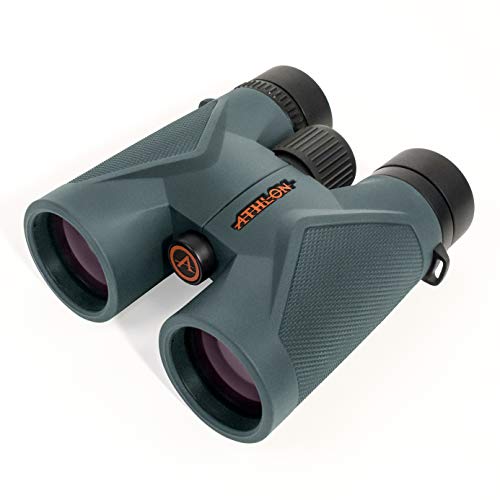
Athlon Optics 8×42 Midas UHD Binoculars

Steiner 7×50 Marine Binoculars

Adorrgon 12×54 High Powered Binoculars
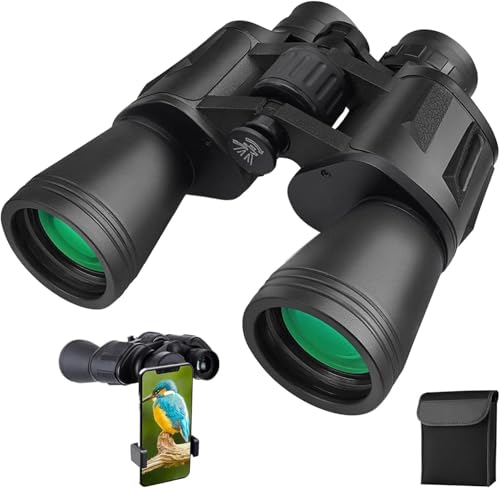
Allenjoy 20×50 HD Binoculars

Vortex Crossfire HD 10×42 Binoculars
What Each Pick Brings To The Table
The Diamondback HD sits at the top of the Vortex lineup that most people can still afford without flinching. The 10x magnification pairs with 42mm objective lenses, a sweet spot for general wildlife viewing and stadium use, since 10x pulls distant subjects in close while 42mm gathers enough light for shaded forests or overcast mornings.
Fully multi-coated optics work to keep colors true and contrast sharp from edge to edge. For anyone stepping up from a basic pair, this is the kind of jump you actually notice in the field, not just on a spec sheet.
A Few Highlights
- HD optical system reduces color fringing along high-contrast edges
- Argon-purged housing resists internal fogging across temperature swings
- Armor coating adds grip and absorbs minor bumps on the trail
- Tripod-adaptable for long sessions watching distant ridges
Points To Keep In Mind
- Heavier than compact 8x models, so neck fatigue can show up on long hikes
- Eyecups may need a break-in period for glasses wearers
Built With In Mind
Serious birders, hunters, and outdoor enthusiasts who want premium glass without crossing into the four-figure price tier.
Skip It When
You’d rather grab the Vortex Crossfire HD 10×42, a lighter companion that costs less and includes a chest harness for easier field carry.
Stepping onto a cruise deck or scanning a coastline from a clifftop demands gear that holds up to spray and salt air. The Bushnell Trophy XLT aims squarely at that use case, with waterproof and fogproof construction that shrugs off morning mist without losing clarity.
The 6.2-degree angular field of view gives you a generous window for tracking moving ships, distant whales, or shore birds wheeling over the water. Compared with the Vortex Diamondback HD earlier, this Bushnell leans more toward versatility than maximum brightness.
A Few Strong Suits
- Sealed optics handle wet environments, including boat spray
- Wide viewing angle helps follow fast-moving subjects
- Rubber armor protects against accidental drops on deck
- Center focus wheel turns smoothly even with cold or wet fingers
Worth Bearing In Mind
- Slightly bulkier than travel-focused compact 8x designs
- Lens caps can come loose in busy travel bags, depending on how you pack
Quick Facts
Right Fit For
Vacationers, cruise passengers, and casual birders who want one reliable pair that survives rain, spray, and a packed suitcase.
Consider Something Else When
Your main goal is long hours of slow forest birding, where the Athlon Optics 8×42 Midas UHD delivers a steadier hand-held image.
The Copperhead HD shares a similar 10×42 form factor with the Diamondback, but it positions itself as the practical outdoor companion. You still get HD glass and a waterproof, fogproof, shockproof housing, just in a package aimed at everyday field use rather than maximum optical reach.
Twist-up eyecups and a built-in diopter adjustment help the optic fit different faces without fighting the focus knob. For people who wear glasses, that diopter difference between your eyes can make a surprising difference at the end of a long day.
Standout Benefits
- Sealed, nitrogen-purged body handles rain and dust on rough trails
- Custom-fit diopter fine-tunes focus for each eye
- Textured armor stays grippy when your hands are cold or damp
- Lightweight enough for full-day carry without neck strain
Possible Compromises
- Coatings are a step below the Diamondback HD, so edge sharpness is slightly softer
- No included harness, which the Crossfire HD does provide
Whose Shelf It Belongs On
Regular hikers, hunters, and landowners who need tough, weather-ready glass for unpredictable conditions.
Another Choice May Suit
You want maximum edge-to-edge clarity, where the Vortex Diamondback HD 10×42 pulls ahead for the same 10×42 footprint.
If you have ever wanted to photograph what you see through the lenses, the Adorrgon 12×42 arrives with both a phone adapter and a small tripod in the box. That removes the usual scavenger hunt for compatible accessories, which matters for first-time owners.
Twelve times magnification adds reach compared to the 10×42 designs earlier in this list, though the image gets shakier at full zoom without bracing. The wide field of view helps you find subjects quickly before you lock focus.
Where It Excels
- Phone adapter lets you record or share what you see
- Lightweight body, friendly for casual users and gift-givers
- Wide field of view simplifies locating fast-moving subjects
Trade-Offs
- Higher magnification amplifies hand shake, so a tripod helps for steady viewing
- Optical clarity is noticeably below premium 10×42 models like the Vortex Diamondback
Best Suited To
Casual sightseers, travelers, and anyone who wants to capture distant views with their phone without paying for premium glass.
A Better Fit Elsewhere
You mostly watch slow, distant targets in low light, where the Adorrgon 12×54 brings in noticeably more brightness.
Fifteen times magnification pulls in far-off subjects that a standard 10x pair can only hint at. For open landscapes, distant wildlife across a valley, or shoreline viewing from a high vantage, that extra reach opens up scenes a regular binocular leaves blurry.
The kit includes a tripod, and you may find it almost essential, since hand-holding 15x for long stretches amplifies every tremor. The 45mm objective lenses also gather more light than typical 32mm travel bins.
Useful Touches
- Higher power for spotting distant landmarks and wildlife
- Larger 45mm objective improves image brightness
- Tripod included for stable extended observation
Some Limits To Know
- Heavier and harder to hand-hold steadily than 10x models
- Field of view is narrower, which can frustrate tracking moving subjects
Feature Snapshot
Made For
Open-country observers and casual astronomy fans who mostly set up on a deck or overlook and want extra reach.
Where A Sibling Pick Shines
You want steadier, more forgiving hand-held optics for casual walking, where the Vortex Copperhead HD 10×42 is the better match.
ED glass, short for extra-low dispersion glass, tames color fringing along high-contrast edges. That is the kind of feature you notice most when watching a dark bird’s wing against a bright sky, where cheaper optics show a faint colored halo.
The 8×42 configuration trades some magnification for steadier hand-held viewing and a wider field. Compared with the 10×42 Vortex pair above, this one feels calmer in your hands, which matters during long wildlife sessions.
Advantages To Know
- ED glass sharpens color and contrast along the edges
- 8x magnification is easier to hold steady for beginners and older users
- Phase-corrected prisms improve resolution and color accuracy
- 17.2mm eye relief accommodates eyeglass wearers comfortably
Factors To Consider
- Less reach than 10x or 12x models for very distant subjects
- Body is on the heavier side for a full-size binocular
At A Glance
Who It Suits Best
Wildlife watchers, glasses wearers, and anyone who prefers a steadier view over maximum zoom.
Look Elsewhere When
You mainly scan open country where more reach helps, in which case the Adorrgon 15×45 binoculars extend your effective range.
Marine binoculars live in a tougher world than most, with salt spray, sudden downpours, and rolling decks. The Steiner 7×50 is built around that reality, with a floating prism system that absorbs shock and a Sports Auto Focus design that keeps things sharp without constant wheel turning.
The 50mm objectives gather a lot of light, which helps at dusk when you are trying to read channel markers or spot buoys in low light. The trade-off is a bigger, heavier body compared to the 42mm models earlier.
Well-Handled Touches
- Floating prism system cushions impacts from rough handling
- Auto focus keeps images sharp across long distances
- Large 50mm lenses perform well in fading light
- Rugged rubber armor grips well with wet hands
A Few Limitations
- Bulky for backpacking or casual daytime use
- Lower magnification means closer detail of small birds is harder
Perfect Match For
Boaters, sailors, and coastal watchers who need reliable glass in wet, salty conditions.
Swap It Out When
You spend most of your time on dry land and want a lighter 10×42 design, where the Vortex Crossfire HD is a more travel-friendly choice.
The 54mm objective lenses here are noticeably larger than the 42mm designs earlier, which translates into a brighter image when the light starts to fade. For dawn walks, dusk wildlife viewing, or shaded forests, that extra aperture can be the difference between guessing and identifying.
The 12x magnification gives you solid reach, and the large eyepiece helps with comfortable extended viewing. You do give up some portability for that combination, so think of these as a sit-down pair more than a walk-all-day pair.
Useful Strengths
- Large 54mm objectives excel in low-light environments
- 12x magnification reaches subjects farther than 10x models
- Wide eyepiece design helps during long observation sessions
Things To Weigh Up
- Heavier than 42mm binoculars, so a tripod helps on long outings
- Larger body may not suit hikers counting every ounce
Who Should Grab It
Birders, hunters, and outdoor enthusiasts who mostly observe from a fixed spot and want brighter images near twilight.
Not Your Match When
You need a binocular that lives around your neck all day, where the lighter Vortex Copperhead HD 10×42 is the more comfortable carry.
Twenty times magnification is a serious step up, well beyond what most casual users need, but it transforms stargazing and long-distance viewing. Crater shadows on the moon and the brighter deep-sky objects become reachable without a telescope.
BAK4 prisms and fully multi-coated lenses help keep that high-power image clear rather than washed out. At this magnification, bracing your arms or mounting on a tripod goes from helpful to necessary, depending on how steady you want the view.
Where It Helps
- Powerful 20x magnification for astronomy and distant scenery
- BAK4 prism glass reflects more light to your eyes
- Full multi-coating reduces glare and improves contrast
Less-Strong Areas
- Image is hard to hold steady by hand at full zoom
- Field of view narrows significantly, which can frustrate beginners
Best Suited To
Casual astronomers, stargazers, and anyone who wants maximum reach from a single binocular purchase.
Reach For A Different Pick When
You watch animals in motion or hike for hours, where the 10×42 Vortex Copperhead HD gives you a steadier, more forgiving experience.
The Crossfire HD rounds out the Vortex trio in this guide, and it has one extra the other two skip, a GlassPak chest harness included in the box. That harness matters more than people expect, since it keeps the optics from swinging on a neck strap during long walks.
Optically, you get the same 10×42 footprint with HD glass, similar to the Diamondback and Copperhead. The Crossfire is a touch behind on pure optical refinement, but the harness and overall value make it a strong everyday choice.
Points In Its Favor
- Includes a binocular harness for quick field deployment
- HD optical system for clear, color-accurate viewing
- Waterproof and fogproof sealed housing
- Solid balance of price and optical quality for most users
Minor Gripes
- Optical performance sits between budget models and the premium Diamondback
- Harness sizing can take a few adjustments to sit comfortably
Perfect Match For
Walkers, casual hikers, and birders who want a versatile, ready-to-go setup straight out of the box.
A Better Fit Elsewhere
You chase the sharpest possible image at distance, where stepping up to the Vortex Diamondback HD 10×42 rewards the extra spend.
How Magnification And Lens Size Shape Your Experience
Magnification tells you how many times closer a subject appears, while the objective lens diameter, the second number, controls how much light enters the binoculars. A 10×42 binocular magnifies ten times with 42mm objective lenses, and that combination is a popular starting point because it balances reach with brightness.
For travelers and casual users, 8x or 10x magnification is easier to hold steady. Higher magnifications like 15x or 20x reveal finer details but demand a tripod for clean images, especially as the light fades. Consider how you plan to carry and use them, since heavier binoculars tire your arms quickly.
Matching The Pair To The Place You Use It
Wet climates, boat trips, and dusty hiking trails all call for sealed, nitrogen-purged housings. Open landscapes reward higher magnification and larger objective lenses, while dense forests favor wider fields of view so you can find moving birds.
Think about your usual distance to subjects. Backyard bird feeders sit close, so close-focus distance matters. Stadiums and wide valleys push subjects farther, where stronger magnification pays off. Adjusting eyecups and diopter settings makes a noticeable difference for glasses wearers, since improper eye relief causes blackouts at the edges.
Where Glass Quality Changes What You See
ED glass, or extra-low dispersion glass, and phase-corrected prisms both sharpen what reaches your eyes. Fully multi-coated lenses reduce glare and boost contrast, which helps during dawn and dusk when light is scarce. You may not see the difference on a sunny day at noon, but in dim conditions the gap between budget optics and premium glass widens fast.
BAK4 prisms reflect more light than cheaper BK7 alternatives, which often shows up as brighter, sharper images near the edges of the view. If your budget allows, prioritizing better prism glass pays off across years of use.
What To Watch For Before You Click Buy
Common Buying Mistakes To Avoid
Chasing the highest magnification number often backfires, since 15x and 20x binoculars without a tripod deliver shaky, frustrating images. Many shoppers also overlook the weight difference between 42mm and 50mm objectives, which adds up across a full day of carry. Finally, skipping a waterproof rating to save money tends to haunt anyone caught in a sudden rainstorm or salty marine air.
Why Premium Models Often Justify The Spend
Premium binoculars typically add ED glass, phase correction, and tighter sealing that hold up over years of use. Better armor coatings survive drops on rocky trails, and included harnesses or carrying cases protect your investment during travel. The upgrade often shows up as sharper edges, truer colors, and fewer surprises when conditions turn rough. For dedicated birders, hunters, and marine users, those small improvements add up to a much more enjoyable session every time you lift them to your eyes.
Frequently Asked Questions
What Magnification Is Best For General Use?
For most general use, 8x or 10x magnification hits the sweet spot between reach and steadiness. Higher powers demand a tripod for clean images, so they suit specific situations more than everyday carry.
What Does The Second Number In 10×42 Mean?
The second number, such as 42, refers to the diameter of the objective lenses in millimeters. Larger objectives gather more light, which brightens the image in dim conditions but also adds weight.
Are Waterproof Binoculars Worth The Extra Cost?
For outdoor use, especially near water, in rain, or in dusty environments, waterproof and fogproof sealing pays for itself by protecting the internal optics. Casual indoor or fair-weather users may not need it.
Can I Use Binoculars While Wearing Glasses?
Many binoculars offer twist-up or fold-down eyecups and at least 15mm of eye relief, which lets glasses wearers see the full field of view. Check the eye relief specification before purchasing if you wear glasses regularly.
How Do I Clean Binocular Lenses Safely?
Use a soft brush or air blower to remove dust first, then a microfiber cloth with lens cleaning solution designed for optics. Avoid household cleaners or tissues, which can scratch coatings and damage the glass over time.
The Takeaway
The right binoculars depend on where you point them and how you carry them. Casual sightseers and travelers usually find their stride with a 10×42 all-rounder like the Vortex Crossfire HD, while dedicated birders and hunters often lean toward the Vortex Diamondback HD for sharper optics. Marine users and stargazers have their own specialized needs, so matching the design to your most common scenario pays off every time you head outside.