Capturing everything around you used to require a film crew, multiple tripods, and a generous budget. Today, a single pocketable 360 camera can record the whole scene, letting you pick the angle later when you’re back at the editing desk. The trick is sorting through dozens of options to find a model that delivers sharp footage, solid stabilization, and intuitive software without inflating the price tag. This list rounds up ten thoughtfully priced 360 cameras that handle travel vlogs, weekend motorcycle rides, family gatherings, and casual action sports with very little fuss.
The Choices Worth Comparing

Insta360 X3 360 Action Camera
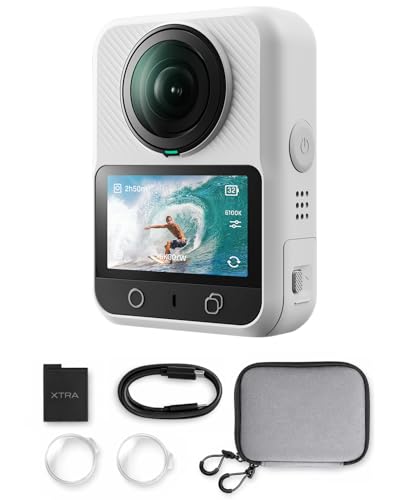
Xtra 360 Camera 8K Waterproof
AKASO 360 Action Camera Creator Combo
Insta360 X3 48MP Sensor Edition

Insta360 X4 Air 8K 360 Camera

TOZO AnyVue Android 360 Camera

PANOX V2 Motorcycle 360 Camera
What Each Pick Brings To The Table
The Insta360 X3 was the camera that pushed 360 into everyday creator hands, and it still feels like the benchmark for what a budget-friendly 360 should do. You can mount it on a motorcycle helmet, drop it in snow, or hold it over a crowded concert, and the dual fisheye lenses record everything around you in 5.7K with HDR (high dynamic range) for balanced lighting.
The 2.29-inch touchscreen makes framing and mode swaps quick without reaching for your phone, while FlowState stabilization keeps handheld shots looking smooth. Compared to the cheaper AKASO below, you get a more mature app and a deeper accessory ecosystem, which matters if you plan to grow into mounting options over time.
Everyday Wins
- 5.7K 360 HDR video captures wide dynamic range scenes without blown highlights
- 4K single-lens mode works as a traditional action camera when reframing isn’t needed
- Reframing tools in the app let you pick angles after the fact, saving you from reshoots
- Waterproof construction handles rain, splashes, and shallow dives without a separate housing
Points To Note
- Video files run large at 5.7K, so you’ll want to budget for high-capacity microSD cards
- Phone editing can heat up older devices during longer reframing sessions
Right Fit For
Travelers and vloggers who want a proven, well-supported 360 camera with strong stabilization and an app that just works.
A Better Fit Elsewhere
Riders who need a built-in GPS overlay for route documentation should look at the PANOX V2 360 Camera for Motorcycle, which bakes GPS tagging directly into the workflow.
Where the Insta360 X3 stops at 5.7K, the Xtra 360 Camera pushes into 8K territory and pairs that resolution with a 1-inch sensor equivalent, a notable step up from the smaller sensors in most action-sized bodies. The result is cleaner low-light footage and richer color depth during golden hour or indoor shoots.
You also get 105GB of built-in storage, which means you can leave the microSD card at home for short trips. Bullet Time mode, the slow-motion rotating effect popularized by earlier 360 cameras, is built in for creative B-roll. If raw resolution and storage headroom matter more to you than brand-name app polish, this is a strong contender.
Useful Touches
- 8K panoramic video delivers sharp reframed output even after heavy crop
- 1-inch sensor equivalent pulls in more light, useful at dusk or indoors
- 105GB internal storage covers a full day of clips without swapping cards
- 100MP panoramic photos are detailed enough for large prints
Trade-Offs To Consider
- 8K files fill internal storage faster than expected at higher bitrates
- Brand recognition is newer, so third-party accessory support may be slimmer than Insta360’s
Feature Snapshot
Made For
Detail-oriented creators who want maximum resolution for cropping and reframing in post-production, especially during travel shoots with mixed lighting.
Swap It Out When
You prefer a lighter, travel-tuned build and don’t need 8K; the Insta360 X4 Air Travel Bundle weighs 165g and slips easily into a jacket pocket.
The AKASO Creator Combo is built for people who want a ready-to-shoot kit without buying accessories one at a time. You get the camera, an invisible selfie stick (a stick that automatically disappears in software during stitching), and a 128GB microSD card, so the box truly is everything you need for a first 360 shoot.
Footage lands at 5.7K with 360-SuperSmooth stabilization, and dual 1/2-inch 48MP sensors handle 72MP 360 stills. Horizon Lock keeps the frame level even when the camera tilts, which is a quiet lifesaver during dynamic activities. For beginners, the included card and stick remove two of the most common first-week purchase decisions.
Key Advantages
- Bundled 128GB card means you can start shooting on day one
- Invisible selfie stick creates third-person drone-style shots without a drone
- AI tracking follows subjects across the 360 frame, useful for solo creators
- 5.7K 360 video matches the resolution of more expensive competitors
Honest Caveats
- AI tracking accuracy can drop when subjects cross behind the camera quickly
- Battery life under continuous 5.7K recording may need a power bank for full-day outings
Best Suited To
First-time 360 shooters and casual creators who want a complete starter kit and don’t want to research which SD card to pair with the camera.
Consider Something Else When
You shoot a lot in dim conditions; the DJI Osmo 360 Standard Combo uses a 1-inch sensor that handles low light more gracefully than the smaller sensors here.
Think of this as the X3’s photo-focused sibling, swapping in dual 1/2-inch 48MP sensors that pull in more detail than the standard version. The 72MP 360 stills are sharp enough for cropping in post, which matters for landscape photographers who want to reframe wide scenes into multiple compositions.
You still get 5.7K 360 Active HDR video, 4K single-lens recording, and the 2.29-inch touchscreen that made the original X3 easy to live with. 60fps Me Mode keeps you centered in the frame, ideal for cycling or vlogging where you want the subject locked in. Owners of older Insta360 batteries will appreciate that the form factor stays familiar.
Where It Excels
- 72MP 360 photos deliver enough detail for large-format prints
- Dual 1/2-inch 48MP sensors improve low-light clarity over smaller-sensor action cams
- 60fps Me Mode is great for cycling, skiing, and other fast-paced vlogging
- 5.7K Active HDR balances shadows and highlights in mixed lighting
Soft Spots
- 8K time-lapses process slowly on mid-range phones
- Sensor upgrade adds modest weight compared to the base X3
Feature Card
Whose Shelf It Belongs On
Photo-leaning creators who want one device that doubles as a high-resolution 360 still camera and a stabilized video rig.
Where Another Pick Suits Better
For raw 8K resolution and 1-inch sensor performance, the Xtra 360 Camera offers a meaningful step up in sensor size, assuming you don’t mind the newer brand.
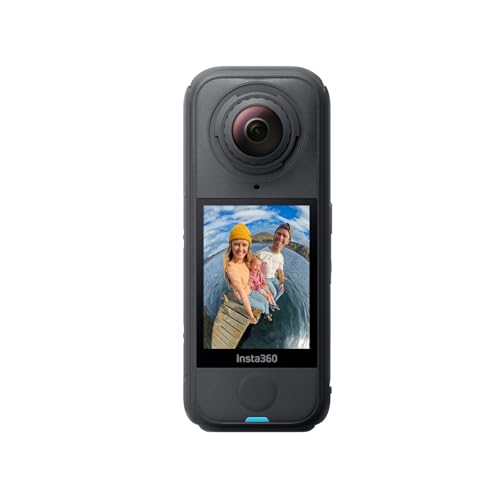
The X4 Air Travel Bundle is for people who count grams in their carry-on. At 165g, the camera disappears into a jacket pocket, and the included invisible selfie stick gives you drone-style angles without a drone or extra mount.
You get 8K 360 video, which is a serious resolution jump for this weight class, and replaceable lenses mean a scratched element doesn’t ruin the camera. The built-in wind guard helps outdoor audio sound cleaner. Compared to the bulkier X3, this feels purpose-built for travel days where you want to shoot light and move fast.
What Pays Off
- 165g body weight is comfortable for handheld vlogging and helmet mounting
- Replaceable lenses reduce long-term repair cost after scrapes or drops
- Built-in wind guard keeps voice audio usable on blustery days
- FlowState stabilization handles walking and light jogging smoothly
Things To Weigh Up
- 8K files consume storage quickly, so frequent offloading is part of the routine
- Smaller body may feel cramped for people with larger hands
Feature Rundown
Perfect Match For
Frequent travelers and city vloggers who want a featherlight 360 setup that can live in a small bag without skimping on resolution.
Skip It When
You want maximum low-light performance; the DJI Osmo 360 Standard Combo’s 1-inch sensor pulls in more light for night scenes.
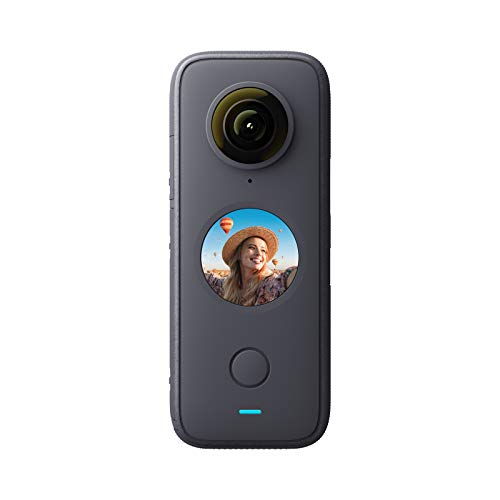
The ONE X2 is a few generations old at this point, but it remains one of the most accessible ways to step into 360 capture without overspending. It shoots 5.7K 360 video, has IPX8 waterproofing, and doubles as a webcam for video calls, which is a quiet perk for remote workers.
FlowState stabilization and horizon leveling (software that keeps the horizon straight even when the camera rotates) keep handheld shots steady, and the touch screen is snappy enough to change modes without fumbling. Voice control adds convenience when the camera is mounted out of reach. You’ll miss the higher 8K resolution and newer sensor tech of the X3, but the price-to-feature ratio still holds up.
Notable Gains
- Lower entry price makes 360 capture accessible for first-time shoppers
- Webcam mode is useful for streamers and remote meetings
- IPX8 waterproofing handles pool use and rain without housing
- Voice control keeps your hands free during action shoots
Less-Strong Areas
- Sensor is older, so low-light footage shows more noise than newer 1/2-inch rivals
- App updates may slow as the model ages, compared to the actively supported X3 line
Who It Suits Best
Casual creators and budget-focused shoppers who want proven 360 capture without paying for the latest sensor upgrades.
Reach For A Different Pick When
You want a more refined sensor for low-light vlogging; the Insta360 X3 48MP Sensor Edition brings noticeably better clarity at a modest step up in cost.
The standalone X4 Air drops the travel bundle but keeps the same core: a 165g body, 8K 360 capture, and the invisible selfie stick effect that erases the stick from your footage. If you already own accessories or prefer to buy the stick separately, this version trims the kit down.
Replaceable lenses continue to be the standout feature, lowering the long-term cost of ownership. The built-in wind guard and FlowState stabilization are equally useful on hiking trails or windy coastlines. For a hiking-focused creator, this is a focused, lightweight tool rather than a do-everything rig.
Noteworthy Benefits
- Lightweight 165g build reduces fatigue on long hikes
- Replaceable lens design makes field repairs more manageable
- 8K 360 video gives breathing room for reframed 4K exports
- AI-powered app helps automate reframing for quick social posts
Practical Considerations
- 8K footage generates heat during extended recording, so ambient temperature matters
- Some advanced editing features require a recent flagship phone for smooth preview
Who Should Grab It
Hikers, backpackers, and solo creators who want a featherlight 360 rig without the bundled accessories they don’t need.
Look Elsewhere When
You want a complete first-time kit; the AKASO 360 Action Camera Creator Combo includes a card and stick, making it a friendlier starting point.
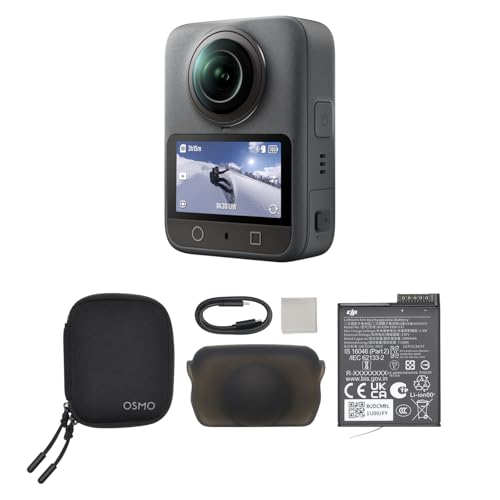
DJI’s entry into the 360 market leans hard on sensor size, and the result is a camera that behaves well in conditions where smaller sensors struggle. The 1-inch 360 imaging setup delivers 8K/30fps footage with strong low-light performance, ideal for city nights, indoor events, and sunrise shoots.
With 105GB of built-in storage, you can leave the card at home for shorter sessions, and the Standard Combo bundles the essentials without bloating the price. If you already use DJI gear, the app integration feels familiar. Compared to the Insta360 X3 line, this trades some app maturity for a genuinely larger sensor.
A Few Highlights
- 1-inch 360 sensor delivers cleaner low-light footage than 1/2-inch rivals
- 8K/30fps video leaves headroom for cropping into 4K exports
- 105GB internal storage reduces dependence on microSD cards
- DJI ecosystem support simplifies pairing with existing gimbals and mics
Possible Compromises
- Heavier than the 165g X4 Air, which matters on long helmet mounts
- App feature set is still maturing compared to Insta360’s longer 360 track record
Technical Highlights
Built With In Mind
Nightlife creators, travel filmmakers, and low-light vloggers who value sensor size over absolute portability.
Another Choice May Suit
Long-distance hikers will find the Insta360 X4 Air Travel Bundle much easier on the neck during all-day wear.
The TOZO AnyVue runs an Android-based operating system, which sets it apart from most 360 cameras that rely on a paired phone app. A 3.0-inch touchscreen, built-in GPS, and intelligent subject tracking make this feel more like a smart device than a traditional action cam.
5.7K 360 video is paired with 12K 360 photos, and 4K live streaming is supported for creators who broadcast regularly. The Qualcomm AI processor inside handles stitching (the process of merging two lens images into one seamless 360 view) and reframing directly on the device. For app-heavy workflows, the standalone interface removes the need to constantly toggle between phone and camera.
Points In Its Favor
- Standalone Android interface reduces reliance on a phone for basic settings
- Built-in GPS tags location data into footage for travel logs
- Intelligent tracking keeps moving subjects framed without manual input
- 3.0-inch touchscreen is larger than most 360 cameras in this class
Worth Bearing In Mind
- Android-based firmware can feel slower to update than dedicated 360 operating systems
- Higher processing load may shorten continuous recording times
Feature Overview
The Right Fit
Creators who prefer managing footage on the camera itself rather than juggling a phone, especially livestreamers and travel loggers.
Not Your Match When
You want a simpler, lighter setup; the Insta360 ONE X2 is easier to pocket and has a more established accessory catalog.
The PANOX V2 is aimed at riders, and the feature list reads like a wishlist for that crowd. GPS panorama overlays let you retrace a route later, AI editing pulls highlights from long rides, and multi-platform live streaming shares the road in real time.
You get 5.7K 360 video, 72MP photos, and 4K live streaming backed by an Android 10 OS. Stabilization is tuned for road vibration, which is meaningfully different from camera shake. For a tourer documenting multi-day rides, this camera covers the workflow from capture to share.
What Earns Its Place
- GPS panorama tags your route into the footage, useful for ride logs
- Multi-platform live streaming supports YouTube, Facebook, and custom RTMP (real-time messaging protocol used for streaming) endpoints
- AI editing pulls highlights from long rides, reducing post-production time
- Stabilization handles engine vibration better than most general-purpose 360 cams
Points To Keep In Mind
- Bike-specific tuning is less useful for non-riding creators
- Android-based system can take longer to boot than streamlined 360 cams
Who Will Love This
Motorcyclists, tourers, and ride-group leaders who want 360 footage with built-in GPS context and live streaming for follower communities.
Where A Sibling Pick Shines
For non-riding travel vloggers, the Insta360 X3 48MP Sensor Edition delivers sharper stills and a more polished general-purpose app.
How To Pick The Right 360 Camera Without Overpaying
Buying a 360 camera comes down to four honest questions: what you’ll shoot, where you’ll shoot it, how you’ll edit, and how much weight you want to carry. The answers shape the spec sheet that actually matters for you.
Resolution And Sensor Size
5.7K 360 is the modern baseline and gives you enough detail to reframe down to sharp 4K exports. 8K models, like the Xtra 360 Camera and DJI Osmo 360, add extra cropping room, which is useful if you want to pull flat 1080p videos from a single 360 clip. Sensor size matters more than pure resolution in dim settings, since a 1-inch sensor gathers more light than a 1/2-inch chip, and that difference is most visible after sunset or indoors.
Stabilization And Horizon Lock
FlowState, 360-SuperSmooth, and similar digital stabilization systems (in-camera software that smooths out bumps and shakes) replace gimbals for most 360 use cases. Look for horizon lock if you tilt the camera often; it keeps the frame level during turns, mounts, and handheld pans. For motorcycle and bike use, road-tuned stabilization tends to handle engine vibration better than generic algorithms.
App, Editing, And Storage
A camera is only as useful as its software. Insta360’s app has the longest refinement record, while Android-based models like the TOZO AnyVue and PANOX V2 let you edit on the device itself. Storage matters: 5.7K files eat 4GB or more per minute, and 8K doubles that. Built-in storage (like the 105GB in the Xtra 360 and DJI Osmo 360) reduces card juggling for short trips.
Form Factor And Mounting
Lightweight bodies (the X4 Air at 165g) suit helmet and travel mounting, while larger units may offer better散热 (heat dissipation) for long takes. Replaceable lenses, a feature on the X4 Air line, lower long-term repair costs. If you ride, a camera with GPS tagging, like the PANOX V2, adds a layer of context that pure video can’t.
Smart Choices When Shopping 360 Cameras
Pitfalls Shoppers Hit
The most common mistake is chasing 8K resolution without considering storage, since those files fill cards fast and slow down older phones during editing. Another is ignoring the app ecosystem, which matters more for 360 cameras than for traditional action cams because reframing and stitching depend on software. Finally, shoppers often overlook sensor size, then wonder why night footage looks grainy compared to daytime clips.
When Paying More Pays Off
Higher-tier models earn their price through larger sensors, better stabilization tuning, and on-device processing that simplifies editing. If you shoot often in low light, travel frequently, or rely on live streaming, the upgrade from a basic 5.7K model to a 1-inch sensor unit is meaningful. For occasional weekend use, a mid-range camera with a mature app often delivers better long-term value than a flagship you rarely take out.
Frequently Asked Questions
What Resolution Do I Really Need In A Budget 360 Camera?
5.7K is the practical minimum for sharp reframed 4K exports, and most modern budget models meet that bar. 8K adds cropping headroom but requires more storage and processing power.
Can Budget 360 Cameras Handle Low-Light Shooting?
Some can, but results depend on sensor size. Models with 1-inch sensors, like the DJI Osmo 360, handle dim scenes better than 1/2-inch alternatives. Expect more noise in night footage from smaller-sensor units.
Do I Need A Special App To Edit 360 Footage?
Yes. 360 footage requires stitching and reframing software, and app quality varies by brand. Insta360’s app is the most refined, while Android-based cameras like the TOZO AnyVue edit on-device.
How Important Is Waterproofing For A 360 Camera?
Built-in waterproofing handles rain, splashes, and shallow dives without extra housing. Most budget 360 cameras carry IPX8 or equivalent ratings, though depth limits vary by model.
Is A 360 Camera Worth It For Casual Vlogging?
For casual vlogging, a 360 camera adds creative flexibility through reframing, letting you pick angles after shooting. The Insta360 X3 or AKASO Creator Combo are friendly starting points without a steep learning curve.
Closing Thoughts
A 360 camera changes how you document a moment, since you’re no longer choosing one angle to capture. Match the camera to your most common shooting scenario, whether that’s a motorcycle weekend, a city trip, or family hikes, and the rest of the decision gets easier. Start with the use case, not the spec sheet, and you’ll end up with a camera that earns its place in your bag.