You want clear views without lugging around a heavy optic, and you want the price tag to feel reasonable. The right pair of compact binoculars changes how a hike, a ball game, or a backyard birding session feels, but only when the magnification, objective lens, and build all line up with how you actually use them. These ten picks cover birding, travel, kid-friendly exploration, and everything in between, with honest notes on what each one gives up to stay portable and affordable.
The Main Contenders

Vortex Diamondback HD 10×50 Binoculars

Nocs Provisions Field Issue Compact 10×32 Binoculars

Pentax Papilio II 6.5×21 Binoculars (Gray)


Luzsco Kids 10×25 Binoculars (Purple)

Canon 10×20 IS Binoculars

Vortex Vanquish Reverse Porro Prism Binoculars

ZEISS Terra ED 10×42 Binoculars (Green)
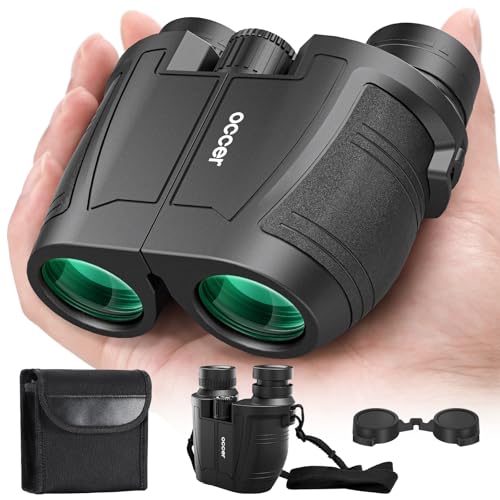
Occer 12×32 Compact Binoculars

Bushnell Bone Collector 10×42 Binoculars
More On The Choices That Made The List
When the light starts fading on a trail or a marsh, the larger 50mm objective lenses on this Vortex pull in noticeably more of the scene than the smaller 30mm and 32mm options lower on this list. The 10x magnification is a familiar sweet spot for spotting distant deer, raptors, or ridge-line landmarks without the handshake wobble you get from anything stronger.
You trade portability for that extra light-gathering, though. These are not the binos you toss in a jacket pocket. For folks who spend long evenings outside or scan open country from a fixed vantage point, the optical payoff usually justifies the extra bulk.
Strengths Worth Knowing
- Fully multi-coated lenses push light transmission up in dim conditions, helping you spot details at dawn or dusk.
- 10x magnification gives a strong reach for distant subjects while staying manageable to hold steady.
- The 50mm objectives gather significantly more light than the 25mm to 32mm lenses on most compact models.
- Vortex’s build quality and warranty support tend to make long-term ownership feel low-anxiety.
Trade-Offs
- Heavier and bulkier than every other pick here, so backpack space matters.
- Not the choice for casual travelers who want something that disappears in a daypack.
Key Specs
Best Suited To
Wildlife watchers and serious hikers who care more about twilight performance than pocket-friendly weight.
Consider Something Else When
You want a lighter travel companion like the Vortex Vanquish Reverse Porro Prism Binoculars for daily carry on the road.
The Nocs Field Issue leans hard into the “go-anywhere” side of compact optics. A Swiss-designed BAK4 prism sits behind fully coated glass, and the housing is sealed for waterproofing and nitrogen-purged to fight internal fogging. Owners who toss bins in a kayak hatch or a wet jacket pocket appreciate that kind of insurance.
The oversized focus wheel is the small detail that wins people over: it is easy to find with gloves on and turns smoothly enough to lock onto a warbler mid-flight. You may find the 16.7-ounce carry weight a touch heavier than the truly pocket-sized options further down, but the rugged feel is the trade.
A Few Strong Suits
- Waterproof and fog-proof sealing handles rain, splashes, and temperature swings.
- BAK4 prism glass delivers cleaner edge-to-edge image quality than cheaper BK7 glass.
- Close focus around 9.3 feet lets you inspect nearby plants and insects.
- Scratch-resistant exterior coating adds confidence for rough travel days.
Points To Keep In Mind
- Heavier than the truly pocketable options like the Vortex Vanquish.
- 10×32 reaches a bit less in low light than the 50mm Vortex Diamondback HD.
Right Fit For
Kayakers, casual birders, and travelers who run into wet weather and want a sealed optic that survives the trip.
Skip It When
You want something smaller and lighter for jacket-pocket carry, in which case the Vortex Vanquish Reverse Porro Prism Binoculars are a smarter pick.
The Papilio II is the odd duck of this list, and that is precisely its charm. Pentax engineered a convergent lens optical system that lets the objective lenses physically slide closer together, dropping close focus to about 50 cm. That means you can study a moth on a windowsill or the texture of a wildflower without flipping to a separate macro lens.
The 6.5x magnification and 21mm objectives keep these tiny and pocketable. Compared to the longer-reaching 10x and 12x picks above, you trade distant zoom power for the rare ability to focus on something a foot or two from your face.
What Pays Off
- Industry-leading close focus makes butterfly, insect, and plant study genuinely fun.
- Lightweight, compact frame slips into a coat pocket or small field bag.
- Lower 6.5x magnification produces a steadier image without a tripod or monopod.
Less-Strong Areas
- 6.5x magnification cannot pull in distant birds or ridge-line details like the 10x or 12x picks.
- Smaller 21mm objectives gather less light for dusk and overcast conditions.
Key Specs
Made For
Naturalists, gardeners, and curious kids who want to inspect close-up insects and flowers as much as distant views.
Look Elsewhere When
You want long-distance birding reach, where the Nikon PROSTAFF P3 8×30 Binocular gives you a much wider field of view.
Nikon’s PROSTAFF P3 is the pair most people end up holding at a shop counter. At 4.9 inches long and around 16.8 ounces, it is genuinely compact, and the 8×30 format keeps the optics light without giving up much reach. Birders especially like the wide field of view, which makes scanning a tree line or a wetland much less frantic.
The rubber-armored body is sealed against water and fog, so a surprise drizzle on a morning walk does not end your day. Long eye relief also makes these friendly for eyeglass wearers, which is a quiet detail that often decides the choice for many shoppers.
Where It Delivers
- Wide field of view around 456 ft at 1000 yds helps you locate moving wildlife quickly.
- Waterproof and fog-proof construction handles rain and temperature shifts.
- Long eye relief accommodates eyeglass wearers comfortably.
- Compact 4.9-inch body fits in a daypack or large jacket pocket.
A Few Limitations
- 8x magnification offers less reach than the 10x and 12x options on this list.
- 30mm objective gathers less light than larger 42mm and 50mm models for deep dusk.
Key Specs
Best Suited To
Birders, hikers, and casual sports spectators who want a balanced everyday optic that disappears in a bag.
Not Your Match When
You need more magnification for long-distance viewing, in which case the ZEISS Terra ED 10×42 Binoculars offer noticeably more reach.
The Luzsco pair is purpose-built for small hands. The 10×25 format is light enough that kids can carry it on a hike or a backyard expedition without immediately handing it back. The purple finish adds a fun, recognizable color that is easy to spot in a backpack or a camping tent.
For parents, the appeal is also practical: a kid-friendly pair means you save your main binoculars from drops, scuffs, and the occasional “oops.” You give up some optical refinement and low-light performance, but for introducing a child to birding or stargazing, that is a reasonable trade.
The Practical Payoff
- Lightweight, kid-sized frame reduces arm fatigue during longer outings.
- Affordable entry point that protects your main optics from accidental drops.
- 10x magnification gives kids a real taste of long-distance viewing.
- Bright color makes the pair easy to spot in a busy backpack.
Practical Considerations
- 25mm objective lenses deliver noticeably dimmer images in low light.
- Less rugged than adult-oriented options for rough outdoor handling.
Key Specs
Perfect Match For
Parents looking for a first pair of binoculars for kids to use on hikes, camping trips, and backyard explorations.
Reach For A Different Pick When
An adult wants a compact everyday optic with better edge sharpness, in which case the Vortex Vanquish Reverse Porro Prism Binoculars are a stronger fit.
Canon’s 10×20 IS brings something almost no other compact binocular on this list does: built-in image stabilization. The lens-shift stabilization system smooths out the natural handshake wobble that comes with 10x magnification, which is genuinely useful for stadium seats, ferry rides, or any situation where you cannot brace your elbows.
The trade is battery dependency and a smaller 20mm objective, so low-light performance takes a hit. For daytime sports, sightseeing, and travel where steadiness matters more than twilight reach, the stabilization can change the entire viewing experience.
What Stands Out
- Built-in image stabilization delivers a steady view at 10x without a tripod.
- Compact 10×20 frame fits in a coat pocket or small carry bag.
- Ideal for stadium use, boat trips, and other unsteady viewing spots.
Honest Caveats
- Requires a battery for the stabilization feature to function.
- 20mm objective gathers less light than larger 30mm to 50mm options.
Made For
Spectators at sporting events, travelers, and anyone whose hands shake at higher magnification who values a steady image above all else.
Where A Sibling Pick Shines
For pure optical quality without battery dependency, the ZEISS Terra ED 10×42 Binoculars offer a sharper, brighter image in most conditions.
The Vanquish is the smallest, lightest Vortex in the lineup, built around a reverse porro prism design that lets the body fold down to a truly pocketable size. The 8×26 format is gentle on the hands and steady to hold, which makes it easy to grab for a quick look at a passing hawk or a stage performance.
Fully multi-coated lenses and nitrogen purging mean you are not giving up optical quality entirely. Compared to the heavier 10×42 and 10×50 options above, you lose low-light punch and long-distance reach, but for daytime travel and casual use, the Vanquish pulls more weight than its size suggests.
Practical Pluses
- Reverse porro prism design folds down to a compact, pocket-friendly shape.
- Fully multi-coated optics boost brightness in a small-format body.
- Nitrogen-purged and O-ring sealed against moisture and fog.
- 8x magnification stays steady without a tripod or brace.
Where It May Fall Short
- 26mm objective lens limits performance after sunset or in heavy overcast.
- Less reach than 10x and 12x options for distant wildlife viewing.
Key Specs
Best Suited To
Travelers, concertgoers, and casual hikers who want an optic that disappears in a jacket pocket and stays ready.
Swap It Out When
You want richer low-light performance for dawn or dusk wildlife viewing, where the Vortex Diamondback HD 10×50 Binoculars pull in much more light.
The ZEISS Terra ED is the premium-feeling option in this roundup, and the difference shows up in the glass. ED (extra-low dispersion) lenses reduce color fringing around high-contrast edges, so a dark treeline against a bright sky stays clean and sharp. The hydrophobic multicoating also sheds water and resists smudges on the outer lenses.
The fast-focusing mechanism is the other quietly excellent detail: a quick half-turn locks onto a subject at mid-range, which is useful when a bird moves between branches. The trade is that ZEISS pricing sits well above most other picks here, so this is a step-up choice rather than an entry one.
Everyday Perks
- ED glass reduces chromatic aberration for cleaner, sharper edges.
- Hydrophobic multicoating repels water and resists smudges.
- Waterproof and nitrogen-filled for fog-free performance in tough weather.
- Fast-focus mechanism speeds up quick subject acquisition.
Things To Weigh
- Sits at a higher price tier than most other picks on this list.
- 10x magnification can feel less steady for users with shaky hands.
Right Fit For
Optics enthusiasts and frequent travelers who want premium glass quality and are willing to step up from budget territory.
Consider Something Else When
You want a budget-friendly everyday carry, where the Nikon PROSTAFF P3 8×30 Binocular delivers a lot of value for less money.
The Occer 12×32 leans toward the higher-magnification end of the compact category, and for many households that extra reach is exactly what they want. The field of view at 288 ft per 1000 yds is wide enough to find subjects, and 12x pulls in distant birds, stadium action, or coastal wildlife that smaller powers leave as a blur.
Compact enough for adults and older kids to share, this pair covers a wide range of casual uses without specialized framing. The honest read is that 12x magnification tends to amplify handshake wobble, so a steady hand or a leaning elbow makes a real difference in what you can actually see.
Real Benefits
- 12x magnification reaches further than most compact picks on this list.
- Wide 288 ft field of view at 1000 yds helps locate distant subjects.
- Compact body suits both adult and older kid use for shared family outings.
- Useful for birdwatching, sports, and travel sightseeing.
Trade-Offs
- 12x magnification amplifies handshake wobble, especially at full zoom.
- 32mm objective is smaller than 42mm alternatives, reducing dusk performance.
Perfect Match For
Families and casual wildlife watchers who want strong magnification in a body that fits both adult and kid hands.
Swap It Out When
You want steadier handheld views at long distances, in which case the Canon 10×20 IS Binoculars use stabilization to compensate for shaky hands.
The Bushnell Bone Collector is the rough-and-tumble choice for hunters, anglers, and anyone working outside in tough conditions. The textured rubber armor absorbs shock from drops and provides a non-slip grip when your hands are wet or cold. Fully multi-coated optics paired with a BAK-4 prism give you bright, sharp views across the full 10×42 frame.
The large center-focus knob is easy to find by feel with gloves on, which is a real advantage in cold weather. Compared to the smaller, lighter 10×25 and 10×32 options above, this pair is a step up in size, but the durability and optical quality earn the extra heft for serious outdoor use.
Notable Upsides
- Rubber-armored body absorbs shock and provides a secure non-slip grip.
- BAK-4 prisms and fully multi-coated lenses deliver sharp, bright images.
- Waterproof and fog-proof construction holds up in wet outdoor conditions.
- Large center-focus knob is easy to operate with gloved hands.
Small Caveats
- Heavier and bulkier than smaller compact picks for casual travel.
- 10×42 size takes up more backpack space than pocket-format options.
Best Suited To
Hunters, anglers, and outdoor workers who want a durable, all-weather binocular that handles drops and rough use.
A Better Fit Elsewhere
For a lighter travel-ready format, the Nocs Provisions Field Issue Compact 10×32 Binoculars offer similar ruggedness in a smaller body.
What Matters Most Before Choosing Budget Compact Binoculars
Match Magnification To Your Use Case
A binocular’s first number, like 10x or 12x, tells you how much closer the image appears. Lower numbers (6x, 8x) produce steadier handheld views and wider fields, while higher numbers (10x, 12x) reach farther but amplify every tiny hand movement. Pickers of distant birds and ridge-line landmarks usually want 10x; casual stadium or travel use often stays steadier at 8x.
Choose An Objective Lens Size That Balances Light And Weight
The second number, the objective lens diameter, controls how much light the binocular can gather. A 50mm lens pulls in significantly more light than a 25mm or 32mm lens, which helps in low-light conditions, but it also adds weight and bulk. For daytime hikes and travel, smaller objectives keep the body genuinely pocketable.
Insist On Waterproofing For Real Outdoor Use
Rubber O-ring sealing and nitrogen purging keep moisture and internal fogging out of the optics. Even a brief rain shower can ruin an unsealed binocular over time. For anyone planning to use their pair outside the living room, sealed construction is worth prioritizing.
Watch For Eye Relief If You Wear Glasses
Eye relief is the distance behind the eyepiece where you can still see the full image. Longer eye relief (15mm or more) lets eyeglass wearers keep their glasses on and still see the full field. Shorter eye relief forces glasses off or crops the edges of the view.
Key Considerations Across These Picks
Mistakes Worth Dodging
Chasing the highest magnification number often backfires. A 12x binocular sounds impressive on paper, but the handshake wobble at full zoom makes the image harder to read than a steadier 8x or 10x pair. Buyers who skip checking close focus end up disappointed when trying to inspect a butterfly or a flower close to their face, which is where something like the Pentax Papilio II really shines.
Another common slip is buying the smallest, lightest pair and expecting it to perform like a full-size optic. Compact designs genuinely trade low-light performance and reach for portability, and pairing a 25mm or 26mm lens with low-light expectations usually ends in frustration.
The Upgrade Payoff
Stepping up to premium territory, like the ZEISS Terra ED, generally buys better glass, stronger coatings, and tighter build quality. ED lenses cut color fringing, hydrophobic coatings keep the outer lenses clear in rain, and tighter mechanical tolerances keep the focus and diopter adjustments precise over years of use. For daily or weekly use, the upgrade is often worth it. For a pair that mostly lives in a glove box, the budget picks already deliver plenty of value.
Frequently Asked Questions
What Magnification Is Best For Budget Compact Binoculars?
Most shoppers find 8x or 10x to be the practical sweet spot. Eight times magnification stays steady in the hands and works well for birding, hiking, and stadium viewing. Ten times reaches further but feels shakier and benefits from bracing your elbows or finding a stable surface.
How Important Is Objective Lens Size?
Very important for low-light use. Larger objective lenses (42mm, 50mm) gather more light and produce brighter images at dawn or dusk. Smaller lenses (21mm, 25mm, 32mm) keep the body compact and lightweight, which suits daytime travel and casual birding. Match the lens size to the conditions you actually use the binoculars in.
Can Compact Binoculars Handle Rain And Rough Weather?
Many can, but not all. Models with rubber O-ring sealing and nitrogen purging are genuinely waterproof and fog-proof, suitable for kayaking, fishing, and rainy hikes. Compact bins without those seals should stay dry. Check the product specifications for waterproof and fog-proof ratings before assuming weather resistance.
Are Higher Magnification Binoculars Harder To Use?
Yes, they tend to be. Higher magnification amplifies every tiny hand movement, so 12x and above benefit from a tripod, monopod, or at least a braced elbow. Stabilized binoculars like the Canon 10×20 IS compensate electronically, but most compact pairs rely entirely on the steadiness of your hands.
How Do I Choose Between Roof And Porro Prism Designs?
Roof prism designs are slimmer and more compact, which is why most modern travel binoculars use them. Reverse porro prism designs, like the Vortex Vanquish, fold into a wider but shorter shape, often producing a slightly more three-dimensional image at the cost of a bulkier closed form. For pure portability, roof prism is usually the better bet.
Wrap Up
The right compact binocular depends on where you take it and how steady your hands are. The Vortex Diamondback HD wins for twilight wildlife, the Canon 10×20 IS saves shaky viewers from frustration, and the Pentax Papilio II unlocks close-up nature in a way no other pick on this list can. Match the pair to the situation you actually use it in, and the optic quickly becomes a tool you reach for again and again.