Stepping up to a full-frame sensor used to mean saving for years or settling for a beat-up used body. Today’s crop of entry-level and mid-tier mirrorless options brings the same big-sensor look and depth of field to first-time upgraders, hobbyists who shoot on weekends, and content creators who need hybrid video skills without draining the gear fund. You’ll find genuine full-frame choices from Canon, Sony, and Panasonic sitting alongside a few clever APS-C picks that stretch the dollar further when full-frame isn’t strictly required.
This roundup weighs ten current models against the kinds of shoots real people actually plan: low-light family portraits, travel vlogs, sports on the sideline, and run-and-gun event coverage. Use it to map your priorities, then pick the body that matches how you shoot.
A Side-By-Side Look

Panasonic LUMIX S5 Full Frame Mirrorless Camera (Black)

Canon EOS R6 Mark II Full Frame Mirrorless Camera (Body Only)

Canon EOS R6 Mark II with Advanced Subject Detection

Canon EOS R7 Mirrorless Camera (Body Only)
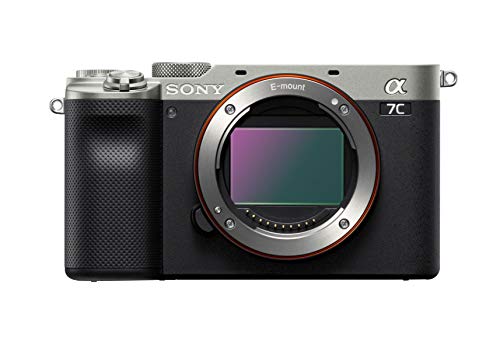
Sony Alpha 7C Full-Frame Mirrorless Camera (Silver)
Sony Alpha A6100 Mirrorless Camera with 16-50mm Lens

Sony Alpha ZV-E10 APS-C Vlog Camera Kit (Black)
Canon EOS R8 Mirrorless Camera Body (Full-Frame)

Sony Alpha a6700 APS-C Mirrorless Camera Bundle

Panasonic LUMIX FZ300 Long Zoom Digital Camera (Black)
Taking A Closer Look At The Options
The Panasonic LUMIX S5 sits in a sweet spot that makes sense for hobbyists who split time between stills and video. The body houses a 24.2-megapixel 35mm full-frame CMOS sensor, and that big sensor matters for the kind of low-light shooting most people want when stepping up from a phone or compact: dim restaurants, late weddings, indoor sports. With 5-axis in-body image stabilization built in, hand-held video at moderate walking speeds stays steady enough for casual YouTube work, and L-Mount lens compatibility opens a wide third-party ecosystem.
For most creators moving up from entry-level mirrorless, the LUMIX S5 feels like the camera that finally lets them stop apologizing for their gear. The flip screen helps with vlogging and self-recording, while WiFi makes phone transfers painless for social posts. Compared to the Canon EOS R6 Mark II up next, the S5 leans harder toward video features at a friendlier starting cost.
Everyday Advantages
- 24.2MP full-frame sensor delivers the wide dynamic range and clean high-ISO output that defines this category.
- 5-axis Dual I.S. helps hand-held stills at slow shutter speeds and keeps walking video steady for casual vlogs.
- 4K 60p video recording covers the resolution and frame rate most hybrid shooters actually use.
- L-Mount compatibility gives access to a deep lineup of Panasonic and Sigma lenses without locking into a closed system.
- Flip screen and WiFi make it approachable for self-recording and quick phone sharing on trips.
Worth Noting
- Autofocus for fast-moving subjects trails behind the class-leading Canon systems, so sports shooters may notice the gap.
- The L-Mount lens library has grown but still offers fewer native options than Canon RF or Sony E mounts.
- Battery life tends to fall short on long video-heavy shoot days, so carrying a spare is wise.
Key Specs
Who Will Love This
Hybrid creators splitting time between stills and 4K video who want full-frame image quality without crossing into flagship pricing.
Look Elsewhere When
Sideline sports photographers chasing fast autofocus should consider the Canon EOS R6 Mark II reviewed below instead.
Canon’s EOS R6 Mark II pairs a 24.2-megapixel full-frame CMOS sensor with the DIGIC X processor, and that pairing shows up everywhere from burst shooting to subject tracking. Continuous shooting at high frames per second matters when a toddler tears across the living room or a school soccer game gets chaotic, and Dual Pixel CMOS AF (Canon’s on-sensor phase-detect autofocus) holds focus on erratic subjects better than most competitors at this tier. The 6K video oversampling produces sharper 4K footage than the headline resolution suggests.
This body fits event photographers and parents chasing fast action equally well. The RF lens mount has matured quickly, with strong native options across focal lengths, and the in-body stabilization helps hand-held video in tight venues. Where the LUMIX S5 leans video-first, the R6 Mark II feels more like an all-rounder with serious speed.
Benefits That Matter
- 24.2MP full-frame sensor paired with the DIGIC X processor keeps noise low and detail high across ISO ranges.
- Fast continuous shooting with reliable autofocus tracking makes it a strong pick for kids, pets, and casual sports.
- Dual Pixel CMOS AF delivers smooth, confident focus for both stills and video.
- 6K oversampled 4K video produces noticeably sharper footage than non-oversampled 4K.
- The growing RF lens lineup covers wide-angle primes, telephotos, and zooms at every budget.
Trade Offs
- The body-only listing means budgeting for at least one RF lens, which adds to the total cost.
- 4K recording at high frame rates can tax the buffer, so fast UHS-II cards are recommended.
- Some entry-level owners find the menu system deeper than they need at first.
Right Fit For
Event and family photographers who shoot fast action and want one body that handles both stills and high-quality video.
Consider Something Else When
Travelers prioritizing the lightest possible full-frame body may prefer the Sony Alpha 7C later in this list.
This listing of the EOS R6 Mark II leans into Canon’s improved subject detection, which means the camera can pick out specific subjects (people, animals, vehicles) and prioritize focus on them automatically. For backyard birders, parents at sporting events, or anyone tired of fumbling with focus-point placement, that automation is the difference between missed shots and a keeper rate that feels effortless. The 24.2MP full-frame sensor and DIGIC X processor remain identical to the standard R6 Mark II, so image quality and burst performance carry over.
Where this version stands apart is the smarter autofocus brain, which feels especially valuable when shooting through light foliage or in cluttered scenes. It is essentially the same hardware as the previous pick, but tuned for shooters who let the camera do more of the focusing decisions. For users stepping up from older Canon DSLRs, the leap in subject tracking is what tends to convert them into mirrorless loyalists.
A Few Strong Suits
- Advanced subject detection identifies and tracks people, animals, and vehicles with minimal setup.
- 24.2MP full-frame sensor produces clean files at higher ISO for indoor and evening shoots.
- DIGIC X processor powers responsive autofocus and quick menu navigation.
- Reliable 6K oversampled 4K video for hybrid shooters wanting sharp footage without complex post-production.
Points To Keep In Mind
- Subject detection works best with native RF lenses, so pairing with adapted EF glass may not unlock the full benefit.
- Battery drain rises during long tracking sessions, so a spare battery belongs in the bag.
Made For
Wildlife and sports shooters who want the camera to recognize and follow the subject so they can focus on composition and timing.
Swap It Out When
Travelers chasing a smaller body should consider the Canon EOS R8 reviewed further down for a lighter full-frame alternative.
The EOS R7 sits in an interesting spot: technically APS-C rather than full-frame, but the 32.5-megapixel sensor and RF lens mount make it a serious alternative when budget matters more than sensor size. APS-C sensors are smaller than full-frame, which means the crop factor effectively extends the reach of telephoto lenses, so a 100mm lens behaves like a 160mm equivalent. For backyard bird photography and youth sports from the sideline, that extra reach is often more valuable than full-frame depth of field.
Continuous shooting at high frames per second with Dual Pixel CMOS AF tracking keeps the R7 competitive against full-frame models that cost considerably more. Compared to the LUMIX S5 reviewed first, the R7 trades some low-light depth for resolution and telephoto reach. Many wildlife photographers on a budget end up here precisely because of that math.
Strong Points
- 32.5MP APS-C sensor delivers high-resolution images with extra telephoto reach for distant subjects.
- Fast continuous shooting with reliable autofocus for sports and active wildlife.
- 4K video recording supports hybrid content creators who shoot both stills and clips.
- RF mount compatibility shares lenses with Canon’s full-frame R-series bodies, simplifying future upgrades.
Honest Caveats
- APS-C sensor produces slightly less shallow depth of field and more noise at high ISO than full-frame alternatives.
- Body-only listing means budgeting for at least one RF-S or RF lens.
Best Suited To
Wildlife and youth sports shooters who prioritize reach and resolution over full-frame image characteristics.
Not Your Match When
Portrait photographers craving the shallowest possible depth of field should look at the Canon EOS R6 Mark II reviewed earlier.
The Sony Alpha 7C earned its reputation as one of the smallest and lightest full-frame mirrorless bodies available, and that portability changes how often people actually carry a camera. A 24.2MP back-illuminated full-frame sensor produces clean low-light results, while the flip-out LCD and 5-axis in-body image stabilization help with vlogging and casual video. For travelers and street photographers who used to leave a heavier body at home, this is the camera that ends up in the bag.
Compared to the LUMIX S5, the 7C trades some video-centric features for a smaller footprint and Sony’s deep E-mount lens library. Real-time autofocus tracking for faces and eyes remains a Sony strength that carries over from higher-end bodies. The silver finish is purely cosmetic, but it does help the camera look distinctive in a market full of black bodies.
Notable Upsides
- Compact full-frame body makes daily carry realistic for travel and street work.
- 24.2MP back-illuminated sensor performs well in available light for indoor and evening shoots.
- Flip-out LCD simplifies vlogging and self-recording without third-party monitors.
- 5-axis in-body image stabilization steadies hand-held video and slow-shutter stills.
- Sony E-mount offers one of the deepest native lens lineups for any mirrorless system.
A Few Limitations
- Smaller grip can feel cramped for users with larger hands, especially with long telephotos attached.
- Viewfinder size is smaller than traditional SLR-style bodies, which may bother glasses wearers.
Key Specs
Whose Shelf It Belongs On
Travelers and street photographers who want full-frame image quality in the most portable body Sony offers.
Reach For A Different Pick When
Shooters prioritizing the absolute best subject-tracking autofocus should look at the Canon EOS R6 Mark II up earlier in this list.
The Sony Alpha A6100 is technically APS-C rather than full-frame, but for shoppers who want the Sony experience without crossing into full-frame pricing, it remains a smart starting point. The 24.2MP Exmor CMOS sensor pairs with a BIONZ X processor and front-end LSI borrowed from higher-end Sony cameras, which is why autofocus speeds around 0.02 seconds and 4K video recording fit into such a compact, affordable body. The included 16-50mm zoom covers everyday wide-angle to short telephoto use right out of the box.
For someone upgrading from a phone or compact camera, the A6100 hits a friendly learning curve: real-time autofocus tracking, a tilting screen, and a built-in electronic viewfinder all help new mirrorless users find their footing. Compared to the Canon EOS R7 reviewed earlier, the A6100 costs less and includes a starter lens, but with lower-resolution output and a smaller feature set.
Where It Helps
- 24.2MP APS-C sensor paired with BIONZ X processing delivers strong image quality for the price.
- Real-time autofocus tracking for faces and eyes simplifies portrait and family shots.
- 4K video recording covers vlog and casual content creation without stepping up to a pricier body.
- 16-50mm kit lens provides wide-angle through short telephoto coverage from day one.
Where It Is Less Suited
- APS-C sensor produces more noise at high ISO than full-frame alternatives like the Sony Alpha 7C.
- Plastic-bodied construction feels light but may not handle rough travel conditions as well as metal-bodied options.
Perfect Match For
First-time mirrorless upgraders who want Sony’s autofocus pedigree and 4K video in a friendly, lens-included package.
A Better Fit Elsewhere When
Vloggers who want a true vlog-first design with a fully articulating screen and stronger audio features should consider the Sony Alpha ZV-E10 reviewed below.
The Sony ZV-E10 was built from the ground up for solo video creators, and the small details reflect that intent. A 24.2MP APS-C Exmor CMOS sensor delivers sharp 4K video, the flip-out vari-angle LCD faces forward for self-recording, and the built-in three-capsule microphone is far better than the typical internal mic found on stills-oriented cameras. The E-mount lens system means creators can swap to a wide-angle prime for sit-down vlogs or a telephoto zoom for distant subjects.
For YouTubers, TikTok creators, and small business owners shooting product walkthroughs, this body cuts the learning curve dramatically. It is APS-C rather than full-frame, which trades some low-light depth of field for a much friendlier price point. Compared to the Sony Alpha A6100 reviewed previously, the ZV-E10 leans harder into video ergonomics at the cost of a slightly different stills experience.
What Makes Sense
- Vlog-first design with flip-out vari-angle LCD facing forward for self-recording.
- 24.2MP APS-C sensor produces sharp 4K video for social and YouTube content.
- Built-in three-capsule microphone outperforms typical internal mics on stills-oriented bodies.
- E-mount lens compatibility opens access to a vast Sony and third-party lens catalog.
Small Caveats
- Lacks an electronic viewfinder, which can complicate outdoor shooting in bright sun.
- APS-C sensor produces slightly more noise at high ISO than full-frame alternatives like the Canon EOS R8.
Feature Snapshot
Built With In Mind
Solo video creators and vloggers who prioritize face-forward shooting, simple audio, and interchangeable lens flexibility.
Skip It When
Hybrid shooters wanting stronger stills performance and better low-light depth should consider the Sony Alpha 7C reviewed earlier.
The Canon EOS R8 is the lightest full-frame RF-mount body in Canon’s lineup, which makes it a meaningful travel companion for shooters who previously avoided full-frame because of the size. The 24.2MP full-frame CMOS sensor with Dual Pixel CMOS AF II focuses confidently on people, animals, and vehicles, while 4K video at 60p covers the frame rate most hybrid creators want. Carrying this body in a small sling bag rather than a dedicated backpack changes how often it actually comes along.
For content creators working in mixed lighting, the R8 brings Canon’s color science and reliable autofocus into a more portable package. It lacks in-body image stabilization, which is a real consideration for hand-held video shooters, but it costs less than the EOS R6 Mark II while keeping the same sensor and processor. Compared to the Sony Alpha 7C, the R8 trades some size for stronger video frame rates.
Noteworthy Benefits
- Lightest Canon full-frame RF-mount body makes travel and everyday carry realistic.
- 24.2MP full-frame sensor paired with Dual Pixel CMOS AF II delivers reliable subject tracking.
- 4K 60p video covers high frame rate needs for smooth motion and slow-motion playback.
- RF mount compatibility shares lenses with higher-end R-series bodies, protecting future upgrades.
Worth Bearing In Mind
- No in-body image stabilization means relying on stabilized lenses for hand-held video.
- Battery life is shorter than larger Canon bodies, so spares are essential for long days.
Quick Facts
Who Should Grab It
Travelers and hybrid creators who want full-frame quality with Canon’s color science in the lightest RF body available.
Where A Sibling Pick Shines
Vloggers who need in-body stabilization for walk-and-talk video should consider the Sony Alpha 7C reviewed earlier.
The Sony a6700 bundle takes the APS-C a6700 and pairs it with the E PZ 16-50mm power zoom lens, an extra battery, a shoulder bag, and a charger, which adds up to a complete starter kit rather than just a body. The a6700 itself sits at the higher end of Sony’s APS-C lineup with strong autofocus and 4K video, making it a confident upgrade path for users stepping up from older Sony bodies. The included accessories remove several shopping decisions for first-time buyers.
For shoppers who want a ready-to-shoot package without piecing together a bag, battery, and charger separately, this listing covers the essentials. The 16-50mm power zoom is motorized, which matters for smooth video zooms during vlogs. Compared to the Sony A6100 reviewed earlier, the a6700 offers a more advanced feature set with a higher starting price.
Useful Highlights
- Complete bundle includes camera, lens, extra battery, shoulder bag, and charger.
- E PZ 16-50mm power zoom provides smooth motorized zooming for video.
- APS-C sensor with Sony’s advanced autofocus supports confident subject tracking.
- Manufacturer warranty through Sony adds reassurance for first-time upgraders.
Practical Considerations
- Bundles can occasionally ship older firmware revisions that may need updating out of the box.
- APS-C sensor produces more noise at high ISO than full-frame alternatives like the Canon EOS R8.
The Right Fit
First-time Sony upgraders who want a single purchase that covers body, lens, and core accessories without separate shopping.
Consider Something Else When
Shooters prioritizing full-frame image quality for portraits and low light should consider the Sony Alpha 7C reviewed earlier.
The Panasonic LUMIX FZ300 sits outside the mirrorless category entirely, and that is precisely why it earns a place here. As a bridge camera, it pairs a fixed Leica DC 24X zoom lens (25-600mm equivalent) with a splash and dustproof body, so users can shoot in rain, snow, and dusty conditions that would threaten interchangeable-lens systems. The bright f/2.8 aperture holds across the entire zoom range, which is rare at this price and matters for low-light telephoto shots.
For outdoor enthusiasts, casual birders, and travelers who prefer one sealed camera over a body-and-lens kit, the FZ300 delivers without the maintenance headaches. 4K video and WiFi round out a feature set that punches above its modest megapixel count. Compared to the interchangeable-lens options reviewed above, the FZ300 trades sensor size and lens flexibility for simplicity and weather sealing.
Real-World Strengths
- Splash and dustproof body handles rain, snow, and dusty trails that would challenge mirrorless systems.
- Leica DC 24X zoom covers wide-angle through serious telephoto without swapping lenses.
- Constant f/2.8 aperture across the zoom range supports low-light telephoto shooting.
- 4K video and WiFi provide modern capture and sharing features in a single fixed-lens package.
Factors To Consider
- Smaller 1/2.3-inch sensor produces more noise and less shallow depth of field than larger formats.
- Fixed lens means no upgrade path for users who later want wider apertures or different focal lengths.
Who Will Love This
Outdoor travelers and casual wildlife shooters who want one weather-sealed camera with a long zoom and no lens-swapping required.
Look Elsewhere When
Photographers planning to grow into different focal lengths should consider the Panasonic LUMIX S5 reviewed first in this list.
What To Weigh Before Choosing Your Next Camera Body
A full-frame sensor delivers a specific look: shallow depth of field for portraits, cleaner files at high ISO for indoor events, and wider dynamic range for high-contrast scenes. If those characteristics define the images you want to make, prioritize a body with a full-frame sensor. If telephoto reach, lighter weight, or a tighter budget matters more, a high-resolution APS-C body like the Canon EOS R7 or Sony a6700 can stretch your dollars further.
Lens mount ecosystems matter as much as the camera body itself. Canon RF, Sony E, and Panasonic L-Mount each offer deep native lineups, but the lenses you buy today will likely outlive the body. Check that the system you choose has the focal lengths and aperture choices you’ll actually use, since third-party options have grown but native glass remains the safest investment.
Video and stills priorities shape which body feels right at home. Hybrid creators leaning toward vlogs and YouTube content benefit from flip screens, microphone inputs, and strong autofocus during recording, which is why the Sony ZV-E10 and Canon EOS R8 earn their places. Stills-first shooters chasing sports and wildlife should weigh burst rates, subject detection, and lens reach more heavily.
Ergonomics and weight determine whether the camera actually gets used. A heavy body left at home captures nothing, so the lightest full-frame option that fits your hand often outperforms a more capable camera that stays in a drawer. Try to handle a body in person when possible to confirm grip comfort and button placement before committing.
Smart Choices Before You Click
Common Shopping Slip Ups
Many shoppers focus on megapixel count and overlook autofocus and lens ecosystem, which matter more in everyday shooting. Others chase the latest body and under-budget for lenses, only to discover that a kit with mid-range glass produces better images than a premium body paired with a cheap starter lens. Reading owner feedback about long-term reliability can also reveal issues that spec sheets do not list.
What The Higher Tier Buys
Stepping up to flagship bodies typically adds weather sealing, faster burst rates, deeper buffers, and more advanced autofocus subject detection. For working professionals shooting paid events, those differences justify the cost quickly. For hobbyists shooting a few weekends a month, a mid-tier body usually delivers the same image quality in calmer conditions, leaving more budget for lenses and accessories.