Analog photography keeps pulling photographers back to the deliberate pace and distinctive grain of 35mm film. Whether you’re a working pro shooting editorial assignments, a serious enthusiast building a darkroom practice, or a hybrid shooter adding film to a digital kit, the right body, lens, and stock shape the final frame as much as your eye does. This roundup cuts through the noise with ten picks that cover cameras, lenses, and the film that loads them.
Your Options, Compared

SHD 100 Black and White 35mm Film (36 Exposures)
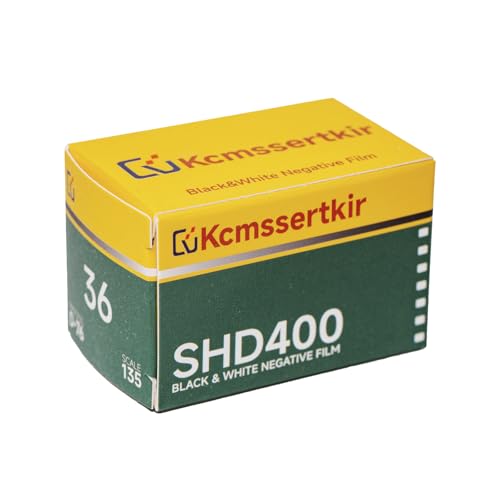
SHD 400 Black and White 35mm Film (36 Exposures)

Kodak Drake 35mm One-Time-Use Camera Bundle

Meike 55mm F1.4 AF STM APS-C Portrait Lens (Sony E)
Meike 85mm F1.8 SE Mark II STM AF Portrait Lens (Canon EF)

Meike 35mm F2.0 AF STM Portrait Lens (Sony E)

KODAK Snapic A1 35mm Film Camera (Ivory White)

C200 Color Negative Film ISO 200 35mm (36 Exposures)

Nikon F6 AF 35mm Film SLR Camera (Body Only)

Canon EOS Elan 7 35mm SLR Camera (Body Only)
A Breakdown Of The Leading Choices
Slower monochrome film rewards patience. ISO 100 is built for bright, controllable conditions: full sun, studio strobes, or window-lit interiors where you want crisp tonal gradations rather than visible grain. For a working photographer shooting architectural studies or editorial fashion on location at midday, that speed means deeper midtones and tighter detail in highlights.
You trade flexibility for image quality. In a dim concert hall or a candlelit dinner, that low ISO will leave you reaching for a tripod or pushing the film in development. Compared to the SHD 400 covered later, this roll is the disciplined, detail-first pick for photographers who plan their light.
What Stands Out
- ISO 100 supports fine grain and smooth tonal transitions in well-lit scenes.
- 36 exposures per roll means a full project arc without frequent reloads.
- Standard 135 format fits every mechanical and electronic 35mm body in this roundup.
- Produces classic monochrome prints suited for traditional darkroom enlarging.
Things To Consider
- Limited use in low light without a tripod or flash support.
- Owners commonly report pushing this stock yields more noise than higher-ISO options.
Feature Snapshot
Whose Shelf It Belongs On
Architectural, landscape, and studio photographers shooting in bright or fully controlled light who want maximum detail from monochrome stock.
Look Elsewhere When
You mostly shoot indoors, at night, or in unpredictable weather, in which case the SHD 400 Black and White 35mm Film (36 Exposures) covers your scenarios better.
Step the ISO up to 400 and the working world opens. Street shooters chasing fleeting expressions, documentary photographers in mixed lighting, and anyone shooting handheld indoors can keep moving without a flash. The grain structure is visible without becoming the subject, which gives portraits and reportage a classic newspaper feel.
Versatility costs a little smoothness. Pushing this stock further to 1600 is workable, but expect more pronounced grain and slightly compressed shadow detail than the slower SHD 100. For unpredictable lighting where you cannot control the sun, that compromise usually pays off.
Strengths Worth Knowing
- ISO 400 handles overcast skies, indoor scenes, and twilight without flash.
- Visible grain structure adds character to documentary frames.
- Push-processes acceptably for low-light event coverage.
- Standard 36-exposure count keeps reloads infrequent.
- Compatible with every 35mm body covered in this guide.
Worth Noting
- Grain is more apparent than slower stocks in large-format prints.
- Shadow detail compresses when pushed aggressively in development.
- Not ideal for studio strobe work where a fine-grain 100-speed stock produces cleaner enlargements.
Right Fit For
Street, travel, and event photographers who work across changing light and want one reliable monochrome stock to load.
Consider Something Else When
Most of your work happens in bright daylight or controlled studios, in which case the SHD 100 Black and White 35mm Film (36 Exposures) gives cleaner midtones.
Disposable cameras get a bad rap among gear snobs, yet they solve a real problem. The Kodak Drake arrives preloaded with 27 exposures of Ultra Max 800, a high-speed color stock that forgives the dim interior of a wedding reception, a music venue, or a candlelit dinner. There is no metering, no focus ring, no menu, just point and press.
The trade-off is obvious. You surrender creative control, get a fixed plastic lens, and receive roughly 27 frames per camera. For a working photographer who wants a backup body for risky shoots or a curious newcomer exploring analog without buying a full SLR, that simplicity is the point.
The Practical Payoff
- Built-in flash handles dim interiors and evening events.
- Preloaded 27-exposure Ultra Max 800 color film works in mixed light.
- Compact plastic body fits a jacket pocket or small bag.
- Beginners can shoot without learning exposure or focus settings.
- Low-risk format for risky environments like beaches, boats, or crowds.
Trade Offs
- Plastic lens limits sharpness, especially in low light at the edges.
- No exposure compensation or focus control for deliberate compositions.
- Single-use design means the entire body is discarded after development.
Who Should Grab It
First-time film shooters, vacationers, and working pros needing a cheap, disposable backup for risky assignments.
Skip It When
You want full creative control over focus, depth of field, and aperture, in which case the KODAK Snapic A1 35mm Film Camera (Ivory White) gives you a reusable body with the same simplicity.
A 55mm prime on an APS-C Sony body behaves like an 82mm full-frame equivalent, putting it firmly in short-telephoto territory. That focal length, paired with a bright f/1.4 maximum aperture, produces flattering subject isolation for headshots and environmental portraits. The STM stepping motor delivers silent, smooth autofocus that works well for both stills and video shooters.
Built specifically for Sony’s APS-C E-mount lineup, this lens covers models like the a6400, a6000 series, a6500, and a6700. Linear-response manual focus allows precise adjustment for critical focus pulls. For working photographers already in the Sony ecosystem who want a fast portrait prime without the brand-name premium, this is a worthy addition.
Features That Help
- Wide f/1.4 aperture produces shallow depth of field for portraits.
- STM stepping motor gives quiet, smooth autofocus for video work.
- Supports electronic aperture adjustment and EXIF data transmission.
- Linear-response manual focus enables precise framing adjustments.
- Compatible with a wide range of Sony APS-C bodies.
Points To Keep In Mind
- APS-C coverage only; full-frame Sony bodies will vignette.
- f/1.4 wide open can show field curvature on close subjects.
Feature Snapshot
Best Suited To
Sony APS-C shooters building a portrait kit who prefer a fast normal-to-short telephoto field of view.
A Better Fit Elsewhere
You shoot full-frame Sony bodies like the a7 IV or a7R V, in which case the Meike 35mm F2.0 AF STM Portrait Lens (Sony E) covers the wider documentary angle natively.
Eighty-five millimeters remains the gold-standard portrait focal length for full-frame work. The Mark II version of this Meike optic keeps the classic 85mm framing and adds a stepping motor for cleaner autofocus on modern Canon DSLRs. With a minimum focus distance of 0.65m and a maximum magnification of 0.17x, it handles head-and-shoulders portraits and tighter detail crops.
The aperture range runs from f/1.8 to f/16, giving wide-open subject separation for environmental portraits and stopped-down sharpness for group shots. Compatibility spans a long list of Canon EF-mount bodies, including the 5D Mark IV, 6D Mark II, 90D, Rebel T7, and older models like the 5D Mark III and 7D Mark II.
What It Does Well
- Classic 85mm focal length on full-frame Canon bodies.
- f/1.8 maximum aperture produces creamy background blur.
- STM autofocus motor supports smoother focusing during video capture.
- 0.65m minimum focus distance suits tight headshot framing.
- Wide compatibility across Canon EF-mount DSLR lineup.
Honest Caveats
- EF-mount only; Canon RF mirrorless bodies need an adapter.
- At 0.17x magnification, it is not a dedicated macro optic.
Perfect Match For
Canon DSLR owners shooting weddings, senior portraits, and editorial work who want a reliable short telephoto prime.
Swap It Out When
You primarily shoot wide environmental portraits or street scenes, in which case the Meike 35mm F2.0 AF STM Portrait Lens (Sony E) offers a more flexible working distance, assuming you are on the Sony platform.
Thirty-five millimeters on full-frame mirrors the human eye’s natural field of view, making this focal length a workhorse for documentary, travel, and editorial work. The f/2.0 maximum aperture is bright enough for low-light handheld shooting while keeping the lens compact and lightweight for everyday carry. Photographers covering events, city streets, or family gatherings will appreciate the versatility.
The lens supports Sony’s full-frame E-mount bodies including the a7 IV, a7R V, a7C II, and a9. Eye-detection autofocus and a Type-C firmware upgrade port round out a feature set aimed at hybrid shooters. Compared to the wider f/1.4 portrait prime covered earlier, this lens sacrifices some shallow depth-of-field drama in exchange for a more universal focal length.
Where It Delivers
- Natural 35mm focal length suits documentary and street photography.
- STM autofocus motor enables smooth, quiet focusing for video.
- Eye-detection AF support for sharp portraits on modern Sony bodies.
- Type-C firmware upgrade port extends the lens’s working life.
- Compact, full-frame-friendly design travels well.
A Few Limitations
- f/2.0 is less dramatic for subject isolation than f/1.4 options.
- Wide-angle distortion requires care for close-up portrait framing.
Feature Snapshot
Who It Suits Best
Sony full-frame shooters who want one versatile prime for street, travel, and environmental portraits.
Another Choice May Suit
You want maximum subject separation for headshots, in which case the Meike 85mm F1.8 SE Mark II STM AF Portrait Lens (Canon EF) offers more dramatic background blur, provided you shoot Canon.
The Snapic A1 fills the gap between disposable cameras and full manual SLRs. This reusable point-and-shoot body runs on a single AAA battery and accepts standard 35mm film, so you reload and keep shooting instead of discarding the camera after 27 frames. The 3-element glass lens and 2-zone focusing handle everyday subjects at a reasonable price for newcomers.
Creativity extends beyond single frames. Built-in auto flash covers dim interiors, and a multiple-exposure function lets you layer two scenes on a single frame, a nice creative option for analog hobbyists. Film and battery are not included, so factor those into your starter budget before you commit.
Well-Handled Touches
- Reusable design reduces long-term cost compared to disposable bodies.
- Multiple-exposure function enables creative layered frames.
- Compact, lightweight body fits pockets and small bags.
- Auto flash with red-eye reduction handles indoor portraits.
- 2-zone focus keeps operation simple for beginners.
Some Limits To Know
- Film and AAA battery sold separately.
- 2-zone focus is less precise than rangefinder or SLR focusing.
Made For
Analog beginners and casual shooters who want a reusable, low-fuss 35mm body for everyday carry.
Reach For A Different Pick When
You want professional-grade manual control and interchangeable lenses, in which case the Nikon F6 AF 35mm Film SLR Camera (Body Only) covers that workflow.
ISO 200 color negative film is the daylight workhorse for analog shooters. The C200 delivers natural color saturation, smooth grain, and reliable exposure latitude, forgiving enough to handle mixed lighting on a sunny afternoon. For travel, street, and outdoor portrait work in predictable daylight, this speed strikes a useful balance between fine grain and handheld flexibility.
Processing is straightforward. This film uses the universal C-41 color negative process, the same chemistry most labs run daily for color prints and scans. You are not locked into specialty labs or boutique development. Compared to the slower SHD 100 monochrome roll, this stock trades fine-grain monochrome detail for full-color versatility in everyday light.
Why It Works Well
- ISO 200 daylight balance suits most outdoor shooting.
- Standard C-41 process works at virtually any photo lab.
- 36 exposures per roll supports a full day’s shooting.
- Natural color saturation suits travel and street work.
Practical Considerations
- Less forgiving in dim interiors without flash or a tripod.
- Smooth grain is less pronounced than the SHD 400 monochrome stock for character-driven frames.
Who Will Love This
Outdoor and travel photographers who want reliable color film processed anywhere with no specialty chemistry.
Not Your Match When
You work mostly indoors or after dark, in which case the Kodak Drake 35mm One-Time-Use Camera Bundle ships preloaded with high-speed color stock ready for low light.
The Nikon F6 is the final flagship in a line stretching back to 1959. As Nikon’s last professional 35mm SLR, it pairs modern autofocus with the mechanical reliability that made the F-series legendary. The Multi-CAM 2000 autofocus module covers a wide area and works in light as dim as EV -1, meaning the camera still focuses when most eyes struggle.
Exposure control runs the full manual-to-automatic spectrum: Programmed Auto, Flexible Program, Shutter Priority, Aperture Priority, and full Manual. The B-type BriteView focusing screen is bright enough for manual focus confirmation, and seven interchangeable focusing screens let you tune the viewfinder to your style. For photographers who want the last word in professional 35mm bodies, this is the platform.
Useful Touches
- Multi-CAM 2000 autofocus module with broad AF area coverage.
- Five exposure modes covering full manual to programmed auto.
- Compatible with virtually all Nikon F-mount lenses (with minor exceptions).
- Bright B-type BriteView focusing screen with seven optional replacements.
- AF detection range from EV -1 to EV +19 at ISO 100.
Where It Is Less Suited
- Body only; lenses sold separately.
- Premium flagship pricing reflects professional positioning.
- Heavier than entry-level SLR bodies.
Feature Snapshot
Built With In Mind
Working professionals, photojournalists, and serious collectors who want Nikon’s most advanced film SLR for long-term use.
Where A Sibling Pick Shines
You want modern Canon AF ergonomics at a more accessible tier, in which case the Canon EOS Elan 7 35mm SLR Camera (Body Only) delivers reliable 7-point AF in a lighter body.
The Elan 7 sits in Canon’s mid-tier enthusiast lineup, and it punches above its class. Seven-point wide-area autofocus covers off-center subjects better than older 3-point systems, while the 35-zone evaluative metering reads light across the frame for balanced exposures in mixed conditions. Silent rewind mode is a thoughtful touch for quiet events and ceremonies.
For Canon shooters who want modern autofocus and metering without the flagship price tag, the Elan 7 is a sensible step. The fixed laser matte screen with seven focusing points gives clear focus confirmation for manual focus lovers too. Body only means you bring your own EF-mount glass, which is where Canon’s massive lens ecosystem becomes the real advantage.
Useful Strengths
- 7-point wide-area autofocus handles off-center subjects.
- 35-zone evaluative metering for balanced exposures.
- High-speed or silent rewind modes for different shooting contexts.
- Compatible with the full Canon EF-mount lens lineup.
- Fixed laser matte screen with seven focusing points for manual focus.
Factors To Consider
- Body only; no lens included in the package.
- Older mid-tier design lacks flagship build sealing.
The Right Fit
Canon enthusiasts and working photographers on a budget who want reliable autofocus and metering in a film body.
Look Elsewhere When
You demand flagship durability and the widest AF coverage available, in which case the Nikon F6 AF 35mm Film SLR Camera (Body Only) sits at the professional ceiling.
Factors Worth Weighing When Choosing 35mm Film Cameras For Professional
Body, Lens, And Film All Pull Their Weight
A complete analog kit is more than just the camera. The body determines your focusing system, metering, and exposure control, while the lens shapes sharpness, focal length, and maximum aperture for low-light depth of field. Film ties it all together by setting your ISO, color palette, and grain character. Working photographers tend to build their kit around one strong body, two or three prime lenses that match their style, and a small rotation of film stocks for different conditions.
Focal Length And Aperture Decide How You See
A 35mm prime tells a different story than an 85mm prime, even on the same body. Wider focal lengths include more environment and feel documentary; longer focal lengths compress the scene for flattering portraits. Maximum aperture matters equally: an f/1.4 lens isolates subjects with creamy background blur, while an f/2.0 optic keeps things compact and stops down cleanly for group shots or low-light street work. Matching focal length and aperture to your subject is where the real creative decisions happen.
Autofocus And Metering Shape Modern Workflows
Older manual-focus SLRs force you to stop and meter each scene, which slows you down but builds deliberate habits. Modern AF bodies like the Nikon F6 or Canon Elan 7 let you work at the pace of changing subjects. For event photographers and journalists, faster AF and reliable evaluative metering mean more keepers. For landscape and studio shooters, slower manual systems are often more than enough.
Film Speed And Processing Match Your Lighting
ISO 100 and 200 stocks reward bright, controlled light with fine grain and smooth tones. ISO 400 handles overcast skies and indoor scenes without flash. ISO 800 and above excel in dim venues and fast-moving events, but at the cost of visible grain. Pair your film speed with how you actually shoot, and confirm that local labs process your chosen stock before committing to a multi-roll project.
What Separates These Picks In Real Use
Mistakes Shoppers Run Into
One common trap is buying a flagship film SLR before owning a single roll of processed film. The Nikon F6 is a stunning tool, but it costs real money and locks you into a specific lens mount. Beginners often find a reusable point-and-shoot or an inexpensive prime lens a better starting point.
Another mistake is mismatching lens mount to camera body. A Canon EF lens will not mount natively on a Sony E body without an adapter, and adapted lenses can lose autofocus speed. Confirm mount compatibility before adding a lens to your kit, and check that any adapter preserves electronic aperture control and EXIF data if those features matter to your workflow.
Finally, do not overlook film processing logistics. Specialty stocks like instant or sheet film cannot be processed at every lab. Standard 35mm C-41 color and most monochrome films run at virtually any photo lab. Choosing a stock that your local lab handles saves time and avoids shipping costs.
What Higher-Tier Cameras Actually Buy You
Premium film SLRs like the Nikon F6 bring faster, wider-coverage autofocus, more accurate metering, and rugged build quality that survives daily professional use. Mid-tier bodies like the Canon Elan 7 still produce excellent images but with simpler AF systems and lighter construction.
For working photographers shooting events, the upgrade to flagship AF translates directly into more keepers when subjects move unpredictably. For landscape and portrait shooters working at slower paces, the difference matters less. Spending more makes sense when your workflow demands the speed and reliability; spending less makes sense when your style favors deliberate, controlled shooting.
Frequently Asked Questions
What 35mm film camera works best for beginners learning analog photography?
A reusable point-and-shoot body like the KODAK Snapic A1 keeps things simple while letting you reload and shoot multiple rolls. Pair it with an inexpensive color negative film and you can focus on composition and exposure without juggling multiple lenses.
Can professional photographers still rely on 35mm film for paid work?
Yes, especially for editorial, fashion, wedding, and fine-art assignments where film look is part of the brief. Many working photographers keep a flagship SLR like the Nikon F6 or a mid-tier body like the Canon Elan 7 alongside their digital kits.
Which 35mm film speed handles the most lighting situations?
ISO 400 is the most versatile speed for changing light. The SHD 400 Black and White 35mm Film covers overcast skies, indoor scenes, and handheld street work without forcing a flash. ISO 800 color stocks like the one preloaded in the Kodak Drake disposable handle even darker venues.
Do autofocus 35mm SLRs accept older manual-focus glass?
Most modern AF bodies accept older manual-focus lenses, but autofocus only works on lenses with built-in AF motors. Nikon F-mount bodies accept decades of Nikkor glass, while Canon EF bodies work with the full EOS lens lineup, both AF and manual.
How do I match a lens focal length to my subject?
Wide 35mm primes suit documentary, street, and travel work. Short telephoto 55mm and 85mm primes suit portraits and headshots. Longer telephotos beyond 100mm are reserved for sports, wildlife, and distant subjects where you cannot get close.
Closing Remarks
Picking the right 35mm film kit comes down to how you actually shoot. A working pro covering events wants flagship AF and a versatile prime; a beginner exploring analog wants a simple reusable body and a forgiving film stock. Use this roundup as a starting point, match the gear to your real subjects, and trust your eye once you’re behind the viewfinder.