Dobsonian telescopes make nights under the stars feel approachable, with simple mount mechanics and large mirrors that pull in real detail. The trick is matching aperture, focal length, and mount weight to where you actually observe, not chasing a single big number. Parents shopping for a curious eight-year-old, hobbyists chasing faint galaxies, and casual backyard skywatchers all benefit from different trade-offs.
This roundup walks through ten options spanning beginner refractor kits, smartphone-guided Newtonians, a serious 10-inch Dobsonian, and a useful accessory that sharpens views faster. Each pick includes honest strengths, real trade-offs, and a clear sense of who it suits best.
The Picks In Brief

Hawkko Telescope Kit for Kids 80mm Aperture 500mm

SVBONY 10mm Eyepiece Telescope 1.25″ 62-Degree Aspheric
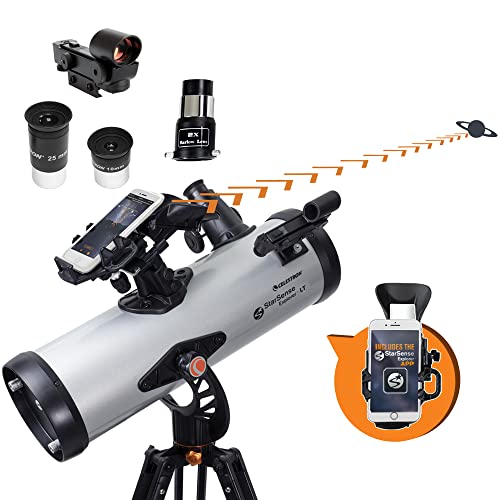
Celestron StarSense Explorer LT 114AZ Newtonian
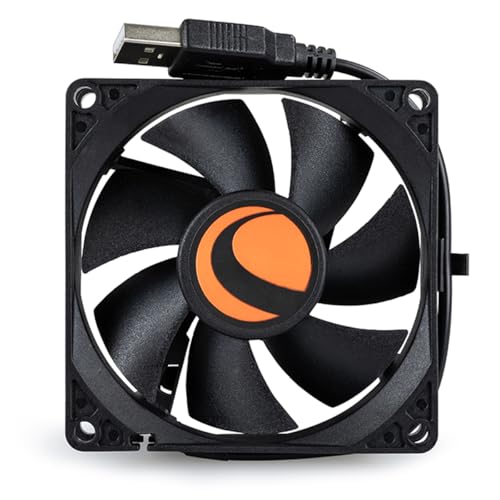
Celestron USB Cooling Fan for StarSense Dobsonian

70mm Telescope for Kids & Adults with Space Puzzles

Feicosky 90mm Aperture 600mm Telescope with Stool
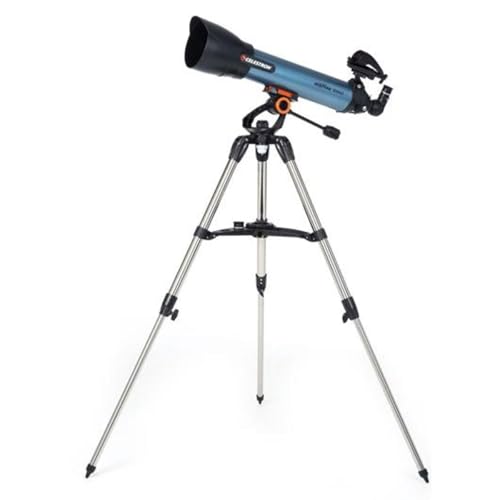
Celestron Inspire 100AZ Beginner Refractor Telescope

Celestron StarSense Explorer 10″ App-Enabled Dobsonian
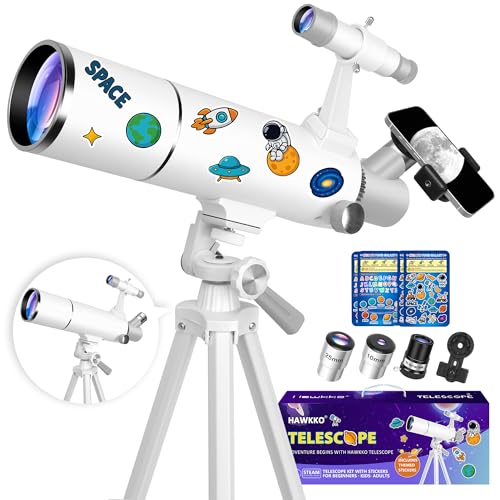
Hawkko 80mm Aperture 500mm Telescope for Beginners

Feicosky 80mm Portable Telescope Kit with Pop-Up Tent
Taking A Closer Look At The Options
The Hawkko 80mm refractor lands in that sweet spot where a child can carry it from a closet to the backyard without help. Aperture refers to the diameter of the front lens, and at 80mm it gathers enough light to show lunar craters, the moons of Jupiter, and brighter star clusters with crisp definition.
The kit includes a moon learning booklet and themed stickers, which turn the telescope into a small project rather than just a gadget. For most backyards, the 500mm focal length keeps views wide enough for handheld aiming, and the included accessories cover the basics so there’s no immediate accessory run.
Positive Takeaways
- Refractor design means no mirror alignment, so first-time users skip the fiddly collimation step.
- Educational booklet frames moon-watching as a learning activity, helpful for parents and teachers.
- Lightweight tube and simple mount make it approachable for an eight-year-old to set up alone.
- 80mm aperture is a noticeable step up from entry-level 50mm or 60mm starter scopes.
Things To Consider
- Refractor optics at this size show some chromatic aberration (a faint color fringe) on bright targets like the Moon’s edge.
- Plastic finder and stock eyepieces commonly feel flimsy after a season of regular handling.
Feature Snapshot
Built With In Mind
Kids aged 8 to 12 who want a hands-on introduction, plus parents looking for an educational gift that goes beyond a cardboard box.
Look Elsewhere When
Shoppers wanting smartphone-guided aiming should consider the Celestron StarSense Explorer LT 114AZ Newtonian instead, since the Hawkko kit does not include app-based navigation.
The SVBONY 10mm eyepiece is an accessory, not a full telescope, and that matters. An eyepiece determines magnification and field of view, the visible window through the scope, and a 62-degree apparent field of view feels noticeably wider than the 40-to-50-degree stock eyepieces that ship with most starter scopes.
Slipping it into any telescope with a 1.25-inch focuser (the tube that holds the eyepiece) makes a familiar scope feel new again. For existing scope owners chasing sharper planetary views, this is one of the smallest, lowest-cost upgrades you can make.
Practical Pluses
- 10mm focal length is a strong middle-ground magnification for planets and the Moon.
- 62-degree apparent field of view keeps objects from drifting out of sight too quickly.
- Standard 1.25-inch barrel fits most beginner and intermediate telescopes.
- Aspheric element design (a specially shaped lens) helps reduce distortion toward the edges of the field.
Points To Note
- Does not include a scope, so it only helps if you already own a compatible telescope.
- Eye relief (the distance your eye needs from the lens to see the full view) tends to feel tight for eyeglass wearers.
Whose Shelf It Belongs On
Existing telescope owners who feel limited by the stock eyepiece and want sharper planetary or lunar detail.
Reach For A Different Pick When
First-time skywatchers should skip straight to the Celestron Inspire 100AZ Beginner Refractor Telescope, since this eyepiece is only useful paired with a scope.
The StarSense Explorer LT 114AZ solves the biggest beginner problem: finding things in the dark. Instead of squinting at star charts, you dock your smartphone into the included cradle and follow on-screen arrows to planets, bright stars, and galaxies.
The 114mm Newtonian reflector pulls in more light than the 80mm refractors earlier in this list, which means fainter deep-sky objects finally show up. The altazimuth mount (a simple up-down, left-right mount) is heavier than a beginner refractor, so you may find it best carried out already assembled.
Standout Benefits
- StarSense app dramatically shortens the learning curve for new observers.
- 114mm aperture gathers noticeably more light than 70mm or 80mm scopes.
- Newtonian reflector design gives sharp views without chromatic color fringing.
- Sturdy manual mount feels solid during tracking adjustments.
Honest Caveats
- Reflector tube needs occasional mirror collimation (alignment) after bumps or transport.
- Phone dock adds bulk, so the overall package is heavier than simpler refractor kits.
Spec Overview
Made For
First-time telescope owners who want guided finding help and enough light grasp to explore beyond the Moon.
Consider Something Else When
Shoppers planning to keep things simple for a child should consider the Hawkko Telescope Kit for Kids 80mm Aperture 500mm, which avoids smartphone setup altogether.
The Celestron USB Cooling Fan is a tiny accessory with a very specific job. Reflector mirrors store heat from indoors, and that heat warps views until the glass cools to outside air temperature. The fan mounts to the rear cell of the mirror and accelerates the cooling process.
Plenty of owners report crisper, better-focused views after running the fan for 15 to 30 minutes instead of waiting an hour. It’s a niche upgrade, but for anyone who owns a StarSense Explorer 10-inch Dobsonian or a compatible reflector, the difference during the first hour outside is meaningful.
Where It Delivers
- USB-powered, so it works from a phone charger or power bank.
- Specifically designed for the StarSense Explorer 10-inch Dobsonian rear cell.
- Speeds up thermal equilibration, the process of the mirror matching outside air temperature.
Worth Noting
- Only useful if you already own a compatible large reflector telescope.
- Requires a USB power source during use, which adds one cable to manage in the dark.
Who Should Grab It
Dobsonian and reflector owners who hate the long wait for sharp views after hauling a cool mirror into warm night air.
Skip It When
Refractor owners like those using the Hawkko Telescope Kit for Kids 80mm Aperture 500mm will see no benefit, since refractors do not suffer from mirror heat issues.
This 70mm refractor targets the casual entry point. With fully coated optics (glass treated with thin layers to reduce reflection and boost light transmission), the image stays crisp and bright enough for terrestrial daytime viewing as well as basic Moon observation.
The included space puzzles add a quiet learning angle for kids who burn through toys quickly. You may find this is a better gift than a serious instrument, since it doubles as an activity kit rather than a single-purpose tool.
The Practical Payoff
- Refractor design is low-maintenance with no mirror alignment to worry about.
- Coated optics improve contrast for daytime nature viewing too.
- Lightweight aluminum tripod is easier for younger kids to position.
- Space puzzles extend the kit’s value beyond observation.
Trade Offs
- 70mm aperture is noticeably smaller than the 80mm and 90mm refractors in this list.
- Puzzle inclusion feels like filler if the recipient is purely a stargazing enthusiast.
Feature Card
Best Suited To
Casual beginners and gift-givers who want a low-fuss introduction with some extra activity value included.
A Better Fit Elsewhere
Anyone wanting more serious lunar and planetary detail should consider the Feicosky 90mm Aperture 600mm Telescope instead, since the larger aperture gathers noticeably more light.
The Feicosky 90mm refractor feels like the sensible middle step. Aperture jumps to 90mm, gathering more light than the 70mm and 80mm scopes earlier in this roundup, and the 600mm focal length keeps magnification usable without a heavy mount.
The folding stool and adjustable tripod make this a portable kit rather than a permanent backyard fixture. Fully multi-coated optics help with contrast, and depending on your local seeing conditions, you may find detail on Jupiter’s cloud bands and Saturn’s rings emerging for the first time.
A Few Strong Suits
- 90mm aperture is a meaningful jump up from common 70mm and 80mm beginner scopes.
- Folding stool adds comfort during long observation sessions.
- Fully multi-coated optics boost light transmission for brighter views.
- Adjustable tripod fits a range of viewer heights, including seated observers.
Small Caveats
- Heavier than smaller refractors, so younger kids may need help carrying it outside.
- Chromatic aberration becomes more visible at higher magnifications on bright targets.
Who It Suits Best
Backyard observers stepping up from a starter scope who want sharper planetary detail without jumping to a full Dobsonian.
Swap It Out When
Shoppers ready for serious deep-sky exploration should consider the Celestron StarSense Explorer 10″ App-Enabled Dobsonian, which offers far more light grasp for faint galaxies.
The Inspire 100AZ is Celestron’s “complete kit” answer to beginner observing. The 100mm aperture is the largest in the Inspire line, and the short tube offers a wider field of view suited to fainter, larger deep-sky objects like the Andromeda Galaxy.
The included phone adapter makes it easy to share moon photos without extra purchases, and the asymmetric mount has a thoughtful design that doubles as a storage compartment for accessories. For most backyards, this is the all-in-one bundle that doesn’t leave you hunting for missing pieces.
Useful Strengths
- 100mm aperture offers noticeably brighter views than the 80mm Hawkko earlier in this roundup.
- Built-in phone adapter captures lunar and planetary photos without separate purchases.
- Asymmetric mount design includes integrated accessory storage.
- Fully coated glass optics provide solid contrast for the price tier.
Points To Keep In Mind
- Shorter focal length means higher magnifications require steady hands and good seeing conditions.
- Altazimuth mount is heavier than the smaller beginner refractors.
The Right Fit
Beginners who want a complete observing kit with smartphone photography built in, without buying accessories separately.
Where Another Pick Suits Better
Anyone seeking smartphone-guided target finding should consider the Celestron StarSense Explorer LT 114AZ Newtonian, since the Inspire relies on manual star-hopping rather than app navigation.
The StarSense Explorer 10-inch Dobsonian is the serious entry on this list. A 10-inch reflector gathers enough light to show structure in galaxies, nebulae, and globular clusters that are essentially invisible in smaller scopes.
The Dobsonian mount keeps things simple: a sturdy wooden base that swivels and tilts, no counterweights, no polar alignment. The StarSense app does the navigation, so you spend your time looking, not searching. It is large and heavy, but in our view that’s the trade-off for serious light grasp.
A Few Highlights
- 10-inch primary mirror pulls in far more light than any refractor in this roundup.
- StarSense app-guided navigation works at this scale, which is rare.
- Simple Dobsonian base means no electronics to power or fail in the field.
- Large aperture reveals faint nebulae and galaxies under dark skies.
Factors To Consider
- Tube and base together are heavy and bulky, limiting portability.
- Reflector optics need occasional collimation after transport.
- Mirror cooldown requires patience without the cooling fan accessory.
Quick Facts
Right Fit For
Hobbyists with a stationary observing spot or dark-sky access who want to chase faint galaxies, nebulae, and clusters.
Not Your Match When
Anyone needing a grab-and-go portable scope should consider the Hawkko Telescope Kit for Kids 80mm Aperture 500mm, which is far easier to carry outside.
This Hawkko 80mm refractor is the family-shared version, designed for kids 8 to 12 plus adults learning alongside them. The fully multi-coated lens is the meaningful upgrade over simpler coated optics, gathering more light and producing crisper lunar detail.
The 500mm focal length keeps the scope compact and forgiving for beginners. Compared to the original Hawkko kit earlier in this roundup, this version leans more toward shared observing and slightly improved optical coatings rather than educational accessories.
Positive Points
- Fully multi-coated lens gathers more light than entry-level coated refractors.
- Compact 500mm focal length keeps views wide enough for handheld aiming.
- Refractor design requires no mirror alignment, simplifying setup.
- Lightweight enough for kids to carry outside with minimal help.
Less Ideal Details
- 80mm aperture, while solid, is not a major jump from the other Hawkko model.
- Stock eyepieces are functional but limited for high-magnification planetary work.
Who Will Love This
Multi-generational households where parents and kids want to share the same scope rather than buy separate instruments.
Another Choice May Suit
Shoppers wanting more light grasp and a serious step up should consider the Feicosky 90mm Aperture 600mm Telescope, which offers noticeably brighter views.
This Feicosky 80mm kit is built around the idea that observing doesn’t have to happen at home. The pop-up tent creates a small shelter for backyard or camping use, blocking stray light and giving kids a “base camp” feel during sessions.
The phone adapter, travel backpack, and 80mm coated optics combine into a portable bundle. Depending on how far you travel and the conditions, you may find this kit’s packaging makes the difference between a telescope that gets used and one that stays in a closet.
Noteworthy Benefits
- Pop-up tent creates a darker, more focused observing environment outdoors.
- Travel backpack keeps the kit organized for camping or park trips.
- Phone adapter captures observation photos without extra purchases.
- 80mm coated optics balance light grasp with portability.
Practical Considerations
- Pop-up tent is a nice touch but adds bulk for those who don’t need it.
- Refractor optics show chromatic aberration on bright lunar edges.
Key Product Details
Perfect Match For
Campers, weekend travelers, and families who want a complete portable observing kit that travels together.
Where A Sibling Pick Shines
Shoppers who mostly observe from home should consider the Feicosky 90mm Aperture 600mm Telescope, which offers more aperture for the same backyard setup.
What Matters Most Before Choosing a Dobsonian Telescope
Aperture sits at the top of the priority list for any telescope decision. The diameter of the primary lens or mirror determines how much light the scope collects, and that single number drives almost every visible difference. A 70mm refractor shows the Moon nicely but struggles with faint galaxies. A 10-inch Dobsonian gathers so much more light that nebulae and star clusters start showing structure.
Focal length, paired with aperture, determines magnification and field of view. Shorter focal lengths like 500mm give wider, more forgiving views suited to beginners and large deep-sky targets. Longer focal lengths push magnification higher for planetary detail, but require steadier mounts and more careful aiming.
Mount type shapes the entire observing experience. Altazimuth mounts move simply up-down and left-right, which is intuitive. Dobsonian bases are a type of altazimuth mount built for large reflectors, using a swiveling wooden base for stability without complex mechanics. Equatorial mounts track the sky’s rotation but require polar alignment (angling the mount to match Earth’s rotational axis), which adds learning curve.
Portability matters more than people expect. A 10-inch Dobsonian gathers incredible light, but the tube and base together weigh enough that carrying them to a dark-sky site feels like a workout. For backyard use, that’s no problem. For camping trips, a smaller refractor kit travels more kindly.
Accessories shape long-term satisfaction. A phone adapter for photography, a moon learning booklet for kids, or a cooling fan for fast mirror equilibration each add value without requiring separate purchases. Stock eyepieces almost always benefit from an upgrade, which is why accessories like the SVBONY 10mm eyepiece earn a spot on this list.
Key Considerations Across These Picks
Pitfalls Shoppers Hit
The most common mistake is chasing magnification. Manufacturers love printing huge magnification numbers like “500x,” but the real limit is aperture and atmospheric stability. A telescope operating beyond its useful magnification range produces blurry, dim views that frustrate beginners into thinking stargazing isn’t for them.
Another trap is buying the cheapest scope possible. Entry refractors under 50mm aperture simply don’t gather enough light to make stargazing rewarding. The Moon looks fine, planets look like fuzzy dots, and galaxies are invisible. Spending modestly more for 70mm to 90mm makes a meaningful difference.
Forgetting the mount is a quiet mistake. A shaky tripod at 200x magnification turns every view into a vibrating mess. A solid altazimuth or Dobsonian base matters more than people expect, and a scope with great optics on a flimsy mount disappoints.
Where The Extra Money Goes
Spending more typically buys aperture, not features. The jump from an 80mm refractor to a 10-inch Dobsonian represents a roughly 20x increase in light-gathering area, which translates directly into what you can see.
Higher tiers also bring better coatings and glass. Fully multi-coated optics boost contrast and brightness, and the difference between a coated scope and a multi-coated one shows up on subtle targets like planetary cloud bands.
Smartphone integration adds value at the upper end. The StarSense Explorer line uses your phone as a sky-recognition tool, which lowers the learning curve dramatically. For serious beginners, that guidance often justifies the upgrade over a similar aperture scope without app support.
Build quality matters too. Heavier, sturdier mounts reduce vibration and last through years of setup and teardown. Plastic finder scopes and thin tripods are common weak points that owners commonly report replacing within a season.
Frequently Asked Questions
What is the best Dobsonian telescope for a complete beginner?
For a true first-timer, the Celestron StarSense Explorer LT 114AZ Newtonian offers smartphone-guided navigation that removes the steepest part of the learning curve, finding objects in the night sky. A 114mm aperture gathers enough light to keep the experience rewarding after the Moon.
How much aperture do I need to see the planets?
A 70mm or 80mm refractor reveals Jupiter’s moons and Saturn’s rings as small but clear features. To see actual cloud bands on Jupiter or the Cassini Division in Saturn’s rings, 90mm and above, or a 6-inch reflector, makes a meaningful difference.
Are these scopes good for kids?
Refractors in the 70mm to 90mm range, like the Hawkko Telescope Kit for Kids 80mm Aperture 500mm, work well for children because they require no mirror alignment and feel manageable to carry. Younger observers benefit from shorter focal lengths that produce wider, easier-to-find views.
What accessories matter most?
A quality eyepiece like the SVBONY 10mm Eyepiece Telescope makes the biggest difference. Phone adapters, moon filters, and a cooling fan for large reflectors are useful secondary additions. Stock eyepieces that ship with most scopes are usually the weakest link.
Can I use these telescopes for daytime viewing?
Yes, especially refractors in this list. Lower magnifications work well for terrestrial viewing of landscapes, wildlife, and distant scenery. Reflectors show an inverted image by default, so daytime landscape use is less natural without an optional erecting prism.
Bottom Line
The right telescope depends on where you observe and how much light you want to gather. Backyard beginners do well with 70mm to 90mm refractors and smartphone-guided options like the StarSense Explorer line. Serious hobbyists chasing deep-sky targets step up to a 10-inch Dobsonian. Accessories like a better eyepiece or cooling fan refine an existing setup without replacing it. Pick the scope that matches your nights, not the one with the biggest number on the box.