A reliable camera in your vehicle does more than record the road; it gives you an extra set of eyes when something goes wrong, whether you’re backing a trailer into a campsite, commuting through city traffic, or trying to figure out what caused that parking lot scratch. Choosing the right setup depends on how and where you drive, and the gap between a basic dash cam and a multi-camera system can be significant.
This roundup covers ten different approaches, from single-lens recorders to full 360° backup systems. Each option has been weighed for image quality, installation effort, and real-world usefulness, so you can match the right camera to your specific driving situation.
A Closer Look At The Lineup

HEECOOMI 360° Adjustable Magnetic Solar Wireless Backup Camera System

TERUNSOUl 4K+4K+1080P 3 Channel Dash Cam with 128GB Card

JoycePure 4 Channel 360° Coverage Dash Cam with 64GB Card

WOOCARTY 10.1″ 1080P Wired Backup Camera System

FITCAMX Front 4K+Rear 1080P Dash Cam for Land Rover Discovery Sport 2015-2019

Miofive S1 Pro 4K Front & 2K Rear Dual Dash Cam

Xrizuo 4-Wired Backup Camera System with 10.36″ Touch Monitor

Miofive 4K Front + 4K Rear Dash Cam with 64GB Card
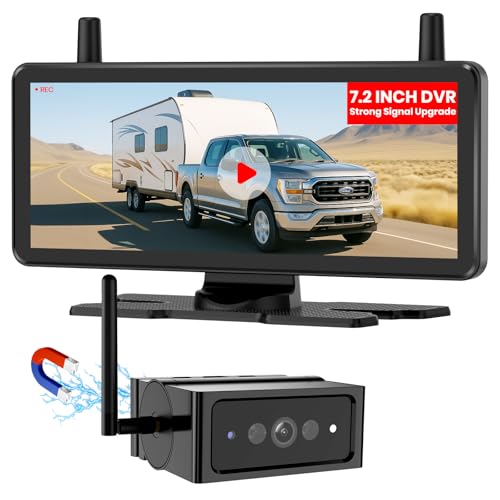
AUTO-VOX 7.2 Inch Magnetic Wireless Backup Camera

MIOFIVE S1 4K Front Dash Cam with 32GB Card
A Closer Look At Each Pick
Reversing a long trailer into a tight campsite is the kind of task that punishes a small field of view, and this HEECOOMI system leans into that challenge with a fully adjustable camera that rotates a full 360° horizontally and tilts 180° vertically. The 7-inch IPS touchscreen (a flat-panel display with wide viewing angles) gives you a clear image of what’s behind the rig, while the 140° ultra-wide lens covers more ground than a typical reversing camera. You also get DVR recording and IR night vision (infrared illumination for low-light viewing), which means the system pulls double duty as both a reversing aid and a security recorder.
The magnetic mount and solar panel make this a strong match for trucks, RVs, trailers, and campers where running a hardwired power line isn’t practical. The IP69K rating (a top-tier ingress protection standard against high-pressure water jets and dust) suggests serious weather sealing, which matters for vehicles that sit outside through storms. For anyone who wants a flexible reversing view and a recording system in one unit, this delivers more versatility than a standard fixed-angle backup cam.
Points In Its Favor
- 360° rotation and 180° tilt let you fine-tune the view for any trailer length or hitch position
- IP69K weather sealing handles heavy rain, dust, and road grime
- Dual purpose as both a reversing aid and a continuous DVR recorder
- Solar panel reduces the need to manually recharge or hardwire
- IR night vision keeps the image useful in unlit areas
Things To Consider
- Wireless magnetic mounting is convenient but can be removed more easily than a hardwired setup, which may be a concern in high-theft areas
- The 7-inch monitor takes up meaningful cab or dashboard space
Key Specs
Built For RV And Trailer Reversing
Truck, RV, and camper owners who routinely back up long rigs will find the adjustable angle and wide lens especially useful.
Consider Something Else When
Daily commuters who only need a simple front-facing dash cam should look at the Miofive S1 Pro or MIOFIVE S1 for a more streamlined setup.
Rideshare drivers spend hours every day in the car with strangers, and a single front-facing camera won’t tell the full story when something happens in the back seat. This TERUNSOUl setup uses three lenses to cover the front, rear, and cabin simultaneously, which means the footage spans the entire vehicle’s surroundings in one trip. The front and rear cameras record at 4K while the cabin camera captures at 1080P, and the wide viewing angles on each lens (170° front, 150° rear, 150° cabin) help minimize blind spots. A 128GB card is included, which removes one of the more annoying setup steps.
For families who want full incident coverage or drivers who use their car for work, this three-channel approach offers more peace of mind than a standard dual-lens setup. Where a basic dash cam might miss a rear-end collision or a back-seat dispute, this configuration records all of it. Compared to the Miofive models later in this list, which focus on front and rear only, this one adds the cabin view that professional drivers often need.
What Pays Off
- Three simultaneous angles capture front, rear, and cabin activity
- 4K resolution on front and rear lenses preserves license plate and sign detail
- Included 128GB card gets you recording right out of the box
- Wide-angle lenses on each camera cover more of the surrounding scene
- Useful for rideshare drivers and parents of teen drivers alike
Worth Noting
- Three cameras running at once demand more storage and power than simpler dual-channel setups
- Installation is more involved with three cables and a cabin camera mount
Key Specs
Made For Rideshare And Family Drivers
Rideshare drivers, fleet operators, and families with new teen drivers benefit most from having the cabin recorded alongside the road.
Look Elsewhere When
If you only need simple front and rear coverage without a cabin view, the Miofive S1 Pro offers a cleaner two-lens approach.
Side-impact collisions are exactly the kind of incident a front-and-rear dash cam often misses, and the JoycePure four-channel system is built specifically to close that gap. The front lens records at 4K while three additional cameras cover the rear and both sides, with the left and right cameras rotating up to 180° to capture through the side windows. The result is a true 360° view around the vehicle, which is more comprehensive than what you’d get from the TERUNSOUl three-channel unit covered earlier. Built-in WiFi, a G-sensor (an accelerometer that detects sudden impacts and locks the relevant footage), and a 64GB card round out the feature set.
For urban drivers who navigate tight intersections and parallel-park frequently, having evidence from every direction can matter. The trade-off is complexity: four lenses mean more cables, more mounting points, and a more involved setup process than simpler options like the FITCAMX unit you’ll see later. Still, for anyone who’s had a side-swipe incident go undocumented, this level of coverage has clear appeal.
Strengths Worth Knowing
- Four lenses create a true panoramic view with no dead zones
- Front 4K recording preserves fine detail where it matters most
- Side cameras rotate 180° to record through the side windows
- Built-in WiFi and app support make footage retrieval straightforward
- G-sensor automatically locks impact-related clips from being overwritten
Trade Offs
- Four cameras running together generate heat and consume storage faster than dual-channel systems
- Mounting four lenses takes more time and planning than a standard setup
Right Fit For Urban And Parallel-Parking Drivers
City drivers who deal with frequent lane changes, parallel parking, and side-impact risks get the most value from full 360° coverage.
A Better Fit Elsewhere When
Highway commuters who mostly face front and rear risks may find the simpler Miofive 4K+4K dual setup easier to live with day to day.
A consumer dash cam won’t survive long bolted to a skid steer or a tractor cab, and this WOOCARTY system is built with that reality in mind. The all-metal housing handles 20G vibrations, which means it tolerates the kind of shaking that would shake a plastic-bodied camera apart. Operating temperature spans from -4°F to 158°F, so the system works across freezing morning starts and high-summer job sites. The 10.1-inch display gives operators a clear rear view, and IP69 weather sealing protects against the kind of water and dust exposure heavy equipment faces daily.
Compared to the HEECOOMI wireless solar option at the top of this list, this one trades convenience for durability. Running a wired connection takes more installation effort, but it also means a more reliable signal that won’t drop out mid-job. Owners commonly report that the metal housing holds up where cheaper units fail, though proper sealing of cable entry points is worth attention during install.
Key Advantages
- 20G vibration rating handles off-road and heavy-equipment environments
- Wide operating temperature range suits agricultural and construction use
- IP69 sealing resists high-pressure water and dust intrusion
- 10.1-inch display is large enough for use from a tractor or truck cab
- Wired connection eliminates wireless signal dropouts
Minor Gripes
- Wired installation is more time-consuming than magnetic or wireless options
- Larger display requires more cab or dashboard space than compact alternatives
Built For Tractors, Trailers, And Heavy Equipment
Farmers, contractors, and operators of skid steers or combines get a system built to handle punishing work environments.
Skip It When
If you drive a standard passenger vehicle and just want a quick-install reversing aid, the AUTO-VOX wireless magnetic option is a simpler choice.
Aftermarket dash cams tend to look aftermarket, with visible wires running down the windshield and suction mounts that don’t quite blend in. The FITCAMX is designed specifically for the Land Rover Discovery Sport (2015-2019, model 6053/L550), and it tucks behind the rearview mirror housing for a factory-installed appearance. No extra cables, no hardwiring headaches; it draws power from the mirror area and looks like it shipped with the vehicle. The front camera records at 4K while the rear camera captures at 1080P, and built-in WiFi with the FITCAMX app lets you pull footage straight to your phone.
The honest trade-off is specificity. This unit only fits a narrow range of Discovery Sport trims (S, SE, HSE, R-Dynamic), so it’s not a general-purpose option. For Discovery Sport owners who care about the clean look of the install and don’t want cables draped across the headliner, this is one of the better-integrated solutions on the market.
Everyday Advantages
- OEM-style fit blends in behind the rearview mirror
- No visible wires or suction cup mounts on the windshield
- Front 4K resolution captures fine road details
- WiFi and app integration simplify footage retrieval
Points To Note
- Vehicle-specific fit means it won’t work on most other cars or SUVs
- Rear camera records at 1080P rather than 4K, unlike the Miofive dual setup
Made For Discovery Sport Owners
Land Rover Discovery Sport owners from 2015 to 2019 who want a clean, factory-looking dash cam integration will appreciate the tailored fit.
Not Your Match When
Drivers of other vehicles should consider the Miofive S1 Pro for a similarly capable dual-channel setup without vehicle restrictions.
Most daily drivers don’t need four lenses or a cabin camera; they need a sharp front view and a clear rear view, and the Miofive S1 Pro delivers exactly that without overcomplicating the setup. The front lens records at 4K Ultra HD with a 140° wide angle, while the rear camera captures at 2K with a 115° angle. HDR technology (high dynamic range, which balances bright and dark areas in the same frame) and advanced night vision help the footage stay readable in challenging lighting, like sunrise glare or poorly lit parking garages. A 32GB card comes in the box, so you can start recording without an extra purchase.
Compared to the vehicle-specific FITCAMX unit reviewed just above, this Miofive is a generalist that works in virtually any car. The integrated GPS and dual-band WiFi (supporting both 2.4GHz and 5GHz networks for faster data transfer) make it easy to pull footage and check route data, and the resolution balance keeps file sizes manageable without sacrificing detail. For most commuters, this hits the sweet spot of capability and simplicity.
Practical Pluses
- 4K front and 2K rear resolution cover the two most important angles clearly
- HDR and night vision improve image quality in mixed and low lighting
- Built-in GPS logs speed and route data alongside the video
- Dual-band WiFi speeds up footage transfer to your phone
- Universal compatibility fits most vehicles without model-specific restrictions
Softer Spots
- No cabin or side cameras means interior and blind-side incidents go unrecorded
- 32GB card fills faster at 4K resolution than lower-resolution alternatives
Who Should Grab It For Daily Driving
Daily commuters, road-trippers, and anyone who wants reliable front and rear coverage without extra cameras will find this a sensible fit.
Swap It Out When
Rideshare drivers who need cabin footage should step up to the TERUNSOUl three-channel system for that added layer.
Maneuvering a box truck or RV through a tight loading dock is a different challenge than backing up a car, and the Xrizuo system is built with that scale in mind. Four HD 1080P cameras cover the front, rear, and both sides of the vehicle, feeding a single 10.36-inch IPS touchscreen. The result is a surround-view monitor that helps drivers spot pedestrians, posts, and other vehicles they wouldn’t see with mirrors alone. Where the HEECOOMI unit at the top of this list uses a wireless magnetic approach, this one relies on wired connections for a more stable signal across long vehicles.
The wired design is a meaningful trade-off: more installation effort up front, but also less susceptibility to signal dropouts on extra-long rigs. For commercial drivers who depend on a reliable rear view, that stability tends to matter more than installation speed. Owners commonly find that the touchscreen interface is responsive and that the four-camera layout makes lane changes and tight turns noticeably safer.
Where It Helps
- Four cameras give full surround coverage for large vehicles
- 10.36-inch touchscreen is large enough to read at a glance from the cab
- Wired connections deliver stable video without wireless lag or dropouts
- HD 1080P on every camera keeps image quality consistent across angles
A Few Limitations
- Wired installation across four cameras takes more time than single or dual setups
- Not designed for forward-facing incident recording the way a dash cam is
Right Fit For Large Trucks And RVs
Box truck, RV, and van owners who need a surround view for parking and low-speed maneuvering get the most value here.
Reach For A Different Pick When
If you want an incident-recording dash cam rather than a maneuvering aid, the Miofive 4K+4K dual setup captures road events with higher resolution.
Detail matters when you need to read a license plate from footage, and dual 4K resolution across both front and rear cameras sets this Miofive apart from most dash cams that drop to 1080P on the rear lens. The 8MP sensor on each side captures sharp detail, while a built-in polarizer helps control glare and reflection during bright daytime driving. Dual-band WiFi, Bluetooth, and integrated GPS round out the connectivity, and a 64GB card ships in the box. The 3-inch IPS screen on the unit itself is small, but most owners pull footage to their phone rather than viewing it on-device.
For drivers who want maximum clarity from a straightforward two-lens system, this is a step up from the Miofive S1 Pro covered above, which uses a 2K rear lens. The honest trade-off is file size: 4K on both channels fills storage quicker and demands more from the SD card during loop recording (overwriting the oldest footage once the card is full).
The Upside
- True 4K on both front and rear cameras preserves maximum detail
- Built-in polarizer reduces glare and reflection in bright conditions
- Bluetooth and dual-band WiFi streamline pairing and file transfer
- Integrated GPS logs speed and route alongside the video
- 64GB card provides more headroom out of the box
Possible Compromises
- Dual 4K recording generates large files that fill storage faster than 1080P setups
- Higher resolution puts more demand on the SD card during continuous loop recording
Who Will Love This Detail-Focused Setup
Drivers who prioritize image clarity for license plates, road signs, and incident detail benefit most from dual 4K recording.
Another Choice May Suit When
For a simpler, lower-storage dual-channel option, the Miofive S1 Pro offers a balanced alternative with smaller file sizes.
Hardwiring a backup camera into a vehicle’s electrical system is a Saturday afternoon project for many people, and not everyone wants to spend that time. The AUTO-VOX magnetic mount gets around that entirely: the camera attaches to a metal surface on the rear of the vehicle, and the monitor pairs wirelessly. Dual antennas help maintain a stable signal even on extra-long RVs, buses, and trailers. The 7.2-inch screen sits on the dash or windshield, and the whole setup can move between vehicles if needed.
Where the WOOCARTY system covered earlier prioritizes heavy-duty durability, this AUTO-VOX prioritizes convenience. Renters, people with leased vehicles, and anyone who swaps cars frequently will find the no-commitment install appealing. The trade-off shows up in signal reliability on very long vehicles, where even upgraded antennas can occasionally struggle.
A Few Strong Suits
- Magnetic mount installs in roughly a minute with no tools or wiring
- Wireless design makes it portable between different vehicles
- Dual antennas strengthen signal stability for long trailers
- 7.2-inch monitor provides a clear view from the driver’s seat
Things To Weigh
- Magnetic mount can be removed easily, which is a theft concern in some areas
- Wireless signal may weaken on very long RVs compared to wired systems like the Xrizuo unit
Built For Renters And Casual Towers
Leased vehicle owners, apartment dwellers, and people who tow occasionally get a setup they can install and remove without tools.
Skip It When
For permanent install on a daily-driven vehicle, the Miofive S1 Pro delivers dash-cam functionality with a more secure mounting approach.
Sometimes the simplest approach is the right one, and the MIOFIVE S1 is a single-lens 4K dash cam that does one job well. The 140° wide-angle lens captures the road ahead in Ultra HD, and HDR plus advanced night vision keep the footage readable in low-light situations like dusk commutes and unlit rural roads. A 32GB card is included, and 5GHz WiFi makes pulling clips to your phone noticeably faster than older 2.4GHz-only units. Built-in GPS logs speed and route data, which can be useful evidence in a dispute.
Compared to the dual-lens Miofive S1 Pro covered earlier, this S1 drops the rear camera entirely. For drivers who only care about front-facing coverage, that trade-off can actually be a feature: smaller footprint, less wiring, and lower cost. Owners commonly appreciate the compact size and straightforward setup, though anyone wanting rear coverage should look at the S1 Pro instead.
The Good Stuff
- 4K Ultra HD captures sharp front-facing footage day and night
- HDR and night vision maintain clarity in low-light conditions
- 5GHz WiFi speeds up footage transfer compared to older 2.4GHz units
- Built-in GPS logs route and speed data alongside the video
- Compact single-lens design keeps the windshield uncluttered
Honest Caveats
- Single-lens design means rear and side incidents go unrecorded
- 32GB card fills faster at 4K resolution than at lower settings
Best Suited To Minimalist Single-Cam Users
Drivers who prioritize clean front-facing coverage without extra cameras or wiring will find this a focused, easy-to-use option.
Where A Sibling Pick Shines
For dual-channel coverage at the same brand, the Miofive S1 Pro adds a 2K rear camera without much extra complexity.
What Matters Most Before Choosing 1080p Car Cameras
Image Quality and Field of View
Resolution matters most when you need to read details after an incident, like a license plate or a road sign. A 1080P lens captures enough detail for most situations, while 4K lenses preserve fine information at greater distances. Field of view (measured in degrees) determines how much of the scene fits in the frame; wider angles (140° to 170°) capture more of the surroundings but introduce some edge distortion, while narrower angles (around 120°) keep images flatter and more accurate.
For most commuters, a 140° to 150° lens strikes a good balance between coverage and image clarity. Drivers who spend time on highways at higher speeds may prefer wider angles to capture vehicles approaching from adjacent lanes.
Installation and Power Source
Wired systems like the WOOCARTY and Xrizuo options deliver the most reliable signal and power, but they require routing cables through the vehicle. Wireless magnetic options like the AUTO-VOX and HEECOOMI install in minutes with no tools, which suits renters and leased vehicles. Hardwired dash cams like the FITCAMX draw power from the vehicle’s electrical system and stay out of sight, but installation is more involved.
Parking mode (recording while the engine is off) requires either a hardwired connection or a battery pack. Without it, the camera typically shuts down when you turn off the ignition, which means it can’t record hit-and-runs in parking lots.
Multi-Camera Configurations
Single-lens cameras cover the front only. Dual-lens systems add a rear camera. Three-channel systems (like the TERUNSOUl) add cabin recording, which suits rideshare drivers. Four-channel setups (like the JoycePure) cover all sides, including blind spots. More cameras mean more complete coverage but also more cables, more storage demand, and more complex installation.
For most daily drivers, dual-lens is sufficient. Rideshare operators and urban drivers dealing with frequent side impacts benefit from three or four lenses. Off-road and heavy equipment operators often prioritize rugged single or dual-camera backup systems over incident-focused dash cams.
Storage and Connectivity
Higher resolution produces larger files, so a 4K dash cam fills a 32GB card faster than a 1080P one. Loop recording overwrites the oldest footage once storage is full, which means a larger card holds more history. Cards rated for high-endurance use (designed for continuous read/write cycles) tend to last longer under constant recording.
WiFi and app support let you pull footage to your phone without removing the SD card. Dual-band WiFi (2.4GHz and 5GHz) transfers files faster than single-band, especially for high-resolution clips.
Common Slip Ups Worth Dodging
Hidden Buying Traps
Many shoppers focus on resolution alone and overlook the field of view, which often matters more in practice. A 4K camera with a narrow 90° lens may capture less of the scene than a 1080P camera with a 160° lens. Look at both specs together rather than chasing the highest pixel count.
Another common mistake is buying a dash cam without checking SD card compatibility. Some cameras only work with specific card types, and using a standard card instead of a high-endurance one can lead to corrupted footage. Always check the manufacturer’s card requirements before buying additional storage.
Where Shoppers Go Wrong
Ignoring parking mode is a frequent oversight. A camera that only records while driving won’t capture the hit-and-run that happened while you were in the store. If your vehicle sits in public lots or on the street, parking mode with hardwiring or an external battery pack adds meaningful protection.
Mounting location matters more than many people realize. A camera tucked too far behind the rearview mirror may miss side events, while a camera mounted too low captures more of the hood and less of the road. Aim for a spot near the top center of the windshield, just below the mirror line.
Frequently Asked Questions
What is the difference between 1080P and 4K in a car camera?
1080P captures 1920×1080 pixels per frame, while 4K captures roughly four times that detail. In practice, 1080P is sufficient for general incident recording, while 4K makes it easier to read license plates and small details from a distance or in low light.
Do dash cams record when the car is off?
Standard dash cams shut down with the ignition unless they have parking mode enabled. Parking mode requires either a hardwired connection to the car’s fuse box or an external battery pack, and it captures movement or impacts while the engine is off.
How much storage do I need for a dash cam?
A 32GB card typically holds a few hours of 1080P footage or less at 4K. A 64GB card doubles that capacity, and 128GB cards are useful for high-resolution or multi-camera setups. Most cameras overwrite the oldest footage once the card fills, so the loop continues without manual intervention.
Can I install a backup camera myself?
Wireless and magnetic options like the AUTO-VOX and HEECOOMI install in minutes with no tools. Wired systems like the WOOCARTY and Xrizuo require routing cables through the vehicle, which may take an afternoon and basic tools like a trim remover and wire stripper.
Are dash cams legal to use in all states?
Dash cams are legal for personal use in most regions, but windshield mounting laws vary. Some states restrict where on the windshield a device can be mounted, and recording audio without consent may have legal limits. Check your local regulations before installing, especially if you drive across state lines frequently.
Closing Thoughts
The right car camera depends almost entirely on what you drive and where. RV and trailer owners get the most value from adjustable wireless systems, while daily commuters typically do fine with a compact dual-lens dash cam. Heavy-equipment operators need ruggedized hardware, and rideshare drivers benefit from cabin coverage. Start with your primary use case, then narrow down by resolution, installation effort, and how much of the vehicle you actually need to see recorded.