A 28mm lens sits in that sweet spot between casual wide-angle and everyday standard. Photographers reach for it on city walks, tight interiors, documentary projects, and street shoots where you want context without distortion. The shortlist below pairs native primes, pancake designs, and adapted manual glass for every mount, so you can find the focal length you love on the body you already own.
How The Shortlist Stacks Up

Thypoch Simera-C 28mm T1.5 Cine Lens (M Mount)

VILTROX 28mm F4.5 XF Pancake Lens (X-Mount)

Nikkor Z 17-28mm f/2.8 Zoom (Z Mount)

Canon RF 28mm F2.8 STM (RF Mount)

Thypoch M-E Auto-Lock Mount Adapter

Tamron 17-28mm f/2.8 Di III RXD (E Mount)

Nikkor Z 28mm f/2.8 SE (Z Mount)

Thypoch Ksana 21mm f/3.5 M Mount Lens
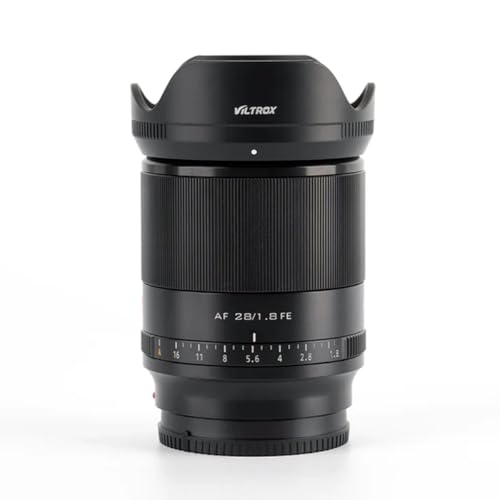
VILTROX 28mm F1.8 FE Full Frame (E Mount)
VILTROX AF 28mm F4.5 FE Lens (Sony E)
Meet The Standout Selections
The Simera-C lands at the top of the list for one reason: sheer light-gathering muscle. A T1.5 aperture (T-stop is the cinema-standard measurement of light transmission, slightly tighter than the f-stop but directly comparable for exposure purposes) is two stops faster than the Canon’s f/2.8 below, which translates to handheld-friendly shooting after sunset or in moody interiors without cranking ISO. The 16-blade aperture is a nice cinematic touch, rendering out-of-focus highlights as round, dreamy orbs rather than polygonal edges.
It is a manual-focus cine lens, so you trade autofocus speed for image control, geared focus and aperture rings, plus full-frame coverage that also crops cleanly onto APS-C bodies. If you run a Leica M body or adapt to Sony E, L, Z, RF, or ARRI, this glass slots straight into a serious video kit.
What Makes Sense
- Ultra-fast T1.5 transmission keeps ISO tame in dim venues
- 16 rounded aperture blades produce smooth, circular bokeh for narrative work
- Manual focus with cine-standard gear rings suits follow-focus rigs
- Full-frame coverage remains versatile when paired with an adapter
- Sturdy metal build, designed for repeated rigging and lens changes
Worth Noting
- No autofocus means run-and-gun event shooters will struggle
- Premium price band puts it out of reach for casual hobbyists
- Requires a separate adapter for most modern mirrorless mounts
Feature Snapshot
Who It Suits Best
Independent filmmakers, wedding videographers, and documentary shooters who prioritize low-light performance and cinematic bokeh over autofocus convenience.
Where Another Pick Suits Better
Travelers wanting auto focus and a smaller footprint will get more mileage from the VILTROX 28mm F4.5 XF pancake in this list.
This VILTROX takes up almost no room in your bag. At roughly 60 grams and about 15mm deep, it barely registers on a Fujifilm X-body, which is the whole pitch: a wide-angle that disappears on the camera and weighs less than a smartphone. Autofocus runs quietly through a stepping motor, so stills grab focus fast and video stays free of distracting clunks.
The f/4.5 aperture is modest, so you trade low-light confidence for that pancake profile. For daytime street work, family walks, and travel logs on a bright Fuji body, the trade is one most people happily accept.
A Few Highlights
- Weighs about 60g, so the camera stays light in a jacket pocket or small sling
- Autofocus is quiet enough for vlogs and casual video
- 28mm focal length suits everyday walkaround framing on APS-C
- Compact 15mm length keeps the camera profile slim
Points To Note
- f/4.5 aperture needs higher ISO in dim cafes or golden-hour interiors
- Limited weather sealing makes heavy rain a real concern
- X-mount only, so Sony, Nikon, and Canon shooters need a sibling pick
Made For
Fujifilm X-series photographers who want a featherweight walkaround lens for street photography, travel, and everyday carry.
Consider Something Else When
Sony shooters chasing the same pocket-size feel should look at the VILTROX AF 28mm F4.5 FE later in this list.
Where the Thypoch Simera-C is a fixed-focal-length cinema piece, this Nikkor is a working photographer’s wide zoom. You stretch from 17mm for tight interiors and architecture to 28mm for environmental portraits, all at a constant f/2.8 (the maximum aperture stays the same across the zoom range, so exposure does not shift as you reframe). On a Z body you get full autofocus, weather sealing, and a sensible weight that pairs well with hybrid still-and-video work.
The 17-28mm range is narrower than a typical kit zoom, but that restraint keeps the lens compact. For destination weddings, real-estate interiors, and travel documentary work, the flexibility pays for itself the first time you need one extra millimeter of width.
Everyday Wins
- Constant f/2.8 keeps exposure steady when reframing mid-shot
- 17mm wide end handles tight interiors and architecture
- Nikon Z autofocus means confident eye-detection on people
- Compact enough to balance on smaller Z bodies like the Z fc
Trade Offs
- 17-28mm reach omits a 24mm sweet spot if you want a true 28mm prime
- Z-mount only, so Fuji or Sony owners should skip past it
- No optical stabilization, relying on in-body stabilization from the body
Feature Card
Best Suited To
Z-mount shooters who want one zoom to cover ultra-wide event spaces and tighter wide-angle portraits without swapping lenses.
A Better Fit Elsewhere
Travelers on Sony E who want a similar wide zoom should compare the Tamron 17-28mm f/2.8 Di III RXD.
The Canon RF 28mm F2.8 STM is the wide-angle you forget is on the camera. It is short, light, and unobtrusive on an EOS RP, R8, or R6, which makes it a natural fit for anyone stepping into Canon’s full-frame mirrorless world. The STM motor drives smooth, quiet autofocus, so it pulls double duty for casual video and vlogging.
At f/2.8 you get a stop more light than the VILTROX pancakes without ballooning the size. For everyday walkaround on a Canon body, it is hard to find a reason to leave it at home.
Everyday Advantages
- Compact body suits slim mirrorless cameras like the EOS RP
- STM autofocus stays quiet during video recording
- f/2.8 aperture gathers more light than typical pancake primes
- 28mm framing on full frame feels natural for street and travel
Small Caveats
- No optical stabilization, leaning on the body’s IBIS
- RF mount only, so non-Canon users need a different pick
- Plastic exterior feels less premium than metal-bodied lenses
Perfect Match For
Canon EOS R beginners who want a slim everyday wide prime that handles both stills and casual video without bulk.
Look Elsewhere When
Sony E shooters want a near-identical profile from the VILTROX AF 28mm F4.5 FE later in this list.
This is technically not a lens but an adapter, and it earns its place because so many 28mm focal-length options live on the Leica M mount. The Thypoch M-E bridges M-mount glass, including its own Simera-C and Ksana lenses reviewed here, onto Sony E bodies from the A7 through the FX30. The auto-lock design gives a confident, wobble-free attachment that holds up on long shooting days.
Aerospace-grade aluminum keeps the adapter under 80g, so pairing a manual prime with this bridge does not turn your camera into a brick. You sacrifice autofocus, which is a given on adapted M glass, but you gain access to a deep catalog of compact primes.
Reasons It Performs
- Auto-lock mechanism seats M lenses firmly on Sony E bodies
- Machined aluminum holds tight tolerances for accurate infinity focus
- Lightweight at about 80g, keeping camera balance reasonable
- Compatible with a wide Sony E lineup including A7, A7C, FX3, and ZV-E10
Honest Caveats
- Adapter-only, so it requires a separate M-mount lens to be useful
- No electronic communication, focus and aperture stay fully manual
- Auto-lock release takes a small learning curve on first lens changes
Feature Rundown
Who Should Grab It
Sony E shooters with manual M-mount glass who want a sturdy, low-profile adapter that does not add bulk.
Swap It Out When
Photographers wanting native Sony autofocus should skip ahead to the VILTROX 28mm F1.8 FE in this roundup.
Tamron’s 17-28mm f/2.8 is the practical sibling to the Nikkor zoom reviewed earlier. It targets Sony E bodies specifically, weighs under 15 ounces, and stretches from 17mm wide to 28mm standard at a constant f/2.8. For travel shooters and hybrid creators, the size-to-flexibility ratio is hard to beat in this category.
The RXD autofocus motor (Rapid eXtra-silent stepping Drive, Tamron’s branded quiet stepping motor) tracks reliably on subjects, and the 67mm filter thread is friendly for owners of standard wide-angle filters. It is one of those lenses that quietly earns its place in a working kit.
Key Advantages
- Lightweight build at roughly 14.8 oz reduces shoulder fatigue on long walks
- Constant f/2.8 maintains exposure through the zoom range
- Compatible with full-frame and APS-C Sony E bodies
- 67mm filter thread simplifies adding ND or polarizer filters
Less Ideal Details
- No optical stabilization, relying on body IBIS for handheld video
- External zoom can creep when pointed straight down
- Plastic barrel shows wear on heavy travel days
Spec Overview
Built With In Mind
Sony E shooters who want a light, constant-aperture wide zoom for travel and hybrid photo-and-video work.
Another Choice May Suit
Nikon Z owners looking for the same brief should consider the Nikkor Z 17-28mm f/2.8 reviewed earlier.
The 28mm f/2.8 SE was designed to live alongside the Z fc, and you feel that heritage the moment you pick it up. The textured control rings echo Nikon’s classic SLR lenses, while the optics inside are thoroughly modern, with a multi-focusing system that snaps to focus quickly and quietly for both stills and video.
On a Z fc, the cropped sensor turns the lens into a 42mm equivalent, which is great for vlogs and candid portraits. On a full-frame Z body, you get the wide 28mm view, so the same lens flexes between roles without needing to swap glass.
Standout Benefits
- Vintage-inspired design pairs beautifully with retro Z bodies
- Multi-focusing system keeps autofocus quiet for video
- Doubles as a 42mm equivalent on APS-C Z bodies
- Compact prime body balances well on smaller Z cameras
Factors To Consider
- Z mount only, leaving Fuji, Canon, and Sony users out of luck
- f/2.8 aperture is modest for dedicated low-light shooters
- SE styling feels less cohesive on modern all-black Z bodies
Right Fit For
Z fc and Z series owners who want a compact prime with retro looks and modern autofocus performance.
Reach For A Different Pick When
Sony E shooters after a slim prime should look at the Canon RF 28mm F2.8 STM, which pairs nicely with adapter-free Sony bodies of similar philosophy.
The Ksana 21mm is technically not a 28mm, but it lives one focal step wider on the same M-mount body and deserves a mention for Leica shooters weighing a wide-angle option. At 131g and only 27mm deep, it sits closer to a pancake than most 21mm glass, which is rare for this ultra-wide category.
The f/3.5 aperture and manual focus suit deliberate street photography rather than fast-paced action. Pair it with a film M6 or a digital M11 and the lens stays small enough to live on the body as a permanent companion.
Bright Spots
- 131g weight is unusually light for a 21mm wide-angle
- 27mm length keeps the lens close to pancake territory
- Vintage-friendly Epoch 73 coating adds a subtle character to images
- Native M-mount avoids any adapter-related bulk
Softer Spots
- Manual focus only, so action shooters should look elsewhere
- f/3.5 aperture requires bright light or higher ISO for handheld shooting
- Needs an adapter for Sony, Nikon, or Canon mirrorless bodies
Whose Shelf It Belongs On
Leica M owners wanting an ultra-wide street lens that barely changes the camera’s footprint.
Not Your Match When
Sony E shooters wanting a similar light wide-angle should look at the VILTROX AF 28mm F4.5 FE in this list.
Where the VILTROX pancakes trade aperture for size, this 28mm f/1.8 FE flips the script with a bright, fast prime designed for full-frame Sony E bodies. The f/1.8 aperture is more than a stop brighter than the Canon RF 28mm STM, which makes a real difference when shooting indoors, at night, or for video with shallow depth of field.
An 11-element, 9-group optical formula with two aspherical elements keeps sharpness competitive wide open. Autofocus is reliable across the supported Sony lineup, including the A7 IV, A7R V, and FX3, which makes it a versatile hybrid tool rather than a stills-only specialty lens.
Where It Helps
- f/1.8 maximum aperture pulls in noticeably more light than f/2.8 primes
- Two aspherical elements support sharp rendering wide open
- Autofocus tracks reliably across Sony E full-frame bodies
- Compact body for an f/1.8 full-frame prime
A Few Limitations
- Heavier than pancake alternatives at this focal length
- Sony E only, so non-Sony shooters need an adapter or different lens
- Focus breathing may show during critical focus pulls in video
Who Will Love This
Sony E photographers and hybrid creators who shoot in low light and want autofocus on a bright wide-angle prime.
Skip It When
Travelers prioritizing grams over light gathering will prefer the VILTROX AF 28mm F4.5 FE pancake in the next slot.
VILTROX clearly read the room and built the Sony E counterpart to its popular X-mount pancake. This full-frame AF 28mm F4.5 FE sits at roughly 60g and 15mm deep, mirroring the Fuji version’s footprint for Sony shooters who want the same carry-everywhere attitude.
ED (extra-low dispersion) and aspherical elements manage chromatic aberration (color fringing around high-contrast edges) and distortion (straight lines bowing at the edges of the frame), and the front element adds a subtle starburst effect for night street scenes. It is the lens you keep on the camera for daily walks.
Strong Points
- 60g weight and 15mm depth keep the camera barely heavier than body-only
- ED and aspherical elements correct color fringing and barrel distortion
- Autofocus supports Sony E bodies from the A7C through the FX3
- Starburst effect from the front element adds character for night scenes
Things To Consider
- f/4.5 aperture is dim for indoor or nighttime shooting
- No weather sealing for use in heavy rain
- Sony E only, so Fuji users should pick the VILTROX XF version
The Right Fit
Sony E photographers who carry one camera everywhere and want a near-invisible wide prime for everyday stills and casual video.
Where A Sibling Pick Shines
Shooters needing low-light reach will get more from the VILTROX 28mm F1.8 FE reviewed just above.
What To Weigh Before Choosing Your Next 28mm
A 28mm lens sounds simple on paper, but the category spans cinema glass, pancake primes, and wide zooms across several mount systems. The right pick depends on what you shoot, what body you own, and how much weight you actually carry.
Mount First, Focal Length Second
Every lens here targets a specific mount: Leica M for the Thypoch primes, Sony E for the Tamron and VILTROX E-mount options, Nikon Z for the Nikkor duo, Canon RF for the RF 28mm, and Fujifilm X for the VILTROX XF pancake. Before comparing apertures and weights, confirm the lens fits your camera body natively. Adapters like the Thypoch M-E bridge work, but they add bulk and remove autofocus for adapted M glass.
Fixed Prime vs. Wide Zoom
Fixed 28mm primes are smaller, lighter, and usually sharper wide open. Wide zooms like the Nikkor 17-28mm and Tamron 17-28mm trade a bit of size for compositional flexibility, stretching from ultra-wide interiors to wide-angle portraits in one lens. Travel photographers usually prefer the zoom, while street photographers tend to gravitate toward a single fast prime for discipline and simplicity.
Aperture and Light Gathering
A T1.5 or f/1.8 aperture gives you two or three stops more light than f/2.8, which directly translates to cleaner images in dim venues and stronger subject separation. The trade is size, weight, and cost. f/4.5 pancakes like the two VILTROX slim designs stay compact but require bright light or higher ISO to keep shutter speeds safe.
Autofocus vs. Manual Focus
If you shoot events, kids, or wildlife, autofocus is non-negotiable. Sony E, Canon RF, Nikon Z, and Fujifilm X lenses in this list all support reliable autofocus on their respective bodies. Manual-focus M-mount glass rewards deliberate shooters who zone-focus or use a rangefinder, but it is not the right tool for fast-moving subjects.
Build Quality and Weather Sealing
Shooters working outdoors in unpredictable conditions should prioritize lenses with weather sealing (rubber gaskets around the mount and control rings that block dust and moisture). The Nikkor Z and Tamron 17-28mm carry seals; the slim VILTROX pancakes and most M-mount primes do not, which matters for anyone shooting in coastal fog, mist, or light rain.
Key Considerations Across These Picks
Where Shoppers Go Wrong
The biggest mistake is picking a lens for the wrong mount and then buying an adapter to make it fit, only to discover autofocus does not survive the bridge. If you want autofocus, stick with native glass for your system. Another common slip is chasing maximum aperture on a wide-angle prime, then realizing the size and weight no longer suit your everyday carry. Match the lens to your actual shooting rhythm, not just your spec sheet.
When Paying More Pays Off
Spending more on the Thypoch Simera-C buys you genuine optical gains in low light and cinematic rendering that cheaper primes cannot match. Stepping up to the Nikkor 17-28mm f/2.8 over a slower zoom buys weather sealing, faster autofocus, and constant exposure through the zoom range, which matters for video. The honest read is that budget glass delivers great results in good light, while premium options buy confidence when conditions get tough.
Frequently Asked Questions
Is a 28mm lens wide-angle on a full-frame camera?
Yes, 28mm sits at the wider end of the standard range on full-frame bodies. It gives you a noticeably broader view than a 50mm, with enough width for interiors and street scenes while still feeling natural for environmental portraits. On APS-C bodies, the same lens reads closer to 42mm due to the crop factor (the smaller sensor cropping away the outer edges of the image circle), so it behaves more like a short portrait lens.
Can I use a 28mm lens for street photography?
Absolutely, 28mm is one of the classic street focal lengths. It is wide enough to capture context and architecture, but not so wide that faces distort uncomfortably at close range. Photographers like Henri Cartier-Bresson and many contemporary street shooters built entire bodies of work at similar focal lengths.
Do I need a filter thread for a 28mm prime?
A 28mm prime benefits from a standard filter thread if you plan to add a UV filter for protection, a polarizer for skies, or ND filters (neutral-density filters that reduce light without changing color) for long exposures. Slimmer pancakes often skip filter threads to save space, so check the spec sheet before planning filter-based work.
What is the difference between T-stop and f-stop?
The f-stop is a mathematical ratio of focal length to aperture diameter, while the T-stop is a measured value of actual light transmitted through the lens. Two lenses at the same f-stop can transmit slightly different amounts of light due to glass coatings and internal elements. Cinema lenses like the Thypoch Simera-C use T-stops so filmmakers can predict exposure precisely across cuts.
Should I get a prime or a wide zoom covering 28mm?
Choose a prime for smaller size, sharper wide-open performance, and discipline in framing. Choose a wide zoom for compositional flexibility on trips, events, and architectural work where the extra reach saves lens swaps. Most photographers end up owning one of each eventually.
Wrap Up
The right 28mm lens comes down to mount, shooting style, and how often you actually carry the glass. Cine shooters chasing low-light bokeh will love the Thypoch Simera-C, while everyday photographers on mirrorless bodies should start with the Canon RF 28mm, Nikkor Z 28mm SE, or one of the VILTROX pancakes. Pick the lens that disappears on your camera, and you will reach for it more often than any other in your bag.