Shooting on actual film has found its second wind, and for good reason. The grain, the color rendering, and the deliberate pace of a roll of 35mm pull you out of phone-snapshot autopilot and into something with weight. If you’re picking up the hobby, returning to it after a break, or just curious about the look, the right film stock is the single biggest creative choice you’ll make after the camera itself. The picks below lean into color, black and white, and a couple of motion-picture-style stocks, with a single reusable camera for anyone starting from scratch.
A Quick View Of The Lineup

Kodak Gold 200 35mm Film Bundle, 3 Rolls

Kodak Ultra Max 400 Film (Blue/Yellow)

Fujifilm 200 Color Negative Film 36 Exposures 3-Pack

Kodak Tri-X 400TX Black and White Film 35mm

Fujifilm Fujicolor 200 Color Negative Film 3-Pack

Fujifilm 35mm Color Negative Film 400 ISO 3-Pack

Kodak Max 400 Speed 24 Exposure 35mm Film

Amber 800 35mm Color Negative Cine Film 27 Exposures
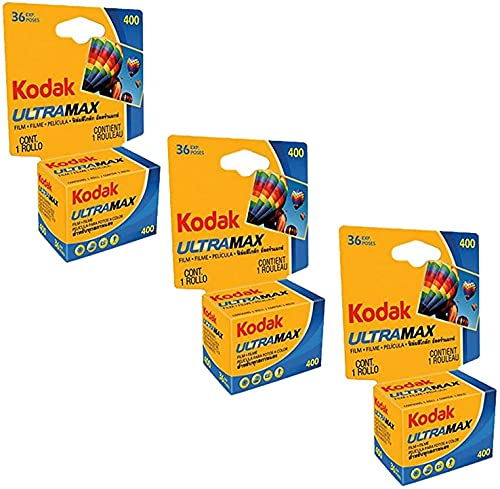
Kodak Ultramax 400 Color Print Film 35mm 3-Pack

Kodak Snapic A1 35mm Film Camera (Ivory White)
The Details Behind The Selections
Kodak Gold 200 has been the casual shooter’s go-to for decades, and the 3-roll bundle keeps things simple for anyone who just wants to load a camera and start clicking. The 200 ISO speed (a measure of how sensitive the film is to light) works best in daylight or bright interiors, and each roll gives you 36 exposures. A small microfiber cloth is tossed in for keeping the lens and viewfinder clean between rolls.
For weekend walks, beach trips, and group portraits, the warm, slightly saturated look is what most people picture when they imagine film. The grain is fine enough that prints hold up at standard sizes. The bundle format helps if you’re buying your first batch, since you get consistent results across multiple rolls.
Key Advantages
- Three rolls means 108 total exposures, enough for a couple of weekends of shooting
- 200 ISO is forgiving enough to work indoors near windows
- Warm color rendition that flatters skin and golden hour scenes
- Microfiber cloth included for quick lens cleanup
Points To Note
- 200 ISO is slower than 400 speed films, so dim indoor shots may look soft
- Color shifts are common in heavy shade, so bright light produces the most reliable results
Right Fit For
Casual shooters who mostly work outdoors and want the classic warm film look without overthinking exposure settings.
Skip It When
Low-light shooters should reach for the Kodak Ultramax 400 (Pick 9) instead, since its 400 ISO handles dim rooms and dusk far more gracefully.
Ultra Max 400 is the everyday 400-speed color film a lot of photographers keep in their bag because it just shows up. ISO 400 gives you noticeably more headroom than 200, so indoor parties, shaded streets, and overcast days all stay sharp. The blue and yellow packaging is the visual cue that this is the higher-speed cousin of the Gold line.
For travel days where you’ll be moving between sunlit plazas and dimly lit restaurants, one speed covers both. The grain is slightly more visible than a 200 stock, but the trade-off is exposure flexibility. Compared with the Gold 200 bundle, this is a more “one film for the whole trip” choice.
What Earns Its Place
- 400 ISO handles mixed lighting with fewer underexposed frames
- Strong color saturation in daylight without looking artificial
- Developed through standard C-41 (the most common color negative process) at virtually any photo lab
Worth Noting
- Grain is more noticeable than slower color stocks, especially in flat lighting
- Skin tones can shift slightly under fluorescent light, so exposure compensation may be needed
Built With In Mind
Shooters who want one film that handles outdoor adventures and indoor evenings without a roll change mid-day.
Consider Something Else When
Anyone who wants finer grain for large prints should grab the Fujifilm Fujicolor 200 3-pack (Pick 5) for dedicated daylight sessions.
This is the entry-level Fujifilm 200 stock, sold in a 3-pack and bundled with a BluebirdSales microfiber cloth. The greens and skin tones skew a touch cooler than Kodak’s warmer palette, which gives photos a slightly more neutral, modern feel. At 200 ISO, it’s a daylight-friendly choice that rewards sunny conditions.
For beginners who want predictable color without paying a premium, the 3-pack format keeps per-roll cost low. Each roll is 36 exposures, so you get 108 frames to learn with. A microfiber cloth for lens wiping is a small but welcome touch, especially for older cameras with dusty viewfinders.
What It Does Well
- 200 ISO produces fine grain, good for close-up and portrait work
- Neutral color balance that scans cleanly with minimal color correction
- Bundle includes a cleaning cloth, useful right out of the box
Trade Offs
- 200 speed needs bright light or flash indoors to avoid motion blur
- Less forgiving of exposure mistakes than a 400 speed stock
Best Suited To
Newcomers who mostly shoot outside and want a budget bundle to experiment with across a few rolls.
Look Elsewhere When
Anyone doing heavy indoor shooting will be happier with the Fujifilm 400 ISO 3-pack (Pick 6) for its higher speed.
Tri-X 400 is the black-and-white film most people think of when they picture classic photojournalism. ISO 400, 24 exposures per roll in the 35mm format, and a wide tonal range that holds up beautifully when pushed or pulled in development. Pushing or pulling means intentionally over- or under-exposing the film to compensate for the lighting you have, then adjusting the development time to get the right contrast.
It’s forgiving for handheld street work and handles dim conditions without forcing you to crank up the flash. The grain is a feature here, not a flaw, and it’s a film that looks better the harder you push it. Owners often note that mixing light and shadow on a single roll gives the most striking results.
Bright Spots
- 400 ISO works handheld in low light, which is rare for a black-and-white stock
- Responds well to push processing, giving you extra speed when needed
- Distinctive grain structure that holds up to scanning and moderate enlargement
- Long tonal scale, so both highlights and shadows retain detail
Some Limits To Know
- 24 exposures per roll means more frequent reloading than 36-frame options
- Black and white development is less universally available than C-41 color processing
Feature Snapshot
Whose Shelf It Belongs On
Photographers drawn to street, documentary, or low-light work who want grain, contrast, and latitude in equal measure.
Reach For A Different Pick When
If you want color, the Kodak Ultra Max 400 (Pick 2) is the natural alternative at the same speed and exposure count.
Fujifilm’s consumer-grade 200 color stock has earned a quiet reputation among travelers and portrait shooters for its pleasing skin tones. The 3-pack adds up to 108 exposures, and the daylight-balanced emulsion (the light-sensitive coating on the film) keeps colors honest under direct sun. Greens skew slightly toward turquoise, which suits foliage and coastal scenes well.
Unlike the budget bundle in Pick 3, this is the more established Fujicolor 200 release with consistent scanning results. For someone who already owns a 35mm body and just wants reliable color film for a trip, it’s a low-fuss option.
What Pays Off
- Pleasing skin tone reproduction, ideal for portraits and family shots
- Fine grain at 200 ISO, holds up to 8×10 prints
- Daylight-balanced color that rarely needs correction in post
Honest Caveats
- 200 ISO demands plenty of light, so dim indoor events may be a stretch
- Lacks the high-speed flexibility of the 400 stocks
Quick Facts
Made For
Travelers and portrait shooters who want consistent, natural color in bright conditions and don’t need a high ISO.
Swap It Out When
Low-light events call for the faster Fujifilm 400 ISO 3-pack (Pick 6), which trades fine grain for usable indoor speed.
Often sold as Fujicolor Superia X-TRA 400, this is Fujifilm’s high-speed color stock. 400 ISO paired with a wide exposure latitude (the range of over- or under-exposure a film can absorb before results fall apart) makes it one of the most forgiving color films around. The 3-pack format gives you 108 frames to shoot across mixed conditions.
It’s the film to load when you’re not sure what the day will look like: bright morning, cloudy afternoon, evening with friends. The colors are punchy, the grain is moderate, and it develops through the same C-41 process as every other color negative here.
Noteworthy Benefits
- 400 ISO handles dim interiors, late golden hour, and fast action
- Wide exposure latitude means mistakes are rarely fatal
- Vibrant color saturation that scans well without correction
Factors To Consider
- Grain is more visible than the 200 stocks, especially when scanned at high resolution
- Color can lean slightly cool under tungsten indoor lighting without a warming filter
At A Glance
Who Should Grab It
Anyone shooting variable lighting who wants one film to cover bright afternoons and dim evenings in the same roll.
A Better Fit Elsewhere
For the cleanest scans in controlled daylight, the Fujicolor 200 3-pack (Pick 5) gives finer grain at the cost of speed.
Kodak Max 400 is the older, simpler sibling of the Ultra Max line. 400 ISO, color negative stock, and a reputation for accurate skin tone reproduction that makes it a quiet favorite for casual family and event photos. The shorter 24-exposure roll feels familiar to anyone who learned photography in the 1990s.
If you’ve been handed a hand-me-down camera and want film that just works, Max 400 is a sensible starter. It’s also widely available and reliably developed at most labs. Compared with the 36-exposure Ultra Max 3-pack, this is a single shorter roll for one outing.
A Strong Showing
- 400 ISO handles typical indoor and outdoor scenes without flash
- Accurate flesh tones for portraits and group shots
- Allows high degrees of enlargement without losing detail
Room For Improvement
- Single 24-exposure roll, so you may run out before a long event
- Less common on retail shelves than Ultra Max, so availability can be patchy
Perfect Match For
Casual shooters who want a single, reliable roll for a family gathering or weekend trip without committing to a multipack.
Another Choice May Suit
Anyone needing 108 frames on hand for a longer trip will be better served by the Kodak Ultramax 400 3-pack (Pick 9).
Amber 800 is a motion picture-style color negative film repackaged for still cameras, and the look is genuinely different from consumer stocks. ISO 800, 27 exposures, and a characteristic halation (a soft glow around bright light sources, caused by light bouncing inside the film layers) that gives highlights a glowing, cinematic feel. Skin tones lean warm, reds pop, and shadows carry a subtle density.
For photographers chasing the look of film stills from a movie set, this is the pick. It’s worth knowing that the emulsion behaves differently from a standard C-41 stock, so processing is a separate decision. Among all the films here, this one is the most stylistic and the least neutral.
The Upside
- ISO 800 keeps shutter speeds usable in dim, indoor, and night settings
- Distinct cinematic halation that adds atmosphere around highlights
- Warm color palette that flatters golden hour and tungsten-lit scenes
Worth Bearing In Mind
- Specialized motion picture stock may require a specific lab or home development setup
- 27 exposures per roll is unusual, so reloading is more frequent
- Distinctive look won’t suit projects where you want neutral, archival color
Key Product Details
Who Will Love This
Experimental shooters chasing a film-still aesthetic with halation, warm reds, and higher speed than the standard 400 stocks offer.
Where A Sibling Pick Shines
For a more neutral color negative, the Kodak Ultra Max 400 (Pick 2) is the safer everyday alternative.
The Ultramax 400 3-pack is the bulk option for the most widely used 400-speed color film on the market. 36 exposures per roll, 108 total, and the same forgiving latitude that makes this Kodak stock a default for trips, weddings, and school events. It’s also DX-coded, meaning the 35mm cassette has a small pattern of silver and black squares that the camera reads to automatically set ISO, which makes it drop-in compatible with most modern 35mm bodies.
For someone who shoots often and doesn’t want to think about film choice mid-trip, a 3-pack of Ultramax covers most situations. The color balance sits between the warmer Gold and the cooler Fujifilm stocks, which keeps skin tones honest without looking flat.
Positive Takeaways
- 108 total exposures means a single purchase covers a long trip
- 400 ISO handles sun, shade, and indoor lighting in the same roll
- DX coding ensures automatic ISO setting on compatible cameras
- Balanced color that flatters both people and landscapes
Things To Weigh Up
- Grain is visible on close inspection, especially at higher scan resolutions
- Color leans slightly neutral, so some users prefer the warmer Gold for portraits
Who It Suits Best
Frequent shooters, event photographers, and anyone building a film stash who wants the most universal color stock at a value price.
Not Your Match When
Black-and-white purists should reach for the Kodak Tri-X 400TX (Pick 4) for a dedicated monochrome look.
The Kodak Snapic A1 is a reusable 35mm point-and-shoot body, which is the only camera in this list. The 2-zone focus system lets you switch between close and far subjects, the built-in auto flash with red-eye reduction handles low light, and the lightweight compact body fits in a coat pocket. Film and an AAA battery are not included, so you’ll need to pair it with one of the rolls above.
For someone with zero film experience, this is the shortest path to a finished roll of negatives. Multiple exposure support is a small creative bonus for layering two scenes on one frame. The honest read is that it’s a simple, no-frills camera that prioritizes portability over manual control.
Everyday Wins
- Reusable body means you only pay for film after the initial purchase
- 2-zone focus simplifies framing for beginners
- Built-in flash with red-eye reduction for indoor use
- Compact, lightweight build slips into a small bag
Less Ideal Details
- Film and battery sold separately, so plan for an extra purchase
- No manual exposure controls, limiting creative control compared to used SLRs
- Plastic lens elements, so image sharpness won’t match a quality used 35mm body
Right Fit For
First-time film users, gift buyers, and anyone who wants a reusable 35mm body without hunting through secondhand listings.
Where Another Pick Suits Better
Photographers who already own a 35mm SLR or rangefinder should skip this camera and just buy more film, like the Kodak Ultramax 400 3-pack (Pick 9).
What To Weigh Before Buying 35mm Film For Your Camera
Picking film is a smaller decision than picking a camera, but the differences are real once you start printing or scanning. Most of the 35mm stocks here fall into two camps: 200 ISO for bright daylight and fine grain, and 400 ISO for flexibility in mixed light. ISO (International Organization for Standardization) is simply a measure of how sensitive the film is to light, so a higher ISO number means the film needs less light to make a proper exposure.
ISO Speed And The Lighting You Actually Shoot In
If your days are mostly outdoors, a 200 ISO film like the Kodak Gold 200 bundle (Pick 1) or the Fujicolor 200 3-pack (Pick 5) rewards you with finer grain. If your shooting spills into evenings, restaurants, or overcast afternoons, 400 ISO stocks like the Kodak Ultra Max (Pick 2) or the Ultramax 400 3-pack (Pick 9) keep shutter speeds usable without flash. For night or event work, the Amber 800 cine stock (Pick 8) offers even more headroom, though its look is more stylized.
Color Negative Vs Black And White
Color negatives (Gold, Ultra Max, Ultramax, Max, Fujicolor 200, Fujifilm 200, Fujifilm 400, Amber 800) all develop through the same standard C-41 chemistry, available at almost any photo lab. The Kodak Tri-X 400TX (Pick 4) is the only black and white option, and it requires separate B&W chemistry, which can be a deal-breaker if your local lab doesn’t offer it. The trade-off is grain, contrast, and a tonal range that color film can’t match for documentary work.
Roll Length And Pack Size
Most rolls here are 36 exposures, with the Kodak Tri-X (Pick 4) and Kodak Max (Pick 7) at 24, and the Amber 800 cine stock at 27. For longer trips or events, the 3-pack bundles (Picks 1, 3, 5, 6, 9) stretch your supply without reordering. Single rolls (Picks 2, 4, 7, 8) make sense for one-off outings or when testing a new emulsion.
Picking Across These Film Stocks
Where Shoppers Go Wrong
The most common slip is buying 200 ISO film and expecting it to perform indoors. ISO 200 needs bright light, and dim restaurant or party shots will come out blurry or underexposed. Match the film to the lighting you’ll actually be in, not the lighting you hope for.
Another trap is assuming all 400 ISO color films look the same. Kodak and Fujifilm stocks differ in warmth, green rendering, and grain, so one 3-pack may not feel like another even at the same speed. If you find one you love, stock up, because single roll purchases can be inconsistent across batches.
Why Top Tier Costs More
Premium film costs more mostly because the emulsion (the chemical coating on the film base that actually records the image) is more complex to manufacture consistently, and the production runs are smaller than consumer-grade stocks. Specialty motion picture stocks like Amber 800 (Pick 8) also require repackaging and sometimes different processing, which adds to the cost.
For most casual shooters, mid-tier consumer films in 3-packs give the best balance of cost and image quality. The upgrade to specialty or motion picture stocks pays off when you specifically want their look, like halation, finer grain at a given speed, or a distinctive black-and-white character.
Frequently Asked Questions
What’s the best 35mm film for beginners?
A 400 ISO color negative film is usually the most forgiving choice, since it handles a wide range of lighting conditions without forcing manual exposure changes. The Kodak Ultramax 400 3-pack (Pick 9) is a common starting point, and the reusable Kodak Snapic A1 body (Pick 10) pairs well with it.
How long does an unprocessed roll of 35mm film last?
Most modern color negative films are rated for several years past their expiration date if stored cool and dry, though color shifts and fog can creep in over time. Black and white films tend to last longer than color stocks, and freezing unexposed rolls extends life noticeably for serious stockpiling.
Can I use any 35mm film in any 35mm camera?
Yes, almost every 35mm camera accepts any standard 35mm (135 format) roll, regardless of brand, ISO, or color type. The only exceptions are specialty cameras that use APS or 110 film formats, which are different cassettes entirely.
What’s the difference between color negative and slide film?
Color negative film produces a negative image that is printed or scanned to make a positive, and it tolerates a wide range of exposure. Slide film (also called transparency or reversal film) produces a positive image directly on the film, with richer colors but much less exposure latitude. None of the films in this list are slide film, so the tolerance for exposure mistakes is higher across the board.
Should I send my film to a lab or develop it at home?
For most casual shooters, a local lab or mail-in service that runs C-41 chemistry is the simplest path, since every color film in this list develops through that same process. Home development gives you more control and is the only practical option for some specialty stocks, but it requires chemistry, a dark bag, and a willingness to learn.
Final Verdict
Film is one of the few creative tools where the medium itself is part of the look, so the best stock is the one that fits how you actually shoot. Daylight regulars will be happiest with a 200 ISO film like the Fujicolor 200 3-pack (Pick 5), while mixed-light shooters benefit from a 400 ISO workhorse like the Ultramax 400 3-pack (Pick 9). For something with real character, the Amber 800 cine stock (Pick 8) and the Tri-X 400TX (Pick 4) give you looks you simply cannot get from a phone or a digital sensor.