Shopping for a 360 video surveillance camera usually starts the same way: a driveway, a backyard, a barn, or a job site, and the uneasy feeling of not knowing what is happening when you are not looking. Modern units cover wide angles, track movement, and send alerts straight to your phone, so the right choice depends less on flashy numbers and more on where the camera will live and how you plan to power and connect it.
The Essentials At A Glance

LIWAN 4G LTE Cellular Security Camera, 2K Off-Grid
REOLINK TrackFlex Floodlight WiFi 4K 360° PTZ Camera

REOLINK Duo 3 PoE Dual-Lens 180° Panoramic Camera

REOLINK TrackMix PoE Dual-Lens PTZ 6X Zoom Camera
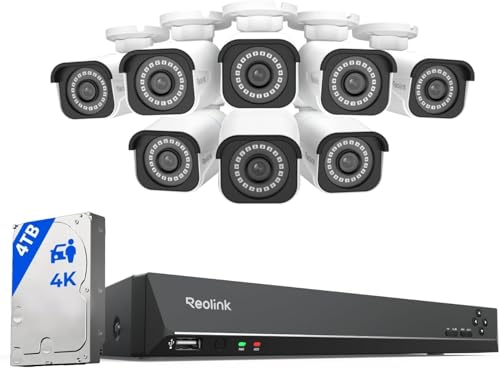
REOLINK 16CH 4K Bullet Camera System RLK16-800B8
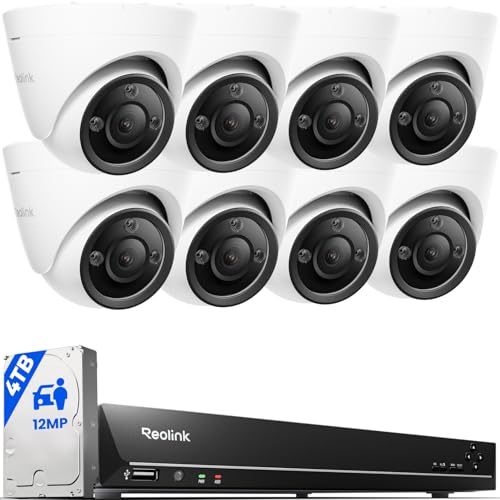
REOLINK 16CH 12MP PoE System RLK16-1200D8-A

REOLINK 4K Solar Wireless Outdoor 4G LTE Camera
A Breakdown Of The Leading Choices
Coverage gaps at the far end of a property are where most off-grid camera ideas fall apart, and the LIWAN 4G LTE Cellular Security Camera leans directly into that problem. It skips the router entirely and uses a cellular connection, which suits barns, ranch gates, and remote land where WiFi simply does not reach. The SIM comes pre-installed so setup stays close to a power-on-and-go experience.
You give up home-network conveniences in exchange for flexibility, so this unit earns its place when running cable or pulling a router out to a distant structure is not realistic. For most owners watching a wide, open area with a clear cellular signal, the trade is worth it.
Points In Its Favor
- Cellular connectivity removes the need for on-site internet, so you can monitor a remote gate or barn without paying for a separate line.
- Pre-installed SIM card means setup is closer to mounting and powering than wrestling with network pairing.
- 2K resolution gives you enough detail to read plates or recognise faces at typical driveway distances.
- Bullet-camera form factor mounts easily on a post, eave, or pole without much fiddling.
- Sends live view and alerts straight to your phone, so you do not need a separate monitor on site.
Points To Note
- Requires a usable cellular signal at the install spot, so a weak coverage area will limit usefulness.
- Cellular data plans are an ongoing cost that wired alternatives avoid.
- You may find the bullet design less suited to very wide open spaces than a PT or panoramic unit.
Who It Suits Best
Owners of remote acreage, farms, or second properties with a reliable cellular signal but no internet service.
Look Elsewhere When
The REOLINK Duo 3 PoE is a stronger match for properties where you can run Ethernet and want a single panoramic view without a data plan.
Sitting between utility and accessibility, the second LIWAN unit on this list is aimed squarely at places where neither WiFi nor a power outlet reaches. Think vacation homes, job site trailers, and rural outbuildings that need a steady eye even when nobody is around. The 2K sensor gives you sharp enough detail to identify faces and vehicles from across a typical yard.
Where the earlier LIWAN covered a similar need, this version leans into a year-round, set-and-forget role at a property you might only visit seasonally. For most owners who check on a place occasionally, that focus on low-maintenance monitoring is the main reason to pick it.
Everyday Advantages
- Runs entirely on cellular, so it works where routers and mesh systems simply do not reach.
- Designed for unattended properties, which suits a vacation home or a job site that sits empty for stretches.
- 2K video keeps recordings usable for evidence or insurance rather than just general awareness.
- Bullet-camera mounting keeps installation straightforward on fences, poles, or exterior walls.
Worth Noting
- Cellular plan cost applies, and the camera is only as reliable as the local signal at the install spot.
- You may find single-lens coverage narrower than dual-lens panoramic units for very wide yards.
- Periodic check-ins on the SIM and power setup become part of the ownership routine.
Built With In Mind
Owners of remote cabins, vacation properties, or construction sites who need eyes on a place without existing internet.
Skip It When
The REOLINK 4K Solar Security Camera is a smarter fit when you want solar power alongside cellular freedom, cutting the need for any wired power.
A driveway at night is a tough brief for any camera, and the REOLINK TrackFlex pairs a 4K dual-lens PTZ head with an integrated floodlight to handle that exact scenario. The wide lens covers the approach, while a tracking lens follows movement and zooms in, so you get both scene and detail in the same recording. The 355° pan and 50° tilt add a layer of reach that fixed bullet cameras cannot match.
Compared with the LIWAN units above, this one is firmly a home-network piece: it expects WiFi and a steady power supply. For most suburban driveways and backyards where the goal is to light up, track, and record, that is exactly the right setup.
Why It Works Well
- 4K resolution paired with a 6x hybrid zoom keeps distant subjects readable after the fact.
- Auto-tracking follows a person or vehicle across the field of view, so you do not need to manually pan.
- The built-in floodlight doubles as a deterrent and a way to capture color detail at night.
- 360°-class PTZ coverage suits irregular shapes like L-shaped driveways.
Honest Caveats
- PTZ mechanics mean more moving parts than a fixed bullet camera, so long-term wear is worth factoring in.
- WiFi-only connection limits placement to spots with strong router signal or a mesh node nearby.
- Requires hardwired power, which rules out spots without easy access to an outdoor outlet or junction box.
The Right Fit
Suburban homeowners who want one camera to light, track, and record an entire driveway or backyard at once.
Reach For A Different Pick When
The REOLINK TrackMix PoE is worth considering when you prefer a Power-over-Ethernet setup that stays online even if your WiFi stutters.
Panoramic coverage at the edge of a property usually means stitching two or three cameras together, and the REOLINK Duo 3 PoE solves that in one housing. Two image sensors produce a single 180° view, which is helpful for fences, side yards, or any long, narrow zone a fixed lens would have to crop. The dual-lens design also keeps a wide field without the fisheye distortion you see on some ultra-wide units.
Where the TrackFlex leans on movement and lighting, this one is the steady, fixed eye. For most owners who would rather mount once and forget about tracking, that simpler profile is the point.
What Helps Most
- 180° stitched panorama covers a long stretch of fence or driveway with a single install.
- PoE (Power over Ethernet) means one cable handles both data and power, simplifying routing.
- Stitched dual-lens output avoids the heavy curvature of single-lens ultra-wide views.
- Fixed installation removes the long-term concerns that come with PTZ moving parts.
Some Limits To Know
- Requires a wired Ethernet run, which can be impractical for detached structures without existing cabling.
- No active tracking means detail beyond the centre of the frame depends on the wide lens alone.
- You may need a PoE switch or injector if you do not already have one in your network rack.
Best Suited To
Owners with a PoE-ready network who want one camera to span a fence line or side yard without stitching software.
A Better Fit Elsewhere
The REOLINK TrackMix PoE suits situations where you want the same wired reliability plus PTZ tracking on top of the wide view.
For a property where the perimeter sees real activity, the REOLINK TrackMix PoE stacks two lenses onto one housing and lets them cooperate. The wide-angle PT lens tracks the subject across the scene while the telephoto lens zooms in for a closer view, so the recording shows both context and detail. PoE keeps that connection stable even when WiFi would be unreliable.
Compared with the Duo 3 above, this unit trades the static panoramic feel for active motion. For most owners who want the camera to do more than just record, that trade is the whole point.
Everyday Wins
- Dual-lens setup pairs a wide tracking view with a close-up telephoto, so one camera covers both jobs.
- 6x hybrid zoom keeps the close-up usable for identifying people or vehicles at distance.
- Wired PoE connection stays steady where WiFi signals tend to drop or fluctuate.
- Suitable for driveways, parking areas, or yard zones where movement is expected and worth following.
Factors To Consider
- Needs an Ethernet run, which may require drilling through walls or routing cable through conduit.
- PTZ mechanics add long-term wear considerations versus a fixed-mount design like the Duo 3.
- Setup is more involved than a simple WiFi plug-in camera, especially for first-time PoE users.
Made For
Tech-comfortable owners with a wired network who want active tracking and close-up detail in a single unit.
Consider Something Else When
The REOLINK TrackFlex Floodlight WiFi is an easier install when you would rather skip the Ethernet run and let a floodlight handle the night detail.
Covering a whole property usually means more than one or two cameras, and the REOLINK RLK16-800B8 is built for that scale. The kit ships with eight 4K bullet units and a 16-channel NVR with a 4TB hard drive, so you can run, record, and review a multi-camera setup out of the box. Person and vehicle detection help cut down on the noise of generic motion alerts.
Where the earlier single-camera picks were about solving one coverage gap, this kit assumes you have several. For most owners planning a complete perimeter or multi-zone setup, the bundled recorder is what makes the math work.
Where It Excels
- 8MP (4K) bullet cameras deliver detail strong enough for digital zoom during review.
- 16-channel NVR leaves room to add more cameras later without replacing the recorder.
- 4TB hard drive handles weeks of continuous recording from multiple feeds.
- PoE design keeps each camera on a single cable run back to the NVR.
- Person and vehicle detection reduce false alerts from leaves, shadows, or small animals.
Practical Considerations
- Full kit is overkill for a single driveway or apartment balcony.
- Installing eight cameras means routing multiple Ethernet cables through walls, eaves, or conduit.
- You may find the included storage fills up faster than expected at the highest 4K setting.
Who Should Grab It
Homeowners with larger properties or small business owners who want a single coordinated recording system across multiple zones.
Where Another Pick Suits Better
The REOLINK TrackFlex Floodlight WiFi is a simpler choice when one well-placed PTZ camera can cover the area you actually care about.
The RLK16-1200D8-A steps the resolution up to 12MP per camera and keeps the same 16-channel PoE foundation as the kit above. That extra pixel count matters when reviewing footage after the fact, since digital zoom holds together better at higher starting resolution. Color night vision through the spotlight gives you readable night recordings without relying on infrared alone.
Compared with the 8MP RLK16-800B8, the difference shows up most when you need to crop into a clip. For most owners recording for evidence rather than just peace of mind, that jump in clarity justifies the move up.
Practical Advantages
- 12MP resolution keeps detail intact even after digital zoom during review.
- Spotlight-assisted color night vision produces more identifiable footage than IR-only night modes.
- PoE-powered cameras simplify the wiring plan across a multi-zone setup.
- 4TB NVR stores weeks of footage at typical recording settings.
Worth Weighing
- Higher resolution files consume more storage, so the 4TB drive fills up faster than in the 8MP kit.
- You may need extra network switch capacity to feed 16 high-bandwidth streams at once.
- The price jump over the 4K kit only pays off if you actually use the extra detail regularly.
Whose Shelf It Belongs On
Property owners who review footage frequently and need cropping-friendly detail, such as shop owners or large-lot homeowners.
Swap It Out When
The REOLINK 16CH 4K Bullet Camera System is a more balanced choice if 8MP detail is enough and you prefer to spend the savings on storage or accessories.
The final pick closes the loop on true off-grid coverage. The REOLINK 4K Solar Security Camera runs on continuous solar power and connects over 4G LTE, so you can mount it at a remote cabin, job site, or gate without running any cable at all. The 4K sensor keeps daytime and color-night recordings sharp enough to identify subjects at typical yard distances.
Where the LIWAN units earlier handle cellular but assume you can get power to them, this one removes that last wire. For most owners who have struggled with both no internet and no outlet, that combination is the whole selling point.
What Earns Its Place
- Solar power keeps the camera running without needing a nearby outlet or trenching a new line.
- 4G LTE connectivity removes the need for any on-site internet infrastructure.
- 4K resolution supports detail usable for identification and review after the fact.
- Truly wireless install makes repositioning easy as your monitoring priorities change.
Things To Consider
- Solar charging depends on adequate, unshaded sunlight, so heavily wooded sites can starve the battery.
- Cellular data plan is an ongoing cost, similar to the LIWAN units.
- You may find fixed-lens coverage narrower than PTZ or panoramic alternatives in very open spaces.
Perfect Match For
Owners of remote cabins, job sites, or seasonal properties who need an install-anywhere camera with no wiring at all.
Not Your Match When
The REOLINK TrackFlex Floodlight WiFi suits a typical suburban driveway better, where WiFi is available and active tracking is the priority.
What Matters Most Before Choosing 360 Video Surveillance Cameras
Connection And Power
The first fork in the road is how the camera reaches the internet and stays powered. WiFi units are the easiest to install at a home with a strong router signal, while 4G LTE models work where WiFi does not reach but require a cellular data plan. PoE (Power over Ethernet) cameras run a single cable that handles both data and power, which is reliable but needs a wired run to the install spot. Solar plus cellular sits at the far end of the spectrum, suiting remote sites with no wires and decent sun.
Field Of View And Tracking
A 360-degree or panoramic view sounds great on paper, but the way a camera reaches that coverage matters. PTZ cameras physically rotate to follow movement, which adds detail but introduces moving parts. Dual-lens panoramic cameras stitch two sensors into one wide view, giving broad coverage without the mechanical wear. Fixed bullet cameras stay simple but cover less ground per unit, so you may need more of them.
Resolution And Night Detail
4K and 12MP sensors hold up better to digital zoom when you review footage after the fact. Color night vision through a spotlight or floodlight produces more identifiable clips than infrared-only modes, especially when clothing or vehicle colour matters. Higher resolution also fills storage faster, so the recorder and hard drive need to scale with the camera count.
Recorder Or Cloud
Single cameras often rely on a mobile app and optional cloud storage, which is fine for one or two units. Larger setups benefit from a dedicated NVR (network video recorder) with local storage, like the 16-channel kits in this list. Local recording keeps footage on your own hardware and avoids ongoing cloud fees, but it also means the recorder and hard drive need occasional attention.
Key Considerations Across These Picks
Pitfalls Shoppers Hit
A common trap is choosing a WiFi-only camera for a spot with weak router signal and expecting it to keep working. Another is underestimating how fast a 4K recorder fills a hard drive at the highest settings, leaving footage overwritten sooner than planned. People also forget that cellular cameras need a usable signal at the install spot, not just nearby, and that solar units depend on unshaded sun through the seasons.
Where The Extra Money Goes
Stepping up to a 12MP kit or a PTZ-plus-floodlight model adds genuine detail and active tracking, but only if your review habits actually use that extra clarity. Multi-channel NVRs cost more up front but pay off when you scale beyond two or three cameras, since cloud plans add up quickly across that many feeds. The honest read is that the premium tier is worth it for properties with real activity worth recording, while simpler single-camera setups already cover most casual home needs.
Frequently Asked Questions
Do 360 video surveillance cameras need WiFi to work?
Not always. Some models rely on 4G LTE cellular connections, which work on remote properties without internet, while others use PoE (Power over Ethernet) for a wired link. Your choice depends on whether you have router signal or a network cable at the install spot.
How many cameras do you actually need for full coverage?
A single PTZ or panoramic unit can cover a small yard or driveway, but larger properties usually need three or more cameras to cover corners, gates, and outbuildings without blind spots.
Is 4K resolution worth it for home security?
4K holds up better to digital zoom during review, so you can crop into a clip and still identify faces or plates. It also fills storage faster, so the recorder or cloud plan needs to scale with it.
What is the difference between PoE and WiFi cameras?
PoE cameras use a wired Ethernet cable that supplies both data and power, giving a stable connection with one cable. WiFi cameras are easier to install but depend on router signal and need separate power.
Can a solar camera work through winter or cloudy weeks?
Solar charging depends on available sunlight, so heavily shaded or low-light sites can shorten runtime. You may find placement matters as much as the panel size when planning for seasonal changes.
Wrap Up
The right 360 video surveillance camera depends more on your property than on the spec sheet. Match the connection to the location, the field of view to the space, and the storage to how often you review footage, and the rest falls into place. Take another look at the picks above, narrow down by the spot you actually need to watch, and choose the unit that fits that reality rather than the one with the longest feature list.