Working from a home office, hosting a weekly livestream, or just trying to look halfway professional on a Zoom call all run into the same wall: your laptop’s built-in camera is doing you no favors. A dedicated 4K camera sharpens your image, handles tricky lighting, and gives your content a level of polish that software alone can’t fake. This roundup walks through ten options spanning desk webcams, handheld camcorders, and pocketable action bodies, so you can match a camera to the way you actually record.
A Quick View Of The Lineup
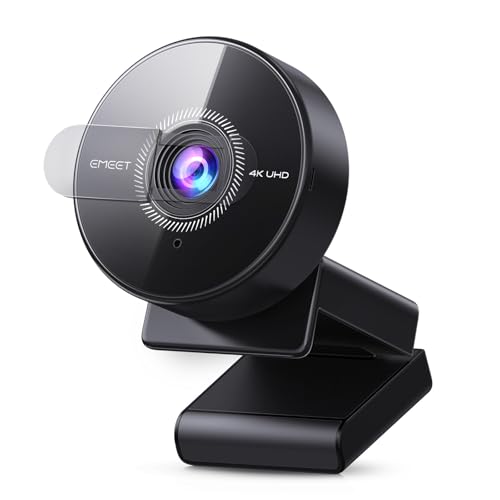
EMEET C950 4K Webcam with PDAF Autofocus

EMEET NOVA 4K Webcam with PDAF Autofocus

EMEET C960 4K Webcam with 73° FOV

EMEET S600L 4K Streaming Webcam with Ring Light

Peryoua 4K Ultra 80MP Camcorder for YouTube Vlogging

EMEET C100 2K Webcam with Privacy Cover
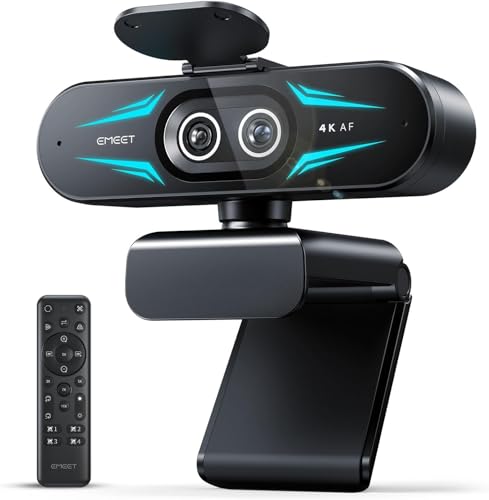
EMEET C60E Dual-Camera 4K Streaming Webcam

EMEET S600 4K Webcam with Sony Sensor

EMEET Piko Dual-Camera 4K Streaming Webcam

acgiewo 4K Mini POV Action Camera
The Strengths Of Each Pick
The C950 sits in that comfortable middle where most people actually live: daily video meetings, online classes, and the occasional family call. It captures 4K at 30 frames per second and drops to 1080p at 60 frames per second when you want smoother motion, and the PDAF (phase-detection autofocus) locks onto your face faster than the older contrast-detection systems most laptops still use.
Built around a CMOS sensor (a type of image chip that converts light into digital signal), it handles the typical desk-lamp and window-backlight combo better than you might expect. For most remote workers setting up in a spare corner of a bedroom, the upgrade from a built-in laptop camera is immediately obvious, and the USB plug-and-play approach keeps the install boring in the best possible way.
Useful Highlights
- Phase-detection autofocus keeps you sharp when you lean in or shift in your chair.
- CMOS sensor holds up under common indoor lighting situations, including dim rooms.
- Flexible 4K/30 and 1080p/60 modes match meetings, classes, and casual streaming.
- USB connection means no extra drivers for the majority of modern computers.
- Built-in microphone trims the need for a separate desk mic on quick calls.
Small Caveats
- The onboard microphone is fine for calls but won’t satisfy podcasters.
- In a sun-flooded room, you may still want to close a blind for the cleanest image.
- Privacy is handled by unplugging or tilting the unit, with no built-in shutter.
Feature Snapshot
Whose Desk It Belongs On
Remote workers, students, and anyone whose laptop webcam has started to look like a smudgy security camera.
Consider Something Else When
You film yourself for long streaming sessions; the EMEET S600 handles that workload with a stronger sensor.
The NOVA is the upgrade choice in EMEET’s desk lineup, aimed at people who treat their webcam like a piece of broadcast gear. It shoots 4K at 30 FPS using a CMOS sensor tuned for dimmer rooms, where many webcams tend to smear shadow detail into a noisy mess. The dual omnidirectional microphones (small mics that pick up sound from all directions) pick up voices from a wider area, which helps in a shared office or when you lean back to think.
Compared to the C950 above, the NOVA leans harder into low-light performance and audio pickup. The PDAF autofocus is the same family of technology, but the processing pipeline behind it leans toward cleaner color when your room lighting is uneven. For a corner office with one lamp and a window, that processing tends to be the difference between looking presentable and looking washed out.
What Stands Out
- Tuned for low-light performance, with shadow detail that survives dim home offices.
- Dual omnidirectional mics catch voices from across a small meeting table.
- Native 4K at 30 FPS avoids the upscaled look of cameras pretending to be 4K.
Trade Offs
- Wider mic pickup also catches background noise, like keyboard clatter or a fan.
- Larger footprint on a monitor than the slimmer C950.
- Owners commonly report that the included software is optional; you may prefer OBS or similar tools.
Right Fit For
Knowledge workers and presenters who record in rooms with imperfect lighting and want one less piece of gear to worry about.
Look Elsewhere When
You want a streaming-focused webcam with a built-in ring light; the EMEET S600L delivers that instead.
The C960 is the pick when you want a real 4K signal without paying for premium-tier features you will not use. It uses a true 4K CMOS sensor, meaning no software upscaling tricks, and pairs it with a 73° field of view (the width of the scene captured, measured in degrees). That middle-of-the-road FOV is friendlier for two-person calls than the ultra-wide 90°+ lenses that distort faces at the edges.
The PDAF autofocus and dual omnidirectional mics round out a camera that handles the daily meeting grind competently. Compared to the NOVA above, the C960 trades some low-light tuning for a simpler, more predictable image that does not require much fussing. You clip it on, your meeting app sees a 4K camera, and you move on with your day.
Good Reasons To Consider
- True 4K without software trickery, which matters if you crop or zoom in post.
- 73° FOV frames two people comfortably without the wide-angle warp.
- Solid autofocus for the kind of small head movements people make on calls.
Points To Keep In Mind
- Low-light performance is acceptable, but not as strong as the NOVA’s tuning.
- Fixed monitor clip limits placement if you prefer a tripod mount.
Quick Facts
Who It Suits Best
Anyone joining recurring meetings with one or two colleagues in frame and who prefers a clean, undistorted image.
Another Choice May Suit
If you frequently present in larger rooms, the EMEET C60E offers a wide-angle lens for group framing.
The S600L is built for streamers who would rather not bolt a separate key light to their monitor arm. The integrated ring light circles the lens, and when you switch it on, the camera’s auto-exposure system works in tandem with the light to keep your face evenly lit without blown-out highlights. The 1/2-inch sensor is on the larger side for a webcam, which helps gather more light in dim setups.
Phase-detection autofocus at roughly 0.2 seconds is the kind of speed that holds up when you gesture, hold products up to the lens, or move between standing and sitting during a stream. Compared to the EMEET C950 earlier in this list, the S600L trades some general-purpose flexibility for a content-creator feature set: lighting, color tuning, and faster focus tracking.
The Helpful Details
- Built-in ring light removes the need to buy and position a separate streaming light.
- Larger 1/2-inch sensor handles low-light streaming setups more gracefully.
- Fast 0.2-second PDAF keeps products and gestures in focus during reviews.
- Exposure balancing with the ring light avoids the harsh shadow look of basic lights.
Things To Consider
- The ring light draws power and may push the unit warmer during long streams.
- Color tuning tends to lean toward streaming aesthetics rather than natural office tones.
- Owners commonly report that dust on the ring light diffuser shows up on camera over time.
Key Attributes
Best Suited To
New and intermediate streamers on Twitch, YouTube, or similar platforms who want a single-piece lighting and camera setup.
Swap It Out When
You already own strong studio lighting and prefer a sensor-driven camera like the EMEET S600 without the ring light.
Stepping away from clip-on webcams, the Peryoa camcorder is a handheld unit shaped like a small camcorder, intended for vloggers who film away from a desk. It captures 4K at 30 FPS and uses an 80MP stills mode, which sounds dramatic on the box but in practice mostly means generous resolution for cropping thumbnails and YouTube cover frames. The 18x digital zoom is the headline feature for parents and travel vloggers who can’t always get close to the action.
This is the most accessible pick for first-time vloggers who want a dedicated camera body rather than a phone rig. Unlike the EMEET streaming webcams above, it records to its own storage and works without a computer, which makes it useful at events, on hikes, or in classrooms where a laptop isn’t welcome.
Where It Excels
- Handheld form factor is friendlier for travel and event recording than a clipped webcam.
- 4K/30 video gives new vloggers enough detail for YouTube-ready footage.
- Doubles as a webcam when plugged into a computer for live sessions.
Things To Weigh
- Digital zoom reduces detail as you push in, unlike optical zoom on more expensive camcorders.
- Battery life tends to favor shorter clips; pack a spare for long shoots.
Who Will Love This
Beginner vloggers, parents recording family events, and anyone who wants a single camera for both home filming and occasional livestreaming.
Reach For A Different Pick When
You need a true pocketable body cam for action footage; the acgiewo 4K Mini Body Camera is purpose-built for that.
The C100 is the honest pick for people who don’t need 4K and just want a sharper, cleaner image than their laptop offers. It records 2K at 30 FPS, which is roughly twice the detail of a 1080p webcam, and uses fixed focus tuned for the 12 to 40 inch range where most people sit during a call. Fixed focus avoids the small breathing and hunting that autofocus can introduce when you barely move.
The rotating privacy cover is the feature that earns this camera its spot. You spin it over the lens when the camera is off, and you don’t have to wonder whether some app quietly turned the feed on. Compared to the EMEET C950 at the top of this list, the C100 sacrifices resolution for a simpler, lower-fuss experience in a smaller body.
Where It Delivers
- Rotating privacy cover offers clear visual confirmation that the lens is blocked.
- Fixed focus within 12-40 inches stays sharp during normal desk use.
- Metal clip grips monitors securely without damaging thin laptop lids.
Some Limits To Know
- 2K resolution is noticeably less detailed than the 4K options elsewhere on this list.
- Fixed focus can blur if you regularly stand up and pace during calls.
Perfect Match For
Privacy-conscious home users and shared-space offices where a physical shutter matters as much as resolution.
A Better Fit Elsewhere
You prioritize resolution over privacy features; the EMEET C960 steps up to true 4K with PDAF autofocus.
The C60E is the unusual one in this list: a dual-camera 4K webcam with both a wide-angle and a telephoto lens sharing a single 1/2.8-inch CMOS sensor. The wide lens covers your full scene and background, while the telephoto crops in for a clean close-up, and you switch between them live. The hybrid zoom stretches that reach up to about 11x, though digital zoom past the optical range trades detail for magnification.
RGB lighting strips, a remote control, and PDAF autofocus round out a streamer-focused feature set. Compared to the S600L earlier, the C60E gives you more framing options without physically moving the camera, which suits product reviews and tutorial creators who bounce between wide demos and tight close-ups.
The Value In It
- Dual lenses let you switch between scene view and close-up without repositioning.
- Up to 11x hybrid zoom brings small products and details into frame.
- RGB lighting adds atmosphere for gaming and creative streams.
- Included remote control lets you toggle views mid-stream without touching the camera.
Worth Bearing In Mind
- Hybrid zoom past the optical range softens image detail noticeably.
- RGB lighting is fun but can clash with branded stream overlays if you don’t tune it.
- Two mics are present, but dedicated creators still tend to prefer an external mic.
Feature Overview
Made For
Multi-angle streamers, product reviewers, and tutorial creators who need both wide and tight framing from one device.
Skip It When
You only need a single framing for talking-head streams; the EMEET S600 keeps things simpler with one strong sensor.
The S600 is the camera you reach for when the Sony sensor matters more than the lighting tricks. A Sony 1/2.55-inch CMOS sensor is a noticeable step up in light gathering and color rendition over generic webcam chips, and it’s the main reason this unit looks cleaner than budget 4K alternatives in mixed lighting. It records 4K at 30 FPS or 1080p at 60 FPS for smoother motion.
Compared to the S600L earlier, the S600 strips out the integrated ring light and focuses the budget on the imaging pipeline. For streamers who already own key lights or work in naturally well-lit rooms, that trade usually works out in their favor: a better sensor plus your existing lighting typically beats a lesser sensor plus built-in LEDs.
Real-World Strengths
- Sony sensor delivers stronger color accuracy and cleaner shadows.
- 4K/30 and 1080p/60 modes suit both recorded streams and live broadcast workflows.
- PDAF autofocus tracks movement during gaming and energetic presentations.
Points To Note
- No built-in light means you’ll want a key light or window for best results.
- Premium sensor positioning can push the price above other 4K webcams.
Core Details
Who Should Grab It
Aspiring streamers and content creators with existing lighting setups who want a sensor-forward webcam without paying for a full mirrorless camera.
Not Your Match When
You want an all-in-one lighting solution; the EMEET S600L pairs a similar sensor with a built-in ring light instead.
The Piko shares the dual-lens idea with the C60E but packages it in a slightly different body and feature mix, aimed at creators who jump between teaching, demoing, and presenting. The wide-angle camera keeps you and your environment naturally framed, while the telephoto camera pulls in for product close-ups and detailed expressions during tutorials.
It is the calmer sibling to the C60E: less RGB flash, more focus on the framing story. For someone running a weekly demo session, that balance tends to age better than the more theatrical setups, and the dual-camera approach saves you from buying a second cam for tight shots.
Notable Gains
- Two lenses in one unit cut down your gear list for tutorial-style content.
- Wide-angle framing suits educational and presentation formats.
- Telephoto lens brings expressions and small details closer to the audience.
Things To Consider
- No flashy RGB lighting, so it lacks the visual flair some streamers want.
- You may still need an external mic for the cleanest voice audio.
Built With In Mind
Educators, presenters, and product-demo creators who alternate between wide scene shots and tight close-ups in the same session.
Consider Something Else When
You want the dramatic RGB lighting of the EMEET C60E for gaming or lifestyle streaming.
Closing out the list, the acgiewo mini body camera is built for hands-free recording when a webcam or camcorder is the wrong tool. It captures 4K at 30 FPS from a wide-angle lens in a body small enough to clip to a jacket or mount on a helmet. The wide-angle view pulls in more of the scene for cycling, hiking, motorcycling, and the increasingly popular hands-free POV cooking videos on YouTube.
It supports both 16:9 landscape and 9:16 portrait orientations, which is a quiet but useful feature for creators who repurpose footage across YouTube, TikTok, and Instagram Reels. Compared to the Peryoa camcorder earlier, this unit trades handheld ergonomics for portability and mounts, which is the right swap for active use.
What Pays Off
- Pocketable body opens up helmet, chest, and bike-mount placements.
- 16:9 and 9:9 switching supports YouTube and short-form platforms.
- Wide-angle lens captures more of the scene for action footage.
Honest Caveats
- Wide-angle distortion stretches faces at very close range.
- Battery tends to drain faster in 4K than in lower resolutions, so pack spares for long outings.
The Right Fit
Outdoor enthusiasts, travelers, and POV cooking creators who want a clip-and-go camera rather than a desk-bound webcam.
Where A Sibling Pick Shines
For handheld vlogging at home, the Peryoa 4K Ultra 80MP Camcorder offers a more traditional grip and zoom controls.
Picking The Right 4K Camera For Your Recording Style
Match the camera to the room, the platform, and how often you actually hit record. A desk-bound worker spending eight hours a day on calls should weight autofocus stability and microphone pickup above all else, while a streamer running nightly broadcasts cares more about sensor quality and lighting control.
Frame rate (frames per second, or FPS) matters more than people expect. 30 FPS is fine for talking-head content and meetings, but 60 FPS at 1080p gives smoother motion for gameplay capture and any footage with fast movement. Several picks in this list offer both modes, which is a real convenience.
Field of view (the width of the scene captured) is the quiet decision-maker for groups. A 73° lens is comfortable for one or two people, while anything above 90° starts to distort edges. The dual-camera options solve this by giving you both, which is why they exist.
For outdoor and travel recording, sensor size and stabilization matter far more than pixel counts. A 1/2-inch or larger sensor gathers more light in changing conditions, and clip or helmet mounting means you cannot reposition the camera mid-shot.
Key Considerations Across These Picks
Common Shopping Slip Ups
Buyers often chase pixel count and ignore sensor size, which controls how a camera behaves in low light. A true 4K signal from a small sensor can look worse than 1080p from a larger one in a dim room. Watch for “upscaled 4K” claims that simply stretch a lower resolution, which is not the same as native 4K capture.
Field of view is another quiet trap. Wide-angle lenses look appealing on the box but distort faces at the edges during close-up calls. Match the FOV to your typical frame rather than chasing the widest number on the spec sheet.
Where The Extra Money Goes
Higher-tier 4K webcams invest in sensor quality, color tuning, and faster autofocus rather than extra resolution. The Sony sensor in the EMEET S600 and the dual-lens systems in the C60E and Piko are examples: you are paying for better imaging pipelines and flexible framing.
For most home users, the step from a basic 1080p webcam to a true 4K unit like the EMEET C950 or C960 is the upgrade that pays off first. Jumping further to dual-camera or premium-sensor models makes sense once your content reaches an audience that notices the difference.
Frequently Asked Questions
What is the difference between 4K and 1080p in a webcam? 4K captures roughly four times the detail of 1080p, which matters most when you crop, zoom in post-production, or stream to large displays where every pixel shows up.
Do all 4K webcams work with Mac and Windows? Most modern 4K webcams use a standard USB connection and work with both operating systems without extra drivers, though checking the manufacturer’s compatibility list for your specific platform is wise.
Is PDAF autofocus better than standard autofocus? PDAF (phase-detection autofocus) tends to lock onto subjects faster and track movement more smoothly than older contrast-detection systems, especially during gestures and product demonstrations.
Can I use a 4K webcam for streaming on Twitch or YouTube? Yes, though most platforms compress the outgoing stream, so the visual difference shows up most in recorded VODs and clips where the source resolution is preserved.
What is a good field of view for a 4K webcam? A 73° to 80° field of view frames one or two people naturally without distortion. Wide-angle lenses above 90° work better for group shots and presentation setups where you step back from the camera.
The Takeaway
The right 4K camera depends less on specs and more on where and how often you record. A webcam with PDAF autofocus covers most desk workers, a sensor-forward model like the EMEET S600 satisfies streamers who already light their rooms, and a pocketable body cam like the acgiewo handles the outdoor footage nothing else on this list can. Pick the camera that fits the way you actually use it, and the rest tends to fall into place.