Picking the right 4K cinema camera shapes everything about your footage, from low-light confidence to how much grading work you’ll touch later. Whether you’re stepping up from a mirrorless body or building a kit for documentary work, the cameras and accessories below cover the most common creator scenarios. I’ve grouped them so solo shooters, sports recorders, and pros with deeper budgets can each find a clear starting point.
The Leading Options At A Glance

Blackmagic Design Pocket Cinema Camera 4K

SONY Cinema Line FX30 Super 35 Camera (Gray)
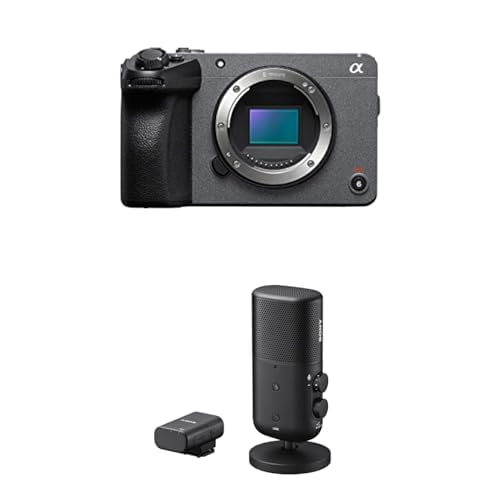
FX30 Cinema Camera + ECM-S1 Wireless Streaming Mic Bundle

FX30 Cinema Camera + NPFZ100 Battery Pack

Blackmagic Pocket 4K Power Bundle with Extra Batteries

Sony FX3A Full-Frame Cinema Camera Kit

FX30 Cinema Camera + ECM-W3 Wireless Mic Bundle

XbotGo Falcon All-in-One 4K AI Sports Camera (Green)

XbotGo Falcon All-in-One AI 4K Sports Camera

XbotGo NT4 PRO Carbon Fiber Tripod 12.8ft
The Picks, Examined More Closely
Blackmagic’s Pocket 4K earned its reputation by giving indie shooters a real cinema sensor without locking them into a closed codec. Its 4/3-inch sensor (a sensor slightly smaller than full-frame but larger than typical mirrorless) produces the kind of filmic depth that mirrorless bodies struggle to match, and the active Micro Four Thirds lens mount opens up a huge library of affordable glass.
For documentary crews shooting in mixed light, the dual native ISO (a sensor design that reads cleanly at two different sensitivity baselines) helps keep grain in check when you can’t control the room. Built-in mini XLR inputs (professional balanced audio connections) make it practical for run-and-gun interviews too.
Positive Takeaways
- 13 stops of dynamic range (the range between the darkest shadow and brightest highlight the sensor can capture in one take) give plenty of latitude for color grading.
- Records Blackmagic RAW and ProRes, so you choose between smaller files and maximum flexibility.
- Mini XLR inputs handle professional microphones without an external mixer.
- USB-C external SSD recording extends shoot days without swapping cards.
- Includes a DaVinci Resolve Studio activation key for full editing and color tools.
Worth Noting
- No internal ND filters (Neutral Density filters that reduce light without shifting color), so bright outdoor shoots require matte box filters or variable ND adapters.
- Active Micro Four Thirds mount narrows native lens options compared to Sony E or Canon RF systems.
- Battery life runs shorter than full-frame competitors; owners commonly pack extras for full-day shoots.
Whose Shelf It Belongs On
Indie filmmakers and documentarians who want genuine cinema codec flexibility without stepping into full-frame pricing.
Look Elsewhere When
Sony shooters prioritizing full-frame depth and in-body stabilization should consider the FX3A kit later in this list.
The FX30 is the gentlest entry point into Sony’s Cinema Line, pairing a Super 35 sensor (a sensor size matching the classic 35mm film frame, smaller than full-frame) with mature autofocus that new operators can trust. It’s compact enough to mount on a gimbal without rigging gymnastics, which matters when you’re still learning lens and movement choices.
The S-Cinetone picture profile (a preset color curve tuned to look cinematic straight out of camera) lets you record footage that already feels graded, so you can focus on storytelling instead of color wheels early on. Dual base ISO keeps shadows clean in dim interiors.
What It Does Well
- Compact, lightweight body fits travel kits and gimbal rigs without strain.
- S-Cinetone profile delivers a film-like look without grading.
- Sony’s autofocus tracking holds subjects reliably across focal changes.
- Wide lens compatibility through the Sony E mount.
Things To Consider
- Super 35 sensor produces shallower depth-of-field separation than full-frame bodies.
- Body lacks the XLR handle found on the FX3, so serious audio work may need an adapter.
- Recording limits apply in 4K 120p; plan take length around thermal behavior.
Made For
First-time cinema camera owners moving up from hybrid mirrorless bodies.
Consider Something Else When
You need dual XLR audio on the body itself; the FX3A kit bundles that handle for you.
This bundle pairs the FX30 with Sony’s ECM-S1 wireless streaming microphone, solving the audio gap that often catches solo creators off guard. The S-Cinetone profile keeps you looking polished on stream, while the wireless mic delivers broadcast-style vocal clarity without tethering you to the camera.
Low intrinsic noise levels mean you don’t have to scrub hiss out of every take in post. For YouTube creators running a one-person operation, this combo saves a separate audio shopping trip.
Real Benefits
- Wireless mic cuts cable clutter between subject and camera.
- Low self-noise keeps vocal tracks clean for streaming or podcast-style content.
- FX30 sensor handles mixed lighting for studio and location shoots alike.
- Saves the hassle of matching separate audio gear later.
Some Limits To Know
- Wireless mic range is best in line-of-sight setups; walls reduce reliable distance.
- Single-mic bundle doesn’t cover two-person interviews without an extra unit.
Right Fit For
Solo streamers and content creators building a one-room production setup.
Reach For A Different Pick When
You regularly record two-person interviews; the ECM-W3 bundle below handles that workflow.
Long-form shooters know that battery anxiety can ruin a day’s footage, which is exactly why this FX30 bundle ships with Sony’s NPFZ100 Z-Series pack. The NPFZ100 carries roughly 2.2 times the capacity of the smaller NP-FW50, which translates to meaningful extra runtime on extended documentary or event work.
The 16.4Wh cell stays physically compact (roughly 38.7 x 22.7 x 51.7 mm), so it doesn’t bulge your rig. Cine EI shooting modes (exposure modes that lock the sensor’s base ISO for predictable post-production grading) make it easier to match takes across changing light.
Strengths Worth Knowing
- NPFZ100 battery roughly doubles runtime over the smaller NP-FW50 cell.
- Compact battery dimensions keep the rig balanced.
- Cine EI modes lock exposure for consistent grading across sessions.
Honest Caveats
- Bundle still ships one battery, so truly long shoots need additional cells.
- No audio accessory included, unlike the mic bundles earlier in the list.
Quick Facts
Who Will Love This
Documentary crews and event videographers running long shooting days off-camera power.
Swap It Out When
Your priority is streaming audio quality; the FX30 + ECM-S1 bundle is a better fit.
The original Pocket 4K body has earned its cult following, and this bundle adds the accessories solo shooters forget they need until they’re already on a job. Two extra LP-E6 batteries plus a dual charger keep you rolling through long interviews without babysitting a single cell on the wall.
Recording to SD, CFast 2.0, or external SSD gives you storage flexibility, and the inclusion of DaVinci Resolve Studio keeps the post-production chain inside one ecosystem. The active MFT mount still limits lens choice, but the platform is mature.
The Good Stuff
- Spare batteries and dual charger remove the most common day-of failure.
- Multiple storage paths (SD, CFast, USB-C SSD) suit different budget levels.
- DaVinci Resolve Studio activation key included at no extra cost.
- Mini XLR inputs support professional audio without adapters.
Trade Offs
- No internal ND filters, so outdoor shoots still need filter solutions.
- Active MFT mount limits autofocus lens options compared to newer Sony bodies.
Perfect Match For
Solo shooters building a run-and-gun documentary kit from a single purchase.
Not Your Match When
You want full-frame shallow depth-of-field; the Sony FX3A kit later is the obvious step up.
The FX3A is Sony’s compact full-frame cinema body, and the bundled kit adds the XLR handle, dual charger, and a 128GB card so you can shoot on day one. Full-frame depth-of-field separation (the natural background blur a larger sensor produces) gives narrative work that polished film look, and 5-axis in-body stabilization helps handheld shots stay smooth without a gimbal.
4K at 120p with 10-bit 4:2:2 color (a color subsampling setting that retains rich hue and brightness detail for grading) and 16-bit RAW output gives serious latitude for color work. For independent filmmakers ready to invest in a platform they’ll grow into, this kit checks the boxes.
A Few Strong Suits
- Full-frame sensor creates natural cinematic depth-of-field.
- 5-axis stabilization smooths handheld shots without extra gear.
- XLR handle in the kit provides two pro audio inputs from day one.
- 16-bit RAW output maximizes grading flexibility in post.
- 4K 120p supports slow-motion narrative work.
Practical Considerations
- Full-frame glass (Sony G Master or similar) raises the overall kit cost.
- Compact body runs warm during extended 4K 120p takes; plan ventilation breaks.
Feature Snapshot
Best Suited To
Serious indie filmmakers and small production teams stepping into full-frame cinema work.
A Better Fit Elsewhere
Budget-focused creators who don’t need full-frame depth-of-field; the original Blackmagic Pocket 4K delivers strong footage for less.
Interview shooters need two clean audio channels, and that’s exactly what the ECM-W3 brings to this FX30 bundle. The dual-channel wireless system keeps two subjects mic’d without cables crossing the frame, which matters when the visual style depends on a clean two-shot.
Range of up to roughly 492 feet (150 m) line-of-sight means you can roam for B-roll without losing the signal in open environments. S-Cinetone keeps the on-camera look consistent across your cuts.
Real-World Strengths
- Dual-channel wireless audio covers host and guest from one receiver.
- Long wireless range suits outdoor documentary shoots.
- FX30’s compact body handles gimbal and tripod setups equally well.
Trade-Offs To Consider
- Super 35 sensor limits depth-of-field compared to full-frame rivals.
- Wireless range drops sharply through walls or dense crowds.
Who Should Grab It
Two-person interview teams producing podcast video or documentary segments.
Where Another Pick Suits Better
Solo streamers; the FX30 + ECM-S1 single-channel bundle is a leaner match.
Filming youth sports usually means you’re also coaching, watching the play, or cheering, so a camera that follows the action on its own changes the math. The XbotGo Falcon combines 4K recording with AI tracking that recognizes players and pans to follow the ball, removing the need for a dedicated videographer on the sideline.
Live streaming support means grandparents and traveling relatives can watch from home. The all-in-one design bundles the smarts and the lens into a single unit you set up and forget.
Where It Delivers
- AI auto-tracking keeps the active player centered without a camera operator.
- Built-in live streaming shares games in real time.
- 4K recording preserves footage for later highlight reels.
- Hands-free operation lets parents focus on coaching or watching.
Worth Bearing In Mind
- Action-camera sensor size limits low-light performance under stadium lights.
- AI tracking works best when players are visually distinguishable; identical uniforms can confuse it.
Built With In Mind
Parents and coaches who want full game footage without hiring a videographer.
Skip It When
You need narrative-style shallow depth-of-field; cinema cameras like the FX3A deliver that look.
This alternate-color Falcon shares the same AI follow-cam engine as the green edition above, which makes the choice mostly about which finish matches your kit bag. The 6 TOPS AI performance (a measure of the chip’s ability to process trillions of operations per second for real-time tracking decisions) drives the recognition system that keeps the active player framed without intervention.
For clubs recording multiple games a week, hands-free operation cuts a real recurring cost. Footage still records at 4K for later editing.
Everyday Wins
- Eliminates the need to assign a parent to film duties each game.
- 4K resolution preserves enough detail for coaching review.
- AI tracking recognizes plays across jersey styles common to youth sports.
Factors To Consider
- Lens choice is fixed; no interchangeable optics for different framing.
- Wide-angle capture can distort faces up close during sideline reactions.
Who Will Love This
Youth sports clubs and traveling teams needing consistent game footage every weekend.
A Better Fit Elsewhere
Solo filmmakers who want creative control; the Blackmagic Pocket 4K gives you manual override of every setting.
A tall tripod makes sideline sports recording feel professional, and the NT4 PRO reaches roughly 12.8 feet (3.9 m) for that elevated angle coaches love. Carbon fiber construction keeps the weight manageable at around 6.57 lbs, so you’re not dreading the setup at 7 a.m.
The air-cushioned center column (a pneumatic mechanism that slows the column’s descent to protect cameras from sudden drops) protects your gear when you’re collapsing the stand after a long day. Horseshoe foot pads keep the base planted on grass and turf.
Practical Advantages
- Carbon fiber build balances rigidity with carry-friendly weight.
- Air-cushioned column reduces the risk of camera drops during breakdown.
- Horseshoe foot pads grip turf and grass reliably.
- Height range covers end-zone and midfield angles.
Small Caveats
- Tall stance needs clear vertical space; indoor gyms may not accommodate full extension.
- Setup time runs longer than a tabletop tripod; plan accordingly on busy game days.
Perfect Match For
Sideline sports videographers who want broadcast-style elevated angles without renting a jib.
Look Elsewhere When
You primarily shoot indoors; a shorter tripod will be quicker to position.
What To Weigh Before Choosing A 4K Cinema Camera
Sensor Size And The Look You Want
Sensor size is the single biggest decision in this category because it shapes depth-of-field, low-light behavior, and lens cost. Full-frame bodies like the FX3A create that cinematic background separation, while Super 35 sensors like the FX30 keep lenses smaller and more affordable. Micro Four Thirds (used in the Pocket 4K) trades some shallow-focus drama for compact rigs and budget glass. Pick the sensor that matches the visual style you shoot most.
Codecs, RAW, And Storage Headaches
A codec is the way your camera compresses and saves video files; different codecs balance file size against grading flexibility. Cameras that record ProRes or Blackmagic RAW preserve more data for color grading, but the files balloon quickly and demand fast SSDs. H.264 and H.265 codecs save space but limit how far you can push the image in post. Match the codec to your storage budget and your editing computer’s horsepower.
Audio Built Into The Body
XLR inputs (professional three-pin balanced audio connections) on the camera body save you from carrying a separate mixer or recorder. The FX3A kit includes an XLR handle, while the FX30 relies on smaller inputs that work fine for many setups but may need an adapter for two-channel interview work.
Stabilization And Movement
In-body stabilization smooths handheld shots when a gimbal isn’t practical, which matters for documentary or run-and-gun work. Cinema-specific rigs sometimes skip IBIS (in-body image stabilization) to keep the body compact, so check whether stabilization is a feature you’ll rely on.
Key Considerations Across These Picks
Common Shopping Slip Ups
The most common mistake is buying a camera body and forgetting that lenses, batteries, and audio gear often double the real budget. Confirm the lens mount ecosystem before committing, since switching systems later means selling glass. Another trap is chasing the highest resolution number without checking storage and editing headroom, since 4K 120p RAW footage can overwhelm older computers fast.
Where The Extra Money Goes
Spending up usually buys larger sensors, better autofocus, in-body stabilization, and professional audio inputs. For solo creators, the practical upgrade is often a body with reliable autofocus and dual XLR, not the deepest dynamic range. Match the premium features to the ones your projects actually demand rather than buying the most expensive body on the shelf.
Frequently Asked Questions
What Frame Rate Should I Look For In A 4K Cinema Camera?
For most narrative and documentary work, 4K at 24p or 30p is enough. Pick a camera with 60p or 120p if slow-motion is a regular part of your style, since those higher frame rates enable smooth playback at lower speeds without dropping resolution.
Do I Need A Full-Frame Sensor For Cinematic Footage?
Full-frame helps with shallow depth-of-field and low-light clarity, but Super 35 cameras like the FX30 still produce a filmic look. Lens choice, lighting, and color grading contribute as much to the final image as sensor size, so smaller sensors are a valid starting point.
How Important Are XLR Audio Inputs?
XLR inputs matter for run-and-gun documentary and event work where you can’t carry a separate mixer. If you mostly shoot controlled scenes with on-camera microphones, smaller inputs may suffice, but XLR gives you professional mic options without adapters.
Is RAW Recording Worth The Storage Cost?
RAW and high-bitrate codecs give you more latitude to fix exposure and color in post, which helps in mixed lighting. Budget-conscious creators can still get strong results with H.264 or H.265, especially when lighting is controlled on set.
Can Sports Cameras Like The XbotGo Falcon Replace A Cinema Body?
They serve completely different purposes. Sports cameras excel at automated tracking for live action, while cinema bodies offer manual control, interchangeable lenses, and codecs designed for narrative editing. Choose based on whether your goal is hands-free game recording or creative filmmaking.
Final Verdict
Your best pick depends on what you’re actually shooting: indie film work leans toward the Blackmagic Pocket 4K or Sony FX3A, sports recording points to the XbotGo Falcon, and audio-heavy interview setups favor the FX30 bundles. Start with the sensor size and codec that match your real-world projects, then add the accessories that solve the headaches you already know you’ll hit on set.