A grainy laptop camera makes even a great stream look tired. With 4K webcams now common, you can show up on calls and broadcasts looking crisp, with autofocus that holds your face and mics that don’t pick up every ceiling fan in the building. The ten cameras below cover everyone from remote workers who just want clarity to creators who want tracking, gesture control, and high frame rates. Pick the one that matches how you actually show up online.
A Quick View Of The Lineup

EMEET C960 4K Webcam with PDAF Auto Focus

Insta360 Link 2 PTZ 4K Webcam with HDR

TONGVEO 4K Conference Room Camera System

OBSBOT Meet 2 4K Webcam with AI Framing

OBSBOT Meet SE 1080P 100FPS Webcam

OBSBOT Tiny 3 Lite 4K AI Webcam

OBSBOT Tiny SE AI Tracking PTZ Camera
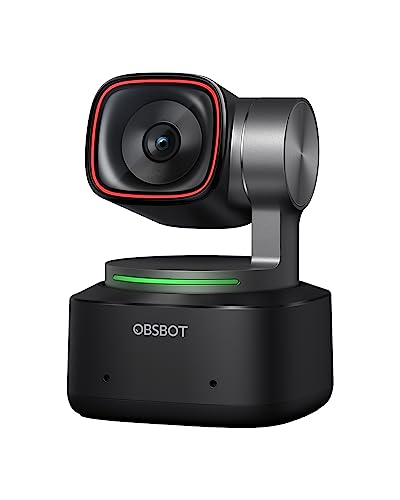
OBSBOT Tiny 2 4K Voice Control PTZ Webcam

OBSBOT Tiny 3 Spatial Audio 4K Webcam

OBSBOT Tail 2 PTZR NDI 4K Camera
A Breakdown Of The Leading Choices
The EMEET C960 stands out in the budget-monitor tier for one simple reason: it delivers native 4K from its CMOS sensor rather than upscaling a lower-resolution feed. PDAF (phase-detection autofocus) locks onto your face quickly, which matters on back-to-back calls where you don’t want to fiddle with focus rings.
The 73° field of view frames a single person without the fish-eye distortion you sometimes see on wider lenses. Two omnidirectional mics pick up your voice from a desk’s distance, making it a sensible pick for remote workers who hop between Zoom and Teams all day.
Positive Points
- True 4K capture from the CMOS sensor avoids the soft look of upscaled video
- PDAF autofocus holds your face during movement, useful if you stand or gesture while talking
- Dual omni mics capture clear voice from across a desk without needing a separate headset
- The 73° FOV frames one speaker cleanly without the wider-angle warping at the edges
Things To Consider
- No AI tracking or auto-framing means you’ll need to stay centered in the shot yourself
- Low-light performance depends heavily on your room lighting, and the image can get grainy in dim setups
- Microphone quality is fine for calls but won’t satisfy creators who want broadcast-grade audio
Who It Suits Best
Remote workers and students who want noticeably sharper video than a built-in laptop camera without paying for creator-tier features.
Skip It When
The OBSBOT Meet 2 is a better fit when AI framing matters because it follows you around the room.
Insta360 built the Link 2 around a 1/2″ sensor, which is unusually large for a webcam and helps it pull clean detail out of dim home offices. PTZ (pan, tilt, zoom) mechanics let the camera physically rotate to follow you, while HDR processing balances bright windows behind you against your face.
AI noise-canceling on the mic reduces keyboard clicks and HVAC hum, and gesture control lets you start tracking or zoom in with a hand wave. Compared to the EMEET C960’s static approach, this one actively works to keep you framed during a presentation.
Positive Takeaways
- The 1/2″ sensor delivers strong low-light clarity for late-evening streams or dim home offices
- Physical PTZ movement tracks you around the room, which static webcams like the EMEET C960 can’t match
- Gesture control removes the need to interrupt your flow with clicks or keyboard shortcuts
- AI noise reduction cleans up keyboard chatter and background hum that would otherwise leak into calls
Worth Noting
- The mechanical gimbal means you’ll want to mount it somewhere stable, since bumps can affect tracking
- Companion software adds features but may feel heavier than simpler plug-and-play webcams
- Higher power draw can warm the housing during long streaming sessions
Key Specs
Made For
Creators, presenters, and serious remote professionals who want tracking, gesture control, and HDR without jumping to a full broadcast camera.
Consider Something Else When
The OBSBOT Tiny 2 is a stronger pick when voice control and multi-mode tracking matter more than raw sensor size.
The TONGVEO system isn’t a webcam in the desk-mounted sense; it’s a full room solution. The PTZ camera handles 3X optical zoom and AI auto-tracking across a 93° wide angle, while a separate wireless Bluetooth speakerphone picks up voices around a conference table.
USB 3.0 and HDMI outputs give you flexibility for different room setups, whether you’re feeding a streaming PC or a wall-mounted display. This is built for shared spaces, not solo creators, and it shows in the way the speakerphone covers a wide area.
Why It Works Well
- The 3X optical zoom keeps remote viewers close to the active speaker without losing image quality
- Wireless speakerphone removes cable clutter on the conference table
- Dual USB 3.0 and HDMI outputs work with most room hardware, from PCs to dedicated conferencing gear
- AI tracking follows whoever is speaking so remote attendees don’t lose the thread
Trade Offs
- Multi-piece setup takes longer to install and configure than a single plug-in webcam
- Overkill for a home office, since the camera is designed for larger rooms
- Wireless speakerphone requires charging management for full-day meetings
Best Suited To
IT teams and AV managers setting up huddle rooms, worship spaces, and mid-size conference rooms that need tracking plus clear table coverage.
Look Elsewhere When
The Insta360 Link 2 is the smarter choice for a solo professional who just needs one camera on a home desk.
The OBSBOT Meet 2 keeps things tidy: a 1/2″ sensor paired with AI framing that crops and follows you inside a 4K frame. You get the resolution headroom of 4K without needing to manually frame every shot, which is genuinely useful when you’re moving between a whiteboard and your desk.
Autofocus is fast and quiet, so transitions don’t pull focus awkwardly during a stream. Compared to the EMEET C960, the Meet 2 trades some simplicity for smarter framing, making it a better fit if you pace while presenting.
Real Benefits
- AI framing crops intelligently inside the 4K frame, keeping you centered without manual adjustment
- The 1/2″ sensor holds detail well in soft or mixed lighting
- Autofocus transitions are quiet enough not to interfere with spoken content
- Compact body fits neatly on a laptop lid without blocking the screen
Points To Note
- Companion app is needed to access some AI framing modes, which adds setup steps
- Framing accuracy can waver when two people enter the frame simultaneously
Feature Snapshot
Right Fit For
Solo creators, vloggers, and presenters who want clean AI framing without the complexity of a full PTZ gimbal system.
Not Your Match When
The OBSBOT Tiny 3 Lite is a more sensible choice if you travel often and need the smallest possible footprint.
Most webcams in this list chase resolution; the OBSBOT Meet SE chases frame rate. 100fps at 1080p makes motion look noticeably smoother, which matters if you’re a gamer showing fast on-screen action or a fitness creator doing quick reps.
AI framing still keeps you centered even at the higher frame rate. It isn’t 4K, so this isn’t the right tool for someone who needs maximum pixel count, but for streamers focused on buttery motion, it’s a thoughtful alternative.
Where It Helps
- 100fps produces smoother motion than typical 30fps webcams, ideal for fast gameplay or fitness content
- AI framing works even at the high frame rate, keeping the shot composed
- Lower resolution means lighter demands on your streaming PC’s encoding pipeline
Small Caveats
- 1080p is a step down in sharpness if your viewers expect 4K detail
- Low-light performance is acceptable but not exceptional compared to 1/2″ sensor options
Perfect Match For
Gamers and fitness creators who value smooth motion over maximum pixel count and want AI framing on a budget.
A Better Fit Elsewhere
The OBSBOT Meet 2 is the stronger pick when your audience expects 4K resolution more than high frame rates.
The Tiny 3 Lite is the smallest webcam here, sitting 48% smaller and 34% lighter than its predecessor. Inside that compact housing sits a 1/2″ CMOS sensor and a triple-mic spatial audio array, which is more tech than you’d expect from something this small.
It captures 4K at 30fps or 1080p at 120fps with PDAF autofocus. For travelers and minimalists, the size advantage matters more than any single spec, and it still holds its own against bulkier options.
Useful Touches
- The compact body slips into laptop bags without crowding other gear
- Triple-mic spatial audio captures directional sound, useful for travel vlogs
- PDAF autofocus keeps close-up shots sharp when you’re holding objects up to the camera
Areas To Watch
- The smaller housing may feel less stable on heavy monitors than chunkier designs
- Compact tripod mounts aren’t always included, so check the box contents if you need one
Quick Facts
Who Will Love This
Traveling creators and anyone working out of small hotel desks who want real 4K without hauling a full-size webcam around.
Reach For A Different Pick When
The OBSBOT Tiny 3 is worth stepping up to when spatial audio quality matters as much as size savings.
The Tiny SE brings the gimbal-style tracking that made the OBSBOT Tiny line popular into a more accessible price tier. PTZ mechanics physically rotate the camera to keep you in frame, paired with 1080p at 100fps for motion that stays smooth even when you gesture quickly.
It’s a streaming-focused camera rather than a meeting tool, leaning into tracking and high frame rates over 4K. For streamers who move around, that trade is usually worth it.
Well-Handled Touches
- Physical PTZ tracking follows you across the room without digital cropping
- 100fps at 1080p handles fast gestures without motion blur
- Gimbal mechanics feel responsive during live streams, with minimal lag
Honest Caveats
- 1080p limits the maximum detail your stream can show
- Gimbal movement can pick up desk vibrations during intense gaming moments
- Setup typically requires OBSBOT Center software for fine-tuning
Built With In Mind
Streamers and creators who move around on camera and care more about smooth tracking than raw resolution.
Swap It Out When
The OBSBOT Tiny 3 Lite is the better pick for travelers who want 4K and a smaller footprint.
The Tiny 2 packs a 1/1.5″ sensor, gesture control, voice control, and HDR light correction into a single desktop unit. It runs at 60fps and uses multi-mode AI tracking that can lock onto your face, hands, or upper body depending on what you’re doing.
Compared to the Tiny SE, this is the grown-up version with more resolution and more control options. The voice control is genuinely handy when your hands are busy with a presentation clicker or cooking demo.
Features That Help
- Voice control lets you trigger tracking or zoom with spoken commands, useful during hands-on demos
- Gesture control adds a second hands-free option for switching modes mid-stream
- HDR light correction helps when windows or bright screens would otherwise blow out the exposure
- Multi-mode tracking chooses the right framing for whatever motion you’re doing
Factors To Consider
- Voice commands require a quiet environment to avoid false triggers
- More features mean more setup time inside the companion app
- Slightly larger than the Tiny 3 Lite, so less ideal for ultralight travel kits
Technical Highlights
The Right Fit
Hands-on creators, presenters, and cooking or craft streamers who want both voice and gesture control during busy scenes.
Another Choice May Suit
The Insta360 Link 2 is worth considering when you want HDR performance with a slightly simpler control scheme.
The Tiny 3 steps up with a 1/1.28″ CMOS sensor, dual all-pixel PDAF, and a triple-mic array tuned for spatial audio. It captures 4K at 30fps or 1080p at 120fps, and the 48% size reduction versus older Tiny models makes it easier to position anywhere.
Spatial audio means the camera can separate and position sound sources, which podcasters and music streamers will appreciate. For most meeting users, this is more camera than needed, but for content creators it’s a focused tool.
What Pays Off
- Spatial audio pickup separates voices and instruments for cleaner podcast-style recordings
- The 1/1.28″ sensor is among the largest in any webcam, pulling in significant light
- Dual all-pixel PDAF keeps focus locked across fast movements during streams
- Compact body makes it practical for hybrid creators who move between setups
Possible Compromises
- Higher cost than simpler webcams, even before considering audio gear
- Spatial audio shines in controlled environments and is less effective in noisy rooms
Whose Shelf It Belongs On
Podcasters, music streamers, and creators who want both strong 4K imaging and directional audio in one device.
Where A Sibling Pick Shines
The OBSBOT Tiny 2 is the smarter choice when voice control and gesture commands matter more than spatial audio fidelity.
The Tail 2 is the most ambitious camera in this lineup. It runs 4K at 60fps with a 1/1.5″ CMOS sensor and a 50MP capture mode, plus pro AI tracking built for multi-camera studio setups. NDI (Network Device Interface) support means you can route the video feed over your network rather than relying on a single USB cable.
PTZR stands for pan, tilt, zoom, and rotate, giving this camera more movement range than a standard webcam. For solo creators running a small studio or hybrid event spaces, this is a significant step up in capability.
Practical Pluses
- 4K at 60fps produces smooth, sharp video suitable for high-end live streams
- NDI support enables flexible network routing in multi-camera setups
- PTZR movement covers wider spaces than standard webcams can follow
- 50MP capture mode delivers detailed stills for thumbnails and promotional material
What To Weigh
- Significantly more complex than a simple USB webcam, requiring network configuration
- Premium pricing puts it out of reach for casual streamers
- Larger physical footprint may require dedicated mounting hardware
Feature Card
Who Should Grab It
Studio creators, event producers, and small broadcast teams running multi-camera setups that need network-driven video routing.
Wrong Turns To Avoid
The OBSBOT Tiny 2 is the better fit for solo streamers who don’t need NDI or multi-camera workflows.
What Matters Most When Choosing A 4K Streaming Webcam
Resolution vs Frame Rate
4K resolution gives you sharp detail, but frame rate controls how motion looks. Gamers and fitness creators benefit from 100fps or higher for smooth motion, while podcasters and presenters often prioritize resolution. Match the spec to what your stream actually shows.
Sensor Size And Low Light
A larger CMOS sensor pulls in more light, which helps in dim home offices. The 1/2″ and 1/1.5″ sensors in this list handle low light noticeably better than smaller webcam sensors. If your streaming space lacks strong lighting, sensor size matters more than resolution.
Tracking And Autofocus Behavior
AI tracking and PDAF autofocus keep you framed and sharp without manual adjustment. PTZ (pan, tilt, zoom) cameras physically rotate to follow you, while digital AI framing crops inside a 4K frame. Both work, but PTZ feels more natural for room-scale movement.
Audio Capture
Built-in mics range from basic omni pickups to triple-mic spatial arrays. For calls, simple dual mics work fine. For podcasts or music streams, spatial audio or a dedicated mic makes a meaningful difference. Match audio quality to your content type.
Key Considerations Across These Picks
Common Buying Mistakes
Many shoppers fixate on 4K resolution and overlook frame rate, ending up with choppy motion on action streams. Others ignore sensor size, then complain about grainy footage in dim rooms. A third mistake is buying PTZ tracking without considering desk stability, since gimbal movement can amplify vibrations.
Where The Extra Money Goes
Premium tiers typically buy larger sensors, better AI tracking, and richer audio capture. The jump from 1080p to 4K helps most when you crop or stream at high bitrates. Gesture and voice control show up in mid-to-high tiers and save real time during hands-on demos. Paying more makes sense when your content actually benefits from those features.