A 50mm prime has earned its reputation as the everyday workhorse for a reason: it renders scenes close to how your eyes see them, lets in plenty of light, and forces you to think about composition rather than zoom. The f/1.8 aperture keeps weight low on your neck while still pulling creamy background separation, so portraits pop without expensive glass.
The challenge is finding the right version for your mount. Canon EF, Nikon F, Sony E, Nikon Z, and Canon RF all have their own native options, plus third-party lenses from brands like Meike that fill gaps at friendlier prices. This list rounds up ten solid choices across mounts and budgets, with honest notes on who each one suits best.
A Quick View Of The Lineup

Nikon AF-S FX NIKKOR 50mm f/1.8G Lens

Canon EF 50mm f/1.8 STM Lens (Renewed)
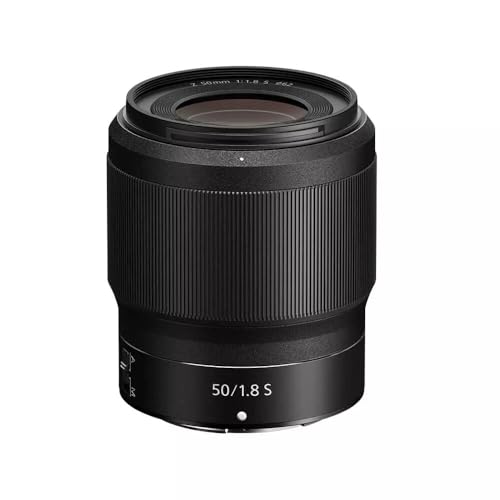
Nikon Nikkor Z 50mm f/1.8 S Lens

Canon EF 50mm f/1.8 STM International

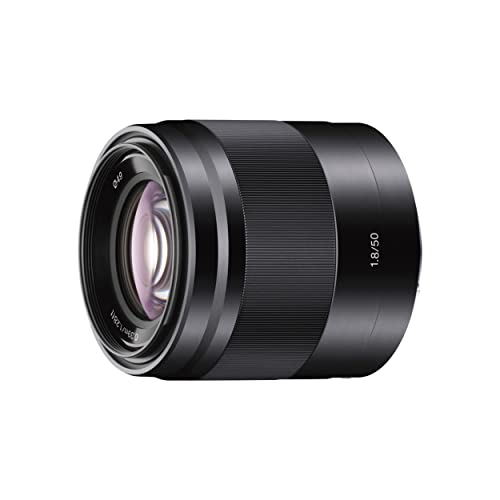
Sony E 50mm F1.8 OSS Portrait Lens

Meike 33mm F1.4 APS-C for Sony E

Meike 50mm F1.8 Full Frame Sony E
Meike 85mm F1.8 SE II for Sony E

Canon RF 50mm F1.8 STM Lens
A Closer Look At Each Pick
The Nikon AF-S FX NIKKOR 50mm f/1.8G is a long-running favorite among Nikon DSLR owners who want sharp images without a heavy lens. Its 47-degree picture angle matches what you’d see walking around town, which makes framing intuitive from day one. The f/1.8 maximum aperture gathers enough light for indoor portraits without forcing the ISO sky-high.
Compared to many older 50mm designs, this version is compact enough to keep mounted on a walk-around body. Owners commonly report that autofocus is snappy on bodies like the D7500 and D850, especially in good light. For most full-frame Nikon shooters, this lens handles daily walking-around photography with quiet competence.
Key Advantages
- Compact FX-format build keeps camera bags light on long shoots
- f/1.8 aperture gathers enough light for indoor portraits without extreme ISO
- SWM autofocus motor (Silent Wave Motor) drives quiet, accurate focusing
- 47-degree angle mimics natural human field of view for easy composition
- Metal-and-plastic construction feels balanced on mid-size DSLR bodies
Things To Consider
- No image stabilization, so handheld shots in dim light need a stable grip
- Older AF-S design lacks the silent stepping motor of newer Z-mount lenses
Key Specs
Made For
Full-frame Nikon DSLR shooters who want a reliable everyday prime for portraits, street scenes, and indoor events.
Consider Something Else When
You’re on a Nikon Z mirrorless body and want native autofocus performance, where the Nikon Nikkor Z 50mm f/1.8 S is a sharper choice.
The Canon EF 50mm f/1.8 STM, sold here as a renewed unit, brings the same capable optics as the standard version at a noticeably lower outlay. STM stands for stepping motor, which focuses smoothly during video and quietly during stills. For hobbyists building a kit on a Canon Rebel or older EOS body, this lens covers portraits and street photography with minimal fuss.
The renewed route appeals to anyone uneasy about dropping full price on a first prime. Some units show light cosmetic marks from prior use, though optics are typically inspected before resale. If you’re willing to accept a slightly worn exterior, the savings can fund an extra battery or a tripod.
Noteworthy Benefits
- Renewed pricing drops the entry cost compared to a brand-new unit
- STM stepping motor keeps focus quiet during video recording
- Lightweight plastic build won’t weigh down a small Canon DSLR body
- Wide f/1.8 aperture suits indoor events and low-light scenes
Worth Noting
- Renewed condition varies; cosmetic wear is possible
- No image stabilization for handheld dim-light shooting
- Plastic mount construction is lighter but less durable than metal mounts
Right Fit For
Canon DSLR hobbyists on a tight budget who want a reliable everyday prime without paying for a brand-new box.
Look Elsewhere When
You shoot Canon RF mirrorless and want a native mount, where the Canon RF 50mm F1.8 STM pairs more naturally with current bodies.
The Nikon Nikkor Z 50mm f/1.8 S is the kind of lens that rewards patience with sharper files than you might expect. Part of Nikon’s S-line, this prime uses a Nano Crystal Coat that suppresses ghosting and flare in backlit scenes. The Z mount’s wide throat lets the optical design breathe, and the result is edge-to-edge clarity on full-frame bodies like the Z 6II and Z 7II.
For working photographers or serious enthusiasts, the multi-focus stepping motor delivers quiet autofocus that suits hybrid video-and-stills workflows. The included HB-90 hood and CL-C1 case round out a thoughtful kit. Weighing roughly 415 grams, it stays comfortable on a full day of handheld shooting.
Good Reasons To Consider
- S-line optical quality with Nano Crystal Coat for clean backlit shots
- Multi-focus STM motor handles smooth video autofocus
- Weather-sealed construction handles light dust and moisture
- Wide Z mount allows sharper corner-to-corner performance on full frame
- Customizable control ring lets you adjust aperture or exposure compensation
Honest Caveats
- Premium price compared to F-mount 50mm options
- Heavier than typical f/1.8 primes at around 415 grams
Key Specs
Best Suited To
Serious Nikon Z shooters who want flagship-grade sharpness and don’t mind paying extra for premium optics.
A Better Fit Elsewhere
Casual hobbyists on a budget, where the Meike 50mm F1.8 for Sony E or older Nikon F-mount primes give better value.
The Canon EF 50mm f/1.8 STM International Version skips the manufacturer warranty in exchange for a lower sticker price. Optically, you’re getting the same lens Canon has sold for years: a Super Spectra coating that helps with contrast in mixed light, and a stepping motor that focuses smoothly during video capture.
The trade-off matters mainly for shoppers who want peace of mind against defects. If you tend to keep gear for many years without issues, the international version may suit you perfectly. It’s also worth noting that “international” here means the lens ships without USA warranty paperwork, which can be a deal-breaker for some.
Notable Gains
- Lower price than the US-warranty edition of the same lens
- Super Spectra coating reduces flare and improves color accuracy
- STM motor keeps video focus smooth and silent
- Compact build balances well on entry-level Canon DSLRs
Trade Offs
- No manufacturer warranty in the US
- International packaging may lack some bundled accessories
- Plastic lens mount lacks the durability of metal-mount alternatives
Who Will Love This
Cost-conscious Canon DSLR owners comfortable buying without a US warranty in pursuit of a better price.
Not Your Match When
You want full US warranty coverage and factory packaging, where the standard Canon EF 50mm f/1.8 STM is the safer bet.
The standard Canon EF 50mm f/1.8 STM remains a benchmark for first-time prime buyers. Its 40-degree horizontal angle of view and 1.15-foot minimum focusing distance make it versatile for portraits, action, and after-dark street scenes. On a Rebel T7 or EOS 90D, this lens pairs naturally and stays light in the bag.
The stepping motor quietly locks onto faces and tracks motion during video without the grinding noise of older Canon 50mm designs. The maximum magnification of 0.21x lets you get reasonably close to small subjects like flowers or food. For Canon DSLR owners who want a single do-it-all prime, this is a sensible starting point.
What Stands Out
- Versatile 50mm focal length covers portraits, street, and events
- STM motor delivers smooth, quiet focus for video capture
- 0.21x maximum magnification supports close-up subjects
- Lightweight design balances well on smaller Canon DSLR bodies
Points To Note
- No image stabilization means slower shutter speeds need a steady hand
- Plastic mount construction can wear with frequent mounting changes
Key Specs
Perfect Match For
Canon DSLR owners stepping up from a kit lens who want a single prime that handles most everyday subjects.
Swap It Out When
You’re on a Canon EOS R-series body, where the Canon RF 50mm F1.8 STM gives native mount performance.
The Sony E 50mm F1.8 OSS brings built-in Optical SteadyShot image stabilization to Sony’s E-mount lineup, which is a notable edge over stabilized-by-sensor-only options. OSS here provides roughly a 4-stop shutter speed advantage, meaning handheld shots at 1/30 second remain usable in many indoor settings.
The 7-blade circular aperture produces smooth, rounded defocus highlights that portrait photographers appreciate. With a minimum focus distance of 1.28 feet and a maximum magnification of 0.16x, it doubles as a light close-up lens for tabletop work. On a full-frame Sony body, the 50mm focal length suits everyday street and portrait shooting without forcing you to swap lenses often.
Well-Handled Touches
- Optical SteadyShot image stabilization adds confidence in low light
- 7-blade circular aperture creates pleasing bokeh
- Silent autofocus operation suits video and event shooting
- Compact design balances nicely on a6xxx series cameras
Small Caveats
- Older design lacks the sharpness of newer Sony GM lenses
- Somewhat heavier than the plastic-bodied E-mount primes
Key Specs
Built With In Mind
Sony E-mount shooters who frequently shoot handheld in dim cafes, museums, or at indoor events where stabilization matters.
Another Choice May Suit
Hybrid shooters who want newer coatings and quieter autofocus, where the Meike 50mm F1.8 Full Frame Sony E offers a modern alternative.
The Meike 33mm F1.4 is built for Sony E-mount APS-C cameras like the a6400, a6700, and ZV-E10. APS-C sensors are smaller than full frame, so a 33mm focal length produces a field of view similar to about 50mm on full frame. The f/1.4 aperture is wider than the typical f/1.8, letting in more light for indoor shooting and producing slightly softer backgrounds.
Meike also bundles STM stepping motor autofocus with electronic aperture control and EXIF data transmission, so the camera recognizes the lens properly in metadata. A Type-C firmware upgrade port on the lens lets you update it without sending it back, which is unusual at this tier. For vloggers and content creators on Sony APS-C, it’s a strong value pick.
The Helpful Details
- f/1.4 maximum aperture gathers more light than typical f/1.8 primes
- STM stepping motor delivers quiet video-friendly autofocus
- Type-C firmware upgrade port keeps the lens current over time
- EXIF data transmission integrates properly with Sony camera menus
Where It Is Less Suited
- APS-C design means it won’t cover a full-frame sensor edge-to-edge
- Third-party build quality varies more than first-party Sony lenses
Whose Shelf It Belongs On
Sony APS-C mirrorless owners and ZV-E10 vloggers who want a wide-aperture everyday prime at a friendly price.
Where A Sibling Pick Shines
You shoot full-frame Sony bodies like the A7 IV, where the Meike 50mm F1.8 Full Frame is the better-matched option.
The Meike 50mm F1.8 fills a noticeable gap in Sony’s E-mount lineup: a true 50mm full-frame prime at a price most hobbyists can stomach. It supports autofocus, electronic aperture adjustment, and EXIF information transmission on bodies like the A7 III, A7R IV, and A9. The dedicated AF/MF switch lets you swap focus modes without diving into camera menus.
For portrait, street, and landscape photography, the wide f/1.8 aperture enables faster shutter speeds in low light while still rendering pleasant background blur. STM stepping motor autofocus keeps operation quiet for video. Compared to the Sony E 50mm F1.8 OSS covered earlier, this lens skips the built-in stabilization but trades that for a noticeably lower price.
Why It Works Well
- Native full-frame coverage for Sony E-mount cameras
- Dedicated AF/MF switch for fast manual focus overrides
- STM stepping motor keeps video autofocus smooth and quiet
- EXIF data transmission integrates with Sony metadata fields
Points To Keep In Mind
- No optical stabilization means slower shutter speeds need steady hands
- Third-party build quality can vary between production runs
Made For
Sony full-frame mirrorless owners who want a 50mm prime that fits their mount without paying for first-party glass.
Skip It When
You frequently shoot handheld in very dim light and need stabilization, where the Sony E 50mm F1.8 OSS adds that reassurance.
The Meike 85mm F1.8 SE II stretches beyond the typical 50mm territory into telephoto portrait reach. The 85mm focal length on full frame produces flattering compression for headshots and half-body portraits, with subject-to-background separation that makes faces pop without needing a wider aperture. Each element is multi-coated on both sides to suppress flare and ghosting.
The redesigned optical formula keeps the lens compact and lightweight despite the long focal length. The front and rear elements carry a fingerprint-resistant coating, which matters when you’re constantly adjusting filters or shooting in changing conditions. For Sony full-frame portrait shooters who want telephoto reach without first-party pricing, this lens earns serious consideration.
What Helps Most
- 85mm focal length produces flattering portrait compression
- Multi-coated elements reduce flare in backlit situations
- Fingerprint-resistant coatings on front and rear elements
- Compact telephoto design stays manageable on full-day shoots
- Fast f/1.8 aperture enables indoor portraiture without flash
Things To Weigh
- Telephoto focal length demands more working distance from subjects
- Longer reach means tighter framing limits for indoor group shots
- No built-in stabilization for handheld low-light work
Perfect Match For
Sony full-frame shooters focused on portraiture who want telephoto compression and creamy background separation.
Not Your Match When
You primarily shoot street or environmental portraits in tight spaces, where the Meike 50mm F1.8 Full Frame gives more breathing room.
The Canon RF 50mm F1.8 STM is the native mount answer for Canon EOS R-series shooters looking for an affordable everyday prime. The RF mount’s short flange distance lets Canon design a compact lens with an aspheric element that keeps distortion low. For users stepping up from phone photography into an EOS R50 or R6, this lens feels right at home.
The STM motor moves smoothly during video, with near-silent operation that suits vlog-style content. Combined with the bright f/1.8 aperture, the lens renders pleasing background blur for portraits while staying small enough to leave mounted on the camera between sessions. On a hike or weekend trip, this setup rarely feels like a burden.
Where It Delivers
- Native RF mount with full electronic communication
- Aspheric element reduces distortion for cleaner edges
- STM motor delivers smooth, silent focus for video
- Compact build suits smaller R-series bodies like the R50
- f/1.8 aperture enables low-light shooting and background blur
Less Ideal Details
- No optical image stabilization for handheld low-light work
- Plastic lens mount feels less premium than metal alternatives
Built With In Mind
Canon RF mirrorless owners, especially those on entry-level R-series bodies, who want an affordable native 50mm prime.
A Better Fit Elsewhere
You shoot Canon EF DSLRs and want a budget-friendly 50mm, where the Canon EF 50mm f/1.8 STM offers the same core experience on the older mount.
What Matters Most Before Choosing Your Next Prime
Matching The Mount To Your Camera
The single biggest decision is mount compatibility. A Nikon Z lens won’t fit a Canon body, and Sony E-mount glass behaves differently on APS-C versus full-frame cameras. Before falling in love with a specific lens, confirm your camera’s mount type and whether the lens is designed for your sensor size.
For full-frame Sony bodies, you can use both full-frame and APS-C E-mount lenses, though APS-C lenses produce heavy vignetting on full frame. For Canon RF cameras, native RF lenses work best, though EF lenses can be adapted with generally good autofocus performance.
Aperture And Low-Light Capability
An f/1.8 aperture is the sweet spot for most hobbyists, gathering enough light for indoor portraits and evening street scenes without forcing extreme ISO settings. Some specialty lenses like the Meike 33mm F1.4 push wider to f/1.4, which adds even more low-light headroom and softer backgrounds at the cost of weight and price.
For video or run-and-gun stills, an aperture wider than f/2 helps separate subjects from busy backgrounds. If you mostly shoot outdoors in daylight, you might not need the widest aperture and can save money by sticking with f/1.8.
Autofocus Motor Type
Modern stepping motors (STM on Canon, STM on Meike, SWM on older Nikon AF-S lenses) focus quietly and smoothly, which matters for video work. Older ring-type motors can still focus accurately but often make more noise. For hybrid shooters who switch between stills and video, a stepping motor is worth prioritizing.
Sony’s OSS system adds optical image stabilization, useful when handheld shooting in dim conditions. Canon and Nikon typically rely on in-body stabilization in their newer mirrorless bodies, which can compensate for lenses that lack built-in stabilization.
Build Quality And Weight
Plastic-bodied primes keep weight low and cost down, which matters for travel and casual use. Metal mounts last longer under frequent mounting changes, and weather sealing adds confidence in dusty or damp conditions. Consider how often you’ll swap lenses and where you’ll shoot when weighing these factors.
Key Considerations Across These Picks
Pitfalls Shoppers Hit
The most common mistake is choosing a lens without confirming mount compatibility for your specific camera body. APS-C lenses mounted on full-frame bodies often produce heavy vignetting unless the camera has a crop mode. International versions sometimes lack US warranty coverage, so read the listing carefully before checkout.
Another trap is assuming all 50mm f/1.8 lenses perform identically. Optical coatings, motor types, and build materials vary widely, and these differences show up in real-world use: flare resistance in backlit scenes, autofocus smoothness in video, and overall sharpness at wide apertures.
Where The Extra Money Goes
Premium lenses like the Nikon Nikkor Z 50mm f/1.8 S justify their higher price through better optical coatings, weather sealing, and multi-focus stepping motors. The Nano Crystal Coat on the Nikkor Z 50mm is a real-world benefit when shooting into the sun, reducing ghosting that cheaper lenses can’t suppress.
Spending up also gets you sharper corner-to-corner performance on full-frame sensors, which matters for landscape and architectural work. For hobbyists shooting mostly portraits or social media content, mid-tier lenses deliver plenty of quality without the premium tax.
Frequently Asked Questions
What Is A 50mm f/1.8 Lens Best Used For?
A 50mm f/1.8 lens excels at portraits, street photography, and low-light scenes where you want both subject sharpness and soft background blur. The 50mm focal length mimics how the human eye sees scenes, making framing intuitive.
Do I Need Image Stabilization On A 50mm Prime?
Image stabilization helps in dim light where shutter speeds drop below 1/100 second, but many photographers manage fine without it at wider apertures. Camera bodies with in-body stabilization can compensate, though dedicated OSS or VR systems still help.
Can I Use A Sony E-Mount Lens On A Full-Frame Sony Camera?
Sony full-frame cameras accept both full-frame and APS-C E-mount lenses, but APS-C lenses will produce vignetting unless you enable crop mode. For full-frame image quality, native full-frame lenses are the better match.
What Is The Difference Between STM And Regular Autofocus Motors?
STM (Stepping Motor) autofocus moves in small, precise increments for smooth, quiet focusing that suits video. Older ring-type motors can be louder and jerkier during focus transitions, though they’re often just as accurate for still subjects.
Is A 50mm Lens Good For Beginners?
Yes, a 50mm prime is one of the best learning tools available because it forces you to move your feet for composition rather than relying on zoom. The simple focal length builds stronger framing instincts than a variable zoom lens typically encourages.