Cylindrical anamorphic glass has long lived behind studio doors and rented cases. The current wave of mirrorless-friendly designs pulls those stretched, flared, oval-bokeh looks into indie kits, wedding bags, and even phone shoots. Whether you’re framing a short film on a Sony body or widening your iPhone reel, the right adapter reshapes not just the image but your whole approach to composition.
The Essentials At A Glance

SIRUI 35mm T2.9 1.6X Full-Frame Anamorphic Lens (RF Mount)

Moment 1.33x Anamorphic Mobile Lens (Blue Flare, M-Series)
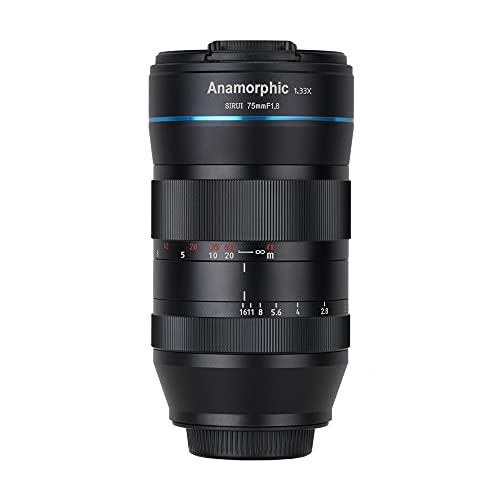
SIRUI 75mm F1.8 1.33X APS-C Anamorphic Lens (E Mount)

SIRUI 50mm F1.8 1.33X APS-C Anamorphic Lens (E Mount)

SIRUI 20mm T1.8 1.33X Anamorphic Autofocus Lens (E Mount)
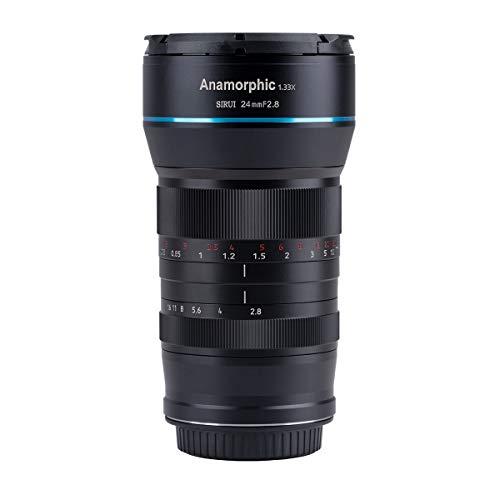
SIRUI 24mm F2.8 1.33X APS-C Anamorphic Lens (E Mount)

SIRUI Saturn 35mm T2.9 1.6X Full-Frame Carbon Fiber Anamorphic (L Mount)

SIRUI 35mm F1.8 1.33X APS-C Anamorphic Lens with E Mount Adapter

SIRUI 40mm T1.8 1.33X S35 Autofocus Anamorphic Lens (E Mount)

SIRUI 100mm T2.9 1.6X Full-Frame Anamorphic Lens (E Mount)
A Closer Look At Each Pick
Full-frame anamorphic shooting used to mean Hollywood rental houses, and the SIRUI 35mm T2.9 1.6X makes that workflow feel almost normal. It pairs directly with RF-mount bodies, so Canon R5 and R6 shooters can mount without an adapter and start framing for a 2.4:1 or wider 2.8:1 image depending on sensor mode. The 1.6x squeeze factor is the bigger of the two common ratios, meaning you keep more horizontal real estate when you de-squeeze in post.
That wider horizontal field of view opens up car commercials, landscapes, and any scene with edge-to-edge information. For documentary shooters carrying minimal rigs, the focal length lands in a comfortable middle ground between wide establishing shots and tighter interviews.
Useful Strengths
- Native RF mount removes the adapter wobble some EF-to-RF conversions introduce during focus pulls.
- 1.6x squeeze delivers a wider de-squeezed frame than 1.33x designs, helpful when cropping for 2.39:1 deliverables.
- Full-frame coverage keeps the look consistent across RF bodies without vignetting on standard frame rates.
- T2.9 aperture is workable for narrative interiors lit with practical sources and small LED panels.
Worth Noting
- Manual focus only, so solo operators rely on pulling marks or monitor magnification.
- Full-frame glass tends to be heavier than APS-C siblings, something to weigh on gimbal builds.
Right Fit For
Full-frame Canon RF shooters producing short films, music videos, or cinematic narrative content who want maximum horizontal squeeze without adapter hassle.
A Better Fit Elsewhere
The SIRUI Saturn 35mm T2.9 1.6X Carbon Fiber version suits L-mount users who need a much lighter body for drone and gimbal work.
The Moment 1.33x takes the anamorphic conversation off the tripod and into your pocket. It attaches to an M-Series Drop-In Mount or Universal Mount over your phone’s wide or telephoto camera, then uses hand-polished glass to produce that 2.40:1 stretched look without resorting to a software crop. For creators whose primary camera is already a phone, this entry feels almost obvious.
Aerospace-grade metal housing keeps the optic rigid during handheld shooting, and the blue flare option gives the classic horizontal streak when point sources hit the lens. Travel vloggers, social filmmakers, and anyone building a B-cam for unexpected moments will find this one earns its slot in a small kit bag.
What Helps Most
- 1.33x squeeze gives a true wide-screen capture without digital cropping, preserving sensor resolution.
- M-Series mount integrates with Moment’s filter ecosystem, including 67mm thread adapters for ND filters.
- Blue or gold flare variants let you dial the signature look to taste, from subtle to obvious.
- Pocketable size means it lives in a jacket pocket between setups, ready for unexpected moments.
Points To Note
- Requires a separate Moment M-Series mount, an extra purchase many shoppers overlook at first.
- Image quality hinges on whichever phone camera it pairs with; older sensors show more edge softness.
Who It Suits Best
Mobile-first creators and travel vloggers who want an authentic cinematic aspect ratio without carrying a separate camera body.
Consider Something Else When
The SIRUI Saturn 35mm T2.9 1.6X is a stronger match for shooters who already own an L-mount body and want full-frame glass on a gimbal.
The 75mm sits at the long end of the APS-C anamorphic conversation, and it earns that spot by giving portrait shooters room to work. The F1.8 aperture pulls in more light than slower siblings, and the resulting oval bokeh reads beautifully against neutral backgrounds. APS-C E-mount bodies like the a6700 or FX30 become portrait-friendly cinema tools with this optic attached.
You trade wide-angle coverage for a compressed, flattering rendering that suits one-on-one interviews, music performances, and tight narrative scenes. For wedding shooters who already keep an APS-C body in the bag, this 75mm fills the telephoto gap left by shorter anamorphic primes.
Bright Spots
- F1.8 wide aperture gathers light in dim venues where slower anamorphics struggle.
- 75mm focal length flatters faces, a real benefit for interviews and wedding ceremonies.
- Horizontal flares from point sources give the lens its character without overstatement.
- APS-C coverage matches Sony E-mount crop bodies without vignetting on common frame rates.
Trade Offs
- Longer focal length means stepping back in tight indoor venues, which not every location allows.
- Manual focus pulls on a 75mm at F1.8 demand accurate marks or reliable monitor magnification.
Made For
Portrait-leaning APS-C shooters who want oval bokeh and subject separation in cinematic framing.
Look Elsewhere When
The SIRUI 20mm T1.8 1.33X fits creators who want a wide, autofocus-friendly option for solo gimbal work.
Think of the 50mm as the “normal” anamorphic most narrative shooters reach for first. It delivers roughly a 37.5mm equivalent horizontal field of view on APS-C, which feels close to how the human eye sees a scene. That natural perspective makes it a comfortable companion for documentary, narrative, and event work where you don’t want the lens to dominate the framing.
Constructed with German Schott glass elements inside a lightweight aviation aluminum body, it stays manageable on handheld rigs and small gimbals. Compared with the wider 24mm sibling, this 50mm gives you breathing room with subjects without compressing them too tightly.
A Few Strong Suits
- Natural 50mm field of view suits a wide range of narrative and documentary setups.
- F1.8 aperture handles low-light interiors and golden-hour exteriors with room to stop down.
- Lightweight aluminum build reduces fatigue during long handheld shooting days.
- Blue flare option produces the signature horizontal streak under streetlights and headlights.
Some Limits To Know
- Manual focus only, so solo operators need a reliable follow-focus or monitor peaking.
- APS-C coverage won’t fill a full-frame sensor without vignetting in corners.
Best Suited To
Walk-around narrative shooters who want a versatile APS-C anamorphic that handles both dialog and environmental scenes.
Swap It Out When
The SIRUI 35mm F1.8 1.33X suits creators who want slightly wider coverage with an included E-mount adapter for entry-level builds.
Autofocus on an anamorphic lens used to be wishful thinking, and the SIRUI 20mm T1.8 makes that gap a lot smaller. A precision STM stepping motor drives smooth, quiet focusing that holds onto subjects while you walk or operate a gimbal. The 20mm focal length covers wide interior work and vlog-style framing where you want the room visible behind you.
The T1.8 aperture (a cinema-standard measurement roughly equivalent to a fast F-stop) gathers meaningful light for handheld low-light scenes, and the 1.33x squeeze turns that wide framing into a 2.35:1 deliverable. For solo creators moving between handheld and gimbal setups, this lens removes the focus-pulling chore that slows down run-and-gun days.
The Case For It
- Autofocus with stepping motor delivers accurate subject tracking for solo creators.
- T1.8 aperture handles dim interiors and night exteriors without pushing ISO too far.
- 20mm focal length gives breathing room for vlogging, real estate, and establishing shots.
- Neutral flare option offers a clean highlight rendering when you don’t want signature streaks.
Practical Considerations
- Autofocus on anamorphic glass is still maturing, so fast subject movement can hunt briefly.
- 20mm on S35 coverage means tighter bodies than full-frame sensors fill the frame cleanly.
Quick Facts
Who Should Grab It
Solo creators running Sony E-mount bodies who want autofocus and a wide field of view for gimbal and vlog-style production.
Reach For A Different Pick When
The SIRUI 40mm T1.8 1.33X is a stronger fit for shooters focused on event coverage and night work who prefer a tighter, faster focal length.
The 24mm sits in that useful zone between true wide-angle and standard, and the SIRUI 24mm F2.8 turns it into a 2.4:1 frame with character. The reduced minimum focusing distance of 0.6m is a real benefit when shooting in compact interiors where you can’t back up far. Real estate walkthroughs, music videos in tight venues, and run-and-gun documentary work all benefit from getting close without losing the wide feel.
F2.8 isn’t the fastest aperture in this lineup, but it’s a sensible middle ground for daylight exterior work and well-lit interiors. The aluminum housing holds up to daily grip use, and the blue flare adds personality when sodium-vapor or LED sources enter the frame.
Standout Benefits
- 0.6m minimum focus lets you frame tight interiors without a wide-angle adapter.
- 24mm focal length strikes a balance between environmental and dramatic framing.
- 2.4:1 native aspect ratio avoids the post-production crop that eats resolution.
- Compact APS-C form factor pairs well with smaller Sony bodies for handheld builds.
Honest Caveats
- F2.8 is slower than the F1.8 siblings, so dim venues may require ISO or lighting help.
- Wide lenses show every focus error at f/2.8, so pulling marks matter more than on telephotos.
Whose Shelf It Belongs On
Run-and-gun shooters working in tight interiors who need a wide field of view and reasonable close-focus reach.
Skip It When
The SIRUI 75mm F1.8 is a smarter pick if your projects lean on portraits and tight dialog scenes rather than wide environmental framing.
The Saturn 35mm is the anamorphic lens for people who count grams. At 418 grams, it trims meaningful heft off traditional full-frame glass while keeping the 1.6x squeeze ratio that gives you a wider de-squeezed frame than 1.33x options. The carbon fiber body construction is genuinely unusual at this price tier, and it shows up immediately when you mount the lens on a handheld stabilizer.
L-mount compatibility covers Panasonic, Leica, and Sigma L bodies, opening the door for shooters who already invested in that system. Compared with the larger RF-mount 35mm earlier in this list, this Saturn version trades some rigidity for portability, a worthwhile swap for travel and gimbal work.
What Makes Sense
- 418g carbon fiber build cuts weight on gimbals and handheld rigs without sacrificing 1.6x squeeze.
- T2.9 aperture gives enough light gathering for narrative interiors with modest lighting setups.
- L-mount compatibility broadens access beyond Sony E and Canon RF ecosystems.
- Compact form factor fits smaller matte boxes and follow-focus setups.
A Few Limitations
- Manual focus only, expected at this tier but worth noting for solo operators.
- Carbon fiber housings require care around impacts; owners commonly report cosmetic wear over time.
Feature Snapshot
Perfect Match For
Gimbal operators, drone pilots, and travel shooters on L-mount systems who need a wide cinematic look without the weight.
Not Your Match When
RF-mount full-frame shooters should step back to the SIRUI 35mm T2.9 1.6X RF version for native mount compatibility.
The 35mm F1.8 is a friendly entry point into anamorphic shooting on a budget that doesn’t feel punishing. It widens the horizontal field of view by roughly 33%, landing around a 26.3mm equivalent, which gives you extra room for environmental storytelling without going full wide-angle. Aircraft aluminum housing with copper focus components keeps the rig light but solid in hand.
For shooters testing whether anamorphic glass fits their style before committing to higher-tier options, this lens answers the question without overcommitting. The included E-mount adapter means it works on Sony Alpha bodies from the a6000 series through current full-frame models.
Positive Takeaways
- F1.8 aperture gathers light well for indoor documentary and event coverage.
- 35mm focal length offers a versatile middle ground for narrative and documentary setups.
- Included E-mount adapter simplifies entry for Sony Alpha shooters testing anamorphic.
- Aluminum and copper construction balances durability with reasonable weight.
Possible Compromises
- Manual focus operation requires focus pulling discipline on moving subjects.
- APS-C coverage won’t fill full-frame sensors without vignetting at the corners.
Built With In Mind
Sony E-mount shooters stepping into anamorphic glass for the first time who want a versatile focal length without committing to a full-frame price.
Another Choice May Suit
The SIRUI 50mm F1.8 1.33X is a better match for shooters who prefer a tighter, more natural perspective for dialog and interview work.
T1.8 is fast for an anamorphic lens, and the 40mm focal length lands close to the natural-perspective zone. Together they give event shooters and night-scene filmmakers a real edge when ambient light is scarce. Autofocus on a 1.33x design is rare at this tier, which makes this lens especially useful for solo operators working without a focus puller.
Concerts, restaurant scenes, neon-lit streets, and wedding receptions are exactly the environments where this combination pays off. Compared with the wider 20mm T1.8 earlier in this list, the 40mm gives tighter framing on subjects while keeping the same low-light advantage.
Positive Points
- T1.8 aperture captures meaningful light in concerts, restaurants, and night exteriors.
- Autofocus support suits solo operators covering live events without a focus puller.
- 40mm focal length delivers a natural perspective for portraits and environmental scenes.
- S35 coverage pairs cleanly with Sony Super 35 bodies like the FX30 and older FS5/FS7 cameras.
Factors To Consider
- T1.8 depth of field is razor thin, demanding accurate focus for moving subjects.
- Autofocus speed on anamorphic glass may not match native spherical lenses during fast action.
The Right Fit
Event videographers and narrative shooters who cover dim venues regularly and want autofocus paired with a wide aperture.
Where A Sibling Pick Shines
The SIRUI 20mm T1.8 1.33X suits creators who prefer a wider field of view with the same autofocus and aperture benefits.
The 100mm closes out this list as the longest anamorphic option, and the 1.6x squeeze turns it into something close to a 63mm equivalent on the horizontal axis. That combination is rare, and it changes how a portrait or detail shot reads on a full-frame sensor. For filmmakers isolating a face against a compressed background, this focal length delivers a look that’s hard to fake in post.
You’re stepping back considerably to frame a subject at 100mm, so this lens favors projects with controlled staging rather than run-and-gun interiors. Product filmmakers, food cinematographers, and detail-driven music video work are the natural fits.
The Value In It
- 100mm telephoto reach compresses backgrounds for cinematic portrait and detail framing.
- 1.6x squeeze factor delivers a wide de-squeezed image with character.
- Full-frame coverage works across Sony E, Canon RF, Nikon Z, and Leica L bodies.
- T2.9 aperture holds exposure consistency across the focal range.
Less Ideal Details
- Long focal length requires more working space, which tight locations don’t always offer.
- Manual focus on a 100mm demands precise marks; missing focus is more visible than at wide angles.
Spec Overview
Who Will Love This
Detail-oriented filmmakers producing portrait-driven narratives, food cinematography, and product work that benefits from telephoto compression.
A Better Fit Elsewhere
The SIRUI 75mm F1.8 1.33X is the smarter pick for shooters covering events or APS-C portraits who need a faster aperture in a tighter package.
What Matters Most Before Choosing Anamorphic Lens Adapters
Anamorphic glass reshapes your image in ways spherical lenses can’t, and the choices that follow from that simple fact cascade into every other decision.
Sensor Coverage and Squeeze Factor
The squeeze factor determines how much horizontal information the lens captures before you de-squeeze in post. A 1.33x factor delivers roughly a 2.4:1 aspect ratio on a 16:9 sensor without cropping, while 1.6x options reach 2.8:1 or wider for fuller cinematic frames. The trade-off is real: higher squeeze factors demand more precise de-squeeze workflows in editing and may show edge softness on smaller sensors. Full-frame bodies handle both ratios comfortably, while APS-C shooters see more pronounced coverage limits at the wide end.
Mount Compatibility and Body Matching
Native mount options eliminate adapter wobble during focus pulls, which matters when you’re working with longer focal lengths or sensitive framing. Sony E-mount shows up across most modern anamorphic designs, with Canon RF, Nikon Z, and L-mount options appearing on higher-tier full-frame lenses. Confirm your body before committing, because adapting between mounts can introduce focus shift and reduce the precision anamorphic shooting depends on.
Aperture and Low-Light Performance
Faster apertures like T1.8 or F1.8 open up event, night, and interior work that slower anamorphics struggle with. The depth of field at wide apertures also becomes razor-thin on longer focal lengths, so pulling marks and monitor magnification become essential. If your projects lean toward controlled interiors with lighting support, slower apertures free up budget for glass you might otherwise skip.
Autofocus and Operating Style
Autofocus on anamorphic glass is still maturing, but it’s a real benefit for solo operators and gimbal work. Manual focus remains the standard for cinema-style pulling, and most anamorphic shooters build workflows around marks, wireless follow-focus systems, or monitor peaking. Consider how you actually operate on set, because the right answer differs between solo creators and team-based productions.
Weight, Build, and Gimbal Use
Carbon fiber and aluminum housings affect how long you can handhold a rig before fatigue sets in. Gimbal operators feel every additional gram at the lens mount, so weight-conscious designs like the Saturn line make a real difference on long shooting days. For tripod-bound projects, traditional aluminum builds offer rigidity at a lower cost without compromise.
Key Considerations Across These Picks
Pitfalls Shoppers Hit
Mount mismatch is the most common mistake, with shoppers picking a lens only to discover their camera body requires a separate adapter that may shift focus or limit functionality. Sensor coverage catches people too, since a full-frame anamorphic on an APS-C body behaves differently than the spec sheet suggests at the edges. Autofocus expectations can also mislead, since anamorphic AF remains less refined than spherical lens performance, particularly with fast-moving subjects.
What Separates Premium From Basic
Higher-tier anamorphic glass shows up in build materials (carbon fiber vs aluminum), squeeze options (1.6x for wider deliverables), and aperture speed (T1.8 vs T2.9). Autofocus support also separates premium offerings from entry-level designs, as do wider mount compatibility and tighter quality control on focus and aperture rings. Whether those upgrades pay off depends on how often you shoot in the conditions that benefit from them, rather than chasing specs that sound good on paper.
Frequently Asked Questions
What does an anamorphic lens adapter actually do?
It captures a wider horizontal field of view than standard spherical lenses and then “de-squeezes” the image in editing to produce cinematic aspect ratios like 2.4:1. The wider capture also creates the signature oval bokeh and horizontal lens flares anamorphic glass is known for.
Are anamorphic lenses only for full-frame cameras?
No. Many modern anamorphic designs target APS-C and Super 35 sensors, though full-frame bodies take advantage of the widest coverage. The choice depends on your camera system and the aspect ratio you want to deliver.
Do I need autofocus on an anamorphic lens?
Not necessarily. Manual focus is the traditional workflow and gives precise control for cinema-style pulling. Autofocus becomes valuable for solo operators, gimbal work, and event coverage where pulling marks are impractical.
What is the difference between 1.33x and 1.6x squeeze factors?
A 1.33x squeeze produces roughly a 2.4:1 aspect ratio without cropping a 16:9 sensor, while 1.6x delivers wider frames around 2.8:1. Higher squeeze factors preserve more horizontal information but may show edge softness on smaller sensors.
Can I use these lenses on a gimbal?
Yes, especially lighter designs built with carbon fiber or compact aluminum housings. Weight and balance matter more than absolute specifications, so mount the lens on your gimbal before committing if possible.
Bottom Line
Anamorphic glass used to be reserved for productions with deep rental budgets, and the current generation of mirrorless-friendly designs puts that look within reach for indie filmmakers, event shooters, and even phone creators. Match the mount to your camera body, decide between 1.33x and 1.6x squeeze based on your delivery aspect ratio, and weigh autofocus against manual pulling based on how you actually shoot. With the right pick in the bag, your framing options open up in ways spherical glass simply can’t match.