10 Best Android Ce Camera Endoscopes for 2026: Clarity in Tight Spaces
The Leading Options At A Glance

DEPSTECH 10FT Articulating Borescope, Dual Lens

DEPSTECH Triple Lens Endoscope with 5″ IPS Screen

DEPSTECH 2K Endoscope, Dual Lens 2560P

Ferdiiz 1920P HD Borescope, 16.4ft Semi-Rigid

Anykit Endoscope Camera with Light, 1920P HD

Anykit Dual Lens Type-C Borescope, 16.5ft

Lightswim 1920P Type C Borescope, 16.5ft

Teslong 10FT USB C Endoscope for iPhone 15/16/17
KEEMIKA 1920P 9.8FT Borescope, USB Type C

Preciva Dual Lens 1920P Borescope, 16.5ft
A cracked sink trap, a missing screw behind a wall, or a mystery clog in a drain line can turn into a full afternoon of disassembly. A phone-based borescope, also called an inspection camera or endoscope, lets you peek inside engine blocks, wall cavities, HVAC ducts, and plumbing without pulling anything apart first. Most run on OTG (On-The-Go, a phone feature that lets the device act as a USB host) and pair with a free app, so the learning curve is short. The ten models below cover the range from basic single-lens scopes to articulating multi-lens units with standalone screens.
The DEPSTECH 10FT Articulating Borescope stands out the moment you try to peek sideways inside a wall cavity. Unlike the Anykit Dual Lens Type-C Borescope, which simply switches between two fixed viewing directions, this scope uses a 210° bidirectional articulating tip controlled by a side wheel, so you steer the camera head itself without dragging the cable around. Two 78° FOV (field of view, the angle the lens captures) lenses feed a split-screen view, which means you can watch both forward and side angles at once.
It suits homeowners who have tried a rigid snake camera and found it too clumsy, plus light trade work where reaching around a bend matters more than absolute pixel count. For most mechanical and HVAC look-inside jobs, this is the model that solves the angle problem the rest of the list hints at but does not fully solve.
Where It Helps
- Articulating tip reaches around bends a rigid cable cannot, so you stop fighting the wire inside engine bays
- Split-screen dual-lens view means less guessing about which direction the camera faces
- One-handed wheel control keeps your other hand free to steady the cable or hold a flashlight
- 10ft cable covers most household inspections without an extension
Things To Consider
- Articulation adds moving parts, so careful cable coiling matters to avoid long-term wear at the joint
- The probe is on the larger side, so very tight gaps behind appliances may still reject it
Quick Facts
Who It Suits Best
Homeowners and tradespeople who regularly inspect engine bays, wall cavities, or HVAC ducts where a straight-line view is not enough.
Where Another Pick Suits Better
The Anykit Endoscope Camera with Light is a friendlier pick for shoppers who only need a slim, single-lens scope and do not want the moving tip.
Most scopes on this list depend on your phone, which is a problem when the phone is in use or the battery is low. The DEPSTECH Triple Lens Endoscope with a 5-inch IPS screen (IPS, or in-plane switching, is a display panel technology known for wide viewing angles and accurate color) sidesteps that by including its own monitor with onboard storage. Three lenses let you cycle between forward, side, and overhead angles with a button press, which is faster than swapping a mirror attachment the way the Ferdiiz 16.4ft Semi-Rigid setup requires.
This unit makes sense for roofers, vehicle inspectors, and field technicians who work far from a charging point and want to leave their phone in a pocket. You give up the phone-as-screen experience, but gain a self-contained kit that runs on its own battery.
Noteworthy Benefits
- Built-in 5-inch IPS screen means no app pairing or drained phone
- Three lenses cover forward, side, and top angles without accessories
- Onboard storage captures photos and video directly on the device
- One-button lens switching keeps the workflow quick in tight spaces
Worth Noting
- The unit is heavier and bulkier than a phone-only scope, so glovebox storage gets tight
- Charging the internal battery adds a step you do not face with wired-only scopes
Made For
Tradespeople and field inspectors who want a dedicated inspection tool without tying up their phone or relying on app compatibility.
Consider Something Else When
The DEPSTECH 2K Endoscope, Dual Lens 2560P is a better match if sharper phone-based resolution matters more than a standalone monitor.
Most 1920P scopes in this list settle for standard HD output, but the DEPSTECH 2K Endoscope pushes 2560×1440 resolution (often labeled 2K) through dual 7.9mm lenses. Compared to the Anykit Endoscope Camera with Light, which uses an 8.5mm probe, this one slips into narrower openings while still delivering noticeably more detail. The 3.69-megapixel sensor helps when you are reading part numbers inside a control box or hunting hairline cracks in castings.
Electronics technicians, restorers, and anyone chasing fine detail benefit most. If your work centers on identifying a specific component rather than just confirming something is there, the resolution bump earns its place.
Features That Help
- 2560×1440 resolution captures fine details like PCB labels and hairline fractures
- Dual 7.9mm lenses cover both forward and side views in one unit
- Sharper image reduces squinting at the phone screen in dim engine bays
Trade Offs
- Higher-resolution video fills phone storage quickly, so a microSD plan helps
- Detail gains matter less if you only need to confirm a clog exists
Key Specs
Best Suited To
Electronics techs, classic-car restorers, and detail-driven DIYers who read part numbers and inspect for hairline flaws.
A Better Fit Elsewhere
The Lightswim 1920P Type C Borescope is a more relaxed choice for general household inspections where 2K resolution is overkill.
Long runs inside drain stacks, ductwork, and ceiling cavities are where a 16.4ft semi-rigid cable earns its keep. The Ferdiiz 1920P HD Borescope keeps its shape once bent, which is a clear advantage over the fully flexible 10ft DEPSTECH articulating scope when you need the cable to hold a curve through a long run. A 7.9mm probe and 2-megapixel sensor deliver solid 1920P stills and video, and IP67 waterproofing means puddles inside pipes are not a problem.
This scope makes sense for plumbers chasing slow drains and homeowners chasing critters in attic ducts. You trade some steering agility for serious reach, which is the right call for long, mostly straight paths.
What Pays Off
- 16.4ft semi-rigid cable reaches deep drains and ductwork without extra extensions
- IP67 waterproof probe handles pipe standing water and outdoor use
- Includes hook, magnet, and mirror attachments for retrieving dropped items
- 1920P resolution is plenty for spotting blockages and breaks
Points To Keep In Mind
- Semi-rigid cable holds its bend but resists tight curves more than fully flexible scopes
- Requires OTG and UVC support on Android, so older phones may need an adapter check
Feature Snapshot
Who Will Love This
Homeowners dealing with long drain lines and HVAC techs who need a camera that holds a curve through duct elbows.
Not Your Match When
The DEPSTECH 10FT Articulating Borescope suits work in tight, bendy cavities where steering matters more than length.
The Anykit Endoscope Camera with Light focuses on one job: slipping into narrow spaces and showing you what is in there. An 8.5mm probe is slightly chunkier than the 7.9mm units elsewhere, but the trade-off keeps the optics simple and dependable. At 1920×1440 resolution you get clean stills and video, and the app-based workflow stays out of your way.
It fits homeowners who need a no-fuss tool for the occasional clogged toilet, missing earring behind furniture, or wiring check behind drywall. Compared to the Ferdiiz 16.4ft Semi-Rigid scope, this one is shorter and friendlier for first-time owners who do not need extreme reach.
Well-Handled Touches
- Straightforward app connection keeps setup fast for less tech-comfortable shoppers
- 1920×1440 output is plenty for routine household inspections
- Adjustable LEDs handle dark cavities without flooding the scene
Room For Improvement
- Single-lens design means side views need the mirror accessory, which adds a step
- Cable length is on the shorter side, so long drain runs are not its sweet spot
Perfect Match For
Casual DIYers and renters who want a simple scope for occasional look-inside jobs around the home.
Reach For A Different Pick When
The Ferdiiz 1920P HD Borescope, 16.4ft Semi-Rigid is a smarter buy for deep drains and long duct runs.
Dual-lens scopes used to require a clunky mirror swap to see sideways, but the Anykit Dual Lens Type-C Borescope solves that with two built-in cameras you toggle between at the press of a button. The 16.5ft semi-rigid cable, 8 adjustable LEDs, and IP67 waterproofing put it in the same practical zone as the Ferdiiz 16.4ft Semi-Rigid, but with that side-viewing convenience baked in.
This unit makes sense for anyone who crawls under cars or opens wall plates regularly, where looking sideways at fasteners is the whole point of the inspection. You get a Type-C native connection, so older Lightning phones are out, but modern Android and iPhone 15 and up users are set.
Notable Upsides
- Dual lenses switch between forward and side views without mirror swaps
- IP67 waterproofing supports wet pipe and outdoor inspections
- 8 adjustable LEDs let you match brightness to the cavity
- 16.5ft semi-rigid cable holds shape through long runs
A Few Limitations
- Type-C only means Lightning-port iPhones need a separate adapter or a different model
- Dual-lens head is slightly bulkier than single-lens scopes, so very tight gaps may reject it
Right Fit
Mechanics, remodelers, and homeowners who need side-angle views in engine bays and behind wall plates without juggling accessories.
Swap It Out When
The Preciva Dual Lens 1920P Borescope is a better fit for households using older Lightning iPhones alongside newer Android devices.
The Lightswim 1920P Type C Borescope covers a wide spread of phones, working with Android 4.4+ and iOS 9+ via included Lightning and Micro-USB adapters. That broad reach makes it a practical pick for households that have not standardized on USB-C yet. The 16.5ft cable and 8-LED ring deliver the inspection depth most people actually use at home.
For mixed-device families, short-term rental owners, or anyone handing a scope around to less tech-savvy relatives, the flexibility matters more than chasing higher pixel counts. The honest read is that 1920P is plenty for confirming a clog or locating a lost item.
Notable Gains
- Works across Android, iPhone Lightning, and Micro-USB devices out of the box
- 16.5ft cable covers most home and light commercial inspection runs
- 8 LED lights give even illumination in dark cavities
- 1920P output is clear enough for everyday diagnostic work
Honest Caveats
- Android phones need OTG and UVC support, so budget models may not pair
- Single-lens design needs mirror swaps for pure side views
Built With In Mind
Households and small repair shops with a mix of older and newer phones who want one scope to share across devices.
Look Elsewhere When
The DEPSTECH 2K Endoscope, Dual Lens 2560P makes more sense if every device in the home is modern and 2K resolution is a priority.
The Teslong 10FT USB C Endoscope skips the adapter pile entirely. Built for iPhone 15 through 17, USB-C iPads, and Android phones running 8.0+ with OTG support, it is a clean plug-and-play setup once your device checks those boxes. The 10ft cable keeps things compact for storage in a drawer or glovebox, which most casual users prefer over a 16.5ft coil.
This is the right scope for someone whose entire phone lineup has already moved to USB-C and who has no patience for adapters. You give up Lightning compatibility and longer reach, but you get a tidy, modern setup.
Real Benefits
- Pure USB-C plug-and-play means no adapters to lose in a toolbox
- 10ft cable is easy to coil and store in a kitchen drawer
- Compatible with USB-C iPads, which opens up bigger-screen inspection work
Factors To Consider
- Not compatible with older Lightning iPhones, Windows PCs, or MacBooks
- Shorter reach than the 16.5ft scopes for deep drain lines
Whose Shelf It Belongs On
Owners of iPhone 15 and newer, USB-C iPad users, and Android households that have fully standardized on USB-C.
Another Choice May Suit
The Preciva Dual Lens 1920P Borescope is the better cross-generational pick for homes still using Lightning phones alongside USB-C devices.
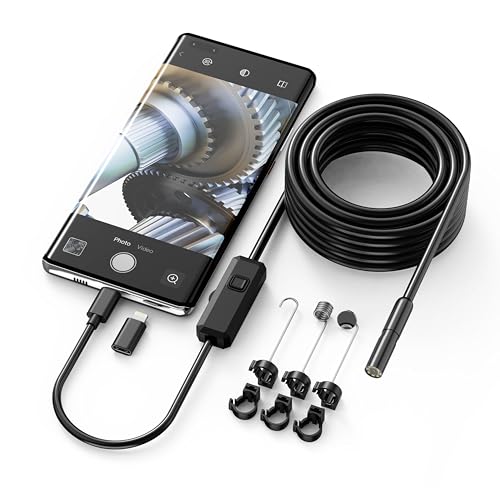
First-time endoscope owners often get overwhelmed by long cables and complex multi-lens controls. The KEEMIKA 1920P 9.8FT Borescope keeps things approachable with a manageable length, a 7.9mm slim probe, and a clear 2.0-megapixel sensor. Eight adjustable LEDs let you dial up brightness inside cylinder heads or dark drains without overexposing close-up shots.
It works well for new homeowners building a basic inspection kit, or anyone who wants a USB-C scope that does not require an engineering degree to operate. Compared to the longer 16.5ft models, this one is less intimidating and easier to control on a first attempt.
Benefits That Matter
- 9.8ft cable is a comfortable length for first-time users learning cable control
- 7.9mm slim probe fits behind appliances and inside small engine bays
- Adjustable 8-LED ring prevents the washed-out look at close range
- 1920×1440 output is more than enough for typical household checks
Practical Considerations
- USB-C only, so Lightning iPhone users will need a different model
- Single-lens design lacks the dual-angle convenience of the Anykit Dual Lens Type-C
Feature Rundown
Who Should Grab It
First-time scope owners and new homeowners who want a USB-C, easy-to-handle unit for occasional inspections.
Skip It When
The Ferdiiz 1920P HD Borescope, 16.4ft Semi-Rigid is the better tool for anyone regularly chasing deep drain or duct runs.
The Preciva Dual Lens 1920P Borescope solves the adapter mess with a single kit. It ships with Lightning, Type-C, and Micro-USB adapters in the box, plus dual lenses for forward and side viewing without mirror swaps. The 16.5ft semi-rigid cable and 8 adjustable LEDs cover most home and light commercial inspection jobs.
For households juggling an older iPhone, a current Android, and maybe a tablet, this scope lets you stop hunting for adapters. Compared to the Lightswim Type C Borescope, this model adds dual-lens convenience for side-angle work, which is helpful inside engine bays.
What Stands Out
- Includes Lightning, Type-C, and Micro-USB adapters in one package
- Dual lenses support side-angle views without accessories
- 16.5ft semi-rigid cable reaches deep cavities while holding shape
- 8 adjustable LEDs adapt to dark or reflective cavities
Soft Spots
- More adapters to keep track of, which means a designated storage pouch helps
- Dual-lens head is slightly thicker than single-lens alternatives
The Right Fit
Multi-device households and repair shops where older Lightning phones and newer USB-C devices both need access to the same scope.
Where A Sibling Pick Shines
The Teslong 10FT USB C Endoscope is tidier for fully USB-C households that do not need older phone adapters at all.
What To Weigh Before Picking Your Endoscope
Probe diameter, cable length, lens count, and lighting tend to drive everyday usability more than resolution chasing. A 7.9mm probe fits behind most appliances and inside small engine ports, while 8.5mm probes still work in most home drains but may reject tighter gaps. Longer cables (16ft and up) hold their shape better with semi-rigid builds, which makes them easier to push down drain stacks, but they get unwieldy in crawl spaces. Single-lens units cost less and pair faster, while dual or triple lens scopes save you from mirror swaps when side angles matter. Adjustable LED rings prevent washed-out close-ups in dark cavities, which is the difference between a useful video and a blur of glare.
Waterproofing ratings (the IP, or Ingress Protection, code, where IP67 means dust-tight and submersible to 1 meter for short periods) matter if you plan to inspect drains, HVAC pans, or outdoor gutters. An IP67 rating covers brief submersion, which is enough for most household plumbing tasks. For pure drain work, semi-rigid cables hold their bend better than fully flexible ones, while flexible cables steer more easily through engine bays. App compatibility also varies: Android users need OTG and UVC support (UVC, or USB Video Class, is the standard that lets a phone receive a live video feed from a USB camera), and iPhone users should check whether they need Lightning or USB-C adapters.
Key Considerations Across These Picks
Mistakes Worth Dodging
Skipping the OTG check is the single most common reason a scope refuses to pair with an Android phone. Many budget Android devices lack the OTG hardware needed to act as a USB host, and the scope simply will not show up. A quick app like USB OTG Checker confirms support in seconds. Buying a 16.5ft semi-rigid cable for a job that only needs a 5ft reach is the other trap, since extra length adds drag and weight that wears out your wrist fast.
Where The Extra Money Goes
Higher-tier scopes earn their cost through articulating tips, dual or triple lenses, sharper 2K sensors, or built-in screens. Those features matter when you regularly work around tight bends, need side-angle views without mirror swaps, or want pixel-level detail on PCB labels and casting flaws. For occasional clogged-drain calls, a 1920P single-lens unit is plenty, and the savings are real.
Frequently Asked Questions
Do these scopes work with both Android and iPhone?
Most models on this list support both, but Android devices must have OTG and UVC support. Older iPhones use Lightning adapters, while iPhone 15 and newer use native USB-C.
Can I submerge the probe in water?
Look for an IP67 rating, which covers brief submersion. That is enough for drains, pipe standing water, and outdoor gutter work.
How long should the cable be?
For most home inspections, 10ft is manageable, while 16ft or more helps with deep drains and duct runs. Shorter cables are easier to control in tight cavities.
Are dual-lens scopes worth it over single-lens?
Dual-lens models save time when you are constantly switching between forward and side views, especially in engine bays. Single-lens scopes are fine if you only need straight-ahead views and do not mind swapping a mirror.
Do I need a phone app to use these?
Yes, the phone-based scopes require a free companion app for live view and capture. The DEPSTECH Triple Lens with the 5-inch IPS screen is the only model on the list with a built-in monitor, so it works without a phone.
Closing Thoughts
The right endoscope depends on where you plan to peek and what phone you carry. Articulating tips solve angle problems, long semi-rigid cables solve depth problems, and dual lenses solve mirror-swap problems. Match the tool to the job you actually do, and the rest falls into place.