You want photos of the night sky, not a pile of confusing gear manuals. The right telescope or accessory turns an evening under the stars into a satisfying imaging session, even from a light-polluted backyard. This roundup walks through nine solid options, from app-driven smart scopes that do the targeting for you to simple adapters that make a DSLR feel right at home on a refractor.
The Choices Worth Comparing
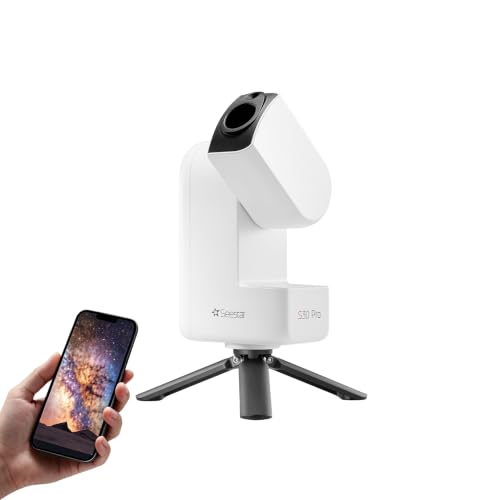
ZWO Seestar S30 Pro Smart Telescope

HUGERSTAR 90mm 600mm Refractor Telescope Kit
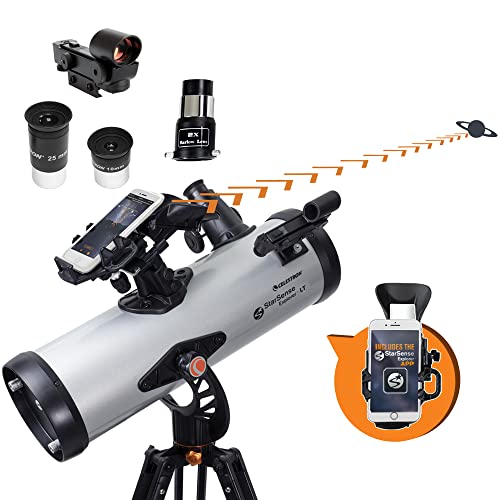
Celestron StarSense Explorer LT 114AZ

DWARFLAB Dwarf 3 Smart Telescope

HUGERSTAR 80mm 500mm Refractor Telescope

HUGERSTAR 90mm 600mm Refractor Telescope

HUGERSTAR 90mm 800mm Refractor Telescope

Farpoint Bahtinov Mask FP410H

Gosky 1.25″ Variable Camera Adapter
A Breakdown Of The Leading Choices
The ZWO Seestar S30 Pro is built for people who would rather look at galaxies than wrestle with a German equatorial mount. Everything lives inside one compact unit: optics, camera, tracking motors, and a battery. You connect through the app, tap a target on your phone, and the scope slews, focuses, and starts stacking exposures on its own.
For urban stargazers, this matters more than raw aperture. Light pollution filters and automated stacking help pull faint nebulae out of washed-out skies, which is exactly the situation most newcomers face. Compared to the HUGERSTAR refractors below, the Seestar sacrifices traditional eyepiece viewing in exchange for a guided imaging workflow that just works.
Practical Pluses
- App-driven GOTO targeting removes the steepest learning curve in amateur astronomy.
- Self-contained design means no counterweights, no polar alignment rituals before each session.
- Automated stacking helps surface deep-sky detail from short urban exposures.
- Live smartphone preview doubles as a teaching tool for first-time users.
Points To Keep In Mind
- Image quality stays modest at the sensor level, so experienced imagers may find results flat.
- App-only operation can feel limiting when a phone battery dies mid-session.
Feature Snapshot
Right Fit For
Beginners who want their first deep-sky photo without learning equatorial alignment on night one.
Swap It Out When
Eyepiece-based visual observers get a more traditional feel from the Celestron StarSense Explorer LT 114AZ.
This HUGERSTAR kit lands in the sweet spot between toy and tool. A 90mm aperture gathers noticeably more light than the 80mm starter scopes, while the 600mm focal length keeps the optics forgiving for first-night focusing. Aperture is the diameter of the front lens, and bigger usually means brighter images of dim objects.
The bundle leans into convenience: a tripod, phone adapter, moon filter, carry bag, and a moon phase guide all show up in the box. Compared to the ZWO Seestar above, you trade automation for actual eyepiece views, which still teaches the sky in a way that screens cannot.
Benefits That Matter
- Fully multi-coated glass improves contrast on the lunar surface and brighter planets.
- Included Barlow lens triples magnification without forcing an extra eyepiece purchase.
- Carry bag and lightweight tripod encourage spontaneous trips to darker skies.
Some Limits To Know
- Tripod stability under high magnification can wobble, so steady hands help.
- Plastic focuser tension may loosen over months of backyard use.
- Not designed for serious deep-sky imaging beyond bright targets.
Made For
Families and casual beginners who want a low-fuss introduction to eyepiece astronomy.
Consider Something Else When
Anyone chasing smartphone-guided targeting will prefer the Celestron StarSense Explorer LT 114AZ.
The Celestron StarSense Explorer LT 114AZ takes a different path from the Seestar. You still look through an eyepiece, but your phone acts as a sky-aware tour guide. A Newtonian reflector uses mirrors rather than lenses to gather light, which lets Celestron stretch the aperture to 114mm without a heavy price tag.
That extra aperture pulls in noticeably more light than the 90mm HUGERSTAR refractors above, which helps with dimmer star clusters. The trade-off shows up in the form factor: a longer optical tube and a manual altazimuth mount that you push by hand.
Real-World Strengths
- Smartphone-guided targeting turns aimless sweeping into a guided tour.
- 114mm aperture reveals star clusters the smaller refractors simply cannot resolve as well.
- Manual mount keeps the workflow tactile and educational.
- Works without power, which suits remote dark-sky trips.
Details To Watch
- Newtonian optics need occasional collimation, the alignment of internal mirrors, which can intimidate first-time owners.
- Smartphone dock adds bulk on top of the optical tube.
Key Specs
Whose Shelf It Belongs On
Visual newcomers who want help locating targets but still want to look through an eyepiece.
Skip It When
Backpack-first travelers get a smaller, lighter option from the DWARFLAB Dwarf 3.
The DWARFLAB Dwarf 3 shrinks the smart-telescope concept down to about three pounds, roughly the weight of a small laptop. That number matters: it slips into a standard daypack, which means a campsite, a mountain overlook, or a friend's dark-sky property suddenly becomes a viable imaging session.
The dual-lens design pairs a telephoto optic for deep-sky targets with a wide-angle lens for Milky Way panoramas. Compared to the ZWO Seestar, the Dwarf 3 trades some sheer aperture for a smaller footprint and a more versatile daytime shooting mode.
Points In Its Favor
- Lightweight body encourages real travel rather than closet storage.
- Dual-lens versatility handles both nightscapes and deep-sky targets.
- App-based workflow suits phones-as-monitors setups.
Honest Caveats
- Smaller sensor means longer stacking sessions to match bigger smart scopes.
- Battery life drops fast in cold observing conditions.
- Lacks a manual eyepiece option for traditional visual use.
Best Suited To
Hobbyists who already chase dark skies and want a grab-and-go imaging rig.
Look Elsewhere When
Tabletop backyard viewing on a budget works better with the HUGERSTAR 80mm refractor.
This HUGERSTAR 80mm refractor is the gentlest entry point on the list. The shorter 500mm focal length produces a wider true field of view, which is easier on inexperienced eyes trying to locate the moon or a bright planet without losing it in the eyepiece.
The kit includes a backpack, phone adapter, and even stickers for younger users. Compared to the ZWO Seestar, you give up automation and sensor-based imaging in exchange for tactile, real-time views through an eyepiece, which can feel more rewarding for some beginners.
A Strong Showing
- Lower magnification range stays forgiving for kids and first-night users.
- Compact tube fits easily into a backpack or carry-on.
- Multi-coated lenses help maintain image brightness across the field.
Trade-Offs
- 80mm aperture collects less light than the 90mm siblings in this lineup.
- Included tripod may need upgrading for steady high-power viewing.
Who Will Love This
Parents introducing children to astronomy on a tight budget.
A Better Fit Elsewhere
Adults who want sharper planetary detail should consider the HUGERSTAR 90mm 800mm refractor.
This 90mm refractor doubles down on the same formula as the 80mm kit but with more light-gathering ability. Aperture climbs to 90mm while focal length stays at 600mm, which keeps the scope compact enough for travel and gives noticeably brighter lunar and planetary views.
Multi-coated optics help with contrast, especially on the moon where chromatic aberration (a faint colored fringe around bright objects) tends to show up in budget refractors. Compared to the Celestron StarSense Explorer, this scope skips the smartphone dock in favor of traditional eyepiece operation.
Key Advantages
- Bright 90mm optics outperform smaller starter scopes on lunar craters.
- Short 600mm focal length keeps the tube portable.
- Coated glass improves clarity without raising weight much.
Things To Consider
- No smartphone targeting means learning the sky the old-fashioned way.
- Tripod stability varies between batches, so a sturdy table helps.
Feature Card
Perfect Match For
Visual observers who want a noticeable step up from an 80mm scope without hauling a Newtonian.
Reach For A Different Pick When
You want app-guided targeting rather than manual aiming, which the ZWO Seestar handles better.
Step the focal length up to 800mm and the math changes in your favor for lunar and planetary work. Higher focal length magnifies the image more for a given eyepiece, so craters, rings, and cloud bands resolve more clearly. Focal ratio here lands around f/8.89, a fairly slow system that helps reduce chromatic fringing on bright targets.
The tube is longer than the 600mm siblings, which makes this scope less backpack-friendly. For backyard or patio setups, though, the reach-to-size ratio is hard to beat in the HUGERSTAR lineup.
Bright Spots
- 800mm focal length pulls in finer planetary detail at modest eyepiece magnifications.
- Multi-coated glass preserves brightness despite the longer light path.
- Includes a Barlow lens for flexible magnification choices.
Worth Bearing In Mind
- Longer tube demands a taller tripod for comfortable viewing angles.
- Field of view narrows, which can frustrate beginners trying to find targets.
Who Should Grab It
Owners focused on lunar craters and planetary detail who do most observing from a fixed spot.
Where Another Pick Suits Better
Roof-prism apartment dwellers get a more forgiving wide-field experience from the HUGERSTAR 80mm refractor.
A Bahtinov mask is one of those tiny accessories that quietly saves a session. It fits over the front of a Celestron 8-inch SCT (Schmidt-Cassegrain Telescope) with Hyperstar or Fastar, and it turns precise focusing into a five-second job. Three diffraction spikes on a bright star need to line up symmetrically, and the mask tells you instantly when they do.
For anyone shooting long exposures with the smart scopes above, or with a dedicated astro camera, accurate focus is everything. Compared to software focusing aids, a Bahtinov mask works without a laptop, batteries, or cables.
Useful Touches
- Manual focusing becomes fast and repeatable for astrophotography sessions.
- Works with DSLRs, dedicated astro cameras, and modified cameras alike.
- No power or apps required.
Factors To Consider
- Designed specifically for the 8-inch SCT with Hyperstar or Fastar, so it does not fit other scopes.
- Requires a bright star within the field of view, which takes some planning in light-polluted areas.
Built With In Mind
Celestron 8-inch SCT owners who image with Hyperstar setups and want razor-sharp focus.
A Better Fit Elsewhere
Refractor owners shooting with a DSLR will find the Gosky 1.25" Variable Camera Adapter more relevant.
The Gosky variable camera adapter is a small piece of hardware that solves a real problem. It threads onto a 1.25-inch focuser and lets you slide a DSLR back and forth, which means you can tune magnification for proper framing without buying three fixed-length adapters.
The all-metal aluminum body and threaded filter holder give it a workshop-friendly feel. Compared to the Farpoint Bahtinov mask above, this adapter helps you connect a camera at all, while the mask helps you focus once you have.
What Stands Out
- Variable length adjustment offers flexible framing for different targets.
- All-metal construction survives frequent setup and teardown.
- Accepts standard 1.25-inch filters, expanding color and contrast options.
Practical Considerations
- Maximum eyepiece outer diameter is 37mm, so very wide eyepieces may not seat fully.
- Setup takes patience on first use, since finding the right extension involves trial and error.
Who It Suits Best
DSLR owners wanting to shoot prime-focus or eyepiece-projection astrophotos with a refractor or SCT.
Look Elsewhere When
Smart telescope users do not need this adapter, since their cameras are already integrated.
What Matters Most Before Choosing Astro Imaging Telescopes
Aperture sets the ceiling on what any telescope can show. Bigger front lenses or mirrors gather more light, which translates to brighter views of dim objects like nebulae and distant galaxies. For purely visual use, a 90mm refractor or 114mm Newtonian covers most backyard targets without weighing you down. Aperture also affects price and portability in equal measure.
Mount and tracking matter more than many newcomers expect. A wobbly tripod turns every high-power view into a seasick blur, and a manual mount means you constantly nudge the scope to follow Earth’s rotation. Altazimuth mounts (which move up-down and left-right) feel intuitive, while equatorial mounts (aligned to Earth’s rotational axis) track the sky more smoothly for long imaging sessions.
Sensor type and camera compatibility decide what you actually capture. Smart scopes bundle a camera and processor, so you skip the technical weeds. Traditional scopes need a smartphone adapter for casual snapshots, a DSLR for serious imaging, or a dedicated astronomy camera for long exposures. Match the scope to the camera setup you already own or plan to buy.
Accessories often decide whether a telescope ends up in a closet. A sturdy tripod, a phone adapter, a moon filter, and a carry bag transform the first session from frustrating to fun. Add a Bahtinov mask if you plan to image, since sharp focus matters more than people realize for deep-sky targets.
Common Shopping Slip Ups and Where The Extra Money Goes
Where Shoppers Go Wrong
The most common mistake is chasing magnification numbers printed on the box. Magnification depends on the eyepiece, not the telescope, and pushing magnification too far produces dim, blurry views. A 90mm scope at 50x beats a 50mm scope at 200x every time. Another misstep is buying the heaviest tripod-omitted bundle and assuming any tripod will do, only to discover vibrations ruin every high-power view.
The Case For Spending Up
Higher-tier scopes earn their keep through better optics, smoother focusers, and sturdier mounts. Fully multi-coated glass transmits noticeably more light than basic coated optics, and a metal focuser holds up to years of use where plastic equivalents develop slop. For astrophotography specifically, a better mount or a tracking platform often improves results more than upgrading the scope itself.
Frequently Asked Questions
Do I need a camera to use an astro imaging telescope?
Not at all. Many scopes on this list work beautifully as visual instruments with just an eyepiece. Cameras become useful when you want to share images or push into dim deep-sky targets.
What is a good first telescope aperture?
A 90mm refractor or a 114mm Newtonian offers a sensible balance of light-gathering ability, portability, and beginner-friendly price. Smaller scopes work, but they show noticeably less detail on dim targets.
Can I use a smartphone with these telescopes?
Several kits include a phone adapter, and smart scopes like the ZWO Seestar rely on a phone as the primary display. Traditional scopes pair well with phones for casual snapshots of the moon and bright planets.
What does a Bahtinov mask actually do?
It creates a precise diffraction pattern that shows you exactly when a star is in perfect focus. Astrophotographers rely on it because software focusing sometimes drifts, especially through temperature changes.
Is an equatorial mount necessary for imaging?
For short planetary snapshots, no. For long-exposure deep-sky imaging, tracking accuracy becomes critical, and a manual altazimuth mount will frustrate you fast.
Final Verdict
Your best pick depends on how you want to spend your night under the stars. Smart scopes like the ZWO Seestar S30 Pro or DWARFLAB Dwarf 3 reward anyone who wants finished images without a steep learning curve. Traditional refractors and Newtonians give a more hands-on feel and teach the sky in a way screens cannot. Add a Bahtinov mask or a variable camera adapter when you are ready to chase sharper results, and the hobby tends to grow from there.