Mounting your camera on a tripod you can trust changes the kind of shots you bring home. Arca-Swiss style plates and clamps have become the de facto standard for serious photo and video work because the dovetail geometry (the angled groove-and-lip fit that slides into a matching clamp) holds firm and snaps in fast. The right system makes a difference whether you shoot weddings, landscapes, or quick handheld vlogs.
A Quick View Of The Lineup
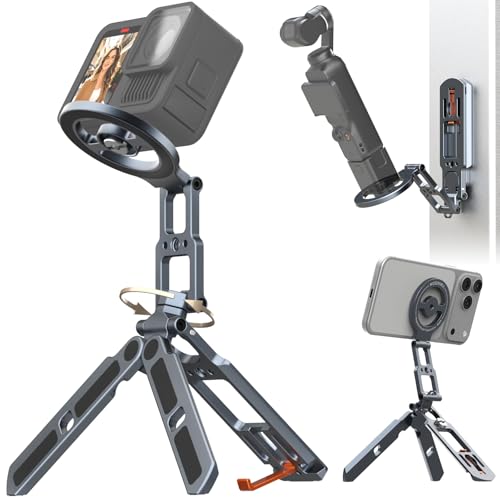
Magnetic Phone Stand Tripod for MagSafe iPhone
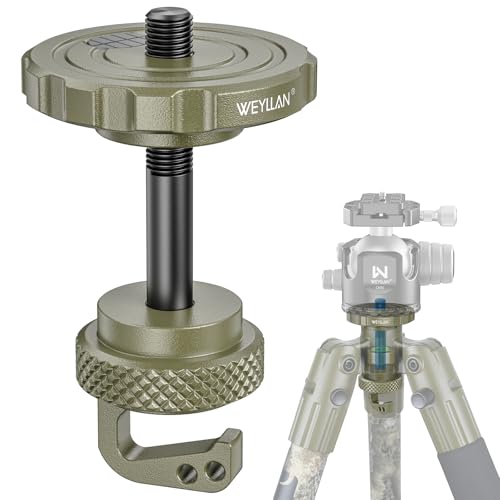
WEYLLAN BA5-Green Arca Swiss Tripod Ball Head Conversion

COMAN M1pro 65″ Carbon Fiber Monopod

Arca-Swiss Rotamount
Arca-Swiss Classic Quick Release
Classic Camera Support 80mm by Arca-Swiss

COMAN M1S 65″ Carbon Fiber Ball Bowl Monopod

COMAN M1Pro V5 Carbon Fiber Monopod

COMAN M1mini Carbon Fiber Monopod with A32
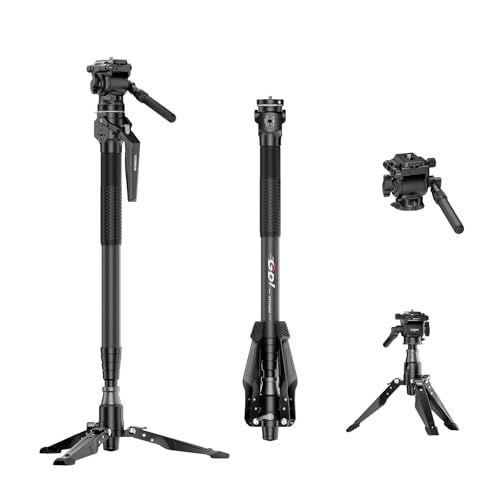
COMAN M1mini Carbon Fiber Monopod with V1
The Details Behind The Selections
Creators bouncing between phone shots and action-cam footage know the pain of swapping mounts. The MOSENVKA Magnetic Phone Stand solves that with a dual-sided body: a MagSafe magnet (the ring of magnets built into recent iPhones that lets accessories snap on) on one face for phones, and a standard 1/4″-20 threaded screw (the universal camera mounting thread) on the other for GoPro, DJI, or Insta360 rigs.
Carrying one compact mount cuts your kit weight noticeably, which matters on long walks. For travelers who already shoot with an iPhone and an action cam, this is the kind of small swap that removes friction from the day.
Good Reasons To Consider
- One mount covers both phone and action camera duties
- MagSafe snap-on is faster than screw clamps for quick setups
- Compact footprint fits jacket pockets and small bags
- Works with GoPro 13/12, DJI Osmo Pocket 3/4, and Insta360 Luna
- Light enough for handheld vlogging without fatigue
Trade Offs To Consider
- Magnet holds phones well but may slip on heavy cases
- Not a tripod replacement for full-frame cameras
- Action-cam side requires a separate clamp or housing
Who It Suits Best
Vloggers and hybrid shooters who run a MagSafe iPhone alongside an action cam and want one piece of hardware to bridge both.
Where Another Pick Suits Better
Anyone carrying a heavier DSLR or mirrorless body should reach for the COMAN M1pro 65″ Carbon Fiber Monopod instead, since it handles real camera weight far better.
BOG DeathGrip owners often want to swap in an Arca-Swiss ball head but find the stock plate layout blocks a clean fit. The WEYLLAN BA5-Green adapter fixes that by giving the DeathGrip platform a true Arca dovetail mounting surface, machined tight enough for serious field use.
It is a niche part, but for the right person it removes a real headache. Hunters, scopes-and-binos shooters, and anyone already invested in the DeathGrip ecosystem now have a bridge into the wider Arca plate world without rebuilding their support kit from zero.
Practical Advantages
- CNC-machined from 6061-T6 aluminum for hard anodized durability
- Stainless steel locking screw and bolt resist wear
- 58mm mounting pan fits the DeathGrip head geometry
- 3/8″ female thread for standard tripod bases
- Opens DeathGrip owners to any Arca-Swiss plate or clamp
Worth Bearing In Mind
- Only fits the standard DeathGrip, not the Infinite version
- A specialty purchase, so cost-per-use only makes sense for committed users
Made For
Field shooters who already own the BOG DeathGrip tripod and want to add an Arca-Swiss style ball head without buying new legs.
Not Your Match When
Studio photographers looking for a clamp from scratch will find the Arca-Swiss Classic Quick Release more broadly compatible with mainstream heads.
Wedding shooters and event photographers carry heavier bodies than most hobbyists. The COMAN M1pro answers that with a 44-pound load rating (roughly 20 kg) and a 3K carbon fiber tube build, meaning the woven carbon sheets use 3,000 filaments per strand for extra stiffness, while keeping the monopod light enough to swing around all day.
The one-click height adjustment (a release lever that frees the entire column at once) is the real headline feature. You drop the lever, extend the monopod to eye level, and lock it again in a single motion. Compared with the Arca-Swiss Rotamount adapter earlier in the list, this is a full support tool rather than a plate accessory, so the use case is very different.
Strengths Worth Knowing
- 44 lb (20 kg) max load handles pro DSLRs and large zooms
- 3K woven carbon fiber keeps weight low without flex
- UV-resistant coating holds up in outdoor shoots
- Tripod-style feet at the base add stability
- One-click height lock trims setup time
A Few Limitations
- Monopod balance depends on your stance in windy locations
- Larger footprint than a bare pole when feet are extended
Key Product Details
Best Suited To
Event and sports photographers who need a sturdy one-leg support that can take real camera weight and survive daily travel.
Look Elsewhere When
Travel photographers prioritizing the smallest pack size should look at the COMAN M1mini Carbon Fiber Monopod with A32, which folds down shorter.
Switching from landscape to portrait on a large-format view camera usually means unmounting the digital back, which can introduce dust and misalignment. The Arca-Swiss Rotamount solves that with a simple twist mechanism that rotates the body 90 degrees without ever lifting it off the support.
It is built for the R-Line, F-Line, and M-Line 6×9 camera bodies, so the audience is narrow. Within that audience, however, the convenience is enormous. Compared to the WEYLLAN BA5-Green adapter earlier in this list, which adapts a tripod platform, the Rotamount adapts the camera side of the equation.
Well-Handled Touches
- Keeps the digital back seated during orientation changes
- Holds the position securely once locked
- Adapter plate seats cleanly inside the Rotamount base
- Simple twist operation with no tools required
Some Limits To Know
- Specific to supported Arca-Swiss camera lines
- A specialty purchase, not a general tripod accessory
Right Fit For
Large-format and technical photographers working on an Arca-Swiss R-Line, F-Line, or M-Line 6×9 body who switch orientations often.
A Better Fit Elsewhere
Anyone shooting mirrorless or DSLR cameras will find the Arca-Swiss Classic Camera Support 80mm a more practical plate choice for everyday work.
The Classic quick release is a 60mm clamp head that upgrades any tripod already fitted with a 1/4″ or 3/8″ mounting thread. It accepts both 38mm Classic plates on the upper channel and 26mm compact monoballFix plates on the lower channel, which makes it one of the more flexible heads in the lineup.
Owners commonly appreciate that it is also cross-compatible with major tripod brands like Manfrotto and Gitzo. The screw knob locking system feels old-school but is dependable, and for many studio shooters that simplicity is a feature, not a drawback.
Useful Highlights
- Dual-channel design fits multiple plate standards
- Works with Manfrotto and Gitzo tripod heads
- Classic screw knob is straightforward to maintain
- 60mm clamp diameter for solid grip on plates
- 3/8″-16 base with included 1/4″-20 adapter
Possible Compromises
- Larger than a bare clamp, adds weight to compact tripods
- Screw knob is slower than lever locks for fast changes
Who Should Grab It
Photographers who already own a respected tripod brand and want to add Arca-Swiss plate compatibility without replacing the legs.
Skip It When
Travel photographers chasing the lightest possible kit will find the COMAN M1S 65″ Carbon Fiber Ball Bowl Monopod a more integrated support option.
The 80mm Classic Camera Support plate is a straightforward dovetail built for larger bodies. At 80mm by 60mm, it gives medium format cameras and lens-foot telephotos enough contact area to sit stable under load. The centered 1/4″-20 screw is a standard fit, so most cameras accept it without modification.
Compared to the WEYLLAN BA5-Green ball head adapter earlier, this plate does not adapt any platform, it just gives your body a wide, dependable mount. For anyone already running Arca-Swiss heads, adding a few of these plates to your bag is the simplest way to make every camera ready in seconds.
Reasons It Performs
- Classic 38mm Arca-Swiss dovetail fits most modern clamps
- 80mm length suits large camera bodies and lens feet
- Centered 1/4″-20 screw matches standard tripod sockets
- Works with the Arca-Swiss Classic Quick Release clamp above
Honest Caveats
- Larger plate adds a bit of bulk to small mirrorless bodies
- Plate-only purchase, requires a compatible clamp
The Right Fit
Studio and location pros using medium format, DSLR bodies, or lens-foot telephotos who need a wide, secure Arca-Swiss plate.
Another Choice May Suit
Mirrorless shooters with smaller bodies will get a better weight match from the Arca-Swiss Classic Quick Release clamp paired with a shorter plate.
Solo video creators often find a tripod overkill and a bare monopod too twitchy for smooth pans. The COMAN M1S sits in the middle, pairing a 65-inch carbon fiber column with a 360-degree ball bowl head. The ball bowl gives fluid orientation changes without the rigidity of a true fluid head.
It uses the same one-click height adjustment as the M1pro earlier in this list, which keeps the learning curve short. For run-and-gun video, the trade-off between smoothness and weight lands in a useful spot.
Useful Touches
- Ball bowl head allows 360-degree framing changes
- 3K carbon fiber column reduces fatigue
- One-click height lock trims setup time
- UV-resistant coating extends outdoor lifespan
- Compact folded size for travel kits
Points To Note
- Ball bowl is fluid-feeling but not a true fluid head
- Lower load rating than the M1pro above
Feature Snapshot
Whose Shelf It Belongs On
Solo content creators who shoot a mix of stills and video and want one support that handles both without much fuss.
Swap It Out When
Photographers needing the heaviest possible load rating should pick the COMAN M1pro 65″ Carbon Fiber Monopod instead.
The M1Pro V5 stretches to 69 inches, an extra 4 inches over the M1pro above, which is genuinely useful for tall shooters or anyone using longer lenses. It pairs the four-section carbon leg with a V5 hydraulic fluid head, the kind of head that uses oil-like fluid to dampen motion so pans and tilts look smoother.
The trade-off is weight capacity. At a 22-pound (10 kg) max load, it is lighter-duty than the M1pro but more than enough for most mirrorless and DSLR kits. For travel where reach and smooth motion matter more than absolute load, this is the version to consider.
The Value In It
- 69-inch max height for taller shooters
- V5 hydraulic fluid head smooths pans and tilts
- Quick release plate speeds camera swaps
- One-click column adjustment keeps setup fast
- Footed base adds a touch of stability
Factors To Consider
- 22 lb load rating lower than the M1pro
- Longer collapsed length than smaller travel monopods
Perfect Match For
Backcountry photographers and travel videographers who want reach plus smoother motion without carrying a full tripod.
Reach For A Different Pick When
Event shooters carrying heavy telephotos will be happier with the COMAN M1pro 65″ Carbon Fiber Monopod, which has a much higher load rating.
Mirrorless kits deserve a support that does not dwarf them. The COMAN M1mini with the A32 ball head packs a 4-section carbon fiber leg and a detachable ball head into one of the more compact travel monopods in this roundup. The one-button height release feels similar to the larger COMAN models earlier in the article, just scaled down.
At a 5 kg max load, the honest read is that this is for light mirrorless bodies, not for full DSLRs with telephotos. For day hikes and city breaks with a small camera, it strikes a nice balance between reach and packability.
Benefits That Matter
- Compact folded length fits small packs
- Detachable A32 ball head for low-angle framing
- Carbon fiber build keeps carry weight low
- One-button height release for fast adjustments
What To Weigh
- 5 kg max load excludes heavier DSLR kits
- Smaller head handles less than the M1pro’s column
Built With In Mind
Travel and outdoor photographers carrying compact mirrorless kits who want an ultralight Arca-Swiss friendly monopod.
Where A Sibling Pick Shines
Shooters after smoother video motion should consider the COMAN M1mini Carbon Fiber Monopod with V1 Fluid Head instead, since a fluid head handles tilts more gracefully.
The M1mini V1 swaps the ball head of the previous pick for a V1 fluid head, keeping the same compact 4-section carbon fiber column. For student filmmakers and entry-level vloggers, that fluid head is the meaningful upgrade, since it damps tilt motion far better than a ball joint.
The load ceiling is the same 5 kg as the A32 version above, so this is firmly a mirrorless-class tool. Anyone moving up to heavier glass will outgrow it, but starting out, it covers both photo and casual video in a single small package.
Where It Helps
- V1 fluid head smooths tilts for video
- Compact folded length for travel
- Carbon fiber keeps carry weight down
- One-button height release speeds setup
- Arca-Swiss style plate compatibility
Worth Noting
- 5 kg load limit rules out larger setups
- Fluid head adds slight weight versus a bare ball head
Who Should Grab It
Students, hobbyists, and beginner vloggers running compact mirrorless cameras who want one tool for both stills and video.
Consider Something Else When
Shooters needing more reach and a higher load rating should step up to the COMAN M1pro 65″ Carbon Fiber Monopod, which handles heavier rigs.
Choosing The Right Arca Swiss Tripod Setup For Your Work
The right Arca-Swiss style gear depends almost entirely on what you shoot and how you carry it. Plate compatibility comes first: every camera in your bag should drop into one clamp without an adapter hunt. Plate width matters more than people expect, since a 38mm dovetail gives most mirrorless bodies enough grip, while an 80mm plate like the Classic Camera Support 80mm is friendlier to medium format and lens feet.
Load rating is the second honest filter. A 5 kg ceiling handles compact mirrorless, but full-frame telephotos need a monopod rated closer to 20 kg. Carbon fiber trims weight but adds cost. Aluminum costs less but carries more fatigue on long shoots.
Head type finishes the decision. Ball heads frame fast but twitch on video. Fluid heads smooth video but slow photo work. Match the head to the dominant shooting style rather than chasing one tool that does everything poorly.
Key Considerations Across These Picks
Pitfalls Shoppers Hit
The most common mistake is buying a clamp that does not match your existing plates. Arca-Swiss 38mm is the safe standard, but some accessories use 26mm or proprietary widths, and a mix-and-match bag creates daily friction. A second slip is overrating load capacity. Manufacturers test in perfect conditions, so a 20 kg rating is rarely a real-world 20 kg with a long lens extended. Buying for your heaviest realistic setup leaves useful margin.
The Case For Spending Up
Premium Arca-Swiss gear earns its cost through materials and machining, not hype. Hard anodized aluminum (a surface treatment that builds a wear-resistant oxide layer) and stainless steel hardware last longer under field use. Tighter CNC tolerances (computer-cut metal dimensions held to fractions of a millimeter) keep plates seated without slop, which matters once you start shooting long exposures. The upgrade is worth it when your gear earns its keep, and it is wasted when your kit sits in a closet most weekends.
Frequently Asked Questions
What Is An Arca Swiss Tripod Clamp?
An Arca-Swiss clamp is a quick-release head with a dovetail groove that fits matching plates, letting cameras slide in and lock with one motion. Most modern tripod and monopod heads use this standard.
Do All Arca Swiss Plates Fit Every Clamp?
No. The 38mm dovetail is the most common, but 26mm and brand-specific widths exist. Check the plate width printed in the spec sheet before mixing accessories.
Can I Use A Monopod Instead Of A Tripod?
Monopods are lighter and faster to deploy, but they trade stability for portability. For long exposures or video, a tripod still wins. For run-and-gun stills, a monopod is plenty.
How Much Weight Should My Monopod Support?
Pick a monopod rated at least double the weight of your heaviest camera and lens combo. That margin keeps the leg stable when the lens is extended and you shift weight quickly.
Do I Need A Fluid Head For Video?
A fluid head smooths pans and tilts noticeably, which matters for video more than stills. If your work is mostly photos, a ball head is faster and lighter.
Closing Remarks
The best Arca-Swiss setup is the one that disappears into your workflow, so plates match, the load rating covers your heaviest lens, and the head matches your dominant shooting style. Work through those three filters and the right piece from this list becomes clear. From there, the gear simply gets out of the way and lets you focus on the picture.