A clean star photo starts long before you click the shutter. From urban rooftops under heavy skyglow to remote dark-sky parks, the gear you pair with your camera shapes how much of the night sky actually reaches the sensor. The right combo of wide aperture, tight optical glass, and a tuned light-pollution filter can turn a hazy purple wash into pin-sharp stars and natural-looking nebulae.
This list mixes dedicated astro lenses with the specialty filters that lift them further. Some pieces fit mirrorless Sony shooters, others slide onto threaded camera lenses, and one turns a 6-inch telescope into a safe solar scope. You will see clear trade-offs called out, plus a sense of who each pick actually suits.
The Shortlist At A Glance

ICE LiPo Didymium Filter for Night Sky/Star Optical Glass (43mm)
K&F CONCEPT 95mm ND100000 (16.6 Stops) ND Lens Filter

VILTROX AF 14mm F4.0 Air Prime Full-Frame Lens for Sony FE
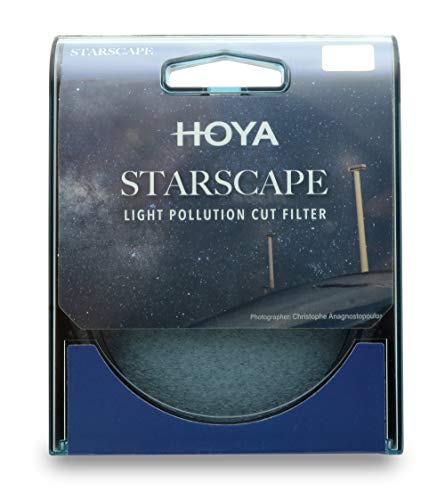
Hoya 62mm Starscape Light Pollution Cut Filter
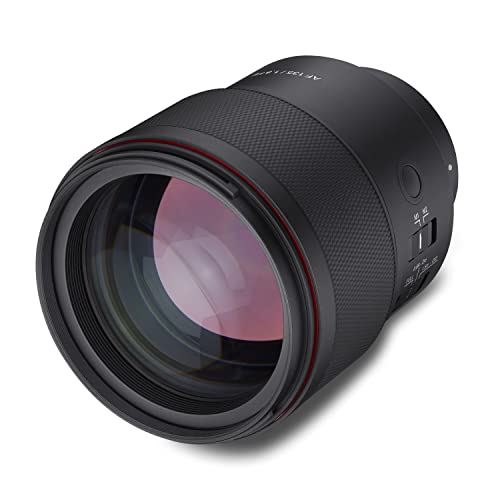
SAMYANG 135mm f/1.8 AF Lens for Sony FE

Celestron EclipSmart 6″ Solar Safe Eclipse Telescope Filter

Samyang SYIO14AF 14mm F2.8 AF Wide Angle Lens for Sony E

Samyang AF 24mm F1.8 Autofocus Lens for Sony FE
What Each Pick Brings To The Table
Shooting from a city balcony or a suburban backyard usually means fighting orange-tinted streetlight glow that drowns out stars. The ICE LiPo Didymium filter tackles that problem by trimming the wavelengths where skyglow lives, while leaving the rest of the visible spectrum mostly alone. That selective approach keeps star colors natural rather than shifting the whole frame blue or magenta.
Built from optical glass and seated in a double-threaded frame, this 43mm filter stacks with a regular UV or polarizer without binding. It suits shooters who already own a wide-to-standard lens and want to clean up night skies without swapping glass. For anyone starting out in light-polluted areas, the trade-off between a slight color cast and the dramatic drop in sky brightness feels worth taking.
Notable Gains
- Trims skyglow while preserving natural star color across the spectrum
- Optical glass construction helps keep contrast sharp on pinpoint stars
- Double-threaded frame allows stacking with hoods, caps, and a second filter
- Lightweight enough to leave on the lens for repeated night outings
- 43mm thread fits a wide range of mid-range zoom and prime lenses
Things To Consider
- Requires a matching lens thread size, so adapters may be needed for larger filters
- Cleaning optical glass in the field demands a proper microfiber kit to avoid smears
- Didymium filters tend to give a mild warm tint that some shooters like and others do not
Right Fit For
City and suburban photographers shooting wide nightscapes under heavy skyglow who want an affordable screw-on fix without swapping to a dedicated astro lens.
A Better Fit Elsewhere
Those chasing deep-sky nebulae at long focal lengths should look at the SAMYANG 135mm f/1.8 AF Lens for Sony FE instead, since it gathers far more light per pixel than any screw-on filter can.
An ND100000, which cuts roughly 16.6 stops of light, sits in extreme territory and is built for photographing the sun with a regular camera lens. The K&F CONCEPT 95mm version uses high-definition optical glass aimed at keeping the sun’s edge sharp rather than mushy. Photographers pointing long telephotos at sunspots, eclipses, or surface granulation rely on that kind of density to keep shutter speeds usable in broad daylight.
The 95mm thread suits larger telephotos and zoom lenses often used for solar work, which is where the filter does most of its heavy lifting. Anyone using smaller lens threads will need a step-up ring to mount it. For safety, this kind of filter should always be paired with proper solar technique, since no neutral density filter alone replaces dedicated solar glass for visual observation.
A Favorable Mix
- 16.6 stops of light reduction enables daytime solar photography with telephoto lenses
- High-definition optical glass aims to preserve edge sharpness on the sun’s disk
- 95mm thread suits many popular long telephoto and zoom setups
Worth Noting
- Thread size means you may need a step-up ring for smaller lenses
- Not designed for visual solar viewing through an eyepiece
- Glass needs careful storage in a padded case to avoid nicks that would scatter sunlight
Made For
Solar photographers capturing eclipses and surface detail with a long telephoto lens on a tripod or tracking mount.
Consider Something Else When
Anyone wanting to observe the sun through a telescope should pick the Celestron EclipSmart 6″ Solar Safe Eclipse Telescope Filter instead, since it is built for direct eyepiece use rather than camera mounts.
Wide astro lenses often tip the scale at the wrong moment, but the VILTROX AF 14mm F4.0 Air Prime lands as one of the lighter ultra-wide primes you can mount on a Sony E body. It still pulls in a sweeping field that swallows entire mountain ranges, city blocks, and the Milky Way core in a single frame, which is exactly the brief travel vloggers and city photographers keep asking for.
The f/4 aperture is not as light-hungry as the f/2.8 or f/1.8 options later in this list, so dark-sky shooters chasing faint nebulae will push ISO harder. In exchange, the small body and modest weight make it easier to leave on a gimbal or compact travel rig all day without fatigue. For Sony FE shooters who already own faster glass, this becomes the dedicated landscape-and-astro wide.
Where It Excels
- 14mm focal length captures vast scenes with strong leading lines
- Lightweight body keeps travel kits comfortable on long shooting days
- Full-frame coverage matches Sony E-mount mirrorless bodies cleanly
- Wide field makes the Milky Way core easy to frame without a tracker
Trade Offs
- f/4 aperture gathers less light than the f/2.8 or f/1.8 alternatives below
- Front element design can pick up flare when stray light hits the glass
Key Specs
Who It Suits Best
Sony FE shooters who travel light and want an ultra-wide that handles both sweeping landscapes and Milky Way arcs without weighing down the bag.
Skip It When
You need a faster wide for deep-sky work in heavy skyglow, where the Samyang SYIO14AF 14mm F2.8 AF Wide Angle Lens for Sony E pulls in noticeably more light per second.
Where many astro filters go too far and tint everything magenta, the Hoya Starscape is tuned to specifically knock back the yellow-orange glow of sodium street lamps while keeping the rest of the color palette intact. That makes it a favorite for nightscape shooters who care about accurate star colors and natural-looking Milky Way tones. The optical glass is built to hold sharpness across the frame, so stars near the corners stay round rather than stretched.
The 62mm thread matches many mid-range zooms and a wide range of fast primes, which is where this filter earns its keep on suburban trips. Owners commonly pair it with lenses like the Samyang AF 24mm F1.8 for Sony FE to push a step further into low-light reach. In strong skyglow zones, the filter cannot fully eliminate pollution, but it can noticeably shorten RAW color-correction time afterward.
Standout Benefits
- Targets yellow sodium-vapor glow without heavy global color shifts
- Optical glass helps maintain star sharpness into the frame corners
- 62mm thread fits many popular mid-range zooms and fast primes
- Shortens post-processing time when correcting mixed lighting at night
Honest Caveats
- Effect drops off in regions with LED streetlights instead of sodium lamps
- Requires an adapter ring for lenses smaller or larger than 62mm
- Coated glass still benefits from careful storage to avoid scratches
Best Suited To
Suburban Milky Way shooters with 62mm-threaded glass who want to tame sodium-vapor streetlight glow without heavy color shifting.
Look Elsewhere When
You shoot under 43mm-threaded lenses or want broader spectrum coverage, where the ICE LiPo Didymium Filter for Night Sky/Star Optical Glass (43mm) is a closer fit.
Long focal lengths and wide apertures rarely meet at friendly prices, but the SAMYANG 135mm f/1.8 AF lands at a focal length that just frames the largest deep-sky targets while still gathering serious light. At f/1.8, this lens pulls in photons fast enough to reveal nebulae and galaxy cores from a tracking mount, even under moderately dark skies. Astrophotographers often reach for 135mm as a sweet spot between wide-field views and tight crops.
The lens also doubles as a portrait telephoto with smooth autofocus on Sony FE bodies, which broadens its appeal for shooters who split time between night sessions and daytime people work. Compared to the wider VILTROX 14mm earlier in this list, this is a much more demanding piece of glass that benefits from a star tracker or solid tripod. For anyone ready to step beyond wide Milky Way arcs, this is where deep-sky imaging begins.
The Upside
- f/1.8 aperture collects enough light to image nebulae and galaxies without extreme ISO
- 135mm focal length frames many popular deep-sky targets with room to spare
- Autofocus adds daytime versatility for portraits and events
- Sony FE compatibility matches the broader mirrorless system in this list
Points To Keep In Mind
- Long focal length magnifies tracking errors, so a star tracker is highly recommended
- Body is heavier than wide-angle primes, which adds fatigue on long shoots
- Fast aperture requires careful focusing technique for pinpoint stars
At A Glance
Who Should Grab It
Astrophotographers ready to image nebulae and galaxy cores with a tracker who want a fast telephoto that pulls double duty for daytime portraits.
Swap It Out When
You mainly want wide Milky Way panoramas without tracking gear, where the Samyang AF 24mm F1.8 Autofocus Lens for Sony FE is a friendlier weight.
Pointing any optical instrument at the sun without the right filter is a recipe for damaged eyes and equipment, which is where the Celestron EclipSmart 6″ filter earns its place. It is purpose-built to fit 6-inch Schmidt-Cassegrain telescopes and converts them into solar scopes. The filter conforms to the ISO 12312-2 international safety standard, giving observers a confidence level that random ND filters cannot match.
Because it is sized for a specific 6-inch Celestron tube, the fit is not universal, so anyone running a different scope size will need a different EclipSmart model. The trade-off for that exact fit is a clean, secure mount that stays put when the scope tilts. For solar eclipse chasers, sunspot observers, and daytime astronomy educators, this filter unlocks an entirely different viewing category.
Noteworthy Benefits
- ISO-aligned solar safety standard offers verified eye protection
- Tailored 6-inch fit keeps the filter stable on matching Celestron tubes
- Turns a standard 6-inch SCT into a dedicated solar telescope
- Useful for eclipses, sunspot tracking, and daytime astronomy outreach
Practical Considerations
- Designed specifically for 6-inch Celestron Schmidt-Cassegrain telescopes
- Solar filter film can degrade with rough handling over many years
- Always inspect for pinholes or scratches before each solar session
Whose Shelf It Belongs On
Owners of 6-inch Celestron Schmidt-Cassegrain telescopes who want to observe the sun and eclipses through a properly rated solar filter.
Another Choice May Suit
Photographers using standard camera lenses for sun imaging should look at the K&F CONCEPT 95mm ND100000 (16.6 Stops) ND Lens Filter, which is sized for camera lenses rather than telescope tubes.
Ultra-wide focal lengths and fast apertures rarely come paired in compact bodies, which is why the Samyang SYIO14AF 14mm f/2.8 stands out. Built for full-frame Sony E bodies, this lens swallows expansive landscapes, architectural lines, and the Milky Way core in a single sweep, all while pulling in twice the light of an f/4 design. For nightscape shooters, that wider aperture means shorter exposures and cleaner stars when skyglow is heavy.
The autofocus motor makes daytime framing quicker than older manual-focus ultra-wides, which broadens the lens beyond pure night use. The VILTROX AF 14mm F4.0 Air Prime covered earlier is lighter and smaller but gives up a full stop of light, a meaningful gap at night. Anyone regularly shooting wide astro scenes on Sony E should weigh that extra aperture seriously.
What Works In Its Favor
- f/2.8 aperture gathers noticeably more light than f/4 ultra-wides for night work
- 14mm field of view frames the Milky Way core without a tracker
- Autofocus adds daytime versatility for landscapes and travel
- Full-frame coverage matches Sony E-mount bodies without vignetting
Small Caveats
- Larger and heavier than compact f/4 ultra-wides
- Front element bulges, so standard screw-on filters need careful fit
Quick Facts
Built With In Mind
Sony E shooters wanting a single ultra-wide that handles both wide Milky Way panoramas and daytime landscapes without dragging extra glass on trips.
Reach For A Different Pick When
You want a telephoto for deep-sky targets, where the SAMYANG 135mm f/1.8 AF Lens for Sony FE reaches much farther and gathers more light per pixel.
A versatile wide that handles both bright landscapes and dim night skies tends to earn its place in smaller kits, and the Samyang AF 24mm F1.8 fits that brief. At 24mm, the field of view is wider than a standard kit zoom but tighter than ultra-wide primes, which gives more natural-looking nightscapes with less stretching at the edges. The f/1.8 aperture pulls in serious light, so a few seconds at moderate ISO can capture the Milky Way from moderately dark sites.
Autofocus adds real convenience for travel shooters who do not want to focus manually every time the scene shifts, and the lens is compact enough to live on a Sony body without unbalancing the rig. Paired with a Hoya Starscape filter from earlier in this list, this combo becomes a strong suburban Milky Way setup. It is the kind of all-rounder that earns its place when you can only carry one lens at night.
What It Does Well
- f/1.8 aperture gathers strong light for nightscapes and indoor scenes
- 24mm focal length balances wide field with natural-looking proportions
- Autofocus makes daytime framing quicker than manual-focus wide primes
- Compact body suits Sony E-mount mirrorless kits without bulk
- Wide-open performance holds up for sharp stars in the central frame
Soft Spots
- Corner sharpness wide-open is softer than stopped-down f/2.8 or f/4
- Not as wide as the 14mm primes above for big Milky Way panoramas
- Fast aperture demands careful focusing to keep stars pin-sharp
The Right Fit
Travel and nightscape photographers who want one fast wide for Sony FE that covers daytime landscapes and Milky Way shoots without swapping lenses.
Not Your Match When
You mainly want ultra-wide Milky Way panoramas, where the Samyang SYIO14AF 14mm F2.8 AF Wide Angle Lens for Sony E captures noticeably more sky in a single frame.
Finding The Right Astro Lens For Your Nights
Astro photography rewards the right match between gear and site, so the question is less about chasing a single “best” lens and more about understanding which constraints matter most. Aperture, focal length, filter thread, and mount type each shape how and where the lens performs.
Wide-angle primes at f/2.8 or faster, like the Samyang 14mm f/2.8 and 24mm f/1.8, give shorter exposures and cleaner stars under skyglow, while lighter f/4 ultra-wides trade some light for portability. For deep-sky targets, longer focal lengths such as 135mm open up nebulae and galaxy cores but demand a star tracker to keep stars round.
Filter choice matters just as much. Light pollution filters, including didymium-based glass like the ICE LiPo and tuned designs like the Hoya Starscape, target specific wavelengths to reduce skyglow without heavy color shifts. Solar filters are a different category entirely, built to safely cut the sun’s light for telescope observation. Picking the right thread size ensures the filter actually mounts on your lens without adapters or vignetting.
Key Traits That Matter In Astro Glass
A wider aperture, meaning a smaller f-number, gathers more photons per second and shortens exposures, which keeps stars round without a tracker in most cases. Focal length shapes the field of view: 14mm sweeps huge sky arcs, 24mm balances context and stars, and 135mm or longer zooms into deep-sky targets. Filter threads should match your existing lens thread or use a step-up ring to avoid mismatched mounts.
Picking Filters To Match Your Lens
Light pollution filters work best when paired with fast wide lenses that already gather a lot of light. A 62mm Hoya Starscape pairs naturally with a 24mm f/1.8 or a 14mm f/2.8, while a 43mm didymium filter suits smaller wide primes. In heavily polluted urban areas, filters alone cannot fully clean the sky, so combining a filter with a wider aperture lens produces better results than either alone.
Matching Mounts And Compatibility
Sony FE glass fits Sony full-frame mirrorless bodies natively, while Sony E lenses suit APS-C bodies and many full-frame Sony cameras in crop mode. Filter thread sizes range from 43mm to 95mm or larger, so check your lens’s front filter thread before buying a screw-on filter. Step-up and step-down rings solve most thread mismatches but add a small chance of vignetting on ultra-wides.
Smart Shopping Notes Across These Picks
Where Shoppers Go Wrong
A common slip is choosing an ultra-wide lens without thinking about filter thread size, then discovering that the chosen light-pollution filter will not screw on without an adapter. Another trap is buying a fast f/1.4 or f/1.8 prime and expecting tack-sharp corners wide-open, when most wide-angle lenses perform best when stopped down by a stop or two for night work. Some first-timers also mistake a neutral density filter for a solar safety filter, which is a serious hazard when paired with a telescope or binoculars pointed at the sun.
What The Higher Tier Buys
Premium astro glass typically delivers wider maximum apertures, sharper optical performance at the frame edges, and quieter, faster autofocus for hybrid daytime use. Higher-end models also tend to have better build quality, more reliable focus rings, and coatings that resist flare in stray-light situations. The upgrade makes sense when you shoot often, work in heavy skyglow, or want a lens that doubles as a daytime portrait or landscape tool. For occasional nightscape sessions, mid-range options cover the brief well.
Frequently Asked Questions
What Is A Light Pollution Filter For Night Sky Photography?
A light pollution filter is a screw-on optical accessory that blocks specific wavelengths of artificial light, such as sodium-vapor streetlamp glow, while transmitting starlight. It helps reduce the orange or magenta wash that hides faint stars and nebulae in urban and suburban skies.
Do I Need A Star Tracker For Astrophotography?
A star tracker is not strictly required for wide nightscapes using fast wide-angle lenses, since short exposures keep stars reasonably round on a fixed tripod. Trackers become important when shooting at longer focal lengths, such as 85mm and above, where Earth’s rotation visibly streaks stars within seconds.
Are Solar Filters Safe For Camera Lenses?
Dedicated solar filters built to ISO 12312-2 standards are safe for visual solar observation through telescopes, but neutral density filters are not safe substitutes for direct solar viewing. For solar photography through camera lenses, properly rated solar filters or extreme ND filters designed for solar use are required.
Can I Use A Light Pollution Filter On Any Lens?
Light pollution filters work on any lens with a matching front filter thread, often with a step-up or step-down ring for size differences. They are most effective on fast wide-angle lenses used for nightscapes, where the filter helps reduce skyglow while the wide aperture gathers enough starlight to keep exposures short.
What Focal Length Works Best For Milky Way Photography?
Focal lengths between 14mm and 24mm are popular for Milky Way photography because they capture wide sky arcs while keeping individual stars reasonably large. Longer focal lengths, like 35mm to 135mm, frame specific sections of the Milky Way or deep-sky objects but require star trackers to avoid star trailing.
Closing Thoughts
Your shooting location, lens mount, and whether you want sweeping nightscapes or tight deep-sky targets will narrow the field faster than any spec sheet. Pair a fast wide-angle lens with a tuned light-pollution filter for the cleanest results under suburban skies, and reserve solar-rated filters for any daytime sun work. The right combination makes the night sky feel a little more reachable.