Stepping into wildlife photography feels exciting, but the technical jargon on most camera boxes can freeze newcomers in their tracks. Trigger speeds, infrared flash, SD card compatibility, the list of unknowns stretches long. You don’t need a research degree to start watching deer, foxes, or raccoons wander through your yard at night. The right first camera gets you sharp images and reliable detection without a steep learning curve or a complicated app setup. After comparing specs, sensor tech, and power setups across eight beginner-friendly models, these are the trail cameras that make first-time monitoring feel straightforward rather than frustrating.
A Side-By-Side Look

Zonetiger 4K 48MP WiFi Game Camera with Night Vision

FKPCAM 4K 64MP Solar Powered Game Camera

Stealth Cam Browtine 16MP Trail Camera Bundle

GardePro A3S 2-Pack Trail Camera 64MP
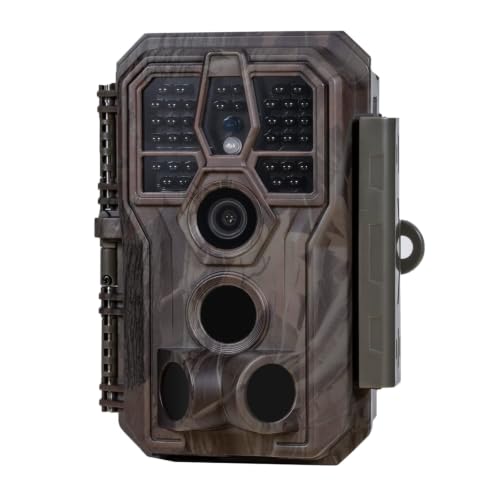
GardePro E5S Trail Camera 64MP

Cadrali 4G LTE Solar Trail Camera 4K

FRKTCAM 2 Pack 4K 64MP Solar Game Camera

MagicEagle Cellular Trail Camera 4G
More On The Choices That Made The List
Starting with the most tech-forward option on the list, the Zonetiger stands out for newcomers who already keep their phone within arm’s reach. It pairs with a dedicated mobile app over Bluetooth, which means you can preview shots, change settings, and trigger recordings without crawling into the brush every time you want to adjust something. For a backyard setup or a feeder near the garden shed, that convenience alone can decide whether you stay engaged or lose interest after the first week.
The image pipeline runs at 4K resolution with 48-megapixel stills, supported by no-glow infrared LEDs that keep the flash invisible to animals. A 0.05-second trigger response (the delay between motion detection and shutter fire) ranks among the quickest you’ll find at this tier, and the 130-degree lens captures a wide slice of the scene. The IP66 rating (a standard that certifies dust-tight construction and protection against heavy rain) handles ordinary weather exposure without complaint.
Strengths Worth Knowing
- Bluetooth app control removes the need to physically retrieve the SD card for every settings change
- Sub-0.1-second trigger captures fast-moving animals like coyotes and foxes before they exit the frame
- No-glow infrared keeps light discipline intact, so curious deer don’t spook at the flash
- Wide 130-degree field reduces setup planning: one mount often covers the whole trail
- IP66 weather sealing handles seasonal rain, snow, and dust without extra housing
Things To Weigh Up
- Bluetooth pairing can occasionally drop if the camera is mounted high or behind thick timber
- Home Wi-Fi connection is not supported, which limits remote use to phone proximity
Who It Suits Best
Curious newcomers who enjoy tinkering with apps and want fast, app-based control without leaving the house.
Consider Something Else When
The FKPCAM solar-powered model is a smarter match for setups placed far from any phone or power source, since it sidesteps both Wi-Fi and battery swaps.
Where the Zonetiger leans on convenience, the FKPCAM prioritizes independence. The built-in solar panel tops up a 5000mAh rechargeable battery, and the camera never asks you to install an app or pair with a phone. You mount it, set the dip switches or onboard menu, and let it run. This style suits remote deer trails, lease properties, and weekend cabin lots where running back to swap batteries every few weeks simply isn’t practical.
Image resolution lands at 4K video and 64-megapixel stills, with a 0.2-second trigger that handles everyday wildlife traffic without noticeable lag. The IP67 rating (slightly stricter than IP66, rated for temporary water immersion) gives you peace of mind through wet seasons. Owners commonly report that the solar trickle keeps the camera alive across multiple weeks of mid-summer sun, though heavily shaded placements will still need occasional manual charging.
Advantages To Know
- No-app, no-Wi-Fi design keeps the unit invisible to digital eavesdroppers and avoids connectivity frustrations
- Solar panel reduces battery maintenance, a real benefit for mounts 200 feet from the nearest outlet
- IP67 rating handles pond-side and stream-side placements better than most entry-level units
- Higher 64-megapixel sensor produces prints and crops with more usable detail than older 12 or 16MP trail cams
Minor Gripes
- SD card is not included, so you’ll need to budget for storage before the first setup
- 0.2-second trigger is slower than the Zonetiger, so lightning-fast subjects may slip past the frame edge
Made For
Property owners with sunny exposure who want a true set-and-forget camera for a deer trail, food plot, or back-forty access road.
Where Another Pick Suits Better
The Zonetiger 4K 48MP WiFi Game Camera wins out for anyone who prefers checking footage from a couch instead of walking out to the camera each time.
Most first-time wildlife camera shoppers underestimate how quickly they want a second unit. You mount one near a salt lick, see how much activity is actually there, and immediately want to compare patterns at a watering hole 300 yards away. The Stealth Cam Browtine bundle sidesteps that whole dilemma by shipping two cameras plus two 32GB SD cards and a high-speed card reader in a single box. The unboxing basically hands you a working two-spot monitoring setup.
Resolution sits at 16 megapixels, modest by today’s standards but more than sufficient for daytime scouting and most nighttime identification. The infrared detection reaches 80 feet, and burst mode captures up to three frames per trigger, which is handy when multiple animals move through at once. Trigger speed lands under 0.8 seconds: slower than the leading options here, but workable for deer-paced subjects.
Well-Handled Touches
- Bundle format removes the guesswork of matching SD cards, capacities, and card readers to the cameras
- Burst mode of up to three frames per trigger helps capture group movement and unique poses
- 80-foot infrared detection covers most backyard and field-edge placements without spotty coverage
- Two-camera package encourages side-by-side learning, comparing behavior at two spots
Room For Improvement
- 16MP resolution trails the 48MP and 64MP competitors in this roundup when cropping or printing
- Trigger speed is the slowest of the group, so fast-moving subjects may register as empty frames
Best Suited To
Newcomers who already know they want to compare two spots at once and would rather skip the accessory shopping.
Skip It When
The GardePro A3S 2-Pack Trail Camera is the better pick if nighttime image clarity matters more than bundling convenience.
Nighttime is when most of the interesting visitors show up: opossums, raccoons, coyotes, and the occasional bobcat. The GardePro A3S leans into that reality with a Sony Starvis sensor, a back-illuminated chip design known for pulling clean images out of dim conditions. It captures 64MP stills and 1296P video with sound, and the night vision reaches 100 feet, comfortably outpacing the Stealth Cam bundle’s 80-foot range.
Like its sibling below, this camera skips the app ecosystem entirely. You swap SD cards to view footage, which keeps setup quick and avoids connectivity frustrations. You also get two units in the box, so the value math stacks up nicely for newcomers planning to monitor both a feeder and a travel corridor. For low-light clarity specifically, this is the strongest pair in the roundup.
Positive Takeaways
- Starvis sensor pulls sharp, low-noise images from scenes most entry cameras render as muddy blobs
- 100-foot night vision outperforms the 80-foot range of the Stealth Cam Browtine bundle
- 1296P video with sound captures audio cues, useful for identifying individual birds or distant coyote calls
- Two-pack format covers separate wildlife hotspots without forcing a second purchase
Worth Noting
- Lacks the wireless app convenience of the Zonetiger, so you’ll walk out to the camera for previews
- Memory cards are not part of the bundle, an extra purchase before first deployment
Quick Facts
Perfect Match For
Night-focused beginners who want their best chance of identifying nocturnal visitors with clean, well-lit frames.
Not Your Match When
The Cadrali 4G LTE Solar Trail Camera is the smarter call for users who want live remote viewing instead of card-based retrieval.
Sometimes the best beginner camera is the one that refuses to overcomplicate things. The GardePro E5S follows the classic trail-cam playbook: no app, no Wi-Fi, no cellular radio. You mount it, retrieve the SD card when full, and review footage on a computer or phone with a card reader. The non-connected design also pulls less power, which means longer battery life in remote placements.
Resolution is identical to the A3S at 64MP stills and 1296P video, so the image quality you give up compared to the 2-pack is essentially nothing. You trade the second unit and the Starvis branding for a single, focused camera at a friendlier entry price. The honest read is that for one-spot monitoring, the E5S delivers GardePro’s imaging chops without the bundle premium.
What Stands Out
- Non-connected operation reduces battery drain, a real advantage in cold weather when cells drain fast
- No-app workflow keeps grandparents, kids, and tech-shy users from getting stuck in setup menus
- 64MP stills and 1296P video match the dual-pack A3S in image quality
- Lower entry cost leaves budget room for a sturdy mount, lock, and SD card
Trade Offs
- Single-unit format means no built-in second camera for a separate trail or watering hole
- No real-time previews: you discover what passed by only after swapping the SD card
Right Fit For
Minimalists who want one reliable camera near a feeder, birdbath, or porch and don’t need app extras.
Reach For A Different Pick When
The Stealth Cam Browtine 16MP Trail Camera Bundle is a better match for users who want two cameras in one purchase without paying the premium for the GardePro 2-pack.
Where most beginner cameras ask you to commit to retrieving an SD card, the Cadrali flips the script entirely. It uses 4G LTE cellular connectivity to stream 4K live video and push 64MP photos directly to your phone app, anywhere you have cell service. For a rental property across town, a hunting lease, or a remote cabin with weak Wi-Fi but decent LTE coverage, that real-time link changes what monitoring feels like.
The solar panel keeps the unit charged across long deployments, and the camera supports motion-activated capture with no-glow night vision. Newcomers should know that cellular cameras typically require a data plan, an ongoing cost no SD-card model carries. The trade-off is essentially convenience for monthly expense: less walking to the woods, more data subscriptions to manage.
Features That Help
- Real-time 4K streaming means you react to wildlife sightings the moment they happen
- 4G LTE works where Wi-Fi cannot reach, a major plus for rural and off-grid properties
- Solar-assisted power reduces trips back to the camera for charging
- Remote configuration through the app avoids the hike out to adjust settings
Honest Caveats
- Cellular data plan adds recurring cost that non-connected cameras avoid entirely
- LTE signal strength varies by carrier and terrain, so dead zones are possible
- Cellular hardware can complicate initial setup compared to a card-only unit
Built With In Mind
Landowners managing remote acreage who want to monitor activity from their office or truck without driving out to check cards.
A Better Fit Elsewhere
The GardePro E5S Trail Camera is the lower-friction pick for anyone not ready to commit to a cellular data plan.
Like the Stealth Cam Browtine, the FRKTCAM bundle ships two cameras, but it goes one step further by adding a 64GB SD card into the box. That single inclusion shifts the experience: you unbox the kit, slot the card into each unit, and start monitoring immediately. For newcomers who don’t yet know what SD card class (a speed rating that determines whether the card can keep up with video write speeds) or capacity their camera needs, that detail removes a small but real friction point.
Both cameras run on a 5000mAh rechargeable battery topped by a solar panel, similar to the FKPCAM setup above. The IP67 rating handles wet conditions, and the cameras shoot 4K video with 64MP stills. The trade-off is that no app or cellular option exists, so you’ll retrieve the card manually to view footage. For a multi-spot setup with zero ongoing costs, this is one of the most practical first-time bundles on the market.
The Upside
- Included 64GB card removes the guesswork of matching storage to camera specs
- Two solar-assisted cameras extend coverage across a property without separate accessory purchases
- IP67 rating handles pond edges, creek crossings, and humid summer months
- 4K video with high-resolution stills covers both quick clips and frame-worthy photographs
Points To Note
- No app or wireless option means more trips out to swap cards than the Zonetiger or Cadrali
- Solar charging slows in heavily shaded placements, so consider a sun-exposed mount
Feature Snapshot
Who Should Grab It
First-timers who want two cameras, solar charging, and a memory card included without juggling separate accessory orders.
Swap It Out When
The Stealth Cam Browtine 16MP Trail Camera Bundle is the stronger match for users who prefer a faster trigger and lower-light tuned burst capture.
The MagicEagle closes the list as the most ambitious beginner-friendly option, pairing a 13,000mAh battery (more than double the capacity of most solar trail cams on this page) with a 4G cellular link and a solar panel. For users who want to deploy once and essentially forget the camera for months at a time, this combination dramatically extends the maintenance interval between visits.
Video resolution sits at 2K with audible recording, slightly below the 4K ceiling but more than enough for identification purposes. No-glow IR keeps the camera stealthy at night, and the IP66 rating handles typical weather exposure. The cellular technology uses a cloud-based signal network that connects without a physical SIM card, which simplifies the initial setup compared to traditional cellular trail cams.
A Few Strong Suits
- 13,000mAh battery is the largest in this roundup, supporting long intervals between manual charges
- 4G connectivity pushes photos and clips to your phone without physical retrieval trips
- No physical SIM card required for cellular, simplifying the setup for newcomers
- No-glow IR keeps the camera invisible to skittish nocturnal animals
Potential Drawbacks
- 2K video trails the 4K output of several competitors when fine detail matters
- Cellular operation requires a data plan, an ongoing cost not present in non-connected models
- Premium battery and cellular tech typically commands a higher entry price than card-only units
Quick Facts
Whose Shelf It Belongs On
Landowners who want a long-lasting, low-maintenance camera they can check from anywhere without a card swap.
Another Choice May Suit
The Cadrali 4G LTE Solar Trail Camera is the better fit for shoppers who want 4K video quality alongside similar cellular features.
What To Weigh Before Picking Your First Trail Camera
For beginners, the most useful lens is the use case rather than the spec sheet. Start by asking where the camera will live: a backyard bird feeder, a fence line overlooking a soybean field, a lease property 90 minutes away. Answering that question first clarifies almost every other decision, because placement dictates everything from power source to whether you’ll ever realistically swap an SD card.
Trigger speed deserves close attention in this category. Trigger speed measures how quickly the shutter fires after the motion sensor detects movement, and anything under 0.2 seconds handles deer and raccoons cleanly. Slower triggers (around 0.8 seconds, like the Stealth Cam Browtine) still capture slow-moving visitors but may miss fast subjects. Night vision range matters most for nocturnal species, with anything from 80 to 100 feet covering most residential and field-edge setups. Weather sealing, usually rated IP66 or IP67, keeps the unit alive through rain and snow. IP66 protects against heavy rain and dust, while IP66 handles similar conditions plus temporary water immersion for stream-side placements.
Storage format affects how you’ll interact with footage. Card-only models keep things simple and avoid monthly fees, but they require physical retrieval. Cellular cameras stream live footage and push notifications but require data plans. Wi-Fi or Bluetooth options split the difference, offering app previews within phone range. Match the format to your patience level for routine trips and your tolerance for subscription costs. Solar panels and high-capacity batteries extend deployment time, particularly valuable in remote placements where hiking in with fresh batteries every two weeks gets old fast.
Key Considerations Across These Picks
Pitfalls Shoppers Hit
The most common beginner slip-up is buying a camera with a fast trigger and high resolution but ignoring storage and power needs. A 64MP sensor fills an SD card quickly, so newcomers often find their footage overwritten before they check the camera. Plan for an SD card with adequate capacity, and consider how often you’ll realistically retrieve it.
A second trap is mounting the camera too high or pointed at bare sky. Trail cameras trigger best when angled slightly downward across a known trail, with vegetation cleared from the immediate foreground to avoid false triggers from swaying branches.
Where The Extra Money Goes
Higher-tier models typically invest in three areas: sensor quality (like the Sony Starvis chip in the GardePro A3S), cellular connectivity (Cadrali and MagicEagle), and battery capacity (the MagicEagle’s 13,000mAh unit). These upgrades pay off when you want live remote access, longer deployment intervals, or better low-light clarity.
For a backyard or near-property setup where you can walk to the camera weekly, a card-only mid-tier model handles the job well. The upgrade to premium models makes more sense once your monitoring extends to remote properties or you want real-time alerts. In other words, the extra money buys distance and immediacy, not necessarily better basic image quality.
Frequently Asked Questions
What resolution do beginners actually need?
For most residential and field-edge monitoring, 16 to 32MP covers identification and cropping needs comfortably. Models at 48MP and 64MP give you more room to crop or print, but the file sizes grow fast, which means larger SD cards and more frequent retrieval.
Do trail cameras need Wi-Fi to work?
No. The vast majority of beginner cameras work without any network connection. You insert an SD card, mount the camera, and retrieve the card to view footage. Wi-Fi and cellular features are convenient extras, not requirements.
How important is trigger speed for a first camera?
Trigger speed matters most if you’re monitoring fast-moving animals. Anything under 0.2 seconds handles deer and raccoons cleanly. Slower triggers (around 0.8 seconds) still capture slower wildlife but may miss quick subjects like coyotes at a full run.
What’s the difference between IP66 and IP67 ratings?
Both ratings handle dust and rain well. IP66 protects against powerful water jets and heavy rain, while IP67 adds brief water immersion protection. For most above-ground trail placements, either rating covers the job. IP67 matters more for stream-side or low-lying flood-prone spots.
Should beginners buy a solar-powered camera?
Solar panels make sense for any camera placed more than a short walk from your house, especially in spots with direct sunlight. They dramatically extend the time between battery swaps. In heavily shaded placements, solar panels add little, and a high-capacity internal battery becomes more valuable.
The Takeaway
Choosing your first wildlife camera gets easier when you start with placement, not pixels. Decide where the camera will live and how often you can visit it, then match the power source and connectivity to that reality. The eight picks above cover the full beginner spectrum, from app-controlled convenience to bundle-ready multi-spot kits, so the honest short answer is that any of them will teach you a lot about the wildlife passing through your slice of the world. Pick the one that fits your routine, mount it where wildlife already travels, and let the camera do the rest.