A good pair of binoculars turns a quiet morning walk into something memorable: a warbler you would have blinked past, a hawk circling the ridge, a distant heron you would have sworn was driftwood. The wrong pair, and you’ll spend the whole trip fighting shaky views and tired eyes. Birding asks a specific kind of optical compromise: enough magnification to read a wingbar at sixty yards, enough field of view to track a warbler in flight, and a body light enough to carry for three hours without shoulder ache. This list walks through ten pairs built for that reality, from pocketable compact models to full-size roof-prism workhorses.
The Leading Options At A Glance

Vortex Diamondback HD 10×42 Binoculars

Bushnell Trophy XLT 10×42 Waterproof Binoculars
Adorrgon 12×42 High Powered Binoculars with Phone Adapter

Adorrgon 15×45 High Powered Binoculars with Phone Adapter

Vortex Crossfire HD 10×42 Binoculars

Adorrgon 12×54 High Powered Binoculars, Waterproof

Aurosports Compact 15×25 Binoculars
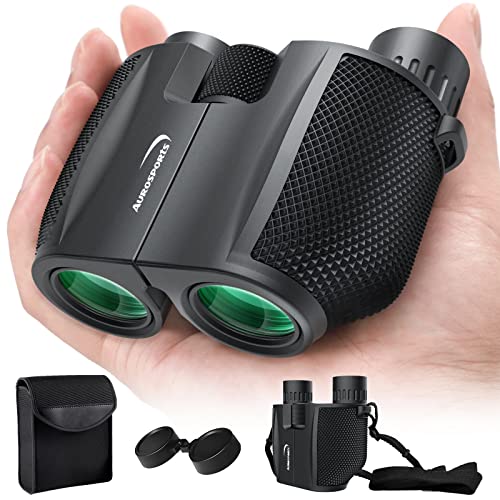
Aurosports 10×25 Compact Binoculars

Aurosports 16×32 Binoculars for Detail Observation

Aurosports 12×32 Compact Binoculars, Wide Field
More Details On Our Top Picks
The Diamondback HD has earned a near-cult following among birders, and the 10×42 setup is the configuration most people end up wanting. A 10x magnification (how much closer a subject appears) keeps the image steady without aggressive tripod support, while the 42mm objective lenses gather enough light for dawn owling or shaded woodland. Fully multi-coated optics, which means every air-to-glass surface is treated to reduce glare and boost transmission, help colors stay honest and edges stay crisp.
For most birders, this is the pair that quietly disappears in the hand once the focus wheel is dialled in. Armored rubber armor absorbs scuffs from car doors and belt buckles, and the wider chassis is comfortable for long sessions. Owners commonly report the diopter (the right-eye focus adjustment) holding its setting well across seasons.
Features That Help
- 10×42 roof-prism design balances reach and stability for walking birding
- Fully multi-coated glass keeps colors accurate and contrast strong
- Rubber-armored body survives drops and resists moisture
- Center focus wheel turns smoothly enough for one-handed tracking
- Twist-up eyecups sit comfortably against glasses
Honest Caveats
- Heavier than compact alternatives, so neck fatigue shows up on long hikes
- Close-focus distance is decent but not class-leading for butterfly-level subjects
Quick Facts
Whose Binocular Harness It Belongs On
Intermediate and serious birders who want one dependable pair to grow into over years of weekend outings.
A Better Fit Elsewhere
Travelers packing light for a long trip should look at the Aurosports 10×25 Compact Binoculars, which fit in a jacket pocket.
Bushnell’s Trophy XLT brings a generous 6.2-degree angle of view, a meaningful upgrade for birders who scan wide tidal flats or lakesides where the next bird can show up anywhere. The 10×42 roof-prism configuration keeps the image bright and the body familiar in shape, so the muscle memory from other 10×42 pairs transfers cleanly. Waterproofing and a grippy rubber exterior make it a sensible pick for damp woodland and boat trips alike.
Compared to the Vortex Diamondback HD, this model leans slightly toward wider fields and weatherproof confidence, with trade-offs you’ll feel in body weight. For wide-open habitats, that swap usually pays off. For close forest work, the slightly narrower exit pupil (the cone of light exiting the eyepiece) can feel a touch dimmer in heavy shade.
Where It Excels
- 6.2-degree apparent field of view makes scanning flocks effortless
- Waterproof and fog-proof build holds up in coastal or rainy terrain
- 10×42 magnification is a familiar, versatile birding size
- Textured armor gives a confident grip with gloves on
Small Caveats
- Body sits on the heavier side compared with compact roofs
- Slightly dimmer view than premium HD glass in deep shade
Who Will Love This
Birders working coastlines, marshes, and open shorelines who value a sweeping field of view and weatherproof build.
Look Elsewhere When
Forest birders chasing fast-moving warblers in low light will find the Adorrgon 12×54 Binoculars a better reach-and-brightness combination.
The 12×42 configuration steps up magnification from the classic 10×42 while keeping the same 42mm objective. You get tighter framing on perched birds, more detail in plumage, and a noticeably narrower field of view as the trade. Adorrgon sweetens that spec with an included phone adapter and tripod, turning casual optics into a digiscoping rig for posting to eBird checklists or sharing rare sightings.
For birders who document their sightings, the phone kit removes a meaningful chunk of cost versus buying the adapter separately. You may find the 12x magnification amplifies handshake compared to a 10x unit, so the included tripod earns its weight fast.
What It Does Well
- 12×42 spec delivers tighter framing on perched songbirds and raptors
- Included phone adapter turns optics into a basic digiscoping setup
- Tripod-ready mount adds stability for phone photography
- Full-size body sits comfortably in larger hands
Points To Note
- Higher magnification reveals hand shake, so steady support matters
- Phone adapter alignment takes practice before results feel clean
Feature Snapshot
Right Fit For
Birders who like to photograph what they see and want a phone-ready setup without buying accessories separately.
Swap It Out When
Backpackers prioritizing weight should choose the Aurosports 12×32 Compact Binoculars for a noticeably lighter carry.
Step up to 15×45 and the binoculars become a spotting tool. Distant raptors over a hillside, waterfowl well out on a lake, shorebirds you cannot approach all reveal more detail. The 45mm objective lenses gather enough light to keep the image reasonably bright in open daylight, even though the body grows in size and weight.
This is a reach-first design, and the trade shows up quickly: at 15x, hand-shake becomes obvious, so the included tripod is more than an accessory, it’s the way most people will actually use these. Owners commonly report that arm fatigue forces a tripod faster than they expected.
Useful Touches
- 15x magnification reads distant raptors and shorebirds clearly
- 45mm objectives balance brightness with manageable body size
- Phone adapter included for casual digiscoping
- Tripod mount turns these into a stationary spotting setup
Trade-Offs To Consider
- Hand shake is highly visible at 15x without support
- Narrow field of view makes tracking moving birds harder
- Full-size body adds noticeable pack weight
Built With In Mind
Birders who work open country, raptor migration points, or large wetland spreads where reach matters more than weight.
Not Your Match When
Backyard or forest-edge birders chasing active warblers will find the Aurosports 12×32 Compact Binoculars easier to manage handheld.
The Crossfire HD is the natural step below Vortex’s Diamondback line. It borrows much of the same optical philosophy: HD glass (high-density glass that reduces chromatic fringing), fully multi-coated lenses, and a roof-prism body, but trims features to reach a friendlier entry point. For a first serious pair, it covers almost everything a birder needs without breaking the bank.
It includes a GlassPak binocular harness in the box, which is a comfortable upgrade over a neck strap for long walks. Compared with the Diamondback HD, the Crossfire gives up some low-light punch and a touch of chassis refinement, though for most daylight birding the gap is smaller than the spec sheet suggests.
The Practical Payoff
- HD glass reduces color fringing on bright edges and treelines
- Roof-prism design keeps the body slim for the trunk and hands
- GlassPak harness included for easy all-day carry
- 10×42 spec is a proven, versatile birding baseline
Potential Compromises
- Low-light performance trails the Diamondback HD noticeably at dusk
- Close-focus distance is decent, not class-leading for backyard feeders
Feature Rundown
Perfect Match For
First-time serious birders who want a known-quality brand, an included harness, and a 10×42 spec they can rely on for years.
Consider Something Else When
Birders chasing shorebirds on bright open flats will prefer the wider angle of view on the Bushnell Trophy XLT.
Bigger objective lenses gather more light, and 54mm is a meaningful jump over the usual 42mm. That extra brightness pays off in the moments birders care about most: dawn choruses, dusk movements, and shaded forest understory where warblers quietly forage. The 12x magnification adds reach for ID’ing perched birds, with the trade-off being a heavier body and the typical tripod recommendation.
The large eyepiece design makes extended glassing more comfortable, with a generous eye box that forgives small head movements. Owners commonly report the waterproof build holding up well in drizzle and damp mornings.
What Makes Sense
- 54mm objectives deliver bright, low-light images for dawn and dusk
- 12x magnification reaches perched birds across larger clearings
- Large eyepiece design improves comfort on long sessions
- Waterproof body handles wet woodland and cold mornings
Where It May Fall Short
- Bigger objectives mean a noticeably heavier carry
- 12x magnification usually calls for tripod support to stay steady
Who Should Grab It
Birders who spend real time at dawn or dusk, work dense forests, or chase crepuscular (twilight-active) species where every bit of light gathering matters.
Reach For A Different Pick When
Travelers prioritizing pack size should consider the Aurosports 12×32 Compact Binoculars for a meaningfully smaller carry.
Compact binoculars live or die on size, weight, and a usable image. The Aurosports 15×25 delivers on all three fronts, sliding into a jacket pocket while still offering genuinely impressive magnification for casual walks. The 25mm objectives are small, so the bright daylight performance is the realistic sweet spot, not heavy overcast.
Fully multi-coated lenses and BAK4 prisms (a high-grade glass prism material that improves light transmission and edge sharpness) help the image stay punchy despite the small objective, and the wide 216ft field of view at 1000 yards helps locate moving birds fast. This is a grab-and-go option rather than a primary birding tool, and owners commonly treat it that way.
Strong Points
- Pocket-sized build goes anywhere a full-size binocular cannot
- 15x magnification is unusually strong for the size
- FMC lenses and BAK4 prisms keep the image bright and sharp
- Wide field makes locating birds easier at 15x
Room For Improvement
- Small 25mm objectives dim noticeably in low light
- Hand shake is visible at 15x without bracing or a stable rest
Right Fit For
Travelers, casual walkers, and anyone who wants a pair to live in a bag or glove box without thinking about it.
Skip It When
Birders doing long sessions in heavy cover will prefer the steadier, brighter view of the Vortex Crossfire HD 10×42.
The 10×25 spec is the classic compact birding configuration: enough magnification to feel useful, a small enough body to live in a jacket pocket or daypack, and a price that keeps the stakes low for first-time users. Kids and beginners often learn focus and tracking on this kind of optic without the bulk of a full-size pair getting in the way.
For backyard feeders, quick walks, and travel where size matters most, this hits the brief without much fuss. It is not the pair you bring for distant raptors or low-light forest work, but for everyday use at the feeder, it is a friendly starting point.
Positive Points
- Compact, ultralight build fits anywhere and adds almost no weight
- 10x magnification is steady enough for handheld use by adults and kids
- Simple, friendly focus wheel for new birders
- Travel-ready form factor for cruises, hikes, and quick outings
Things To Consider
- 25mm objectives dim noticeably at dawn or under deep shade
- Not suited for long sessions compared with full-size 42mm glass
Made For
First-time birders, families, and travelers who want a no-fuss pair to keep in a bag without thinking about it.
A Better Fit Elsewhere
Birders ready for more reach and steadier views should step up to the Vortex Crossfire HD 10×42.
The 16×32 configuration is a strong choice when plumage detail is the priority. Perched warblers, distant hawks, and shy forest birds reward the extra reach, with the trade being a noticeably narrower field of view. You trade a bit of ease for an honest step up in detail.
The 32mm objective keeps the body lighter than a 12×54, and BAK4 prisms help brightness across the frame. Owners commonly report bracing against a tree or resting elbows on a railing to get the most out of 16x handheld, since even small tremors read large at this magnification.
Noteworthy Benefits
- 16x magnification reveals fine plumage and ID marks at distance
- BAK4 prism keeps edge sharpness better than economy prisms
- 32mm objective balances size with usable brightness in daylight
- Compact form factor is easier to carry than 15×45 alternatives
Less-Strong Areas
- Hand shake is obvious at 16x without a brace or rest
- Narrow field of view makes fast-moving birds harder to track
The Right Fit
Birders who prioritize feather-by-feather ID on perched birds and are willing to brace or rest for steady views.
Where A Sibling Pick Shines
Birders who prefer a wider field and steadier handheld view should reach for the Aurosports 12×32 Compact Binoculars.
Closing out the list, the 12×32 hits a sweet middle ground: more reach than the 10×25, wider field than the 16×32, and a body that still rides comfortably in a coat pocket. The 273ft field of view at 1000 yards is the headline number, generous for a compact 12x and meaningfully easier on the eyes when tracking warblers in leafy canopy.
Fully multi-coated lenses with BAK4 prisms keep the image punchy in daylight, and the easy-focus wheel is friendly for beginners. For forest-edge and backyard birding where the action happens fast and close, this configuration quietly outshines more aggressive magnifications.
Positive Takeaways
- Wide 273ft field at 1000 yards simplifies tracking moving birds
- 12×32 spec balances reach with compact carry
- FMC lens and BAK4 prism combo keeps the image sharp and bright
- Easy-focus wheel suits newer birders and quick glassing
Where It Is Less Suited
- Dimmer than full-size 42mm glass at dawn or dusk
- Not the strongest reach for far-flung raptors or waterfowl
Best Suited To
Birders covering mixed forest edge and backyard habitats who want a compact, wide-field pair for quick, active sessions.
Consider Something Else When
Birders working open country or distant water will benefit from the Adorrgon 15×45 High Powered Binoculars and a tripod.
Picking The Right Specs For Your Style Of Birding
Three specs tell you almost everything about how a binocular will feel in the field. The first number, magnification, decides how close the subject appears: 8x or 10x gives a comfortable balance for walking and tracking, while 12x and up trades ease for detail and usually calls for a tripod or rest. The second number, the objective lens diameter in millimeters, controls how much light the binoculars gather; 42mm is the classic full-size sweet spot, 25mm to 32mm keeps the body pocketable, and 50mm-plus unlocks low-light performance at the cost of weight. The third is field of view, usually listed in feet at 1000 yards, which determines how wide an area you can scan and how easily you track moving birds.
Roof-prism designs (prisms aligned in a straight tube) tend to be more compact and durable, while Porro-prism designs (prisms offset in a zig-zag shape) can give a wider depth feel but a bulkier body. Coatings matter too: fully multi-coated optics (every glass surface treated) outperform partially coated ones for brightness and color, and BAK4 prisms (a high-grade prism glass) hold sharpness to the edges better than economy BK7 glass (a more common, slightly less bright prism material). If you wear glasses, look for long eye relief (the distance your eye can sit from the eyepiece and still see the full image) and twist-up eyecups; if you bird at dawn or dusk, lean toward larger objectives.
A 10×42 covers most scenarios without forcing trade-offs you will regret. A 12×42 or 15×45 makes sense for open-country birders willing to mount on a tripod. A compact 10×25 or 12×32 keeps the hobby accessible on hikes and travel where weight matters more than reach.
Key Considerations Across These Picks
Where Shoppers Go Wrong
Chasing the highest magnification often leads to shaky views and frustration, especially for beginners. A 15x or 16x binocular looks impressive on a spec sheet but quickly reveals hand-shake in the field, and the tripod many people skip becomes the accessory they wish they had bought first. Another common slip is underweighting objective lens size: a 16×32 sounds powerful, but the 32mm objective limits low-light performance compared with a 10×42 of similar quality. Finally, ignoring eye relief (the distance your eye can sit from the eyepiece and still see the full image) leaves glasses-wearers with black edges around the image, a frustrating experience that a quick spec check would have prevented.
What The Higher Tier Buys
Stepping into premium HD glass delivers brighter images, better color fidelity, and reduced chromatic aberration (color fringing around high-contrast edges, like a bird’s silhouette against bright sky). You also tend to get tighter quality control, more durable chassis materials, longer eye relief, and fully waterproof and fog-proof sealing. For most casual birders, mid-tier options deliver genuinely good views at a friendlier cost. For birders logging hours weekly, low-light performance and edge sharpness stop being luxuries and start being the difference between IDing a bird cleanly and guessing.
Frequently Asked Questions
What magnification is best for birding?
A 10x binocular is the most common birding starting point, balancing reach and stability for handheld use. Higher magnification (12x to 16x) brings birds closer but demands steady support, often a tripod, to keep the image usable.
Are compact binoculars good for serious birding?
Compact binoculars work well for travel, casual walks, and fast-moving feeder birds, but they gather less light than full-size 42mm pairs. For long sessions in low light, a full-size model is usually the more comfortable choice.
Do I need a tripod for birding binoculars?
A tripod becomes useful around 12x magnification and almost essential at 15x or higher, since hand-shake grows obvious. For 8x or 10x birding, a tripod is optional and most people skip it for the freedom of movement.
Is waterproofing important for birding binoculars?
Waterproofing matters if you regularly bird in rain, near coasts, or in damp forests. In dry climates, a water-resistant pair can be plenty, though the sealed, nitrogen-purged (internally fog-proofed with inert gas) builds also resist internal fogging during temperature swings.
Can I use binoculars for both birding and stargazing?
Yes, especially with larger objective lenses like 42mm or 54mm, which gather more light for dim subjects. Magnification for astronomy is often lower than for birding, so a versatile 10×42 covers both hobbies reasonably well.
The Takeaway
The best birding binoculars are the ones that match the way you actually bird. Full-size 10×42 pairs like the Vortex Diamondback HD or Crossfire HD cover most scenarios cleanly; compact 10×25 and 12×32 models reward travel and casual use; and the higher-magnification 12x and 15x options earn their place once a tripod is part of your kit. Pick the configuration that matches your most common outing, and the rest tends to fall into place.