High-power binoculars can turn a distant coastline into a living postcard, pull a stadium seat close enough to read jersey numbers, and reveal the craters of the moon from a backyard. The trick is finding a pair that balances magnification, glass quality, and comfortable handling without weighing you down or shaking every time you breathe. This shortlist pulls together nine options for stargazing, wildlife watching, sports, travel, and casual exploration, so you can match the tool to the way you actually plan to use it.
How The Shortlist Stacks Up

Bushnell 10x42mm Trophy XLT Binoculars (Black)

Pankoo 20×55 High Powered Binoculars

Pankoo 20×55 Binoculars with Phone Adapter
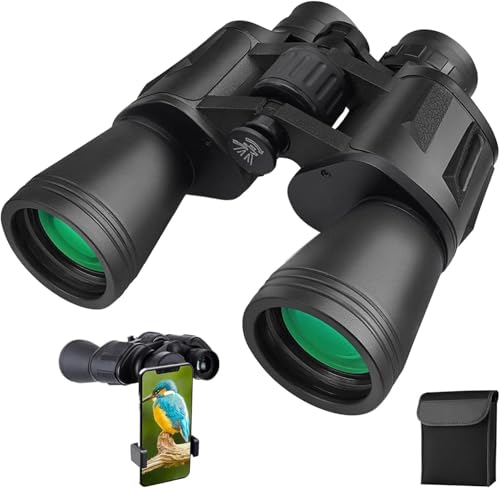
Allenjoy 20×50 HD High Powered Binoculars
Pankoo 20×55 Waterproof Binoculars

ESSLNB 25×70 Astronomy Binoculars

ESSLNB 30×80 Astronomy Binoculars (Black)

ESSLNB 15-30X80 Zoom Astronomy Binoculars

ESSLNB 20×80 Astronomy Binoculars
The Strengths Of Each Pick
Where most of the picks below push 20x and beyond, the Bushnell 10x42mm Trophy XLT takes a steadier approach. The 10x magnification gives you enough reach to pull a far shoreline or a circling hawk into focus without the handshake tremor that plagues higher-power glass. At 42mm, the objective lenses (the large front lenses that gather light) keep the body slim enough to fit in a daypack side pocket, which matters on long hikes or cruise-deck strolls.
Bird watchers tend to gravitate toward this magnification range because it tracks moving subjects more comfortably. The housing is built to handle wet weather, and the 6.2-degree field of view (the width of the scene visible at 1,000 yards) gives you a forgiving window for following a flock across the sky. For travelers who want one pair that does nearly everything short of planetary craters, this is a calm, reliable anchor.
Notable Gains
- 10x magnification stays stable handheld, so you spend less time fighting shake and more time observing.
- 42mm objectives keep the binoculars light enough for cruise decks, long walks, and stadium seats.
- 6.2-degree field of view makes tracking birds in flight feel natural rather than narrow.
- Weatherproof housing handles misty mornings and unexpected drizzles without fuss.
Points To Note
- 10x simply won’t satisfy anyone hoping to read the moon’s craters or pull distant ships into sharp detail.
- Coated optics in this range typically benefit from lens-cap discipline, and owners commonly report dust smudges building up on the eyepieces over time.
Made For
Travelers, casual bird watchers, and anyone who values a steady image over maximum zoom.
Skip It When
Stargazing is the priority, since the Pankoo 20×55 High Powered Binoculars or any of the ESSLNB astronomy pairs offer far more reach.
Stepping up from the Bushnell, the Pankoo 20×55 delivers double the magnification at a price that doesn’t scare off casual shoppers. The 55mm front lenses gather noticeably more light than the 42mm pair above, which helps when you’re peering into shaded tree lines or scanning coastlines at dusk. This is the entry-level sweet spot for people who want serious reach without committing to a tripod-mounted giant.
Expect some shake at 20x without steady hands or a resting surface, and the focus wheel requires small, deliberate turns to land on a sharp image. For stadium seats, open-water sightseeing, and wildlife on the move, though, this pair punches well above what its pricing suggests. Think of it as the practical gateway into high-power glass.
A Favorable Mix
- 20x magnification pulls distant subjects into clear reach for stadium and shoreline use.
- 55mm objectives brighten the image in low-light hours compared to compact 42mm designs.
- Accessible price point makes high-power glass approachable for first-time owners.
Things To Consider
- Handheld shake is noticeable at full 20x, so a fence, monopod, or braced arm becomes your friend.
- The focus mechanism tends to drift slightly over months of use, and a quick reset between sessions is often part of the routine.
Best Suited To
Curious newcomers ready to try 20x glass without a large spend.
Look Elsewhere When
Sharing views with a smartphone matters, since the Pankoo 20×55 Binoculars with Phone Adapter handles that workflow directly.
Key Product Details
The optics here match the previous Pankoo closely, but the included phone adapter is the story. Digiscoping, the practice of aiming a smartphone camera through binocular eyepieces, turns a memorable sighting into a photo you can share, and this kit ships ready to do exactly that. Birders who keep a life list, travelers documenting a safari, and parents trying to capture a recital from the back row all find real value in that adapter.
You’ll want a steady hand or a small tripod to align the phone lens with the eyepiece cleanly. Once locked in, though, the combination of 20x reach and a 1200-yard-rated field of view opens up creative possibilities the standard pair can’t touch. For content creators on a budget, it’s the most useful upgrade in this range.
Standout Benefits
- Bundled phone adapter captures distant moments without buying a separate digiscoping setup.
- BAK4 prism (a high-grade glass prism that transmits more light than standard BAK7) and FMC green coating (fully multi-coated optics that reduce glare and boost brightness) work together to keep colors accurate.
- 1200-yard field of view gives you a wide window for tracking wildlife or sports action.
Trade Offs
- Aligning the phone camera takes patience, and the adapter clamps may need adjustment for larger phones.
- The added phone hardware shifts the balance point, which can amplify shake at 20x during handheld sessions.
Perfect Match For
Casual content creators, hobbyist wildlife photographers, and travelers who want both a view and a photo.
Reach For A Different Pick When
You’d rather skip the adapter workflow and just look, in which case the Bushnell 10x42mm Trophy XLT Binoculars feel more relaxed in hand.
The Allenjoy 20×50 sits in a comfortable middle ground that suits people who don’t want to specialize. Its 20x reach handles concerts, travel landmarks, and casual birding, while the 50mm objectives (slightly smaller than the 55mm Pankoo pairs) keep the body a touch lighter in the hand. The BAK4 prism and FMC lens combo delivers the kind of color fidelity you want when you’re tracking a soaring raptor across mixed sky and tree cover.
What sets this one apart is versatility. Travelers packing for varied itineraries, parents juggling a kid’s soccer game and a museum visit, and anyone who wants one tool for many scenarios will appreciate the balance. The trade-off is straightforward: a hair less light gathering than the larger 55mm and 70mm options, but enough forgiveness to handle most daytime conditions with confidence.
Key Advantages
- 20x magnification covers concerts, sports, wildlife, and travel in a single package.
- BAK4 prism plus FMC lens coating keeps colors true across varied lighting.
- 50mm objective size balances light gathering with manageable weight.
Honest Caveats
- Not the strongest performer at dusk or dawn, where the 55mm and 70mm options pull ahead.
- Eyepiece cups are often reported as firm on the face, which can feel uncomfortable over long sessions without a break.
Whose Shelf It Belongs On
Households and travelers who want one general-purpose pair instead of a closet of niche optics.
Consider Something Else When
Stargazing matters, since the ESSLNB 25×70 Astronomy Binoculars gather far more light for night-sky use.
Feature Snapshot
If your adventures regularly involve rain, spray, or sudden river crossings, this Pankoo 20×55 leans into sealed construction. The waterproof housing uses BAK4 roof prisms (a slimmer prism design that allows a more compact body) and fully multi-coated lenses, which together push claimed light transmission toward the upper end of this price class. The result is bright, contrasty views in conditions that would fog up lesser pairs.
The 56mm objective spec (per the listing data) collects more light than the 50mm Allenjoy above, giving you an edge in dim mornings and shaded forest interiors. Owners planning multi-day backcountry trips or coastal voyages tend to value the sealed build, since humidity and salt air punish exposed optics over time. At 20x, you’ll still want a steady brace, but the optical confidence holds up well.
Positive Takeaways
- Sealed waterproof build stands up to rain, spray, and humid environments.
- BAK4 roof prisms keep the body more compact than traditional porro designs.
- FMC lenses push light transmission high for this price range.
Things To Weigh
- At 20x, even the best waterproofing can’t fix shaky hands, so a resting surface still helps.
- The compact roof-prism body shifts weight closer to the eyepieces, which may feel nose-heavy during long carry sessions.
The Right Fit
Hikers, paddlers, and coastal travelers who need sealed optics and don’t want to baby their gear.
A Better Fit Elsewhere
You want the absolute largest aperture for faint night-sky targets, which points to the ESSLNB 30×80 Astronomy Binoculars instead.
Feature Overview
Here the category shifts toward astronomy, and the ESSLNB 25×70 sits at the entry to true sky-watching glass. The 70mm objectives are roughly 40 percent larger in light-gathering area than the 55mm Pankoo pairs, which makes a meaningful difference when you’re trying to pick out dim star clusters or the bands of Jupiter. The built-in tripod adapter is not optional at this magnification; handheld use becomes uncomfortable within seconds.
25x is a useful middle ground for the moon’s craters, large open clusters, and bright nebulae, while still allowing some terrestrial viewing when you mount them on a sturdy tripod. A carrying bag is included, and the waterproof housing handles dew-prone nights without complaint. For first-time astronomers who want binoculars before committing to a telescope, this is a sensible starting point.
What Earns Its Place
- 70mm objectives gather enough light to reveal lunar craters and bright deep-sky targets.
- BAK4 prisms and FMC lenses reduce color fringing and improve contrast in dim conditions.
- Built-in tripod adapter makes stable mounting straightforward.
Softer Spots
- Handheld use is essentially off the table at 25x; a tripod is part of the deal.
- The body adds real weight to a backpack, and the included soft bag offers minimal padding during rough travel.
Who Should Grab It
Curious stargazers stepping up from compact binoculars and ready to mount a pair on a tripod.
Swap It Out When
You want variable magnification in a single body, which the ESSLNB 15-30X80 Zoom Astronomy Binoculars deliver at a similar size.
Quick Facts
The ESSLNB 30×80 is the largest and most powerful pick in this lineup. With 80mm objective lenses and 30x magnification, it crosses from casual sky-watching into serious observation territory. Compared to the 25×70 above, you’re gaining another 10mm of aperture and a noticeable bump in magnification, both of which help with smaller planetary details and fainter deep-sky targets under dark skies.
The physical size here is genuinely large. Think “tripod-mounted observatory,” not “shoulder bag.” The trade-off is worth it on a calm night at a dark-sky site, where the light throughput rewards careful setup. Casual observers may find this more telescope than they need, but anyone bitten by the astronomy bug tends to appreciate the raw reach.
Where It Delivers
- 80mm objectives capture meaningful light from faint galaxies and nebulae.
- 30x magnification separates tight double stars and reveals lunar rilles.
- Sturdy build supports tripod use even with heavier-duty heads.
Room For Improvement
- The size rules out casual grab-and-go use; storage and transport take planning.
- At 30x, even a minor tripod wobble ruins the view, so a stable head becomes part of the investment.
Built With In Mind
Amateur astronomers who already own a tripod and want maximum reach without buying a telescope.
Another Choice May Suit
Flexibility matters more than maximum power, in which case the ESSLNB 15-30X80 Zoom Astronomy Binoculars let you dial down for wider sky sweeps.
Zoom binoculars get a mixed reputation among purists, but this ESSLNB 15-30X80 makes a strong case for versatility. The variable range starts at 15x for wide star-field sweeps and climbs to 30x for tighter planetary looks, all without swapping eyepieces. You also get a built-in tripod mount, a phone adapter, and a hard case, which together turn the package into a complete observation kit.
The trade-off with zooms is some softness at the long end of the range, especially toward the edges of the field. In practice, that means centering your target and avoiding full 30x when scanning wide areas. For observers who want one pair that handles casual astronomy, terrestrial spotting, and occasional phone photos, this set earns a serious look.
What Makes Sense
- Variable 15x to 30x range covers wide sweeps and detailed planetary views.
- Bundled phone adapter and case add real value out of the box.
- BAK4 prisms with 21mm green-film eyepieces improve brightness for the class.
A Few Limitations
- Image softness creeps in at the upper zoom range, especially off-center.
- Zoom mechanisms tend to need gentle handling, and bumps can nudge the magnification out of place.
Who It Suits Best
Hobbyists who want one flexible pair for sky, shore, and occasional phone captures.
Not Your Match When
Pure optical simplicity matters, since the fixed-magnification ESSLNB 25×70 Astronomy Binoculars deliver a tighter, brighter image at 25x.
Core Details
Closing out the list, the ESSLNB 20×80 keeps the giant 80mm objective lenses but drops magnification back to 20x, which is friendlier than the 30x pair for handheld-leaning sessions on a sturdy surface. The wider field of view at 20x also makes terrestrial targets like distant lighthouses, cliffside raptors, and harbor seals easier to track without constantly recentering.
The same tripod adapter and carrying bag that ship with the 25×70 come along, so mounting and transport are covered. If you’re choosing between the 20×80 and the 25×70, the honest read is that the 25×70 leans deeper sky and the 20×80 leans day-and-night versatility. Neither is a misstep; they just suit slightly different observing styles.
What Pays Off
- 80mm objective lenses provide excellent low-light performance for dawn, dusk, and dim sky targets.
- 20x magnification offers a forgiving field of view compared to 25x or 30x alternatives.
- Tripod adapter and carrying bag included for stable, protected use.
Things That May Matter
- The 80mm objectives add real bulk, and the included bag is sized for the binoculars alone with little room for accessories.
- Even at 20x, long handheld sessions become tiring; expect to mount the pair for any extended viewing.
Right Fit For
Observers who want big-objective light gathering without pushing into the higher shake zone of 30x.
Where Another Pick Suits Better
You want maximum reach for deep-sky targets, in which case the ESSLNB 30×80 Astronomy Binoculars (Black) push further with the same aperture class.
What Matters Most Before Choosing Binoculars High Powers
Magnification And Aperture Working Together
A 10x pair feels steady in hand and suits travel and casual wildlife watching, while 20x and above opens up stargazing and stadium-style distance at the cost of more shake. The objective lens, the front glass that gathers light, is measured in millimeters. Larger objectives collect more light, which becomes essential after sunset or in shaded forests, but they also add weight and bulk. A balanced match looks something like this: 10×42 for day use, 20×50 or 20×55 for versatile reach, and 70mm or 80mm objectives when astronomy enters the picture.
Glass Quality And Coatings
Look for BAK4 prisms (high-grade glass prisms that transmit more light and produce cleaner edges than the cheaper BK7 glass) and FMC, or fully multi-coated, lenses. Together they boost brightness, reduce glare, and improve color fidelity. Cheaper optics may look sharp at first glance but often wash out at the edges and dim quickly as the light fades.
Stability, Comfort, And Extras
At 20x and above, a tripod adapter stops being optional. Eye relief (the distance your eye can sit behind the eyepiece and still see the full image) matters for glasses wearers, and longer eye relief is friendlier there. Waterproofing protects against rain, spray, and humid nights where dew would otherwise fog the lenses. A carrying case and phone adapter are welcome bonuses for travelers who plan to share what they see.
Key Considerations Across These Picks
Common Shopping Slip Ups
Magnification grabs attention, but aperture and glass quality shape the actual image more than zoom alone. Chasing 30x without a tripod in mind leads to shaky, frustrating sessions, and skipping waterproofing means a fogged pair on the first humid night. Buyers also tend to overlook eye relief, only to discover that glasses wearers in the family can’t see the full field of view.
Where The Extra Money Goes
Higher-tier models in this category invest in better prism glass, more thorough lens coatings, and sturdier housings. The visible payoff is brighter edges, more accurate color, and longer service life under real outdoor conditions. If your use case leans heavily toward astronomy or low-light observation, the upgrade from a 50mm to an 80mm objective often matters more than another few millimeters of zoom.
Frequently Asked Questions
What magnification is best for general use?
For most daytime activities like travel, birding, and sports, 10x offers the best balance of reach and handheld stability. Higher magnifications require a tripod for comfortable extended viewing.
Can I use high-power binoculars for stargazing?
Yes, especially models with 70mm or larger objective lenses. Astronomy binoculars work best mounted on a tripod, where they reveal lunar craters, bright star clusters, and some planets.
Do I need a tripod for 20x binoculars?
A tripod is strongly recommended at 20x and above. Handshake becomes pronounced at this magnification, and even a lightweight tripod dramatically improves viewing comfort.
Are waterproof binoculars worth it?
Waterproofing protects against rain, spray, and internal fogging in humid conditions. For outdoor use beyond fair-weather days, sealed construction adds real long-term value.
Can I attach my phone to take photos?
Many binocular models include or support a phone adapter for digiscoping. Look for kits that explicitly include the adapter, or buy a universal adapter that fits your eyepiece diameter.
Closing Remarks
The right pair comes down to matching your most common scenario. Travelers and casual wildlife watchers will find the Bushnell 10×42 steady and friendly, while first-time astronomers gain a lot by stepping up to a 70mm or 80mm pair with a tripod. Whatever you choose, take a few minutes to set the interpupillary distance (the spacing between the eyepieces, matched to the distance between your pupils) and focus for your eyes; that small habit transforms the experience from the first use onward.