A good pair of binos turns a fuzzy shape on a distant ridge into a sharp, detailed scene, and you don’t need to spend a fortune to get there. The trick is matching magnification, objective size, and glass quality to how you actually use them, whether that’s tracking warblers at dawn, picking a sail from a ship railing, or scanning the treeline on a hunt. This guide walks through ten solid options across different budgets, with honest notes on what each one does well and where it falls short, so you can find the right fit without second-guessing the purchase.
The Essentials At A Glance

Vortex Diamondback HD 10×42 Binoculars

Bushnell 10x42mm Trophy XLT Binoculars

Vortex Copperhead HD 10×42 Binoculars

Pankoo 20×55 High Powered Waterproof Binoculars
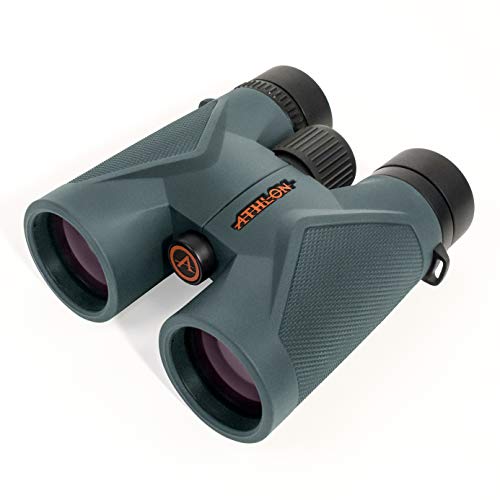
Athlon Optics 8×42 Midas UHD Binoculars

Steiner Marine 7×50 Binoculars

Vortex Crossfire HD 10×42 Binoculars

Pankoo 20×55 Binoculars with Phone Adapter
Pankoo 20×55 Waterproof Binoculars

WRNRN 20X30 Compact Travel Binoculars
The Vortex Diamondback HD sits in a sweet spot that a lot of birders and hunters chase without ever quite finding: real optical polish without the premium-tier price. The 10×42 configuration is a classic for a reason, pairing enough magnification to read a hawk’s tail markings at distance with 42mm objective lenses that pull in plenty of light at dawn and dusk.
Fully multi-coated lenses (meaning every glass surface gets an anti-reflective coating) help the binos push resolution and color accuracy higher than what you’d typically see in this range, and the chassis feels reassuringly solid in hand. For someone stepping up from a basic starter pair, the jump in clarity is the kind of upgrade you notice the first time you raise them to your eyes.
Real Benefits
- HD optical system delivers sharp, high-contrast images across most of the field of view.
- Argon-purged, O-ring sealed body shrugs off rain, fog, and dusty trail conditions.
- Rubber armor gives you a confident grip in cold or wet weather, no slipping.
- Twist-up eyecups and a smooth focus wheel make long glassing sessions comfortable.
- Vortex’s reputation for standing behind optics gives you real long-term peace of mind.
Things To Consider
- At 10x, even small hand tremors show up as image shake, so a steady hold or tripod helps on long sessions.
- Slightly heavier than compact travel binos, which you may feel on all-day hikes.
Feature Card
Whose Shelf It Belongs On
Birders, deer hunters, and outdoor enthusiasts who want a dependable, sharp pair they can trust across years of weekend use.
Look Elsewhere When
The Vortex Crossfire HD 10×42 makes more sense for budget-focused shoppers who don’t need the Diamondback’s added optical refinement.
The Bushnell Trophy XLT 10×42 leans hard into versatility, and that’s exactly the point. Cruise ship travelers, casual birders, and anyone who wants a do-it-all pair they can toss in a backpack will find a lot to like here. The 6.2-degree angle of view (a measure of how wide a scene fits in the lens) gives you a noticeably wider window than tighter binos, which is a real win when you’re scanning open ocean or wide forest edges.
Multi-coated lenses and a waterproof build keep the optics usable in light rain and sea spray, and the housing feels sturdy enough to survive a few rough trips. You give up a touch of the edge sharpness you’d see on a Vortex Diamondback, but in return you get a friendly price that won’t sting if they get scuffed up in a suitcase.
Key Advantages
- Wide 6.2° field of view makes tracking moving subjects easier.
- Waterproof and fogproof construction handles coastal and rainy conditions.
- Multi-coated optics keep images bright enough for dawn deck sightings.
- Long eye relief helps glasses wearers see the full field comfortably.
Worth Noting
- Edge sharpness softens a bit compared to premium-tier HD glass.
- 10x magnification shows hand shake if you have a less steady hold.
Made For
Travelers, cruise passengers, and casual birdwatchers who want a wide view and weatherproof reliability on the go.
Not Your Match When
The Vortex Diamondback HD 10×42 fits better when image sharpness and HD glass matter more to you than wide-angle scanning.
The Vortex Copperhead HD shows up here for people who want HD-grade glass without paying for the Diamondback name. It’s positioned as a starter or backup pair, but the optical system borrows enough from Vortex’s higher-end designs to punch well above its price tier. For someone buying their first real pair of binos, this is the kind of entry point that doesn’t feel like a compromise after a few months.
Adjustable eyecups, a tunable diopter (the small ring that fine-tunes focus for each eye), and a waterproof, fogproof, and shockproof chassis cover the basics that matter in real outdoor use. You don’t get the extra brightness of ED (extra-low dispersion) glass, so contrast in flat lighting isn’t quite as crisp, but most casual users won’t notice the gap.
A Few Strong Suits
- HD optical system delivers clean color and edge-to-edge sharpness for the price.
- Tunable diopter and adjustable eyecups make it easy to dial in a custom fit.
- Rugged waterproof, fogproof, and shockproof build handles rough field use.
- Light enough for long hikes without neck fatigue.
Points To Note
- Lacks ED glass, so color fringing can show up on high-contrast edges.
- Coatings and chassis are a step below the Diamondback line in long-term feel.
Who It Suits Best
First-time bino shoppers and casual outdoor users who want genuine HD optics without stretching into premium pricing.
Consider Something Else When
The Vortex Diamondback HD 10×42 makes more sense if you spend long hours glassing and want stronger low-light performance.
High magnification usually means high compromise, but the Pankoo 20×55 makes a serious case for itself when long reach is the priority. The 55mm objectives pull in solid light for a 20x bino, and the waterproof build gives you confidence in damp conditions. For stadium seating, distant shoreline scanning, or open-field observation, this is the kind of pair that lets you skip the tripod while still pulling in real detail.
The honest trade-off shows up at 20x, where any small tremor in your hands amplifies into a noticeable wobble. The Pankoo handles it about as well as any budget 20x pair, but you’ll want a steady brace, like a railing or a monopod, if you’re planning a long session.
A Favorable Mix
- 20x magnification reaches far beyond typical 10x pairs.
- 55mm objective lenses gather enough light for usable dawn and dusk viewing.
- Waterproof construction handles light rain and humid environments.
- Wide field of view at this magnification makes scanning easier.
Trade Offs
- 20x magnification amplifies hand shake, so a steady support helps.
- Larger body may be bulky for ultralight backpackers.
Quick Facts
Best Suited To
Stadium-goers, coastal observers, and open-field users who prioritize long reach over compact handling.
A Better Fit Elsewhere
The Vortex Copperhead HD 10×42 works better for people who want steadier handheld viewing with less image shake.
The Athlon Optics 8×42 Midas UHD earns its place in the lineup for one specific reason: ED glass. Extra-low dispersion glass reduces the color fringing that cheaper optics show on high-contrast edges, like a dark bird against a bright sky. The result is a noticeably cleaner image that holds up well in tough lighting.
The 8x magnification is lower than most of the picks here, but that’s a feature, not a compromise. Image shake drops dramatically, the 8.1° field of view opens up for easier tracking, and the 17.2mm eye relief is generous for glasses wearers. At roughly 25 ounces, it’s substantial without being a burden, and the magnesium chassis keeps it light enough for full days in the field.
Points In Its Favor
- ED glass cuts color fringing for clean, high-contrast views.
- BAK-4 prisms (high-density glass that brightens the image) with phase correction improve resolution and clarity.
- Generous eye relief suits eyeglass wearers well.
- 8x magnification keeps the image steady for long observation sessions.
Honest Caveats
- 8x reach is lower than 10x and 20x picks on this list.
- Heavier than compact travel binos at around 25 ounces.
Key Product Details
Who Should Grab It
Serious birders and hunters who want ED-grade color accuracy and a steady image over maximum reach.
Skip It When
The Bushnell Trophy XLT 10×42 works better for people who want more magnification for travel spotting and shoreline views.
The Steiner Marine 7×50 is built for a specific kind of abuse: salt spray, sudden rain, and the occasional drop onto a wet deck. The 7×50 configuration is a classic marine format for good reason, with a 50mm objective that pulls in serious light for low-light conditions and a magnification that stays steady in a rocking boat. The floating prism system uses flexible silicone mounts to absorb shock, which helps the binos survive the kind of impact that would end most pairs.
The Sports Auto Focus feature is the headline usability win. Once you set it for your eyes, everything from roughly 20 yards out to infinity stays sharp without constant refocusing. That sounds small, but on a moving boat or in a fast-moving wildlife moment, it’s a real difference-maker.
What Stands Out
- 50mm objectives deliver excellent low-light performance at dawn and dusk.
- Floating prism system absorbs shock and improves durability in rough use.
- Sports Auto Focus keeps the image sharp from 20 yards to infinity.
- 7x magnification gives you a stable image on a rocking deck.
Less Ideal Details
- Larger body takes up more space in a backpack.
- 7x reach is lower than most general-purpose binos on this list.
Right Fit For
Boaters, coastal birders, and sailors who need waterproof glass that handles salt spray and rough conditions.
Reach For A Different Pick When
The Bushnell Trophy XLT 10×42 is a better match for general travel where you want more magnification and a lighter carry.
The Vortex Crossfire HD lands in a comfortable middle ground for people who don’t want to overthink their first real bino purchase. You get HD optical performance that noticeably outclasses toy-store pairs, a build that’s genuinely waterproof and fogproof, and the kind of warranty support that makes a first-time investment feel safer. The included GlassPak harness is a thoughtful extra, letting you carry the binos on your chest for quick access on the trail.
Compared to the Vortex Diamondback HD higher up the list, the Crossfire uses slightly simpler glass and coatings, which means a small step down in edge sharpness and low-light punch. For most newcomers, that difference is barely visible, and the lower entry cost makes it a smart starting point.
A Few Highlights
- HD optics give you sharp, color-accurate images for general use.
- GlassPak harness keeps binos accessible and protected in the field.
- Waterproof, fogproof, and rubber-armored body handles trail abuse.
- 10×42 is a versatile all-around format for most outdoor activities.
Small Caveats
- Edge sharpness is a step below the Diamondback line.
- Harness adds bulk if you prefer a slim belt case.
Feature Snapshot
Perfect Match For
Newcomers, casual hikers, and weekend birders who want a complete, ready-to-go package with no extra shopping needed.
Swap It Out When
The Vortex Diamondback HD 10×42 is the better upgrade for users who want noticeably sharper optics for serious birding.
The Pankoo 20×55 with phone adapter is built for the kind of user who sees something interesting and wants to capture it on the phone without dragging out a full camera setup. Digiscoping (photographing through a spotting scope or binocular eyepiece) usually requires a separate adapter and a lot of fiddling, so having one in the box is a real convenience for travel journaling, casual wildlife shots, and stadium moments.
The 20×55 optical core uses BAK-4 prisms and fully multi-coated lenses, which is a solid baseline for budget high-power glass. You still get the usual 20x trade-offs in image stability, so plan to brace against something, but the included adapter is well-matched to the eyepiece and holds most modern phones securely.
Notable Gains
- Included phone adapter makes digiscoping accessible right out of the box.
- BAK-4 prisms and fully multi-coated lenses produce clean, bright images.
- 20x reach is excellent for distant subjects and large venues.
- Adapter fits a wide range of modern smartphones.
Practical Considerations
- 20x magnification makes steady hands or a brace almost essential.
- Adapter alignment takes a few minutes of practice to get centered.
Who Will Love This
Travel content creators, casual wildlife photographers, and concert-goers who want a one-box solution for sharing views online.
Where A Sibling Pick Shines
The Pankoo 20×55 Waterproof Binoculars work better for users who don’t need a phone adapter and prefer a slightly simpler carry.
The Pankoo 20×55 Waterproof shares the same high-reach optical core as the phone-adapter version but skips the digiscoping extras to land at a lower price. For casual backyard stargazing, distant shoreline views, and open-field scanning, this is one of the most accessible ways to get 20x magnification in a sealed, weather-ready body.
BAK-4 roof prisms and fully multi-coated lenses handle the light transmission reasonably well, though the image can’t match the brightness of 10×42 binos in low light. You trade some optical refinement for the higher power, which is the standard trade-off in this magnification range.
Features That Help
- 20x magnification reaches well beyond standard 10x pairs.
- Waterproof construction handles light rain and humid weather.
- BAK-4 roof prisms deliver clean, sharp imagery for the price.
- Large 55mm objective gathers good light for a 20x bino.
Possible Compromises
- 20x magnification amplifies hand shake, so steady support helps.
- Lower light transmission than 10×42 pairs in dim conditions.
Right Fit For
Casual users, gift-givers, and homeowners who want long reach for distant viewing without paying for extra accessories.
Look Elsewhere When
The Pankoo 20×55 with Phone Adapter is the better match for users who want to photograph what they see through the binos.
The WRNRN 20X30 Compact slots into the lineup for people who care more about portability than maximum light gathering. The 30mm objectives are smaller than most picks here, which is exactly what makes the binos light enough to live in a daypack or jacket pocket. For concert venues, sightseeing, cruise departures, and spontaneous nature moments, that’s a fair trade.
Fully multi-coated optics help make the most of the smaller objectives, though you won’t get the same low-light performance as 42mm pairs. At 20x, you still get strong reach, and a steady hold or leaning against a rail goes a long way toward a clean image.
The Upside
- Compact, lightweight body fits easily in a daypack or large pocket.
- 20x magnification is impressive for the size and weight class.
- Fully multi-coated lenses improve brightness in good light.
- Affordable enough to toss in a travel bag as a casual spare.
Where It May Fall Short
- 30mm objectives gather less light than 42mm binos for dawn or dusk use.
- 20x magnification amplifies hand shake without a steady brace.
Built With In Mind
Day-trippers, concert-goers, and casual travelers who want a grab-and-go pair that doesn’t weigh down a small bag.
Another Choice May Suit
The WRNRN’s compact form can’t match the Steiner Marine 7×50 for low-light marine use, so coastal boaters should look there instead.
What Matters Most When Shopping For Binoculars Under 100
Magnification And Objective Size, Decoded
The two numbers on every bino tell a real story. The first number is magnification, so 10x makes a subject appear ten times closer than with the naked eye. The second number is the objective lens diameter in millimeters, which controls how much light the binos can gather. A 10×42 pair is the most common general-purpose format because it balances reach, brightness, and weight well. A 20×55 pair reaches much farther but amplifies hand shake, while a 20×30 stays compact but loses low-light performance.
Optical Coatings And Glass Quality
Look for fully multi-coated lenses, which means every glass surface has an anti-reflective coating. This boosts brightness, contrast, and color accuracy. ED (extra-low dispersion) glass, like the kind in the Athlon Midas UHD, reduces color fringing on high-contrast edges. BAK-4 prisms (a high-grade optical glass) are another quality marker that brightens the image compared to cheaper BK-7 prisms. None of these features are required, but each one improves what you see through the eyepiece.
Build Quality And Weather Sealing
Waterproof and fogproof construction matters more than most shoppers expect. O-ring sealing keeps dust and moisture out, while nitrogen or argon purging (filling the body with inert gas) prevents internal fogging during temperature swings. If you spend any time outdoors in unpredictable weather, this is a feature worth prioritizing over a small bump in magnification.
Eye Relief And Comfort
Eye relief is the distance your eye can sit behind the eyepiece and still see the full field. Glasses wearers need longer eye relief (15mm or more) to see the entire image without removing their glasses. Adjustable twist-up eyecups make it easy to find the right viewing position, which matters more during long observation sessions than during quick glances.
Key Considerations Across These Picks
Mistakes Worth Dodging
Chasing the highest magnification number often backfires. 20x sounds impressive, but image shake and narrow fields of view make it harder to use than a steadier 10x pair for most activities. Another common slip is buying on size alone. Tiny 20×30 binos are tempting for travel, but their small objective lenses struggle at dawn and dusk. Finally, skipping weather sealing to save a few dollars usually costs you later, since moisture intrusion is one of the top causes of bino failure.
Where The Extra Money Goes
The jump from budget to mid-tier usually pays for better glass, like ED elements, sturdier chassis, and longer warranties. Brands like Vortex and Steiner back their optics with strong support, which adds real value if you keep your binos for years. Premium coatings also make a noticeable difference in edge sharpness and color accuracy, especially in flat lighting where cheaper glass looks washed out. Whether the upgrade is worth it depends on how often you use them and how much image quality matters to your use case.
Frequently Asked Questions
What magnification should I pick for general use?
A 10×42 pair covers most situations well, from backyard birding to stadium events. It balances reach and stability better than 20x options.
Are budget binoculars worth buying under 100?
Yes, several models on this list offer genuine HD glass, waterproof builds, and reliable construction. The trade-off shows up in edge sharpness and low-light performance, not basic functionality.
Can I use binoculars with glasses?
Look for eye relief of 15mm or more and twist-up eyecups. The Athlon Midas UHD and the Steiner Marine 7×50 both work well for glasses wearers.
How do I clean binocular lenses safely?
Use a soft lens brush or blower to remove dust, then a lens cloth with a small amount of lens cleaning solution for smudges. Avoid household cleaners, which can damage coatings.
Is 20x too much magnification for handheld use?
For most users, 20x feels shaky without bracing against something steady. It works for short observations but isn’t ideal for long, casual glassing sessions.
Closing Remarks
The right pair of binoculars under 100 comes down to how and where you use them. Birders and hunters will get the most from HD glass and ED clarity, while travelers and casual users often prefer compact, weather-sealed designs that disappear into a bag. Match the format to your real use case, and you’ll end up with a pair that feels right every time you lift it to your eyes.