A solid pair of binoculars changes how you experience the outdoors, whether you’re scanning a treeline for warblers at dawn, glassing a distant ridge from a hunting blind, or pulling the coastline into focus from a cruise deck. The trick is finding glass that delivers sharp, bright images without crossing into four-figure territory. Every pick below sits comfortably under the 300 mark and earns its place for a specific kind of use.
The Lineup, Simplified
PickWhy We Picked ItBest ForAction

Editor’s ChoiceVortex Diamondback HD 10×42 Binoculars
Balanced optics and durability
All-around wildlife and travel
Traveler’s ChoiceBushnell 10x42mm Trophy XLT Binoculars
Wide field, weather-ready build
Cruise decks and coastal hikes
Outdoor ReadyVortex Copperhead HD 10×42 Binoculars
Sealed, fogproof HD glass
Wet weather birding

Long Range PickPankoo 20×55 High Powered Binoculars
High magnification reach
Distance viewing and stargazing
Beginner FriendlyAthlon Optics 8×42 Midas UHD Binoculars
Wide FOV, ED glass clarity
New birders and casual hikers

Marine PickSteiner Marine 7×50 Binoculars
Floating, saltwater-rated optics
Boating and shoreline wildlife
Creator FriendlyPankoo 20×55 Binoculars with Phone Adapter
Phone-clip-ready optics
Digiscoping and content capture

Value PickVortex Crossfire HD 10×42 Binoculars
Harness bundle, HD glass
Quick-deploy field kit
Backpack carry and travel

Premium PickVortex Viper HD 12×50 Binoculars
High magnification, sharp glass
Long-distance spotting
![]()
Budget FriendlyPankoo 20×55 Waterproof Binoculars
High power on a tight budget
Casual outdoor observation
A Breakdown Of The Leading Choices
The Vortex Diamondback HD 10×42 sits at the top of the lineup because it handles almost anything a casual outdoor user can throw at it. The 10x magnification pulls distant treetops and shoreline details into view, while the 42mm objective lenses gather enough light for usable images around dawn and dusk.
For most birders, hikers, and casual wildlife watchers, this is the binocular that quietly disappears into the experience. You stop thinking about the optic and start noticing the eagle, the warbler, the distant sailboat. Compare it to the busier travel-specific picks below, and the Diamondback reads as the steady, dependable option.
Where It Helps
- ✓HD optical system delivers strong color fidelity and edge sharpness, so birds and game animals look closer to life-size detail.
- ✓Fully multi-coated lenses, meaning each air-to-glass surface has several anti-reflective layers, boost light transmission in shaded forests.
- ✓Rubber-armored housing absorbs small bumps when carried on a backpack shoulder strap or hip belt.
- ✓Tripod-adaptable design lets you mount the binocular for extended viewing sessions without arm fatigue.
Trade-Offs To Consider
- •At 10x, holding steady on a distant warbler takes a practiced hand; a monopod helps on long watches.
- •The included strap and case are basic, so many owners upgrade the harness for trail comfort.
Who It Suits Best
This is a strong match for intermediate birders and hikers who want one binocular that travels well across seasons and terrains.
Swap It Out When
Reach for the Bushnell Trophy XLT if you spend most of your time on open water and want a wider field of view for scanning shorelines.
The Bushnell Trophy XLT earns its spot because the 6.2-degree angle of view is genuinely generous at this price point. That wider window makes scanning a moving coastline or tracking a sailing tern much easier, especially when you don’t have time to fine-tune focus.
It also has a confident, almost tactical grip that feels good in cold or wet hands. Travelers stepping onto a cruise deck or a coastal trail get a binocular that stays usable in drizzle and salt spray. It plays a different role than the Vortex Diamondback above, which leans toward forest detail.
Advantages To Know
- ✓Wide 6.2-degree field of view helps you follow fast-moving birds and shifting coastal scenery.
- ✓Waterproof and fogproof construction holds up to humid mornings and sudden rain showers.
- ✓Rubber armor gives a secure grip even with damp hands or gloves.
- ✓10×42 configuration balances reach and brightness for daytime travel.
Honest Caveats
- •Optics are competent but slightly less refined than the Vortex Diamondback for fine feather detail.
- •The included neck strap is functional but tends to wear quickly with regular travel use.
Built With In Mind
Vacation travelers, casual birders, and anyone who needs a weather-tough binocular for varied destinations will find this a confident pick.
Consider Something Else When
If your adventures involve rough water, the Steiner Marine 7×50 handles saltwater exposure and floating better than this land-focused design.
The Vortex Copperhead HD lives in the same family as the Diamondback but leans harder into rugged, all-weather use. The HD optical system pushes strong color accuracy through fully multi-coated lenses, while the sealed chassis shrugs off rain, fog, and the occasional drop onto a wet rock.
Adjustable eyecups and a built-in diopter make it easier to dial in a custom fit, which matters on long birding walks. Compared with the Bushnell above, this Vortex trades a slightly narrower field of view for noticeably crisper detail at center.
Features That Help
- ✓HD optical system with fully multi-coated lenses produces vivid, true-to-life color.
- ✓Waterproof, fogproof, and shockproof housing handles unpredictable field conditions.
- ✓Twist-up eyecups and diopter adjustment support glasses wearers and personal preference.
- ✓Armor texture improves grip in cold or wet conditions.
Points To Keep In Mind
- •Field of view is tighter than the Bushnell Trophy XLT, which can make tracking flying birds a touch harder.
- •Eye relief is decent but not as generous as the Athlon Midas below for extended glasses-wearing sessions.
Right Fit For
Birders and hunters in rainy or humid climates who want a sealed, dependable optic they can carry in any season.
A Better Fit Elsewhere
Step down to the Vortex Crossfire HD if you’d like a harness-style carrying system bundled in for quicker trail access.
The Pankoo 20×55 plays a completely different game than the 10x models above. The 20x magnification reaches out across open landscapes, scanning ridgelines or pulling a distant lighthouse into focus. The 55mm objective lenses gather enough light to keep images reasonably bright at dawn and dusk.
This kind of reach is genuinely useful for long-distance observation, but you trade away steadiness in the hand. A tripod or monopod is almost required for clean views. It is a more specialized choice than the Vortex Diamondback, which sits comfortably in the all-around middle ground.
A Favorable Mix
- ✓20x magnification brings faraway subjects, like mountain peaks or stadium targets, into clear view.
- ✓55mm lenses keep image brightness respectable in low-light conditions.
- ✓Waterproof housing protects internal optics during outdoor adventures.
- ✓Long eye relief supports comfortable use for glasses wearers.
Worth Bearing In Mind
- •High magnification amplifies handshake wobble, so tripod use becomes practical rather than optional.
- •The field of view is narrower than 10x binoculars, making quick scanning more challenging.
- •Bulkier than compact 42mm designs, so it takes up more backpack space.
Whose Shelf It Belongs On
Long-distance observers, casual astronomers, and anyone tracking distant targets across wide-open terrain.
Look Elsewhere When
Pick the Athlon Midas 8×42 instead if you want easier hand-held tracking and a much wider field of view for fast-moving wildlife.
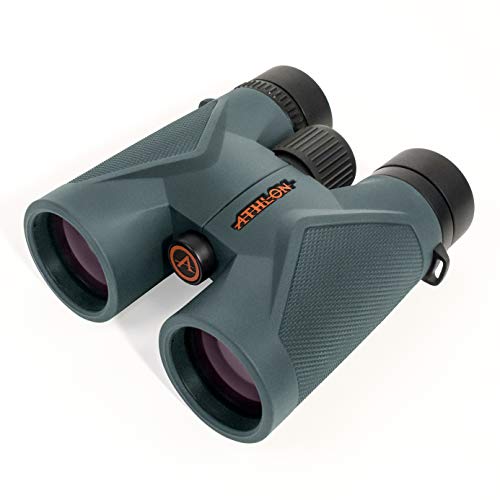
The Athlon Midas 8×42 UHD is the friendliest pick on the list for someone just stepping into birding or casual wildlife viewing. ED glass, which stands for extra-low dispersion glass and controls color fringing around high-contrast edges, pairs with phase-corrected BAK-4 prisms to deliver crisp, color-accurate images.
The 8×42 format is genuinely forgiving in the hand. Less magnification means easier steady views and a noticeably wider field of view at 426 feet per 1000 yards. That wider window makes finding and following birds much more approachable for newcomers. Compared to the high-powered Pankoo above, this is the steady, beginner-tempered counterweight.
Where It Excels
- ✓ED glass and BAK-4 prisms reduce color fringing and improve overall sharpness.
- ✓Generous 426 ft / 1000 yd field of view makes locating birds and tracking movement easier.
- ✓17.2 mm eye relief comfortably accommodates glasses wearers.
- ✓Close focus of around 6.5 ft lets you study nearby butterflies and backyard birds.
- ✓Phase-corrected prism coatings improve contrast in shaded conditions.
Smaller Caveats
- •Lower 8x magnification limits how far you can identify fine detail at distance.
- •Body is a touch heavier than compact travel designs at roughly 25 oz.
Quick Technical Notes
| | Feature | Specification | Why It Matters |
|---|
| Magnification | 8x | Easier steady handheld viewing for beginners |
| Objective Lens | 42mm | Balanced light gathering for dawn and dusk |
| Field of View | 426 ft at 1000 yd | Wide window helps track moving wildlife |
| Eye Relief | 17.2mm | Comfortable for glasses wearers |
| Close Focus | 6.5 ft | Useful for backyard birds and insects |
Made For
First-time birders, family outings, and casual naturalists who want forgiving optics that are easy to hold and use.
Skip It When
The Vortex Viper HD 12×50 is a stronger match if you want significantly more reach for long-distance spotting.
The Steiner Marine 7×50 is the only binocular on this list built specifically to survive water. A floating prism system and a buoyant body mean it bobs back to the surface if knocked off a kayak or a boat rail. For boaters and shoreline birders, that peace of mind alone justifies the pick.
The 7×50 configuration also happens to be a classic marine format. The large 50mm objective lenses gather abundant light for nautical navigation and twilight wildlife viewing. Compared to the Athlon Midas above, this Steiner trades modern ED glass for a rugged, water-going build that simply lasts.
Points In Its Favor
- ✓Floating prism system keeps the binocular recoverable if it slips off a boat.
- ✓High-contrast optics deliver bright images in marine and low-light conditions.
- ✓Sports Auto Focus maintains sharpness from roughly 20 yards to infinity without constant refocusing.
- ✓Durable rubber armor stands up to salt spray and rough handling.
A Few Limitations
- •7x magnification limits how far you can identify fine detail at distance.
- •Larger 50mm objective makes this binocular heavier and bulkier than 42mm designs.
- •Premium marine build places it higher in the budget than most picks above.
Best Suited To
Boaters, kayakers, and shoreline birders who need water-ready optics with dependable buoyancy.
Reach For A Different Pick When
The Bushnell Trophy XLT suits casual travel birders better if you don’t need floating construction.
The Pankoo 20×55 with phone adapter turns a binocular into a quick digiscoping rig. The included bracket lines up a smartphone camera with one eyepiece, so you can capture what you see at 20x magnification without buying a dedicated camera setup.
That makes this pick genuinely useful for casual content creators and field recorders. The 55mm objective and FMC (fully multi-coated) lenses support bright, sharp imaging during the day. Compare it to the Pankoo 20×55 reviewed above, and the difference is the bundled adapter rather than raw optical performance.
Strengths Worth Knowing
- ✓Bundled phone adapter lets you capture magnified images through your smartphone.
- ✓20x magnification and 55mm lenses reach out across long distances.
- ✓FMC coatings improve contrast and color accuracy in daylight.
- ✓Long eye relief supports glasses wearers during extended sessions.
Where It May Fall Short
- •High magnification still demands a tripod or stable surface for sharp captures.
- •Phone adapter alignment takes practice before phone photos look clean.
Who Should Grab It
Amateur nature photographers, content creators, and family memory-makers who want magnified photos without extra gear.
Where A Sibling Pick Shines
The Pankoo 20×55 Waterproof below is a better match if you want the same reach without the adapter.
The Vortex Crossfire HD earns the value slot because it bundles a GlassPak harness into the package. That harness keeps the binocular against your chest for quick deployment, which is genuinely handy on active trails where a neck strap feels slow.
Optically, the Crossfire HD delivers the same 10×42 versatility as the Diamondback above with HD glass and full multi-coating. Color and sharpness are a small step behind its pricier sibling, but the bundled harness helps close that gap for active users.
The Value In It
- ✓Included GlassPak harness supports fast access on active walks and hunts.
- ✓HD optical system with fully multi-coated lenses produces clear daytime images.
- ✓10×42 format works well across birding, hiking, and casual wildlife viewing.
- ✓Rubber-armored body protects against minor bumps in the field.
Practical Considerations
- •Optical refinement is slightly below the Vortex Diamondback at the center of the frame.
- •GlassPak harness adds bulk to the carry profile, which not everyone prefers.
The Right Fit
Active hikers and backpack birders who want quick-deploy carry and solid HD glass without stepping up to premium pricing.
Not Your Match When
The Vortex Copperhead HD suits wet-weather birding better if sealing against fog and rain matters more than the harness.
The Vortex Viper HD 12×50 is the most optically ambitious pick in this price bracket. The HD optical system delivers high resolution, edge-to-edge clarity, and color fidelity that hold up against pricier binoculars, while a glasspak chest harness keeps the optic accessible in the field.
At 12x magnification, you trade steadiness for reach, so a tripod or monopod becomes useful on long watches. Compared with the Pankoo 20×55 reviewed above, the Viper HD offers lower magnification but noticeably better optical quality and a lighter, more compact body.
Notable Upsides
- ✓12×50 configuration delivers strong reach with respectable brightness.
- ✓HD optical system produces sharp, color-accurate views across the frame.
- ✓Relatively compact and lightweight for a full-size binocular.
- ✓Glasspak chest harness included for fast field deployment.
Trade-Offs
- •12x magnification amplifies handshake wobble during hand-held viewing.
- •Premium pricing leaves less budget for accessories.
Who Will Love This
Long-distance spotters, serious birders, and shooters who want premium optical quality without crossing into four-figure territory.
Where Another Pick Suits Better
The Athlon Midas 8×42 is a friendlier match if you want a steadier, hand-held view for closer woodland birding.
The Pankoo 20×55 Waterproof rounds out the list as a high-powered budget pick. The 20x magnification reaches out across long distances, and BAK-4 roof prisms (a high-grade glass prism type that improves light transmission) paired with FMC lenses aim to deliver sharp, vivid daytime views.
It’s the more affordable sibling of the Pankoo 20×55 with phone adapter reviewed above. You give up the bundled phone bracket but keep the long reach and waterproof shell. For casual outdoor observation, it covers a lot of ground for the money.
Useful Strengths
- ✓20x magnification pulls distant subjects into view across wide landscapes.
- ✓55mm objective lenses help maintain image brightness in daytime conditions.
- ✓BAK-4 prisms with FMC coatings support clear, color-accurate viewing.
- ✓Waterproof construction protects optics in light rain and damp environments.
Less-Strong Areas
- •20x power amplifies shake, so a tripod or monopod is recommended.
- •Field of view is narrower than 8x or 10x binoculars.
Perfect Match For
Budget-conscious outdoor users who want high magnification for distance viewing without stretching into premium pricing.
A Better Fit Elsewhere
The Vortex Crossfire HD suits hiking and general birding better if you prefer steadier, more forgiving 10x optics.
What Matters Most When Choosing Binoculars Under 300
Magnification and objective lens size are the numbers most shoppers notice first, but they only tell half the story. A 10×42 configuration, meaning 10x magnification with 42mm objective lenses, is the most forgiving format for hand-held use because it balances reach with a steady image. Lower-power options like 8×42 widen the field of view, which helps with tracking moving birds, while higher-power picks like 12×50 or 20×55 reach further but demand a tripod or monopod for clean views.
Lens coatings quietly shape image quality. Fully multi-coated optics apply multiple anti-reflective layers to every air-to-glass surface, and that translates to brighter, sharper images in low light. ED (extra-low dispersion) glass and phase-corrected prisms push performance further by reducing color fringing and improving contrast, so birds and distant subjects look closer to natural color.
Build quality matters more than spec sheets suggest. Waterproof and fogproof sealing, often called “nitrogen-purged” construction, protects internal optics during rain and temperature swings. Rubber armor absorbs small drops, and a tethered objective cap prevents the most common field loss. For boat users, a floating chassis like the Steiner Marine adds genuine safety.
Finally, think about carry and comfort. A neck strap works for casual use, while a chest harness speeds up deployment on active walks. Eye relief, the distance from the eyepiece at which you can see the full field of view, matters for glasses wearers; 15mm or higher tends to feel comfortable. Weight is the most underrated spec, since a heavier binocular gets left at home.
Key Considerations Across These Picks
Mistakes Worth Dodging
One of the most common buying mistakes in this category is chasing the highest magnification on the spec sheet. Twenty-power sounds impressive, but without a tripod it produces shaky, unusable images. For most hand-held use, 8x to 10x magnification is the practical sweet spot. Another trap is ignoring eye relief. Glasses wearers often buy a binocular that blacks out the edges of the view because the relief is too short.
What Separates Premium From Basic
Premium-tier binoculars under 300 earn their higher pricing through ED glass, phase-corrected prisms, and tighter optical tolerances. Those upgrades show up most in low-light performance and color accuracy, especially around high-contrast edges. The upgrade is worth chasing for serious birders and hunters, while casual users will rarely notice the difference on bright midday hikes.