Plena is Nikon’s word for a near-flawless circle of out-of-focus light, and the 135mm f/1.8 S Plena lives up to that promise. The 135mm focal length and wide aperture compress faces beautifully while throwing backgrounds into creamy abstraction.
Studio portrait specialists and editorial photographers tend to gravitate here. For environmental headshots where you want the subject to feel close but the room to fall away, the framing power is remarkable on Z bodies.
Reasons It Performs
- ✓Edge-to-edge sharpness that holds up at f/1.8 across the frame
- ✓Circular bokeh rendering prized for environmental portraits and editorial work
- ✓135mm working distance lets subjects relax without a lens crowding them
- ✓S-Line build quality brings weather sealing for outdoor shoots
Worth Noting
- •The 135mm reach is overkill for tight indoor spaces like small apartments
- •Heavier than a 50mm or 85mm, which may wear on handheld shooters over long sessions
- •Requires a Z-Series mirrorless body to mount
Made For
Portrait professionals working with Nikon Z bodies who want bokeh that reads as cinematic, not just blurry.
Not Your Match When
Reach for the Sony SEL-85F18 if you want a lighter, cheaper portrait prime on a Sony body for everyday sessions.
The 50mm f/1.8 has been the gateway drug of FX photography for years, and this G-version stays close to that legacy. It pairs the classic “nifty fifty” framing with a fast aperture for surprisingly creamy backgrounds on full-frame DSLRs.
Beginners stepping up from kit zooms find the field of view natural and the depth of field manageable. For street scenes, environmental portraits, or low-light interiors, this lens outperforms much heavier glass at a fraction of the price.
Positive Points
- ✓Compact FX format body slips into small camera bags without complaint
- ✓Fast f/1.8 aperture pulls usable shutter speeds in dim rooms
- ✓47-degree picture angle covers most everyday framing needs
- ✓Affordable entry point compared to premium 50mm alternatives
Trade Offs
- •No silent stepping motor, so video autofocus tends to be audible
- •Plastic mount construction feels less robust than metal-mount peers
- •Some copies are known to show mild sharpness softness wide open until stopped down a touch
Key Specs
| | Feature | Specification | Why It Matters |
|---|
| Focal length | 50mm | Natural perspective for portraits, street, and everyday scenes |
| Maximum aperture | f/1.8 | Strong subject separation and low-light reach |
| Maximum reproduction ratio | 0.15x | Modest close-up capability for small objects |
| Mount compatibility | Nikon F (FX) | Designed for full-frame Nikon DSLRs |
Right Fit For
FX-format DSLR beginners who want a versatile, affordable fast prime.
Consider Something Else When
Reach for the Canon EF 50mm f/1.8 STM if your home is a Canon EOS body and you want quieter autofocus for video.
Sony’s 85mm f/1.8 fits a curious niche: a real portrait telephoto that disappears into a coat pocket. It’s the lens you grab for a casual walk that still wants flattering compression at the end of the day.
The fixed 85mm focal length works beautifully on full-frame bodies, and on APS-C cameras it gives a 127mm-equivalent reach for tighter headshots. Both setups produce clean separation between subject and background at f/1.8.
Noteworthy Benefits
- ✓29-degree viewing angle on full frame gives a strong compressed portrait look
- ✓Nine-blade aperture helps round out-of-focus highlights for pleasing bokeh
- ✓ED glass compensates for chromatic aberration in high-contrast scenes
- ✓Lightweight enough to balance well on smaller A6xxx and ZV-E10 bodies
Points To Keep In Mind
- •Autofocus can hunt in low-contrast scenes such as dim cafes
- •No stabilization listed in the manufacturer data for handheld video
- •Some users commonly report rear-element flare when shooting directly into streetlights at night
Best Suited To
Sony E-Mount portrait shooters who want a portable 85mm for travel and casual sessions.
A Better Fit Elsewhere
Reach for the Sigma 56mm f/1.4 DC DN if you want a shorter and even more affordable portrait prime on an APS-C Sony body.
Few lenses have trained more Canon shooters than the 50mm f/1.8 STM. It distills the full-frame “nifty fifty” idea down to a featherweight prime with a near-silent autofocus motor that doesn’t ruin video takes.
For EOS DSLR owners stepping into primes, this is usually the first stop. Portraits, action, and nighttime handheld work all benefit from the f/1.8 aperture, while the 0.21x magnification handles small-product close-ups.
Useful Highlights
- ✓Stepping motor (STM) keeps autofocus smooth and quiet for video
- ✓0.35 meter minimum focus distance supports tight tabletop shots
- ✓46-degree diagonal angle covers everyday framing comfortably
- ✓Light enough to balance on entry-level bodies without strain
Honest Caveats
- •Plastic mount construction feels light, and some owners report bayonet flex over years of use
- •No image stabilization listed in the manufacturer’s data
- •Background blur is pleasant but not as smooth as more expensive f/1.4 or f/1.2 primes
Who Will Love This
First-time Canon DSLR owners who want a cheap, quiet, fast prime for everyday shooting.
Look Elsewhere When
Reach for the Nikon AF-S NIKKOR 85mm f/1.8G if you want a longer portrait reach with more background compression on a Nikon body.
This is the slimmest, lightest lens in the EF-S lineup, and it feels more like a body cap than a piece of optical glass. The 24mm focal length gives a 38mm-equivalent view on Canon APS-C DSLRs, which reads as a natural wide-normal for street and travel.
Travelers and vloggers appreciate how the pancake profile keeps a kit small. Even though the f/2.8 maximum is slower than other picks here, the seven-blade circular aperture still softens backgrounds in a way most kit zooms can’t match.
Notable Upsides
- ✓Compact form factor barely changes the camera’s footprint
- ✓0.27x maximum magnification supports close tabletop subjects
- ✓Full-time manual focus override lets you fine-tune without leaving AF mode
- ✓Quiet STM motor keeps autofocus smooth on entry-level DSLRs
Where It May Fall Short
- •The f/2.8 aperture gathers less light than the f/1.8 primes on this list
- •Limited to Canon APS-C bodies due to the EF-S mount design
- •Some owners report edge softness wide open on older APS-C sensors
Feature Snapshot
| | Feature | Specification | Why It Matters |
|---|
| Focal length (APS-C) | 24mm (38mm equivalent) | Natural wide-normal framing for street and travel |
| Maximum aperture | f/2.8 | Slower than f/1.8 primes but compact and sharp |
| Maximum magnification | 0.27x | Decent close-up capability for small subjects |
| Aperture blades | 7 | Circular aperture helps soften busy backgrounds |
The Right Fit
APS-C Canon shooters who want a pocketable wide prime to leave on the body day to day.
Another Choice May Suit
Reach for the Sigma 24-70mm F2.8 DG DN Art if you want a wider zoom range with a faster aperture for events.
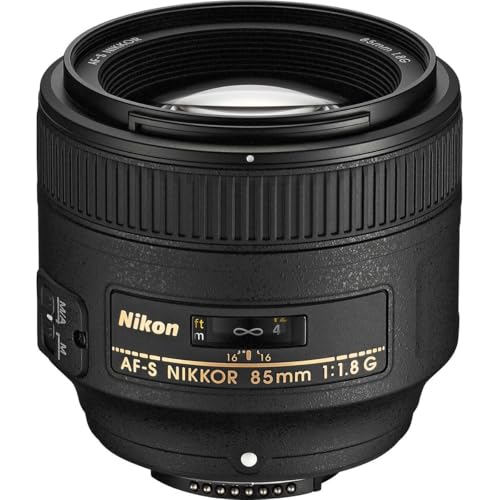
The 85mm f/1.8G earned its reputation as the F-Mount portrait workhorse long before mirrorless took over. On FX Nikon DSLRs it produces classic headshot framing with buttery subject separation at f/1.8.
Wedding photographers on a budget often mount this lens and never take it off. It’s light enough to carry all day and sharp enough that cropping in post still feels forgiving.
A Strong Showing
- ✓M/A autofocus override lets you tweak focus without leaving AF mode
- ✓Moderate weight balances well on full-size Nikon DSLR bodies
- ✓f/1.8 aperture produces strong subject separation for portraits
- ✓Proven long-term reliability in working photographers’ bags
Soft Spots
- •No image stabilization listed in the manufacturer’s data
- •Slower AF in live view compared to newer mirrorless-native lenses
- •Older coatings mean flare control is weaker than modern nano-coated alternatives
Who Should Grab It
Nikon F-Mount DSLR portrait shooters who want a classic 85mm at a reasonable cost.
Swap It Out When
Reach for the Sony SEL-85F18 if you’ve moved to a Sony E-Mount body and want a similar focal length with updated coatings.
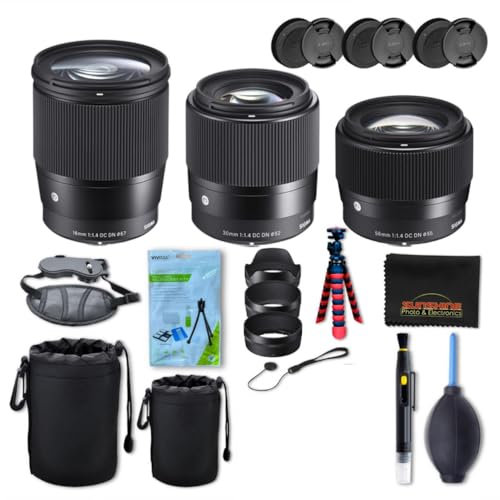
The 56mm f/1.4 completes Sigma’s portable prime trio for Sony E-Mount, and on APS-C bodies it reads as an 85mm-equivalent portrait lens. Hybrid shooters appreciate how the stepping motor stays quiet during video takes.
For creators balancing stills and clips on a single Sony body, this lens fills the gap between everyday 30mm work and longer telephoto reach. Compact enough to keep mounted, light enough to forget.
Bright Spots
- ✓Silent autofocus suits hybrid video and stills workflows
- ✓f/1.4 aperture produces creamy bokeh without breaking the budget
- ✓Compact Contemporary build matches smaller Sony bodies like the A6xxx series
- ✓Compatible with Sony E-Mount Fast Hybrid AF for reliable subject tracking
Points To Note
- •On full-frame Sony bodies the lens only covers an APS-C crop area
- •No weather sealing listed in the manufacturer’s data
- •Slight focus breathing during close-focus pulls, depending on the body
Built With In Mind
APS-C Sony E-Mount shooters who shoot a mix of portraits and video and want quiet autofocus.
Reach For A Different Pick When
Reach for the Sigma 16mm + 30mm + 56mm bundle if you’d rather own the whole fast-aperture trio at once.
This is the lens for people who think 200mm is the start, not the end, of telephoto reach. Sigma’s 150-600mm Contemporary brings bird, wildlife, and stadium sports within range on Nikon F-mount DSLRs.
For backyard birders and amateur sports photographers, the 9-blade aperture and optical stabilization help distant subjects feel close. At 280cm minimum focus, you can fill the frame with a perched hawk without scaring it off.
The Helpful Details
- ✓9 diaphragm blades keep distant highlights reasonably round
- ✓Optical stabilization helps handheld shooting at long focal lengths
- ✓Dust- and splash-proof mount for unpredictable outdoor conditions
- ✓95mm filter thread accepts standard protective filters
Less Ideal Details
- •f/5 to f/6.3 variable aperture gathers less light than prime telephotos
- •Size and weight make handheld fatigue a real concern during long hikes
- •No teleconverter compatibility listed beyond specific Sigma TC-1401 and TC-2001 models
Feature Card
| | Feature | Specification | Why It Matters |
|---|
| Focal length range | 150-600mm | Covers distant wildlife, sports, and aviation subjects |
| Maximum aperture | f/5-6.3 | Variable aperture typical of long zooms; pairs well with bright daylight |
| Minimum focusing distance | 280cm / 110.2 inches | Surprisingly close for a hyper-telephoto zoom |
| Mount | Nikon F | Designed for Nikon F-mount DSLR bodies |
Whose Shelf It Belongs On
Nikon F-mount wildlife and outdoor photographers who need reach more than wide aperture.
Not Your Match When
Reach for the Sigma 24-70mm F2.8 DG DN Art if you shoot events and want a fast standard zoom instead of a long telephoto.
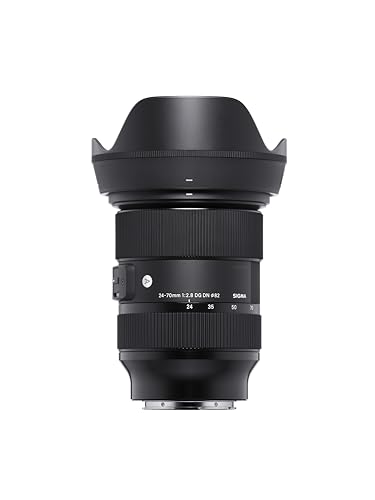
The 24-70mm F2.8 DG DN Art closes the list as the flexible workhorse option. A constant f/2.8 aperture across the entire zoom range means event shooters can switch from wide room shots to flattering portraits without resetting exposure.
Wedding photographers and travel creators on Sony E-Mount treat this lens like a body part. It’s heavier than a prime, but it replaces two or three fixed-focal-length lenses in one body-mount swap.
Useful Touches
- ✓Constant f/2.8 aperture throughout the zoom range
- ✓Art-line optical quality for both stills and video production
- ✓Made in Japan construction reflects flagship-tier build standards
- ✓Versatile 24-70mm range covers most event coverage scenarios
Practical Considerations
- •Weight noticeably larger than prime alternatives on smaller bodies
- •Higher cost reflects professional-grade materials and assembly
- •Some shooters commonly report front-element dust attraction during outdoor changes
Spec Overview
| | Feature | Specification | Why It Matters |
|---|
| Focal length range | 24-70mm | Covers wide-angle to short telephoto in one lens |
| Maximum aperture | Constant f/2.8 | Maintains low-light reach at every focal length |
| Country of origin | Japan | Reflects Sigma’s premium Art-line manufacturing standards |
| Mount | Sony E | Designed for Sony E-Mount mirrorless bodies |
Made For
Sony E-Mount event and wedding photographers who need one flexible zoom with a fast aperture.
Skip It When
Reach for the Sony SEL-85F18 if you prefer a smaller, lighter prime and don’t need the wide-to-mid zoom range.
## What To Weigh Before Choosing A Bokeh Lens### Aperture And Bokeh QualityBokeh refers to the aesthetic quality of out-of-focus areas, not just blur itself. A wide maximum aperture like f/1.4 or f/1.8 lets in more light and produces thinner depth of field, which makes backgrounds melt away from the subject. Lens designers also shape the aperture diaphragm to keep out-of-focus highlights round and smooth rather than hexagonal or jagged.### Focal Length And Subject DistanceLonger focal lengths like 85mm and 135mm compress space and amplify background blur for flattering portraits. Shorter focal lengths like 24mm or 50mm keep more of the scene sharp and let you step closer to your subject. Your working distance and the framing you want should guide which length you reach for.### Mount Compatibility And Sensor FormatEvery lens in this roundup is tied to a specific mount system. Sigma’s Contemporary trio fits Sony E-Mount mirrorless bodies, while the Canon EF 50mm f/1.8 STM works only on Canon EOS DSLRs. Match the lens to your existing body, and consider whether the lens covers full-frame or only APS-C formats.### Size, Weight, And Daily HandlingA fast prime you leave in a bag gets used more than a heavy zoom you dread carrying. The pancake-style Canon EF-S 24mm f/2.8 is barely noticeable on a small DSLR, while the Sigma 150-600mm requires a dedicated strap or monopod. Match the lens size to how often you actually want to shoot.## Key Considerations Across These Picks### Where Shoppers Go WrongMany shoppers chase the widest aperture they can afford and ignore focal length. A 50mm f/1.8 captures beautiful bokeh, but at five feet from a face it still keeps the ears sharper than expected. Stepping back with an 85mm or 135mm produces softer backgrounds at the same aperture. The other common slip is buying a premium lens for a body that can’t resolve its detail. A flagship 135mm f/1.8 on an older entry-level body wastes much of that optical performance.### Where The Extra Money GoesThe jump from a 50mm f/1.8 to a 135mm f/1.8 brings more than just a longer reach. Premium glass uses extra-low-dispersion elements to suppress color fringing, multi-coating to fight flare, and weather sealing for outdoor durability. Build quality rises too, with metal mounts and reinforced internal barrels that hold up under daily professional use. Whether the upgrade makes sense depends on how often you shoot in challenging light and how much you print or crop your final images.## Frequently Asked Questions### What Does Bokeh Mean In Photography?Bokeh describes the aesthetic quality of out-of-focus areas in a photograph, often appearing as smooth, creamy blur behind a sharp subject. It comes from the Japanese word for blur or haze and depends on lens aperture, focal length, and optical design.### Do Faster Apertures Always Produce Better Bokeh?Not always. Wider apertures like f/1.4 create thinner depth of field, but bokeh quality depends on aperture blade shape, optical coatings, and how the lens renders out-of-focus highlights. Some f/2.8 lenses render smoother bokeh than some older f/1.4 designs.### Which Focal Length Is Best For Bokeh Photography?Portraits benefit most from 85mm to 135mm focal lengths because longer reach compresses backgrounds. For environmental portraits where you want some context, 50mm primes balance subject separation with surroundings.### Are Prime Lenses Better Than Zooms For Bokeh?Generally yes, because primes tend to offer wider maximum apertures at a given price. Modern constant-aperture zooms like the Sigma 24-70mm F2.8 DG DN Art close the gap, but a dedicated prime still wins on absolute depth-of-field control.### Can Kit Lenses Produce Good Bokeh?Kit lenses with variable f/3.5-5.6 apertures struggle to produce strong background blur, especially at the long end. Stopping down or using longer focal lengths helps, but for pronounced bokeh, a fast prime like an f/1.8 or f/1.4 lens makes a noticeable difference.## Bottom LinePick a lens that matches the body you already own, the focal length you’ll actually carry around, and the aperture that fits your most common shooting light. For Sony E-Mount hobbyists building a kit, the Sigma Contemporary trio covers most needs. For Nikon Z portrait specialists chasing circular bokeh, the 135mm f/1.8 S Plena earns its premium spot. The right bokeh lens is the one you’ll reach for again tomorrow.