A warbler at sixty feet up in a birch doesn’t care how much you spent on your binoculars. What matters is whether the glass brings the bird close enough to see the eye stripe before it flits to the next branch. Bridge cameras and the optical companions built for birding solve a particular kind of frustration: the gap between what your eyes can see and what you want to remember. Some people want sharp stills and video from the backyard feeder, others want a spotting setup for trail walks, and a few want both. This roundup covers optics, smart feeders, and camera accessories that earn a place in a birding kit. Each pick leans toward a specific kind of user, from the casual feeder-watcher to the traveler who wants to log every warbler migration stop.
A Closer Look At The Lineup

NIKON Monarch M5 8×42 Binoculars

Kiwibit Bird Feeder 2 Pro 4K Solar

Nikon PROSTAFF P7 8×30 Binoculars

Kiwibit Smart Bird Feeder 4K AI 8MP
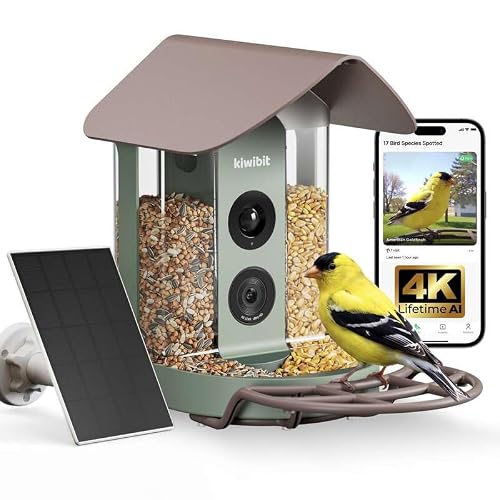
Kiwibit Smart Bird Feeder No Subscription 4K

Coolfly Smart Bird Camera 2.4G
Inside Each Recommended Option
Trail birding rewards optics that forgive shaky hands and dim canopies. The Monarch M5 8×42 brings extra-low dispersion (ED) glass to correct color fringing, the halos that smear the edges of a cedar waxwing’s crest against a bright sky. A dielectric prism coating lifts light transmission, so dawn walks in a foggy ravine still deliver a usable image.
For most backpack-and-binocular trips this is the kit centerpiece. Pair it with a wide-brim hat and a field guide, and you’ve covered 80% of what casual birding needs.
The Case For It
- ED glass reduces color fringing on high-contrast subjects like backlit warblers
- Dielectric prism coating boosts light transmission for low-light forest walks
- 8×42 balance suits most users: enough reach without the handshake of 10x
- Waterproof and fogproof seal survives sudden weather shifts on the trail
Things To Consider
- 8×42 size runs heavier than the compact 30mm options in this list for long hikes
- Requires lens care to keep the outer coatings free of grit and residue
Key Specs
Who It Suits Best
Trail walkers and weekend birders who want a single binocular to handle mixed light, weather shifts, and longer sessions.
Consider Something Else When
Travelers packing light should look at the Nikon PROSTAFF P7 8×30, which trades some light-gathering for a noticeably lighter carry.
Backyard birding shifted dramatically once solar-powered cameras started landing on feeders. The Bird Feeder 2 Pro layers a 4K HDR auto-focus lens over a weatherproof housing with a 5W solar panel and a detachable 5200mAh battery for cloudy stretches. Dual-band 2.4/5GHz Wi-Fi keeps the live stream smooth, and dual mics capture bird songs alongside the footage.
Slow-motion modes (1080p at 60fps and 120fps) turn a hovering hummingbird into a study of wing mechanics, recorded to a microSD card. For households that want both a feeder and a daily wildlife show, the integration feels effortless.
Everyday Advantages
- Auto-focus tracks fast motion, keeping hummingbirds and finches sharp mid-hover
- Solar panel plus removable battery covers most weather without manual charging
- Dual-band Wi-Fi lowers latency for real-time alerts to your phone
- Shared access for up to 20 users without extra subscription fees
Honest Caveats
- Slow-motion recording needs your own microSD card for the higher frame rates
- Solar charging assumes a placement that catches several hours of direct sun
Feature Snapshot
Made For
Households that want a feeder and a daily livestream in one package, especially families who enjoy sharing bird moments with relatives.
Skip It When
Shoppers who already own a feeder they love should consider the Coolfly Smart Bird Camera, which retrofits onto existing setups instead of replacing them.
Birders who log serious miles know that every ounce compounds across a long day. The PROSTAFF P7 8×30 trims weight by dropping the objective lens from 42mm to 30mm, while still delivering a notably wide field of view (456 feet at 1,000 yards). That wider canvas makes it easier to pick up a movement in the canopy and follow it before the bird vanishes.
An oil- and water-repellent coating on the outer lenses shrugs off light drizzle and finger smudges. Compared to the Monarch M5 reviewed earlier, the P7 trades raw brightness for a lighter pack, a worthwhile swap for travelers and day-hikers.
Standout Benefits
- Wide field of view simplifies tracking small, fast birds in dense foliage
- Compact 30mm body reduces fatigue on all-day walks
- Locking diopter lets you set and forget your personal focus adjustment
- Rubber-armored exterior protects against minor drops and bumps
Points To Keep In Mind
- 30mm objectives gather less light than 42mm options in deep shade or dawn sessions
- Lens coatings need occasional wiping to stay clear during travel use
Best Suited To
Travelers and hikers who prioritize a light pack and a forgiving field of view over maximum low-light performance.
Look Elsewhere When
Birders chasing early-morning songbirds in dark forests will benefit from the Monarch M5’s larger 42mm objectives and ED glass.
First-time smart-feeder owners usually want one thing: a setup that just works. This Kiwibit model delivers 4K livestream with HDR and night vision, paired with an 8MP still sensor for crisp photos when a bird lands. The 132-degree wide field covers a generous perch zone, so you don’t lose the action just outside the frame.
AI species identification sorts through the daily parade of visitors, an educational hook for households learning who’s coming to dinner. For a family new to smart feeders, the accessible app and shared viewing simplify the early days.
Good Reasons To Consider
- 8MP photos give you printable-quality images of common visitors
- AI species recognition helps newcomers learn local birds by name
- Night vision extends filming past dusk for owl and nocturnal visitors
- Multi-user viewing keeps the whole household engaged
Trade-Offs To Consider
- Some AI features may require a subscription tier depending on the listing
- Wide-angle lens can distort close-up birds at the very edge of the frame
Perfect Match For
Families and first-time smart-feeder shoppers who want a guided, app-driven experience with species recognition.
Another Choice May Suit
Shoppers who want lifetime AI without recurring fees should step up to the Kiwibit Smart Bird Feeder No Subscription 4K model.
Subscription fatigue is real, especially for a feeder you’ll use daily. This sibling to the entry Kiwibit model includes a lifetime AI subscription for species identification, so the monthly fee never shows up. The AI filters out wind and leaf motion, sending alerts only when an actual bird arrives, a small but meaningful quality-of-life upgrade.
Bird Keyshots auto-organizes daily visits into shareable moments, useful for households that post to family chats or social groups. For most long-term backyard birders, the no-subscription angle is what tips the decision.
Practical Advantages
- Lifetime AI access avoids recurring monthly charges for species ID
- Smart alerts reduce phone noise by ignoring wind and branch movement
- Auto-organized daily clips make sharing easier across family groups
- 4K capture matches the resolution of higher-tier feeders in this roundup
Small Caveats
- Requires strong Wi-Fi signal at the feeder location for reliable AI tagging
- Solar positioning still matters for year-round uptime in shaded yards
Whose Shelf It Belongs On
Long-term backyard birders who want full smart features without committing to monthly software fees.
Reach For A Different Pick When
If you only need a camera for an existing feeder or bird bath, the Coolfly Smart Bird Camera is the more economical retrofit option.
Not everyone needs a brand-new feeder. The Coolfly Smart Bird Camera bolts onto the bird feeder, bath, or house you already own, transforming it into a livestreaming setup. A 150-degree ultra-wide lens covers the perch area, and 2.5K UHD resolution produces solid detail without the storage demands of full 4K.
The catch is connectivity: this camera supports 2.4GHz Wi-Fi only, not 5GHz. In homes with crowded 5GHz networks, that’s actually a plus, since 2.4GHz reaches farther outdoors through walls and foliage. Color night vision extends viewing past sunset.
Real Benefits
- Retrofit design works with feeders, baths, and bird houses you already own
- 2.4GHz Wi-Fi offers better outdoor range through walls and trees
- Wide 150-degree lens captures broad perch zones
- Color night vision supports after-dark viewing
A Few Limitations
- 2.5K resolution trails the 4K feeders elsewhere in this roundup
- Lacks dual-band Wi-Fi, which limits placement flexibility in some homes
The Right Fit
Birders with an existing feeder setup who want to add live viewing without replacing the whole rig.
A Better Fit Elsewhere
Shoppers wanting an all-in-one feeder plus camera solution will find the Kiwibit Bird Feeder 2 Pro a more complete package.
What Matters Most Before Choosing Bridge Cameras For Birding
Magnification and Lens Size
Magnification tells you how much closer a subject appears, while the objective lens diameter affects how much light enters. An 8×42 binocular gathers more light than an 8×30, which matters in dawn and dusk conditions. Higher magnification sounds appealing, but 10x and above amplify handshake, making a steady view harder to hold without a tripod. For most birders, 8x with 30mm to 42mm objectives strikes a useful balance.
Glass Quality and Coatings
Extra-low dispersion (ED) glass corrects color fringing, the purple or green halos that appear around high-contrast subjects like a bird against a bright sky. Dielectric prism coatings boost light transmission compared to standard coatings. For trail birding in mixed light, these upgrades make a visible difference without requiring expert eyes to notice.
Smart Feeder Connectivity
Camera-equipped feeders depend on Wi-Fi, and dual-band 2.4/5GHz support gives you flexibility in placement. Solar panels with backup batteries keep feeders running through cloudy stretches. AI species recognition turns casual watching into a learning experience, though subscription models vary. For households avoiding monthly fees, lifetime AI options exist.
Field of View for Tracking
A wider field of view makes it easier to locate a bird in dense foliage and follow its movement. Compact binoculars often advertise this spec, since a wider view forgives less precise aiming. For forest and thicket birding, this matters more than raw magnification.
Key Considerations Across These Picks
Pitfalls Shoppers Hit
One common misstep is choosing magnification over stability. A 10x binocular sounds powerful, but the resulting handshake makes the image frustrating for most users without a tripod. Another trap is buying a smart feeder without checking Wi-Fi signal strength at the planned mounting location, since weak signals cause missed recordings and frustrating delays. Finally, some shoppers overlook objective lens size, prioritizing weight over light-gathering ability, and end up disappointed in dim conditions.
Why Top Tier Costs More
Premium optics like the Monarch M5 use ED glass and dielectric coatings that require tighter manufacturing tolerances. The visible payoff is reduced color fringing and brighter images, especially in low light. Higher-tier smart feeders add auto-focus, dual-band Wi-Fi, and more capable solar arrays. Whether the upgrade is worth it depends on how often you bird and the conditions you typically face. For occasional feeders, an entry model may serve perfectly well.
Frequently Asked Questions
What magnification is best for birding?
Most birders find 8x to be the sweet spot. It brings birds close enough for ID while staying steady enough for handheld viewing. Higher magnifications like 10x require a tripod for sharp images, especially during long sessions.
Are smart bird feeders worth the cost?
Smart feeders make sense if you want daily engagement with backyard visitors and enjoy sharing footage with family. For casual users, a standard feeder with a nearby binocular may serve just as well. The lifetime AI models offer the strongest long-term value for ongoing use.
Can I use binoculars with glasses?
Many binoculars include twist-up eyecups and long eye relief for glasses wearers. Look for at least 15mm of eye relief if you wear glasses regularly. Adjusting the diopter lets you fine-tune focus for your specific vision.
How important is weatherproofing?
For trail birding, waterproof and fogproof sealing protects your optics from sudden rain and temperature shifts. For backyard feeders, an IP65 rating handles most weather exposure. Cheap unsealed optics tend to fog internally when you move between temperatures.
What is ED glass?
ED stands for extra-low dispersion, a type of optical glass that reduces color fringing around high-contrast subjects. In birding, that means cleaner edges on a warbler against a bright sky or a heron standing against reflective water. It is most noticeable in challenging light conditions.
The Takeaway
Bridge cameras and birding optics span a wider range than most shoppers expect, from a pair of trail binoculars to a solar-powered feeder that doubles as a daily livestream. The right pick depends on how you actually bird: trail walker, backyard host, or both. Match the tool to your routine and the rest falls into place.