Getting into aerial photography used to mean either dropping serious cash or settling for shaky, potato-quality footage. These days, sub-250-gram drones punch well above their weight, packing 4K cameras, mechanical gimbals, and surprisingly long flight times into packages that fold down small enough for a jacket pocket.
This roundup pulls together ten solid aerial rigs that balance price, image quality, and ease of use. Whether you’re a first-time pilot nervous about crashing on day one or a hobbyist ready to add a travel-friendly companion to your kit, there’s something here worth a closer look. Every drone below is light enough to skip most registration rules, and most come with extra batteries or combo kits that stretch your time in the air.
The Leading Options At A Glance

DJI Air 3S (RC-N3), 4K Dual-Camera Drone

DJI Mini 3, 3-Axis Mechanical Gimbal Mini Camera Drone

DJI Mini 3 Fly More Combo, Lightweight Mini Camera Drone with 4K HDR Video, 3 Batteries

DJI Avata 2 Fly Smart Combo, FPV Drone with 4K Camera

DJI Mini 2 SE, Lightweight Mini Drone with QHD Video, 10km Range, 31-Min Flight

DJI Mini 3 Pro (DJI RC), Mini Drone with 4K Video, 48MP Photo, 34-Min Flight
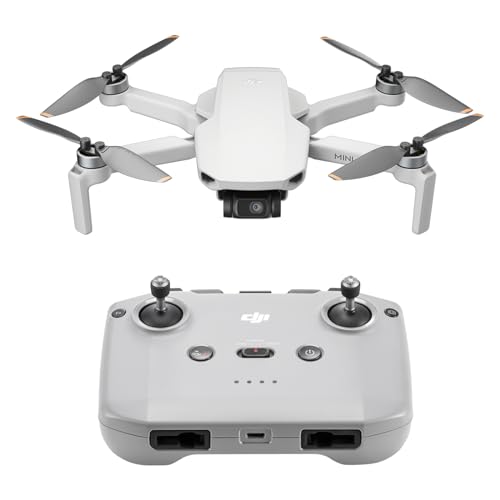
DJI Mini 4K, Drone with 4K UHD Camera, Under 249 g
DJI Mini 4 Pro Fly More Combo with DJI RC 2, Mini Drone, 4K, 3 Batteries
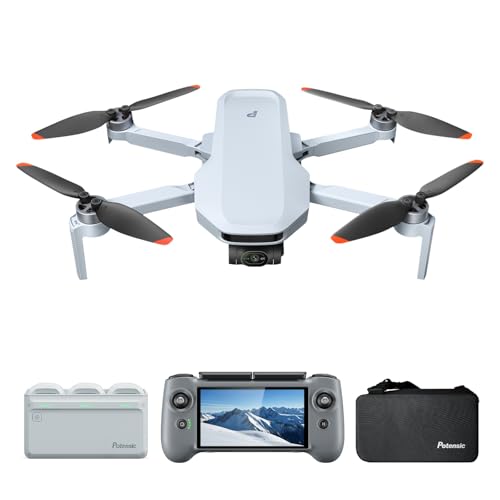
Potensic Atom 2 Fly More Combo with RC PTD 1, 4K Drone, 8K Photo, 10KM Range

DJI Neo Three-Battery Combo, Mini Drone with 4K UHD Camera
A Closer Look At Each Pick
The DJI Air 3S earns its place at the top by pairing dual 4K cameras with a long-distance transmission system that gives travel creators serious flexibility. Where the Mini series below trades one lens for portability, this one lets you swap between a wide-angle and a telephoto on the fly. You get clean HDR video at high frame rates, obstacle sensors that actually help, and a controller that feels closer to professional gear than entry-level toy.
You may find the Air 3S is bulkier than the Mini lineup, so it doesn’t vanish into a jacket the same way. For pilots who care more about image options than pocketability, that trade is well worth it. The RC-N3 controller that ships with this bundle works well but lacks the built-in screen of the upgraded RC 2 version.
What Pays Off
- Dual-camera setup gives you wide and zoom options from the same airframe
- 4K HDR video at 60fps handles golden-hour and bright daylight alike
- 20km transmission range keeps the signal stable when you’re chasing distant subjects
- Omnidirectional obstacle sensing reduces the chance of an expensive crash
- Long flight windows let you actually scout a location before committing to shots
Things To Consider
- Heavier than the Mini lineup, which affects portability
- RC-N3 controller requires a phone mount rather than a built-in display
- Filter and accessory ecosystems tend to cost more than entry-level gear
Key Specs
Who Should Grab It
Travel creators and serious hobbyists who want dual-lens versatility and don’t mind a slightly larger airframe.
Skip It When
The DJI Mini 3 is a better match for shoppers who prioritize compact folding size over dual-camera options.
The DJI Mini 3 hits the sweet spot for casual flyers who want real 4K quality without paying for features they’ll never use. A 3-axis mechanical gimbal (the small motorized mount that keeps the camera steady on three axes of motion) does the heavy lifting on stabilization, so even windy walks through the park turn into smooth footage. Sub-249g weight means most countries won’t require registration, and the folding arms make it disappear into a small bag.
Where the Air 3S above adds a second lens, the Mini 3 keeps things simple with a single, well-tuned camera. That keeps the price reasonable and the learning curve shallow, which is exactly what most first-time shoppers want. You may find the obstacle sensing is less robust than the Pro version, so flying near trees calls for a little more attention.
Real-World Strengths
- True vertical shooting (the camera rotates 90 degrees for portrait framing) makes social clips easy
- Lightweight build skips most registration hoops
- 3-axis gimbal keeps footage stable even in breezy conditions
- Compact folded size fits in a daypack or large jacket pocket
Worth Noting
- No advanced obstacle sensors beyond basic downward sensing
- Single battery in the base kit limits continuous flying time
- No internal screen on the included controller
Built With In Mind
Casual hobbyists and content creators who want a portable, no-fuss drone for travel vlogs and weekend shoots.
A Better Fit Elsewhere
The DJI Mini 4 Pro Fly More Combo suits shoppers who want stronger obstacle sensing and a longer combined flight window.
The Fly More Combo version of the Mini 3 solves the one complaint most people have about the base model: battery life. Three Intelligent Flight Batteries stretch combined flying time up to roughly 114 minutes, so you can actually shoot a whole afternoon without sitting by a wall outlet. The 1/1.3-inch CMOS sensor (a relatively large image sensor for this class that captures more light) pulls in clean 4K HDR video and detailed 48MP stills, which holds up even when the light gets tricky.
Up to 10km of video transmission means you can scout ahead while your drone stays high, and true vertical shooting is a quiet win for social posts. The honest read is that the airframe itself matches the standard Mini 3, so you may find this combo makes more sense for weekend explorers than for someone who only flies for ten minutes at a time.
Useful Touches
- Three batteries nearly triple the flying time of the base kit
- 4K HDR video looks punchy straight out of camera
- 48MP photos give cropping room for still compositions
- 10km transmission range handles ambitious scouting flights
Small Caveats
- Combo price climbs higher than the single-battery bundle
- Same obstacle sensing limitations as the standard Mini 3
Feature Snapshot
Perfect Match For
Weekend explorers and travel vloggers who need long flying sessions without constant battery swaps.
Where A Sibling Pick Shines
The DJI Mini 4K is a more affordable choice for shoppers who don’t need three batteries or maximum range.
The DJI Avata 2 takes a different path from the rest of the list. It’s an FPV drone (First-Person View, meaning you fly through the lens via goggles rather than watching from the ground) built for pilots who want the immersive feel of cockpit-style flying rather than gentle sightseeing footage. The 4K camera captures stabilized video through tight gaps and around corners, which makes it a favorite for action-oriented creators.
Where the Mini models above focus on portability and easy hovering, the Avata 2 leans into maneuverability and the thrill of dynamic angles. You may find the single-battery combo limits session length, so planning your flight path matters more than it does with the Mini 3 Fly More. This one’s a different beast, and that’s exactly the point.
Useful Highlights
- FPV flying style delivers immersive, cinematic action shots
- 4K stabilized video holds up during sharp maneuvers
- Compact cinewhoop-style frame (small, ducted propellers designed for safe indoor and close-quarters flying) handles indoor and outdoor spaces
- Smart Combo bundle includes motion controllers and goggles-ready accessories
Honest Caveats
- FPV flying has a steeper learning curve than camera-drone flying
- Single-battery configuration means shorter sessions per charge
- Not the right tool for slow, scenic landscape pans
Whose Shelf It Belongs On
Action-curious pilots and content creators chasing dynamic, motion-driven footage over smooth scenic shots.
Swap It Out When
The DJI Air 3S is the better fit for traditional aerial photography where smooth, stabilized pans matter more than agility.
The DJI Mini 2 SE is the entry point that lets nervous first-time pilots get airborne without a steep price or intimidating feature list. Auto Return to Home sends the drone back to its launch point if the battery drops or the signal weakens, which alone calms a lot of jitters. The 3-axis gimbal keeps footage level, and a 31-minute flight window on a single battery is plenty for learning the ropes.
QHD video (a step above standard 1080p HD, sitting at 2560×1440 pixels) lands between 1080p and full 4K, and the 10km transmission range is generous for a drone in this class. Where the Mini 3 above steps up to 4K HDR, the 2 SE trades resolution for a friendlier learning curve. Depending on your comfort level with technology, that may be a worthwhile trade for your first drone.
What Helps Most
- Auto Return to Home reduces the risk of losing your drone
- 3-axis gimbal delivers smooth footage despite shaky hands
- Sub-249g build keeps registration simple in most regions
- 10km transmission handles early ambitious flights
Points To Note
- QHD tops out below the 4K capture of newer Mini models
- Fewer automated flight modes than the Mini 3 Pro
Right Fit For
First-time pilots learning the basics who want safety features and a forgiving learning curve above resolution.
Consider Something Else When
The DJI Mini 4K makes more sense for shoppers ready to shoot 4K footage straight out of the box.
The DJI Mini 3 Pro was the Mini that finally felt grown-up, and it still holds its own in 2026. Tri-directional obstacle sensing (forward, backward, and downward detection that helps the drone avoid collisions) and APAS 4.0 (Advanced Pilot Assistance Systems, which automatically routes the drone around small obstacles) handle the kind of close-quarters flying that used to scare off new pilots. The 1/1.3-inch sensor, dual native ISO (two different sensor sensitivity settings blended for cleaner shadows and highlights), and f/1.7 aperture (a wide lens opening that lets in more light for cleaner low-light shots) make night and low-light footage far more usable than older Mini models.
True vertical shooting rotates the gimbal 90 degrees for portrait framing, which is a quiet but appreciated detail for social posts. You may find the DJI RC version costs more than the standard RC-N1 bundle, but the built-in screen saves you from draining your phone mid-flight.
Useful Strengths
- Tri-directional obstacle sensing lowers the odds of an expensive mistake
- 4K/60fps video with dual native ISO handles mixed lighting well
- DJI RC controller has a built-in screen for cleaner outdoor use
- 34-minute flight time stretches your shooting window per battery
Trade Offs
- Costs noticeably more than the non-Pro Mini 3
- APAS can occasionally brake aggressively in tight indoor spaces
Quick Facts
Best Suited To
Confident hobbyists who want pro-level safety sensors and better low-light footage without moving to the Air series.
Look Elsewhere When
The DJI Mini 4 Pro is the better fit for shoppers who want omnidirectional sensing rather than tri-directional coverage.
The DJI Mini 4K is the smart pick for shoppers who care more about getting 4K footage than collecting every modern feature. It’s lighter than a paperback, slips into a small bag, and skips most registration rules because of the sub-249g build. The whole point is that you can shoot sharp UHD clips (3840×2160, the standard 4K resolution) without overthinking the gear.
Where the Mini 3 Pro above adds obstacle sensors and a brighter sensor for low-light work, the Mini 4K keeps the spec list focused. You may find this is exactly the right balance for casual creators, though pilots shooting at dusk may want to lean on the Pro’s larger sensor instead.
Strengths Worth Knowing
- 4K UHD video at a friendly entry-level price
- Sub-249g build skips registration in most regions
- Folding arms shrink it down for travel days
- DJI Fly app keeps the controls approachable for newcomers
Some Limits To Know
- Limited obstacle avoidance compared to the Mini 3 Pro
- Low-light performance trails the larger-sensor models
Made For
Budget-first creators who want genuine 4K footage without paying for sensors and accessories they won’t use.
Another Choice May Suit
The DJI Mini 2 SE is a stronger match for pilots who don’t need 4K and want to save even more.
The Mini 4 Pro Fly More Combo is the kit you buy when you want the Mini experience with everything bundled in. Three batteries stretch the combined flight window to roughly 102 minutes, and the DJI RC 2 controller packs a bright built-in screen so you don’t need to clamp a phone into the rig. Smart Return to Home reads the environment and plots a clean path back, which beats older return-to-home systems on tight launch pads.
Where the Mini 3 Pro above leans on tri-directional sensing, the Mini 4 Pro upgrades to omnidirectional obstacle avoidance (full 360-degree detection that sees hazards from any direction). For most backyards and open fields the difference feels subtle, but it shows up when you fly near tree lines or indoor spaces.
Advantages To Know
- Three batteries plus RC 2 controller ship in one box
- Omnidirectional obstacle avoidance covers more angles
- 102 minutes of combined flight time handles ambitious shoots
- DJI RC 2 screen reads well in direct sunlight
Soft Spots
- Bundle sits at the higher end of the Mini price range
- Omnidirectional sensors add a small weight penalty over the Mini 3
Who Will Love This
Serious hobbyists ready to commit to the Mini platform and want a complete kit out of the box.
Not Your Match When
The DJI Mini 3 Fly More Combo offers similar endurance at a lower entry price.
The Potensic Atom 2 earns its spot as the only non-DJI drone on the list, and it’s no slouch. The PTD 1 remote has a built-in 5.5-inch FHD touchscreen at 700 nits of brightness (a measure of screen luminance, where higher numbers mean better visibility in sunlight), so you can skip the phone-clamp setup entirely. The drone itself stays under 249g and folds down small enough for travel, while still capturing 4K HDR video and 8K stills.
Where the DJI models above rely on a well-known app ecosystem, the Atom 2 leans on AI features like AI Track (subject-tracking that follows a person or object automatically) and AI Night Shot for low-light scenes. You may find the brand ecosystem feels less mature than DJI’s, which matters for shoppers who value long-term accessory support.
What Earns Its Place
- Built-in touchscreen remote simplifies the pre-flight setup
- 8K photo and 4K HDR video cover both stills and motion
- 96 minutes of combined flight time across three batteries
- AI tracking and night-shot modes add creative flexibility
Factors To Consider
- Accessory ecosystem is smaller than DJI’s
- App updates and support may lag behind more established brands
Technical Highlights
The Right Fit
App-light flyers who want a self-contained controller and aren’t locked into the DJI ecosystem.
Reach For A Different Pick When
The DJI Mini 4 Pro is a stronger choice for shoppers who prioritize mature software and broad accessory support.
The DJI Neo is the smallest, simplest drone DJI makes, and that simplicity is the whole appeal. You can launch it from your palm, let it fly a quick pre-set shot, and land it back on your hand, no controller required for the most basic moves. For shoppers who want grab-and-go aerial clips without hauling a transmitter, the Neo is genuinely refreshing.
Where the Mini 4 Pro above offers serious camera tuning and a full controller setup, the Neo keeps things stripped down to quick-shot fun. Three batteries in this combo stretch your sessions out, though each individual flight is short by design. Depending on your goal, the Neo is either a sidekick or your everyday flyer.
What Works In Its Favor
- Palm-launch design removes controller friction
- 4K UHD video holds its own against larger Mini models
- Three-battery combo covers several quick-shot sessions
- Quiet propellers suit indoor and close-quarters use
Where It May Fall Short
- Short per-battery flight time compared to the Mini 4 Pro
- Limited obstacle sensing for open-field flying
Who It Suits Best
Quick-shot seekers and casual creators who want a pocket-sized drone for spontaneous clips rather than long cinematic flights.
Where Another Pick Suits Better
The DJI Mini 2 SE is the stronger match for shoppers who want longer single-battery sessions and traditional piloting.
What To Weigh Before Buying A Budget Drone Camera
Camera quality and flight time get all the attention, but weight class matters more than most shoppers realize. Drones under 249 grams sidestep registration requirements in many countries, which means less paperwork and fewer rules about where you can fly. The Mini series and Potensic Atom 2 all sit in this weight class, while the Air 3S pushes above it and may require registration depending on your location.
Gimbal type is the next quiet decision. A 3-axis mechanical gimbal physically stabilizes the camera on three axes, which produces noticeably smoother footage than electronic image stabilization alone. Most of the drones on this list use 3-axis gimbals, though the Neo relies on different stabilization methods that work best for quick clips rather than slow cinematic pans.
Obstacle sensing ranges from basic downward sensors on entry-level picks to omnidirectional coverage on the Mini 4 Pro and Air 3S. For new pilots, even basic forward and backward sensing prevents the most common crash scenarios, which are fly-aways into trees and walls. If you mostly fly in open fields, basic sensing is enough. If your flying includes backyards, parks with obstacles, or indoor spaces, the upgrade to omnidirectional sensing pays off quickly.
Battery strategy is another practical call. Single-battery kits force you to plan around charging pauses, while Fly More combos add up to two extra batteries for longer sessions. The price jump for a combo is significant, but for weekend trips or longer shoots, the convenience often justifies the cost.
Finally, controller style shapes the day-to-day experience. Controllers without built-in screens require you to mount your phone, which drains the battery and adds a setup step. Controllers like the DJI RC 2 or the Potensic PTD 1 include built-in displays that simplify the workflow, though they tend to cost more.
Key Considerations Across These Picks
Where Shoppers Go Wrong
The most common mistake is buying on megapixel count alone. A 48MP photo sounds impressive, but sensor size, aperture, and image processing matter far more for actual image quality than pixel counts. Shoppers also tend to overlook gimbal type, then wonder why their footage looks jittery compared to review videos online.
Another pitfall is skipping local regulations. Even sub-250g drones have rules about flying near airports, over people, and beyond visual line of sight. Checking your country’s drone laws before flying saves the trouble of fines or, worse, losing your new drone to a no-fly zone.
Where The Extra Money Goes
Higher-tier drones buy you better obstacle sensing, longer transmission range, and stronger low-light performance. The jump from the Mini 2 SE to the Mini 3 Pro adds tri-directional sensing and a brighter sensor, which matters most for pilots flying in dim conditions or near obstacles.
Premium picks like the Air 3S add dual-camera flexibility, which lets you compose shots without flying closer to your subject. For travel creators who shoot a wide variety of scenes, that flexibility often justifies the price climb. For casual backyard flyers, the entry-level Mini models handle the job without the extra spend.
Frequently Asked Questions
Do I need to register a sub-250g drone?
In most countries, sub-250g drones used recreationally don’t require registration, though rules vary by region. Check your local aviation authority before flying, especially if you live near airports or restricted airspace.
How long does a budget drone battery actually last?
Manufacturer flight times reflect controlled lab conditions at low speeds. Real-world flight time is usually a few minutes shorter, especially in wind or cold weather. A Fly More Combo with two or three batteries is the easiest fix.
Can I fly a budget drone in wind?
Most sub-250g drones handle light to moderate wind without drama, thanks to their stabilization software. Steady wind above 20 mph starts to push even the best models around, and you may notice footage getting shakier as wind picks up.
Is 4K worth it over 1080p on a budget drone?
For social media and casual sharing, 1080p looks fine. 4K gives you cropping room for editing and holds up better on larger screens or TVs. If you plan to crop heavily or output to a 4K display, the resolution jump is worth the small price premium.
What happens if my drone crashes?
Most manufacturers offer replacement parts and repair services for common crash damage. Optional protection plans can cover accidental damage for an added cost, which makes sense for first-time pilots still learning to fly.
Wrap Up
The right budget drone depends on how and where you plan to fly. For travel creators chasing flexible compositions, the Air 3S earns its place at the top. For casual hobbyists who want simple, compact flying, the Mini 3 or Mini 4K deliver without complexity. And for pilots chasing action-style FPV footage, the Avata 2 offers a completely different experience that the rest of the list can’t match. Pick the one that fits your real flying style, not the one with the longest spec sheet.