Mounting a camera on a helmet or fairing sounds simple until wind shear, vibration, and a wet road enter the picture. Today’s vlog-focused action cameras handle all three while still producing footage sharp enough for weekly uploads, which is why so many riders have moved past a phone-on-a-clamp. The picks below cover full-frame flagships, pocket-sized POV cams, and the accessories that make any of them mount cleanly to a bike.
A Snapshot Of The Selections
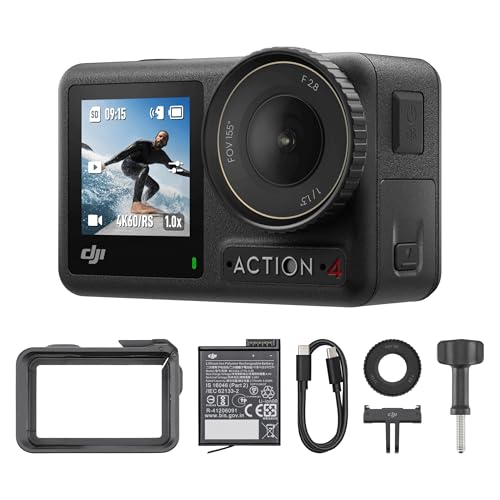
DJI Osmo Action 4 Essential Combo Action Camera

Insta360 X3 360 Action Camera with Stabilization

GoPro Hero12 Black E-Commerce Package

Insta360 X5 Motorcycle Bundle 8K 360 Camera

GoPro HERO12 Black Waterproof Action Camera

Insta360 X4 Standard Bundle 8K 360 Camera

HONGDAK Action Camera Accessories Kit for GoPro

4K Mini Body Camera with Magnetic Mount

4K Thumb Action Camera with WiFi
A Breakdown Of The Leading Choices
For motorcyclists chasing footage through tunnels, tree-lined backroads, and dusk commutes, the DJI Osmo Action 4 Essential Combo is the one to beat. The 1/1.3-inch sensor (the physical chip that captures light, where bigger generally means cleaner low-light footage) brings noticeably cleaner results than the smaller sensors in older action cams, and 10-bit color depth gives editors room to grade without banding.
Riders who shoot at dawn or in heavy overcast will care most about the low-light edge. Compared with the Insta360 X3, which is built for reframing tricks, the Osmo Action 4 leans traditional: point, shoot, ride. The magnetic quick-release system makes swapping between helmet and handlebar mounts painless, which is the kind of thing that quietly decides whether you actually use the camera or leave it in the trunk.
Real Benefits
- Low-light footage stays usable when tunnels, overpasses, and golden-hour riding push older sensors into muddiness.
- 10-bit color and D-Log M (a flat color profile designed for grading in post) preserve highlight and shadow detail editors can pull back later.
- Magnetic mount swap means less fiddling at gas stops, and the body holds up to rain and brief dunks without an external case.
Worth Noting
- Battery life is shorter than the Insta360 X5 Motorcycle Bundle’s 3-hour claim, so charging habits matter on long touring days.
- Auto white balance sometimes drifts under sodium streetlights, which may force a manual tweak.
Who It Suits Best
Twilight commuters, canyon-carving road riders, and creators who care about moody low-light footage more than 360 reframing.
Skip It When
You’d rather capture every angle at once and reframe later, in which case the Insta360 X5 Motorcycle Bundle is the stronger match for your style.
The Insta360 X3 stays relevant for motorcycle vloggers because it solves a problem most riders don’t realize they have: aiming a camera while riding. The dual-lens setup captures everything around the bike, and FlowState stabilization (Insta360’s onboard software that smooths bumpy footage after capture) irons out the worst road buzz. You frame the shot in the app afterward, which is a real gift on group rides where the action moves fast.
Solo creators will appreciate how much time the reframing workflow saves in editing, and the touchscreen is genuinely usable with gloves if you take a moment to learn the gestures. It’s noticeably cheaper than the newer X4 and X5, so it makes sense for first-time 360 buyers.
The Helpful Details
- 5.7K 360 capture means you mount it once and pick angles later, which works well on track days and rally rides.
- FlowState stabilization holds up at speed better than most software-based systems in this price range.
- 2.29-inch touchscreen stays readable in daylight and responds to most glove types after a quick settings tweak.
Honest Caveats
- Single-lens 4K footage is good but won’t match a dedicated GoPro for straight-ahead color punch.
- Reframing takes time in post, so riders wanting grab-and-go edits may feel the workflow slow.
Made For
Solo creators and group-ride vloggers who want one camera to capture both rider view and the road behind.
Look Elsewhere When
You shoot mostly forward-facing daily commute footage and want a simpler, classic action-cam feel, where the GoPro HERO12 Black fits more naturally.
The GoPro Hero12 Black E-Commerce Package is the most balanced forward-facing choice in this roundup, and for many riders that’s all that matters. 5.3K60 video with HDR (high dynamic range, which balances bright skies and dark shadows in a single frame) holds up against the DJI Osmo Action 4, while the GoPro’s massive accessory ecosystem means a mount exists for nearly every bike and helmet. 27MP stills are a nice bonus for thumbnail work.
Daily commuters get a lot out of this one: the menus are familiar, the HyperSmooth stabilization is well-tuned for high-frequency motorcycle vibration, and the new power management keeps recording alive on longer rides. It also works as a webcam for live Q&A sessions, which is useful for creators with regular audience hangouts.
The Good Stuff
- 5.3K60 with HDR produces clean highlight rolloff in sky-heavy road scenes where cheaper cams clip badly.
- Improved battery efficiency roughly doubles continuous runtime versus the previous generation, which is a real touring improvement.
- Mount and accessory compatibility is the deepest in the category, so swapping setups between bikes is painless.
Some Limits To Know
- Low-light noise is higher than the DJI Osmo Action 4 in shaded scenes.
- It lacks the dual-lens reframing flexibility of the Insta360 X5 Motorcycle Bundle.
The Right Fit
Daily commuters and social creators who want reliable forward-facing footage without overthinking the workflow.
Swap It Out When
You need 360 reframing and a longer-lasting battery for touring, where the Insta360 X5 Motorcycle Bundle makes more sense.
The Insta360 X5 Motorcycle Bundle is built specifically for the way motorcyclists actually shoot, and it shows. The rugged, replaceable lens design is the standout detail: gravel chips and bug strikes happen on every ride, and being able to swap a damaged lens without sending the camera in for service is a quiet game-changer. 8K30 360 capture from dual 1/1.28-inch sensors gives editors more cropping room than the older X3.
The bundle includes a 3-hour battery claim, which on paper outlasts every other pick here. Touring riders and weekend-long road-trippers will care most about that. The triple AI chip design also brings better noise handling for those late-evening ride-outs, addressing the main weak spot of older 360 cameras.
Noteworthy Benefits
- Replaceable lens design means trail-side swaps after chip damage, no service trip required.
- Up to 3-hour battery life is enough for most full-day touring rides on a single charge.
- 8K30 360 capture preserves detail when reframing, so flat-export clips still look sharp.
Trade Offs
- File sizes from 8K 360 are large, so storage and backup habits become more demanding.
- Audio pickup is improved but still benefits from an external mic for voiceover-heavy vlogs.
Best Suited To
Touring riders and vloggers who cover long distances and need both rugged hardware and long battery life.
Where Another Pick Suits Better
Street commuters who rarely ride past an hour may find the GoPro Hero12 Black E-Commerce Package a more practical, lighter carry.
Newcomers to motorcycle vlogging often land on the standard GoPro HERO12 Black, and for good reason. It shares the same 5.3K60 sensor and HyperSmooth stabilization as the E-Commerce Package above, just without that bundle’s specific add-ons. For someone who already owns mounts, the standalone camera is a sensible, slightly lighter starting point.
The learning curve is gentle. Auto modes are smart enough to deliver good-looking footage out of the box, and the camera handles exposure transitions between sun and shade better than older GoPros. If you ever decide to expand into 360 or add the HONGDAK accessory kit covered below, the HERO12 plays nicely with most third-party gear.
A Few Highlights
- 5.3K60 HDR video holds up against the DJI Osmo Action 4 for forward-facing road footage.
- Auto-exposure transitions are smoother than older generations when riding through dappled tree cover.
- Webcam and live-streaming modes add a quiet second life for off-bike creator work.
Worth Bearing In Mind
- Low-light performance still trails the DJI Osmo Action 4 in tunnel and dusk scenes.
- Battery is smaller than the Insta360 X5 Motorcycle Bundle’s, so multi-hour touring days call for spares.
Who Should Grab It
First-time motorcycle vloggers who already have mounts and want the core GoPro experience without extra accessories.
A Better Fit Elsewhere
Riders who want 360 capture and longer battery life should look at the Insta360 X4 Standard Bundle instead.
The Insta360 X4 Standard Bundle is the natural step up from the older X3, and on a motorcycle that upgrade pays off in two ways. 8K 360 capture is a real step forward for reframe quality, and 4K wide-angle single-lens mode is finally sharp enough to compete with traditional action cameras. The 135-minute battery life is enough for most full-day rides, and removable lens guards offer protection without the permanent bulk of a housing.
The “invisible selfie stick” effect is genuinely useful on a bike: you can mount the camera at the back of the saddle and get a clean, drone-like trailing shot. For tour-day editors pulling multiple angles from a single source clip, this is the kind of feature that changes how you plan a shoot.
Everyday Wins
- 8K 360 and 4K wide-angle both work well, so the camera pulls double duty without compromise.
- Removable lens guards protect against road debris without adding the haze of a permanent housing.
- AI reframing in the Insta360 app turns one ride into multiple usable angles for social clips.
Where It Is Less Suited
- Storage fills up quickly at 8K, and high-end microSD cards become a real cost.
- Audio is improved but still benefits from external mics for vlog-heavy voice work.
Whose Shelf It Belongs On
Multi-camera tour editors and creators who want one camera to anchor an entire episode’s B-roll.
Not Your Match When
You prefer simple forward-facing footage and minimal editing, where the GoPro HERO12 Black is a more direct fit.
The HONGDAK Action Camera Accessories Kit is the unsung hero of this list. It’s not a camera; it’s the mounting and protection hardware that turns any compatible GoPro into a motorcycle-ready rig. Compatible with the Hero 9 through Hero 13 Black generations, the bundle includes a waterproof housing rated for serious depth, a silicone sleeve for everyday carry, and the small parts that almost always go missing during a long ownership stretch.
Existing GoPro owners will find this kit most valuable. The housing clarity is high enough to keep footage sharp, and the silicone case handles parking-lot drops far better than bare plastic. If you already own a HERO12 Black, this is the add-on that closes the gap between a casual camera and a proper road-ready setup.
Bright Spots
- Waterproof housing delivers real depth ratings for creek-crossings and rain-heavy rides.
- Silicone sleeve absorbs minor drops and gives a more secure grip in wet gloves.
- Wide GoPro compatibility means one kit covers a multi-year upgrade path.
Where It May Fall Short
- It is an accessory bundle, so you’ll still need a GoPro body to use it.
- Bundle weight adds up; for ultralight helmet mounts you may want a smaller subset of the pieces.
Built With In Mind
GoPro-owning riders who want one kit to cover mounts, protection, and carry without buying piecemeal.
Reach For A Different Pick When
You don’t yet own a compatible GoPro, in which case the GoPro HERO12 Black or DJI Osmo Action 4 should come first.
For riders who’d rather not bolt a flagship camera to a helmet, the 4K Mini Body Camera is a different kind of tool. The thumb-sized body clips anywhere a magnet will hold, the 1.47-inch screen gives quick framing checks, and the included 64GB card means you can ride straight out of the box. 4K/30fps video and a 150-degree field of view cover most POV scenarios.
It’s the right shape for chest-mount, collar-clip, or tank-bag placement, and the WiFi connection makes file pulls painless back at the parking lot. Compared with the larger picks above, the obvious trade-off is sensor size, so low-light and high-speed footage won’t be as clean. For daylight commute and weekend POV clips, though, the size-to-convenience ratio is hard to beat.
What Makes Sense
- Thumb-sized body opens up chest, collar, and bag placements that bulky cameras can’t match.
- Included 64GB card and magnetic mount mean you ride the same day, no extra shopping required.
- WiFi transfer keeps the post-ride workflow quick, especially for social-first creators.
Less-Strong Areas
- Low-light footage is noticeably grainier than full-size picks like the DJI Osmo Action 4.
- Audio pickup is basic, so windy highway rides will sound rough without an external mic solution.
Perfect Match For
POV-focused riders who want a small, wearable camera for daylight commute and casual weekend footage.
Where Another Pick Suits Better
Riders wanting flagship image quality and long battery life should consider the GoPro Hero12 Black E-Commerce Package instead.
The 4K Thumb Action Camera is the casual rider’s friend. Light enough to forget you’re carrying it, simple enough to operate one-handed, and shipped with a 128GB memory card plus a waterproof case for rain-day peace of mind. The 120-degree wide-angle lens captures more road context than tighter fields of view, which works well for short social clips.
For daily commuters and first-time vloggers, the honest read is that this is a perfectly capable starter. Image quality is a clear step below the flagship options, and you won’t get 5.3K or 8K resolution, but for documenting commutes, casual weekend rides, and learning the workflow, the convenience is genuinely useful.
A Few Strong Suits
- One-touch operation is glove-friendly and stays simple at red lights.
- 128GB card and waterproof case in the box keep total cost of entry low.
- Lightweight body suits helmet, chest, and handlebar placements without throwing off balance.
Practical Considerations
- Stabilization is basic, so footage over broken pavement will show more shake than flagship picks.
- Audio is internal-only and struggles in wind without the waterproof housing muffling it further.
Who Will Love This
Casual daily commuters and budget-first vloggers who want decent 4K clips without the flagship cost.
Where A Sibling Pick Shines
Riders wanting smoother footage and stronger stabilization should step up to the GoPro HERO12 Black.
What To Weigh Before Mounting Up
Mounting Style And Helmet Fit Helmet chin mounts give the most immersive angle, but they add weight right where your neck pivots. Handlebar and tank mounts stay out of the way but capture more sky and less of your face. Most vloggers end up running two mounts and switching based on the day.
Stabilization Quality Matters At Speed High-frequency vibration from a motorcycle is the silent killer of action cam footage. Software stabilization (like HyperSmooth or FlowState) smooths the worst of it, but the underlying sensor still needs to read fast enough to avoid rolling-shutter wobble at highway speed. Larger sensors tend to handle this better.
Weather And Waterproofing Reality “Waterproof” ratings on most action cameras cover brief immersion, not prolonged rain at highway speed where wind-driven water finds every seam. A silicone sleeve or housing adds margin, and the HONGDAK kit is a sensible add-on for rainy-climate riders.
Battery Life And Charging Habits Touring rides outlast any single battery in this roundup. Spare batteries, USB-C in-tank charging, and small power banks extend usable runtime. Cameras like the Insta360 X5 Motorcycle Bundle push the envelope, but even there, planning around charging stops is the safer move.
Key Considerations Across These Picks
Common Shopping Slip Ups Buying on resolution alone is the most common trap, since a high number on a small sensor still produces noisy footage. Check stabilization, real-world battery life, and mount compatibility before settling on a spec sheet. Another mistake is skipping the accessory kit and ending up with a camera but no clean way to mount it to a specific helmet or fairing.
What The Higher Tier Buys The gap between the budget thumb cameras and the flagship GoPro and DJI models isn’t just sharper video. It includes better low-light handling, more sophisticated stabilization, replaceable parts that survive crashes, and larger batteries. For weekend commuters, the lower tier is plenty. For weekly vlog publishing and touring, the upgrade earns its place.
Frequently Asked Questions
What Is The Best Resolution For Motorcycle Vlogging? 4K is the practical sweet spot for most riders, balancing sharp footage with manageable file sizes. 5.3K and 8K offer more cropping flexibility but demand larger storage cards and faster computers for editing.
Do I Need 360 Capture For Vlogging? Not necessarily, though it solves the “where do I point the camera” problem on group rides and tour days. Solo commuters often do fine with a single forward-facing lens and good stabilization.
How Important Is Stabilization On A Motorcycle? Very important. Road vibration is a constant, and without solid stabilization, footage looks shaky even on smooth pavement. HyperSmooth and FlowState are both strong choices in this list.
Can I Use These Cameras In The Rain? Most action cameras here handle rain and brief dunks out of the box, but prolonged highway-speed rain tests any seal. A silicone sleeve or waterproof housing adds useful margin for storm-prone rides.
How Long Do Batteries Last On A Ride? Expect roughly 60 to 90 minutes at maximum resolution from most flagships, with the Insta360 X5 Motorcycle Bundle pushing up to three hours. Touring riders should plan on spares or in-tank charging.
The Takeaway
The right pick comes down to how you ride and what kind of edits you want to make. Touring vloggers get the most from the Insta360 X5 Motorcycle Bundle, daily commuters will be served well by the GoPro HERO12 Black or DJI Osmo Action 4, and casual riders looking for a simple wearable should start with one of the thumb cameras. Match the camera to your usual ride, and the rest of the workflow tends to follow.