Long exposures punish shaky foundations. Stars don’t care how expensive your lens is; if your tripod drifts by a millimeter during a 90-second exposure, the Milky Way turns into a smeared watercolor painting. The right tripod holds your camera rigid while your mount tracks the sky, and it folds down small enough to survive a backcountry hike.
This roundup focuses on tripods that genuinely suit night-sky work: stable load capacities, vibration-damping construction, and the kind of low minimum height that helps when you’re shooting from a rocky overlook or a dew-soaked meadow. Most picks are travel-friendly carbon fiber or aluminum options, with a tabletop model for grab-and-go sessions and a few video-leaning fluid-head choices for shooters who split time between nightscapes and interviews.
The Picks In Brief

LEOFOTO 71″ Carbon Fiber Travel Tripod with 360° Ball Head

LEOFOTO 71″ Travel Tripod Carbon Fiber with 360° Panorama Ball Head
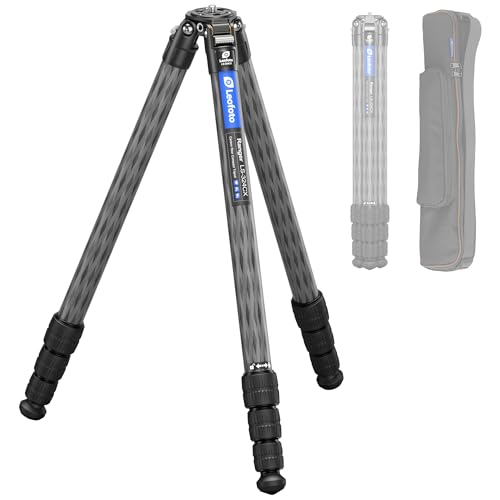
LEOFOTO Carbon Fiber Lightweight Travel Tripod, 68″

LEOFOTO LS-365CX Professional Camera Tripod, 60″
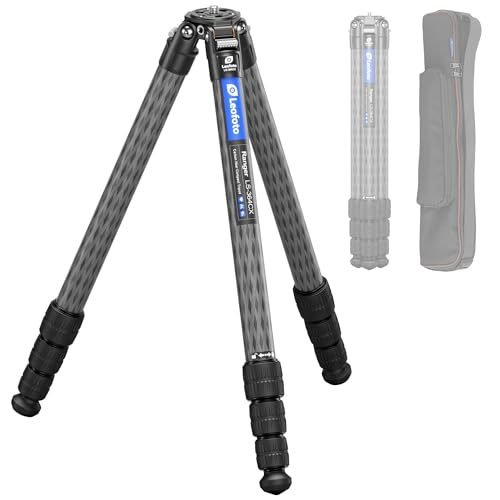
LEOFOTO 58″ Carbon Fiber Tripod (LS-364CX)
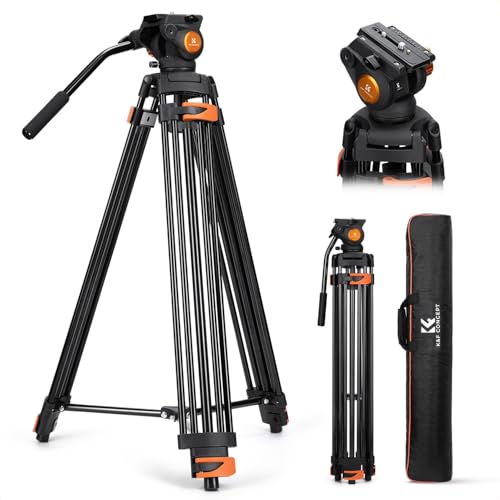
K&F CONCEPT 80″ Video Tripod with Fluid Head

SIRUI AM-TT50 Aluminum Mini Tabletop Tripod

K&F CONCEPT 63″ Aluminum Travel Tripod

K&F CONCEPT 73″ Aluminum Travel Tripod

NEEWER 74″ Video Tripod with Fluid Head (TP74)
Taking A Closer Look At The Options
Carbon fiber costs more than aluminum, but on a cold night with numb fingers, every saved pound matters. The LEOFOTO 71″ Carbon Fiber Travel Tripod folds down to roughly 18.9 inches and weighs about 4.14 lb, which lands in comfortable hiking territory for most astrophotographers heading to dark-sky pullouts.
It stretches to about 71.65 inches tall with the center column extended, so you can clear waist-high scrub and frame compositions without lying on the ground. The 360° ball head (a head that swivels in all directions on a single sphere) accepts the quick-release plate your camera rides on, and the four-section twist-lock legs deploy in a quarter turn.
A Few Highlights
- Max load of 15 kg handles a full-frame DSLR with a tracker plate and guide scope
- 32 mm max tube diameter provides good stiffness for longer exposures
- Removable center column lets you drop the camera close to ground level for low-horizon shots
- Carbon weave helps damp vibrations faster than aluminum, useful when mirror slap and wind conspire against you
Things To Consider
- Twist locks require a careful hand; overtightening can wear the rubber grips over time
- The 4.14 lb weight adds up if you’re covering long trail miles
- Ball head panning near the horizon line may feel less precise than a geared head for stitched panoramas
Whose Shelf It Belongs On
Backcountry astrophotographers who want full-height reach without sacrificing pack weight, especially those running mirrorless bodies with compact trackers.
Reach For A Different Pick When
Studio-bound shooters running heavy equatorial mounts should look at the LEOFOTO LS-365CX Professional Camera Tripod for its higher 20 kg rating.
Setup time matters when a clear sky window is opening. The LEOFOTO 71″ Travel Tripod uses three-section legs instead of four, so each segment is longer and stiffer when extended. Combined with quarter-turn twist locks, you can go from bag to shooting in well under a minute on a calm night.
The 360° panorama ball head has a separate panning base, which helps when stitching horizon mosaics for Milky Way panoramas. The removable center column adds versatility for macro by day and lower-angle framing by night.
The Upside
- Faster deployment than four-section rivals when twilight is fading
- Independent pan lock keeps horizons level for multi-row stitched panoramas
- Same 15 kg load rating as the four-section sibling above
- Carbon fiber tubes stay noticeably cooler to the touch on cold nights
Honest Caveats
- Folded length runs a bit longer than the four-section version, so it may not fit smaller packs
- Longer individual leg sections can flex slightly more at full extension than a five-section design
Right Fit For
Traveling astrophotographers shooting fast panoramas, especially those who value quick setup over absolute folded compactness.
Swap It Out When
Backpackers prioritizing tight pack-down should look at the LEOFOTO Carbon Fiber Lightweight Travel Tripod 68″ instead.
Long hikes to dark skies reward every ounce saved. The LEOFOTO Carbon Fiber Lightweight Travel Tripod weighs just 3.09 lb, dropping nearly a full pound compared to the first pick on this list. It still extends to about 68 inches, which clears most horizon obstacles without forcing you into a stool.
The four-section layout folds down to roughly 17.7 inches, and it ships with a carry bag that protects the legs on rough trail scrambles. For someone running a tracker and small guide scope, the 15 kg load rating has plenty of headroom.
The Case For It
- 3.09 lb weight is friendly on long uphill approaches
- Included carry bag shields tubes from abrasion in the pack
- Min height around 3.74 inches lets you shoot flat to the ground
- Quarter-turn twist locks handle well with gloves on
Trade-Offs
- 32 mm max tube diameter is slimmer than heavier LEOFOTO models
- Lighter tubes can transmit wind gusts more readily at full height
- Ball head sold with this kit is solid but basic for fine pano work
Best Suited To
Backpackers and alpine astrophotographers who count grams and shoot mostly wide-field nightscapes.
Where Another Pick Suits Better
Shooters pairing a long telephoto lens or small refractor should consider the LEOFOTO 58″ Carbon Fiber Tripod for its 25 kg load rating.
Bigger optics demand a stouter foundation. The LEOFOTO LS-365CX Professional Camera Tripod carries a 20 kg load rating and pairs it with a 36 mm max tube diameter. The five-section layout folds down to about 18.9 inches, which is a remarkable trick for a tripod built to take real weight.
The 3/8″ mounting thread suits standard pro heads and many equatorial mount bases, and the carbon layup keeps the tripod around 1.77 kg. That’s lighter than most tripods rated for this payload.
Noteworthy Benefits
- 20 kg load rating handles a small refractor on a strain-wave mount with guidescope
- Five-section design folds shorter than four-section rivals with the same payload
- 3/8″ thread is the standard for many pro ball heads and leveling bases
- 1.77 kg weight is impressive given the load rating
Points To Note
- 60-inch max height is shorter than the 71-inch LEOFOTO siblings
- Five-section legs take a few extra seconds to deploy in cold weather
Feature Snapshot
Who Should Grab It
Amateur astronomers and deep-sky imagers carrying a small refractor, guidescope, and tracking mount on a single support.
Consider Something Else When
Wide-field nightscape shooters using only a DSLR and star tracker should look at the LEOFOTO 71″ Carbon Fiber Travel Tripod for more height.
You can stop worrying about whether your tripod can handle the load. The LEOFOTO 58″ Carbon Fiber Tripod carries a 25 kg rating, the highest in this roundup. It weighs about 1.78 kg, which is striking given how much gear it can carry.
The 36 mm max tube diameter stays rigid even with a long telephoto pointed near the zenith. Four-section legs handle twist-lock deployment, and the tripod tops out around 58 inches, which is comfortable for most adults in standing position.
What It Does Well
- 25 kg load rating is generous overkill for most astrophotography rigs
- 36 mm tubes resist sway in wind better than slimmer designs
- Min height around 3.54 inches supports ground-level compositions
A Few Limitations
- 58-inch max height is shorter than several other LEOFOTO picks
- Overbuilt for casual shooters who never approach the load limit
Key Product Details
Made For
Imagers running heavier DSLRs, star trackers, and small refractors who want a single support they will not outgrow.
Skip It When
Pure landscape astrophotographers shooting wide and light will be happier with the LEOFOTO Carbon Fiber Lightweight Travel Tripod 68″ and its lower carry weight.
Some nightscapes look better with the camera well above your head. The K&F CONCEPT 80″ Video Tripod with Fluid Head reaches 80 inches, the tallest tripod in this roundup, which helps when shooting over tall grass or framing a high celestial object without kneeling in snow.
The aluminum alloy build adds heft compared with carbon options, but the fluid head delivers smooth 360° pan and -70° to +90° tilt, plus a detachable handle that switches sides for left-handed operators. Aluminum is also generally more forgiving of dings and rough transport than carbon.
Why It Works Well
- 80-inch reach clears tall vegetation and offers comfortable standing composition
- Fluid head enables smooth pans for time-lapse sequences
- Detachable handle works for both right and left hand
- Aluminum build is durable and resists impact damage
Points To Keep In Mind
- Heavier than carbon fiber rivals at this height
- Fluid head is geared toward video, so fine static framing takes a small adjustment
Who It Suits Best
Tall shooters and time-lapse imagers capturing sky motion over distant horizons from a stationary spot.
A Better Fit Elsewhere
Hikers needing pack-friendly weight should look at the LEOFOTO Carbon Fiber Lightweight Travel Tripod 68″ for a much lighter carry.
Sometimes the tripod you actually carry beats the one you wish you’d brought. The SIRUI AM-TT50 Aluminum Mini Tabletop Tripod folds to about 7 inches and weighs under 1.7 lb. It tops out around 20 inches, which makes it a tabletop support rather than a full-height stand.
The aluminum build is rugged for its size, and the 360° ball head handles compact mirrorless bodies and small action cameras. Wide-field sky work at low angles is where this little tripod actually shines, since you can rest it on a rock wall or picnic table without unpacking a full-size kit.
Notable Upsides
- 7-inch folded length slips into coat pockets and small pouches
- Under 1.7 lb weight is barely noticeable in a backpack
- Aluminum legs handle small bumps without cracking
- Tabletop scale suits aurora and wide-field sky framing
Small Caveats
- 20-inch max height rules out eye-level compositions
- Limited payload compared to full-size tripods
Perfect Match For
Travelers and casual nightscape shooters who want a grab-and-go support for wide-field sky framing from elevated surfaces.
Not Your Match When
Anyone shooting through a refractor or telephoto lens needs the LEOFOTO LS-365CX Professional Camera Tripod and its 20 kg load rating.
Airline overhead bins are unforgiving, and many tripods get gate-checked when they don’t fit. The K&F CONCEPT 63″ Aluminum Travel Tripod folds to about 18 inches with the ball head attached and slips into a standard 20-inch carry-on. That’s a quiet win for photographers flying to dark-sky destinations.
The center column uses a special flattened tube design that cuts down on the storage diameter, helping the tripod tuck away where round-tube rivals won’t. The ball head is removable, which shortens the folded length further to about 15.3 inches.
What Works In Its Favor
- Fits 20-inch carry-on luggage without disassembly
- Flattened center column reduces storage diameter
- Removable ball head shortens pack length even more
- Aluminum build keeps cost accessible for newcomers
Possible Compromises
- Aluminum adds more carry weight than carbon competitors
- 63-inch max height is moderate, not towering
Built With In Mind
Frequent flyers chasing clear skies across state lines and international borders who need a tripod that survives overhead bins.
Look Elsewhere When
Tall shooters who want eye-level framing should consider the K&F CONCEPT 80″ Video Tripod with Fluid Head.
Entry into astrophotography doesn’t need a five-figure kit. The K&F CONCEPT 73″ Aluminum Travel Tripod lands at the friendly end of the price spectrum and offers 73 inches of working height. The 2.9 lb carry weight stays reasonable for a starter tripod that also works for phone-based night photography.
It collapses to roughly the diameter of a water bottle and fits into a 20-inch carry-on. The adjustable center pivot lets you fine-tune height for seated framing on a stool, and the ball head is replaceable if you decide to upgrade later.
Standout Benefits
- Accessible price for newcomers to night photography
- 73-inch reach clears most shooting scenarios
- Packs down to water-bottle size for backpacks
- Adjustable center pivot helps with creative low-angle framing
Things To Weigh
- Aluminum is heavier than the carbon LEOFOTO options above
- Stock ball head is functional but not premium
Best Suited To
Beginners stepping into astrophotography who want a real tripod without committing to a high-end investment.
Another Choice May Suit
Imagers planning to add a tracking mount should look at the LEOFOTO 58″ Carbon Fiber Tripod for its 25 kg load capacity.
Hybrid shooters who flip between wedding video by day and Milky Way by night need a single support that does both. The NEEWER 74″ Video Tripod with Fluid Head (TP74) carries an 8 kg load and reaches 74 inches, with a 75 mm bowl base and a mid-level spreader that stabilizes panning movements.
The fluid head supports 360° pan and -75° to +90° tilt with smooth friction damping. A bubble level on the head helps keep horizons straight for stitched panoramas, and the telescopic handle tucks away when you want a clean rig for travel.
What Earns Its Place
- 75 mm bowl base supports pro fluid heads and leveling accessories
- Mid-level spreader keeps the rig planted on uneven ground
- Bubble level aids accurate horizon alignment for stitched panoramas
- Double tandem aluminum legs reduce flex for video moves
Where It Is Less Suited
- 8 kg max load is modest compared to dedicated still-photo tripods above
- Aluminum build and spreader add weight over flat-tripod rivals
- Fluid head shines for motion but adds bulk for static astrophotography
Who It Suits Best
Hybrid photo and video creators who want one tripod that handles interviews by day and nightscapes by night.
Where Another Pick Suits Better
Pure astrophotographers running heavy tracking rigs should look at the LEOFOTO LS-365CX Professional Camera Tripod for its 20 kg payload.
What To Weigh Before Choosing Your Astrophotography Tripod
Carbon versus aluminum is the first fork in the road. Carbon fiber weighs less and damps vibrations faster, which matters during long exposures where any buzz becomes star trails. Aluminum costs less and survives bumps and scrapes, so it’s a sensible pick for newcomers still figuring out their workflow.
Load rating deserves attention too. A tripod rated for 15 kg handles most DSLR-plus-tracker combos, but small refractors with guide scopes push past that quickly. When in doubt, pick the higher-rated option so you’re not shopping again next year.
Maximum height shapes how comfortable a session feels. Anything under 60 inches forces kneeling or crouching, which gets old fast on a four-hour shoot. A 68-to-71-inch range suits most adults in standing position, and 74+ inches helps if you’re tall or shooting over waist-high brush.
Minimum height is easy to overlook. Compositions with foreground rocks, dew-soaked grass, or low horizons benefit from tripods that drop to about 3 to 4 inches. Tripods with a removable or reversible center column unlock those low angles when you need them.
Head type shapes everyday usability. Ball heads are quick to reposition and work well for general nightscapes. Fluid heads are smoother for video and time-lapse but add bulk. Panoramic ball heads with a separate panning base help when stitching Milky Way mosaics.
Pack-down length affects travel. If you fly to dark-sky sites, a tripod that fits inside a 20-inch carry-on skips the gate-check gamble. If you hike in, a 3 lb carbon build saves energy on the climb.
Key Considerations Across These Picks
Common Shopping Slip Ups
Many shoppers under-rate their load needs and end up with a tripod that flexes under their heaviest setup. Check the combined weight of your camera, lens, tracker, and guide scope, then add margin. Buyers also focus on max height and ignore minimum height, which matters for foreground-heavy compositions. Finally, low-cost tripods sometimes have weak twist locks that slip over time, so read feedback about lock integrity before committing.
What The Higher Tier Buys
Premium carbon tripods cost more because they use higher-modulus carbon layups and tighter tolerances. The payoff is less weight, less vibration, and longer service life under field use. Top-tier tripods also tend to offer replaceable parts, so a worn foot or damaged head can be swapped without retiring the whole kit. For dedicated night photographers shooting monthly, the upgrade tends to pay for itself in years of dependable setup.
Frequently Asked Questions
What load rating do I need for a star tracker and DSLR?
A 15 kg rating covers most DSLR-and-tracker combos with margin to spare. If you add a small refractor and guide scope, look for 20 kg or higher to stay safe during long exposures.
Is carbon fiber worth the extra cost for astrophotography?
For backcountry shooters, carbon fiber’s savings on every mile is genuinely useful. For backyard and car-camp use, aluminum performs well and leaves budget for other gear like a tracker or intervalometer.
How important is twist-lock versus lever-lock design?
Both work fine when made well. Twist locks are quieter in cold weather since there’s no metal click, which helps near wildlife and quiet sites. Lever locks deploy faster when wearing gloves.
Can I use a fluid-head video tripod for still astrophotography?
Yes, though fluid heads are geared toward smooth motion. Some imagers prefer them for time-lapse sequences, while still shooters may favor a ball head for faster repositioning between frames.
How low should minimum height be for foreground-heavy nightscapes?
Around 3 to 4 inches gives you flexibility for rock-and-root foregrounds and reflections in still water. A removable or reversible center column unlocks those angles without buying a specialty low tripod.
The Takeaway
A tripod is the foundation that decides whether your astrophotography comes home sharp or smeared. Match the load rating to your heaviest rig, choose carbon when weight matters and aluminum when budget matters, and make sure it fits how and where you actually shoot. The right tripod disappears into your workflow, and your stars stay where they belong.