Bird watching on a budget shouldn’t mean missing the warbler tucked into a half-lit canopy. The right pair of budget binoculars pulls distant branches close enough to read a feather pattern, weighs little enough to hang around your neck for an hour, and holds up to a surprise drizzle. This list gathers ten options that balance cost, optical quality, and field-friendly ergonomics, so you spend more time spotting and less time squinting.
The Choices Worth Comparing

VOOPEAK 4K Night Vision Binoculars with WiFi

Vortex Diamondback HD 10×42 Binoculars
Vortex Optics Diamondback 10×50 Roof Prism
Nocs Provisions Field Issue Compact 10×32

Bushnell 10x42mm Trophy XLT Waterproof

Vortex Copperhead HD 10×42 Binoculars
Athlon Optics 8×42 Midas UHD with ED Glass

Steiner Marine 7×50 Binoculars

Vortex Crossfire HD 10×42 Binoculars

Vortex Viper HD Roof Prism 12×50
The Strengths Of Each Pick
Most birders hunt at sunrise and call it a day, but a long-eared owl doesn’t care about your schedule. The VOOPEAK 4K Night Vision Binoculars step into that gap with infrared imaging (essentially built-in night vision) and a WiFi link that streams what you see straight to a phone. For someone tracking owls, night-herons, or mammals after dusk, that combination opens up hours other binoculars leave on the table.
The design is digital rather than traditional optical, which means it records as it sees, and it pairs through a companion app for live viewing and file transfer. Compared to a daylight optic like the Vortex Diamondback HD up next, this one is purpose-built for the dark and won’t replace a 10×42 on a sunny trail. It earns its spot here as a specialty pick for nocturnal wildlife rather than a backyards-and-songsparrows option.
Positive Points
- Infrared night vision lets you identify roosting owls, fox kits, and other wildlife after dusk.
- WiFi streaming to a phone makes it easier to share what you find with a group.
- Built-in photo and video capture turns sightings into a record you can review at home.
- Useful dual-purpose tool for campers and hikers who want one device for trail and tent.
Worth Noting
- Digital optics can struggle in heavy fog or driving rain where light gathers poorly.
- Internal batteries need regular charging, so a power bank belongs in your kit for long nights.
- Resolution specs read high on paper, but image noise is common in true darkness without moonlight.
Right Fit For
Backyard naturalists who specifically want to document nocturnal wildlife and don’t mind managing battery life.
Reach For A Different Pick When
You’re chasing warblers on a sunny trail, where the Vortex Diamondback HD 10×42 will serve you better.
The Diamondback HD shows up on more birding kit lists than almost any other optic in this price band. The 10×42 format (10x magnification with 42mm objective lenses, meaning the front glass gathers plenty of light) is the classic birding sweet spot: enough reach to identify a hawk across a field, enough light gathering for early-morning walks. Fully multi-coated lenses (multiple anti-reflective coatings on every glass surface) reduce the dullness you get from cheaper coatings, so feathers look like feathers rather than smudges.
Compared to the VOOPEAK night-vision unit, this is the daylight counterpart you actually want around your neck most of the time. The body is rubber-armored for grip and shock absorption, and the focus wheel is smooth enough to track a moving bird without overshooting. For most backyard feeders, park loops, and conservation-area visits, it covers the bases without forcing a budget trade-off.
The Helpful Details
- HD optical system reduces color fringing along high-contrast branches, which helps ID tricky warblers.
- Argon-purged, fogproof body handles cold-morning breath and damp woodland conditions.
- Twist-up eyecups sit comfortably over glasses, so prescription users don’t need to remove frames.
- Center focus wheel is large enough to turn with gloves on during winter bird counts.
Trade Offs
- 10x magnification amplifies handshake shake, so a steady hold or monopod helps at long distances.
- Slightly heavier than compact 32mm alternatives for all-day carry on longer trails.
Quick Facts
Made For
Intermediate birders who watch a mix of backyard species and travel to nearby wildlife refuges a few times a month.
Swap It Out When
You want something lighter for backpacking trips, where the Nocs Provisions Field Issue 10×32 will feel less burdensome.
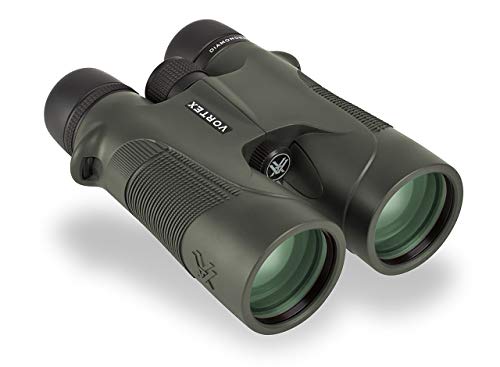
When the sun is two fingers above the treeline and the sparrows are already hopping, the difference between a 42mm and a 50mm objective lens becomes obvious. This 10×50 Diamondback pulls noticeably more light through the front glass, which keeps colors honest in the soft, slanted glow of dawn. The field of view is wide for the class, so panning across a flock at the edge of a marsh takes less searching.
Phase-corrected prisms (a coating process that aligns light waves for better contrast) sharpen edges that older budget binos tend to blur. It’s noticeably heavier than the 42mm Diamondback HD, which is the real trade-off here: more brightness, more neck weight. For early risers in forested or shaded habitats, that exchange usually feels worth it.
Strong Points
- 50mm objective gathers enough light to keep birds visible deep into dusk.
- Phase-corrected prisms tighten contrast on feather edges and branch silhouettes.
- O-ring seals and nitrogen purging keep interior optics clear through temperature swings.
- Rubber armor helps on cold mornings when a metal body would chill your fingers.
Points To Keep In Mind
- Heftier body can tire your neck on a three-hour forest hike.
- Bulker size makes them less convenient to slip into a small daypack pocket.
Whose Shelf It Belongs On
Dawn-and-dusk birders who mostly walk wetlands, woodlands, or shaded preserves with limited direct sunlight.
Look Elsewhere When
You’d rather carry something compact on long walks, where the Nocs Provisions Field Issue 10×32 fits a pocket better.
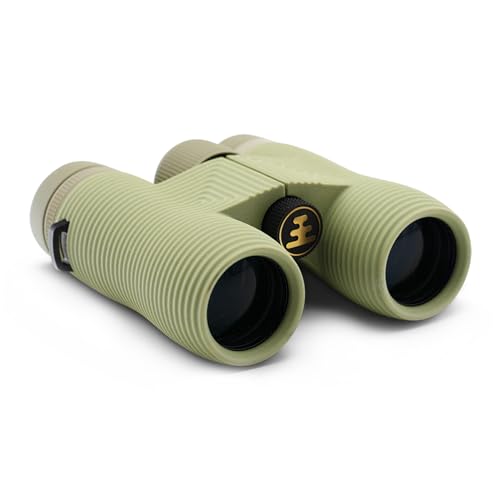
The Nocs Provisions Field Issue earns its “compact” label honestly at around 16.7 ounces, which is roughly the weight of a decent paperback. The 10×32 format trades some light gathering for portability, and that’s a fair exchange for hikers, joggers, or anyone who doesn’t want a strap pulling on their collar. The fully coated optics and Bak4 prism (a high-grade glass prism that transmits more light than cheaper alternatives) keep the image clean enough to ID common songbirds without strain.
Unlike the larger Vortex Diamondback HD or the 50mm Diamondback, this one disappears into a jacket pocket and shrugs off a dropped backpack. The oversized focus wheel is genuinely easy to find by feel, which helps on cold walks. The trade-off shows up at dawn, where 32mm of front glass can’t pull quite the same brightness as a 42 or 50.
A Strong Showing
- Pocket-friendly size makes it the natural choice for hikes where weight matters.
- Waterproof and fogproof sealing survives river mists and surprise drizzle.
- Close focus of around 9.3 feet helps when watching butterflies or ground-feeding birds.
- Clean industrial design stands up to scuffs without looking beaten after a season.
Small Caveats
- 32mm objectives dim earlier in the day than a 42mm or 50mm optic.
- Higher per-ounce price because compact, sealed optics cost more to build.
Best Suited To
Travelers and casual birders who want one pair that lives in a backpack or jacket pocket.
A Better Fit Elsewhere
You regularly bird at dawn in dim conditions, where the Vortex Diamondback 10×50 will pull in more light.
Bushnell has been a recognizable name in sport optics long enough that the Trophy XLT carries a quiet weight of brand trust. The 10×42 format hits the same birding sweet spot as the Vortex Diamondback HD, but with a 6.2-degree angle of view that makes scanning open fields and shorelines feel less like hunting with a straw and more like sweeping with a window. The waterproof, fogproof construction is rated for rain, so a wet morning won’t write off your walk.
It lacks the ED (extra-low dispersion) glass found on pricier optics, so high-contrast edges can show a faint fringe of color. For most birders, that detail doesn’t matter at the feeder; it only really shows up against bright sky edges. Compared to the compact Nocs Provisions pick, this one is heavier but brighter.
A Few Highlights
- Wide apparent field of view makes tracking flying birds smoother.
- Comfortable grip texture holds steady even with damp hands on cool mornings.
- Solid build keeps working through accidental drops on a gravel trail.
- Twist-up eyecups help eyeglass wearers find the right eye relief.
Points To Note
- Heavier than the Nocs compact pick, which can matter on long walks.
- Color fringing shows against stark white edges in bright sun.
Feature Snapshot
Who Should Grab It
Birders who want a familiar brand and a forgiving wide field for backyard and open-area use.
Consider Something Else When
You’re chasing tight details on small songbirds, where the Vortex Diamondback HD will edge out cleaner contrast.
The Copperhead HD brings the HD optical system into a slightly more compact Vortex body, with adjustable eyecups and a diopter (a small adjustment ring that lets you fine-tune focus between your eyes) for matching left and right vision. For birders whose eyes don’t quite match, this matters more than people expect: a properly dioptered binocular reduces eye strain across a long morning.
The waterproof, fogproof, and shockproof ratings handle rough weather and the occasional bump against a tree stand. Compared to the Diamondback HD two spots up, this one feels a touch more refined in the hand. The honest read is that the optical difference between these Vortex siblings is subtle; the choice comes down to body ergonomics.
Benefits That Matter
- Diopter adjustment tailors focus to your eyes, which helps on multi-hour counts.
- HD optical system keeps color fidelity warm and natural in mixed light.
- Sealed body survives wet grass and boat spray without fogging up.
- Adjustable eyecups make the binocular usable with or without glasses.
Honest Caveats
- Priced a notch above basic budget alternatives, so the value case rests on the diopter feature.
- Still a 10x optic, so a steady hold matters at full reach.
Who It Suits Best
Birders with slightly mismatched eyes who want a sealed, all-weather 10×42 for frequent local walks.
Skip It When
You’re more of a casual feeder watcher, where the Bushnell Trophy XLT delivers similar views at a friendlier entry price.
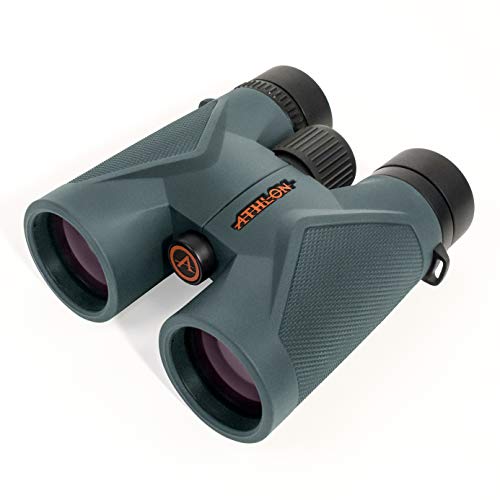
The 8×42 Midas UHD is a friendlier entry into birding because 8x magnification is easier to hold steady than 10x. ED glass (extra-low dispersion glass that reduces color fringing) is a feature usually found on pricier optics, and it pays off here by keeping the edges of white feathers and pale bellies clean. For a beginner or a kid passing the binocular between family members, that steadiness is genuinely valuable.
Compared to the 10×42 Vortex Diamondback HD, you’ll give up some reach but gain easier framing and less wobble. The 17.2mm eye relief is generous, so glasses wearers can use the binocular comfortably without removing frames. It’s a heavier 25 ounces, which is the main compromise for the optical quality on offer.
What Works In Its Favor
- ED glass trims color fringing that cheaper coatings tend to leave around high-contrast subjects.
- 8x magnification keeps the image stable for new users and young birders.
- Bak-4 prisms and phase correction produce contrast that punches above the price tier.
- Long eye relief suits eyeglass wearers across the household.
Factors To Consider
- At 25 ounces, it’s among the heavier options here for trail carry.
- Lower magnification means you’ll want to be a bit closer to identify small songbirds.
Feature Rundown
Built With In Mind
Households with mixed experience levels: a parent introducing kids to birding or a couple sharing one binocular.
Reach For A Different Pick When
You need long-distance reach for shorebirds or raptors, where the Vortex Viper HD 12×50 will pull them in closer.
The Steiner Marine 7×50 has been a familiar sight on boats and seawalls for decades, and that marine DNA translates nicely to birding. The 7x magnification is the easiest power to hold steady by hand, which makes it a forgiving pick for beginners. The 50mm objective pulls bright images even when the sun is hidden, and the sports auto-focus system keeps things sharp from 20 yards out without constant wheeling.
Compared to the Athlon Midas UHD, this one is bulkier and heavier but built like a small tank. The floating prism system uses flexible mounts that absorb shock better than rigid designs. For stationary birding from a deck chair, a dock, or a car, it serves well; for miles of trail walking, the weight catches up with you.
What Earns Its Place
- 7x magnification gives beginners a steady, easy-to-track image right out of the box.
- Bright 50mm optics handle overcast skies and shaded bays well.
- Sports auto-focus reduces fiddling so you stay on the bird.
- Marine-grade construction shrugs off splashes and humidity.
A Few Limitations
- Bulky size doesn’t suit hikers looking to cut ounces.
- Lower magnification means you need to be closer to ID distant raptors.
Who Will Love This
First-time birders, balcony watchers, and anyone with steady hands who prefers a wide, stable view over long reach.
Another Choice May Suit
You walk long distances, where the lighter Nocs Provisions Field Issue 10×32 will be easier on your neck.
The Crossfire HD often sits near the top of entry-level Vortex recommendations, and the included GlassPak harness makes it feel like a complete kit rather than just a binocular. The HD optical system handles the same 10×42 territory as the Diamondback HD, with fully multi-coated lenses and solid light transmission. The harness keeps the binocular against your chest, which reduces neck strain and gets the optic to your eyes faster when a bird pops up.
Compared to the Diamondback HD, the Crossfire is a step down in optical refinement but a step up in package value. For someone stepping into birding from a casual hobby, that balance makes sense: less cash, more accessories. The image is bright and color-true enough to enjoy without disappointment.
The Upside
- Included GlassPak harness keeps the binocular ready without neck strain.
- HD optics deliver sharp enough views for feeder and field identification.
- Roof prism body keeps the silhouette slim for smaller hands.
- Rubber armor protects against drops on a gravel path or boat deck.
Practical Considerations
- Edge sharpness falls off compared to the pricier Diamondback HD.
- Harness adds bulk that some users prefer to skip in favor of a plain strap.
Perfect Match For
Daily-use birders who want a comfortable carry and a binocular that’s ready before the bird flies past.
Not Your Match When
You’re looking for the cleanest possible image at this magnification, where the Vortex Diamondback HD pulls ahead.
For open-country birding where the bird is far away and there’s nowhere to walk closer, the Viper HD 12×50 earns its place at the back of the list. The 12x magnification pulls in shorebirds, raptors, and waterfowl that a 10x would leave as silhouettes. Despite the high power, the body is lighter than many full-size binoculars, which helps with the heavier magnification on long walks.
Compared to the Crossfire HD and Diamondback HD, this is a specialist reach tool: more power, narrower field of view, more handshake to manage. For estuary watching or scanning reservoir edges from a fixed spot, the trade-off feels right. For forest birding, the magnification can feel like too much of a good thing.
What Makes Sense
- 12x magnification reaches birds other 10x optics leave too small to identify.
- HD optical system keeps colors true across the longer focal path.
- Lightweight 50mm body for the power class means less fatigue on long walks.
- GlassPak chest harness included for quick, steady deployment.
Where It Is Less Suited
- 12x requires a steadier hand than 8x or 10x for clean focus.
- Narrower field makes locating moving birds tougher at first.
The Right Fit
Birders who watch open habitats: mudflats, lakeshores, grasslands, or raptors riding thermals far overhead.
Where Another Pick Suits Better
You’re tracking warblers through close canopy, where the Athlon Midas UHD 8×42 will be easier to manage.
Picking The Right Pair Without Overpaying
Budget binoculars live or die by a few practical attributes: magnification, objective size, optical coatings, weather sealing, and weight. Sorting these before you browse prevents the common trap of buying on magnification alone.
Magnification And Objective Size Work Together
Magnification tells you how much closer the subject appears, and objective lens diameter tells you how much light the binocular gathers. The classic 10×42 pairing balances reach and brightness well for most daytime birding. A 7x or 8x setting steadies the image for beginners; a 12x pulls in distant subjects at the cost of stability and field width.
Coatings And Glass Type Affect Image Quality
Fully multi-coated lenses reduce the dull haze you see with cheaper coatings. ED glass (extra-low dispersion glass) cuts color fringing around high-contrast edges, which matters most when you’re trying to read the white wing bars on a small songbird. Phase-corrected prisms sharpen contrast; cheaper optics often skip this step.
Weight, Grip, And Weather Sealing Matter In The Field
A binocular you leave at home because it’s heavy doesn’t help you see anything. Under 25 ounces is comfortable for a full morning walk, and a rubber-armored body survives the inevitable bump against a tree or a fall onto a gravel path. Waterproofing and fogproofing protect internal glass from moisture damage over years of use.
Eye Relief And Eyecups Help Glasses Wearers
Long eye relief (the distance your eye can sit behind the eyepiece and still see the full image) matters if you wear glasses. Twist-up eyecups let you set the right distance without removing frames, and adjustable diopters let you fine-tune focus between your eyes.
Key Considerations Across These Picks
Pitfalls Shoppers Hit
A common mistake is buying a 12x or 16x binocular thinking more is better, then finding the image too shaky to enjoy without a tripod. Another trap is trusting magnification over objective size; a 10×25 is dim and narrow compared to an 8×42, even though 10 sounds more impressive. Choosing a non-waterproof model for outdoor use can also lead to fogged or moisture-damaged optics after one wet morning.
Where The Extra Money Goes
Spending more in this category typically buys ED glass for cleaner color, a wider field of view, better weather sealing, and lighter magnesium bodies. For most birders, the jump to mid-tier optics is worth it once you start using the binocular weekly, and the jump to premium glass pays off once you’re traveling to specific birding destinations. The honest read is that spending more mostly sharpens details you already notice, rather than revealing birds you’d otherwise miss.