If your phone videos keep wobbling through every family walk, travel reel, or unboxing clip, a gimbal fixes that in seconds. These handheld stabilizers counter your natural hand shake so every pan looks like it rolled out of a tiny studio. The picks below run the range from budget-friendly folding gimbals to feature-packed trackers with fill lights and detachable remotes, all without demanding a pro filmmaker’s budget.
A Closer Look At The Lineup

DJI Osmo Mobile 8 Tracking Fill Light Combo
DJI Osmo Mobile 6 Smartphone Gimbal Stabilizer

hohem iSteady M7 Gimbal Stabilizer for iPhone

DJI OM 4 Smartphone Gimbal Stabilizer

DJI OM 5 Smartphone Gimbal Stabilizer (Renewed)
DJI OM 4 SE Smartphone Gimbal Stabilizer

DJI Osmo Mobile 7P Gimbal Stabilizer

Hohem iSteady V3 Ultra Gimbal Stabilizer

Hohem iSteady M6 Smartphone Gimbal
Hohem iSteady M7 Smartphone Gimbal
A Closer Look At Each Pick
The DJI Osmo Mobile 8 leans into solo creator workflows where lighting, tracking, and audio usually force three separate accessories. By folding a fill light and native subject tracking into the same gimbal body, it frees your hands (and your bag) for the rest of the shoot.
Compared to the more travel-focused DJI OM 4 below, this unit trades pure compactness for a fuller feature stack. For runners chasing kids at the park or creators filming solo talking heads, the integrated lighting makes a visible difference in dim rooms.
Features That Help
- Native subject tracking keeps faces centered without an app screen tap.
- Built-in fill light lifts shadows on overcast days and dim cafes.
- 360-degree horizontal pan rotation supports smooth walkaround shots.
- Integrated selfie stick and tripod combo remove two loose accessories.
Things To Consider
- Heavier than the bare-bones DJI OM 4 SE, so long sessions tire the wrist faster.
- Fill light output suits indoor use; bright sunlight still demands real lights.
Key Specs
Whose Shelf It Belongs On
Solo creators filming indoors and outdoors who want tracking, lighting, and stabilization in a single rig.
Consider Something Else When
You only need bare-bones stabilization for travel reels, in which case the DJI OM 4 SE is lighter and easier to pocket.
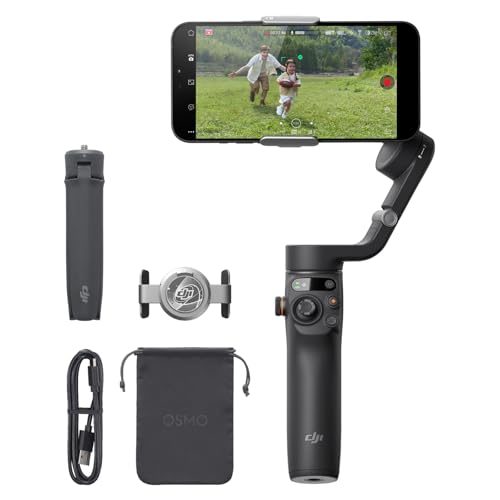
The Osmo Mobile 6 hits a comfortable middle ground for people who shoot a few times a week without obsessing over every frame. It folds down small enough for a jacket pocket, then unfolds into a full 3-axis rig with one motion.
For most households, this is the model to start with, since the built-in extension rod solves the cramped group selfie problem without buying a separate stick. Compared to the older DJI OM 4 SE reviewed below, you get ShotGuides and a tighter app experience.
Notable Gains
- Foldable design slips into daily-carry bags without a dedicated case.
- Built-in extension rod pulls back for group selfies and overhead kitchen shots.
- ShotGuides nudge you toward better angles without video-editing jargon.
Room For Improvement
- Lacks a fill light, so dim rooms still need an extra accessory.
- App dependency for some features may frustrate minimalist shooters.
Right Fit For
Daily vloggers and casual travelers who want reliable stabilization without a steep learning curve.
A Better Fit Elsewhere
You shoot mostly low-light content, where the Hohem iSteady V3 Ultra’s built-in light earns its keep.
The Hohem iSteady M7 quietly solves the awkward “set the gimbal down, walk away, start the recording” problem. A detachable touchscreen remote lets you trigger shots from across the room while the gimbal holds position.
For parents chasing toddlers or solo creators framing wide travel shots, that little remote is more useful than the spec sheet suggests. Compared to the DJI OM 4, you trade DJI’s app polish for a more flexible AI tracker that follows pets, vehicles, and buildings, not just people.
What Pays Off
- Detachable 1.4-inch touchscreen remote frees you from the gimbal for tripod shots.
- AI tracker works with the phone’s native camera, no extra app launch required.
- Tracks pets, vehicles, and buildings alongside people, expanding subject options.
Small Caveats
- More setup steps than a magnetic-mount DJI OM 4 if you only need basic stabilization.
- Remote requires charging separately, easy to forget before travel days.
Feature Snapshot
Who Should Grab It
Travel vloggers and parents who want a remote-triggered, AI-tracking setup without juggling launch screens.
Look Elsewhere When
You want a more pocketable everyday pick, where the DJI OM 5 folds smaller and slips into daily bags.
The DJI OM 4 is the gimbal that made magnetic mounting mainstream, swapping spring clamps for a snap-on ring that clicks into place. That small choice changes how often you’ll actually use the gimbal rather than letting it gather dust.
For first-timers intimidated by balancing acts, this model skips the fiddly phone clamp dance. Compared to the newer DJI OM 4 SE, you get a slightly more refined app experience but skip the lower price tier.
A Favorable Mix
- Magnetic phone clamp cuts mount time to a second.
- 3-axis motors handle external lens attachments without losing horizon lock.
- Tripod included for static talking-head setups out of the box.
Worth Noting
- Magnetic ring must stay attached to your phone or case, which some users find bulky.
- Older app features compared to the newer Osmo Mobile 6 reviewed above.
Best Suited To
First-time gimbal owners who want a forgiving mount system and don’t mind slightly older app features.
Swap It Out When
You want the latest ShotGuides and a tighter app, in which case the DJI Osmo Mobile 6 is the natural upgrade.
The DJI OM 5 (Renewed) keeps the foldable, extension-rod-toting design people liked and trims the price by leaning on professionally inspected pre-owned stock. You get the same footage output without paying full retail for an older generation.
For budget-conscious shoppers, renewed inventory often means sharper deals than waiting for a new unit to dip. The extension rod sets this gimbal apart from the OM 4 above by solving the cramped group selfie problem in one motion.
Everyday Wins
- Built-in extension rod removes the need for a separate selfie stick.
- Foldable body fits into daily-carry bags without dedicated cases.
- Renewed unit can stretch a tight budget further than new equivalents.
Factors To Consider
- Renewed condition varies, so inspect packaging and motor calibration on arrival.
- Older tracking firmware than the current DJI Osmo Mobile 6 reviewed above.
Made For
Shoppers watching their budget who want a foldable DJI gimbal with an extension rod at a softer entry point.
Reach For A Different Pick When
You want the longest warranty coverage and latest tracking, in which case the DJI Osmo Mobile 6 is the safer route.
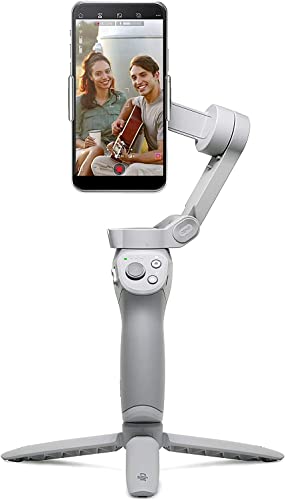
The DJI OM 4 SE trims a few features from the standard OM 4 to land at a friendlier price for casual shooters. You still get the magnetic mount and 3-axis motors that made the line popular, plus ActiveTrack 3.0 for keeping subjects framed.
For light packers, this is the gimbal that survives a backpack all day without feeling like dead weight. Compared to the heavier Hohem iSteady M6 reviewed below, the OM 4 SE is the better companion for long walking tours.
Reasons It Performs
- Magnetic design lets you snap the phone on and off without rebalancing.
- Story Mode templates simplify social-first edits for casual creators.
- Operating range of 0 to 40 degrees Celsius covers most climates.
Potential Drawbacks
- No fill light, so low-light shooting still requires a separate accessory.
- Older ActiveTrack version compared to the Osmo Mobile 7P covered later.
Who Will Love This
Light packers and commuters who want pocketable stabilization with a familiar DJI app workflow.
Skip It When
You need AI tracking for non-human subjects, where the Hohem iSteady M7’s object recognition proves more flexible.
The Osmo Mobile 7P wraps a multifunctional module around the gimbal, adding native tracking, audio pickup, and lighting without forcing you to bolt on accessories. For creators who already carry too many dongles, that consolidation matters.
You step up from the older OM 4 SE into a setup closer to the Osmo Mobile 8 covered earlier, but at a different price point and configuration. For storytellers juggling interviews and b-roll, the bundled module cuts setup time considerably.
Positive Takeaways
- Multifunctional module combines native tracking, audio, and lighting.
- Eliminates several accessories that creators otherwise carry separately.
- Native tracking works without launching the DJI Mimo app first.
Honest Caveats
- Module adds bulk compared to the slimmer DJI OM 5 reviewed above.
- Battery drain climbs faster with audio and lighting active simultaneously.
Quick Technical Notes
Perfect Match For
Storytellers who want one rig for interviews, b-roll, and dim cafes without buying separate audio and lighting gear.
Not Your Match When
You prioritize a featherweight travel build, where the simpler DJI OM 4 SE stays easier on the wrist.
The Hohem iSteady V3 Ultra picks up where the brand’s earlier iSteady models left off, pairing a detachable touchscreen remote with a fill light and AI tracking. It’s a quiet workhorse for households where one person films while another performs.
For social-first creators, the multimodal AI tracker follows animals, vehicles, and other objects beyond people, which beats the older OM 4 SE’s tracking range. The detachable remote echoes the iSteady M7’s approach above, with a slightly different ergonomic shape.
A Few Highlights
- Detachable touchscreen remote lets you trigger shots from a distance.
- Multimodal AI tracker follows pets, vehicles, and other non-human subjects.
- Built-in fill light saves you from carrying a separate LED panel.
Some Limits To Know
- Hohem’s app ecosystem trails DJI Mimo in tutorial depth.
- Fill light is best for indoor use; bright daylight still overpowers it.
Who It Suits Best
Social-first creators and parents who film pets and kids and want a remote-triggered, AI-aware rig.
Where Another Pick Suits Better
You shoot heavier rigs requiring extra payload, in which case the Hohem iSteady M7 handles up to 500 grams.
The Hohem iSteady M6 quietly addresses the pain point most budget gimbals ignore: status visibility. A 0.91-inch OLED panel surfaces battery level, Bluetooth, and gimbal mode at a glance, so you stop guessing mid-shoot.
For creators mounting add-on lenses and external mics, the 400-gram payload ceiling leaves real headroom. Compared to the lighter DJI OM 4 SE, this Hohem leans toward heavier rigs rather than pure portability.
A Strong Showing
- OLED display surfaces gimbal status without checking the phone screen.
- 400-gram payload supports heavier lens and microphone setups.
- Reverse charging can top up a dying phone in a pinch.
Practical Considerations
- Heavier than pocketable DJI options, which matters on long walking shoots.
- Four accessory ports invite clutter if you mount every available add-on.
Built With In Mind
Rigged phone shooters and semi-pro creators using external lenses and on-camera microphones.
A Better Fit Elsewhere
You mostly film handheld travel clips without add-ons, where the DJI Osmo Mobile 6 stays lighter and faster.
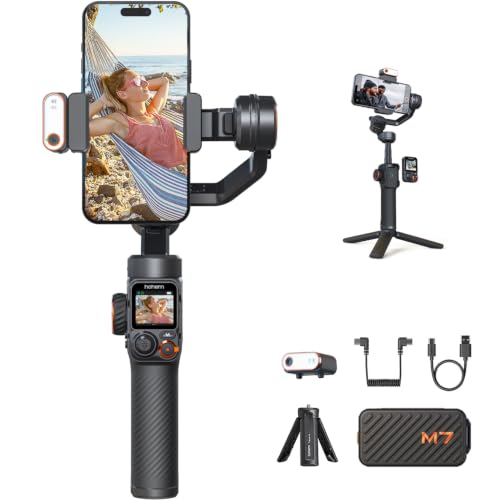
The Hohem iSteady M7 (the smartphone variant) steps payload up to 500 grams, which is the threshold where add-on lenses, larger phones, and microphone combos all coexist without strain. For creators scaling up from a basic handheld, the headroom pays off quickly.
You get the same detachable touchscreen remote and magnetic AI tracker that defined the iSteady line, now with more torque behind the motors. Compared to the 400-gram M6 reviewed above, you gain real-world flexibility for future gear without changing gimbal.
Positive Points
- 500-gram payload handles lens, mic, and grip accessories simultaneously.
- Magnetic AI tracker works with the phone’s native camera app.
- Built-in extension rod pulls back for group shots and overhead angles.
Details To Watch
- Bigger payload capacity adds weight compared to slimmer travel builds.
- Fill light is indoor-focused; bright daylight reduces its impact.
Feature Facts
The Right Fit
Creators planning to grow into add-on lenses, external mics, or larger phones without swapping gimbals later.
Another Choice May Suit
You want a simpler everyday rig without the payload step up, where the DJI Osmo Mobile 6 keeps things light.
What To Weigh Before Choosing Budget Gimbals
Payload And Phone Size
Payload tells you how much weight the gimbal’s motors can handle without losing balance. Most modern phones fall well under 300 grams, so any 3-axis model here will manage bare-bones setups. If you plan to bolt on a wide-angle lens, an external microphone, or a small LED panel, lean toward gimbals rated at 400 grams or higher.
Tracking And Subject Recognition
Active subject tracking, the feature where the gimbal follows a face, body, or object as it moves, varies a lot between budget gimbals. DJI’s ActiveTrack line tracks people reliably, while newer Hohem units add pet and object recognition. Creators filming kids, pets, or vehicles benefit most from object-aware tracking, while solo talking heads can lean on simpler face locks.
Portability Versus Feature Stack
Foldable designs like the DJI OM 5 and OM 4 SE slip into jacket pockets, while the feature-packed Osmo Mobile 8 and Hohem M7 trade pocketability for lighting, audio, and remotes. Travelers who shoot every day benefit from the lighter builds, while creators filming at home can carry the heavier feature-rich models without noticing the difference.
App Ecosystem And Learning Curve
DJI’s Mimo app is the most polished in this category, with ShotGuides, Story Mode, and tutorial content that helps beginners get rolling. Hohem’s app catches up on AI tracking but trails on tutorial depth. For first-timers, the smoother the onboarding, the more often you’ll actually use the gimbal instead of leaving it in a drawer.
Things Worth Knowing Before You Buy
Common Shopping Slip Ups
The biggest trap is buying a gimbal without checking your phone’s weight with a case and any add-on lens. Models rated around 250 grams can struggle the moment you snap a wide-angle attachment on. Another mistake is assuming all 3-axis gimbals track moving subjects, since some older units require manual reframing. Finally, shoppers often overlook battery life during long event shoots, only to discover their gimbal dies before the cake cutting.
Where The Extra Money Goes
Stepping up from a basic OM-series DJI to a newer Osmo Mobile 7P or 8 buys you native tracking, audio integration, and lighting modules that replace three separate accessories. The higher-tier Hohem M7 also unlocks the 500-gram payload that future-proofs your rig for lenses and mics you may add later. For creators who shoot weekly, that consolidation of features usually justifies the stretch; for casual users, a budget OM 4 SE delivers enough smoothness without the extras.